Cart
0

Decorating room by room often leaves your home feeling choppy and disconnected, even when individual spaces look nice. A cohesive look requires a whole-home approach with intentional design choices that create visual flow. This guide provides a clear, actionable framework to achieve stylish, harmonious home decor that feels unified and inviting.
Table of Contents
- Understanding What Makes Home Decor Cohesive
- Preparing Your Home Decor Framework: Anchors To Start With
- Executing Your Cohesive Decor With Practical Steps
- Verifying And Maintaining Cohesion: Common Mistakes And Tips
- Explore Stylish Home Decor Accessories At Homable
Key takeaways
| Point | Details |
|---|---|
| Plan holistically | Cohesive decor requires a whole-home framework, not disconnected room-by-room choices. |
| Establish anchors | Focus on colour palette, materials, lighting, and style as your foundational anchors. |
| Create flow | Use repetition and smooth transitions between rooms for visual harmony throughout. |
| Layer intentionally | Properly sized rugs, layered lighting, and varied textures enhance cohesion without monotony. |
| Maintain consistency | Limit finishes and repeat key elements in multiple rooms to unify your space. |
Understanding what makes home decor cohesive
Cohesion doesn’t mean matching everything or making rooms look identical. It means your spaces feel connected and belong to the same home. Flow through repetition of materials, colours, and styles creates this unity whilst allowing intentional variety and personality.
Many homeowners misunderstand cohesion as uniformity. True cohesive design celebrates diversity within a unifying framework. You might use the same warm grey in your hallway, lounge, and bedroom but layer different textures and accent colours to keep each space distinct.
Harmony delivers the emotional payoff of successful cohesion. Interior design harmony creates calm and peace, making your home feel settled rather than chaotic. This psychological comfort matters as much as visual appeal.
Lack of cohesion creates that subtle “something’s off” feeling visitors and residents notice but struggle to identify. Rooms feel disconnected, styles clash without purpose, and the home lacks a unifying vision. Designers achieve cohesion through consistent choices and strategic repetition.
Pro Tip: Before buying new items, photograph your existing rooms and create a mood board to spot patterns and gaps in your current decor.
When planning your approach, optimise room layout alongside aesthetic choices to ensure functionality supports your cohesive vision. Spatial flow and visual flow work together.
Key elements that signal cohesion include:
- Repeated materials appearing in at least three rooms
- Consistent colour temperature in lighting across spaces
- Complementary rather than clashing style choices
- Intentional transitions between adjacent rooms
“A cohesive look isn’t about matching furniture or copying rooms you see on Pinterest. It’s about creating flow or a common thread that runs through your own home…room by room.” – Welsh Design Studio
Preparing your home decor framework: anchors to start with
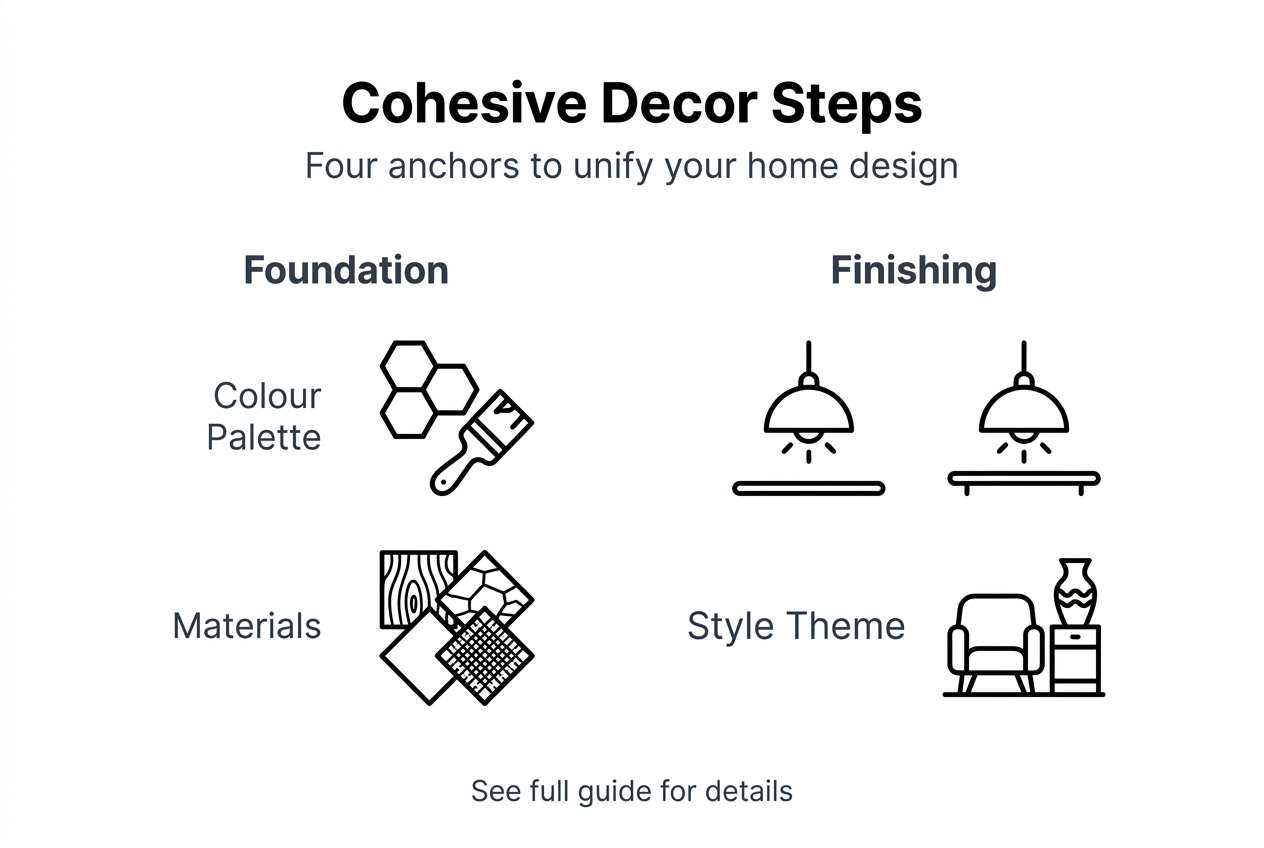
Successful cohesion starts with establishing four foundational anchors before you purchase anything: colour palette, materials and finishes, lighting, and style. This whole-home framework prevents random, choppy decor decisions.
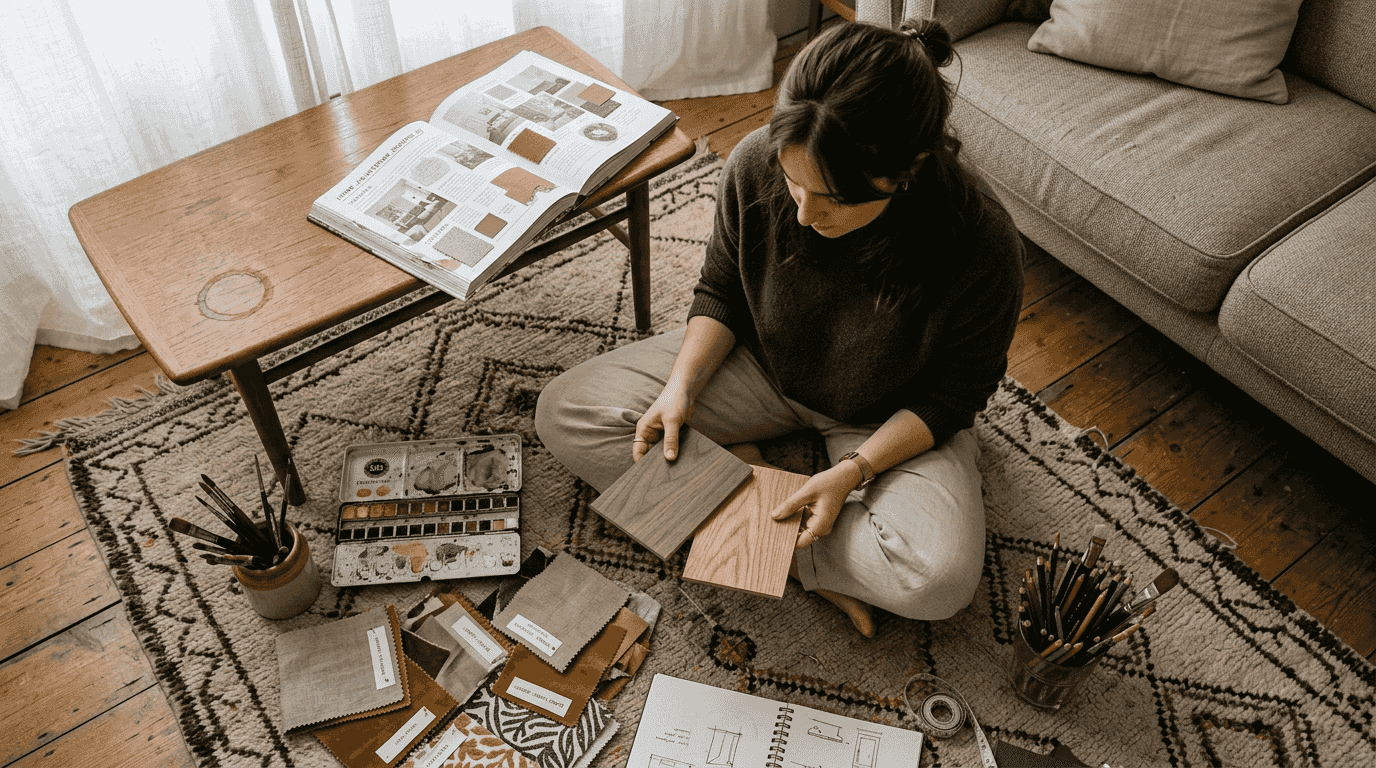
Your colour palette forms the visual foundation. Choose one neutral base and add one to two supporting colours that appear throughout your home. This restraint creates unity whilst offering flexibility for variation.
Consider this starter framework:
- Select your main neutral (warm white, greige, soft grey, or beige)
- Choose a primary supporting colour for major accents
- Add a secondary accent colour for smaller touches
- Test samples in different lighting conditions before committing
- Document your choices for future reference
Materials and finishes deserve equal attention. Repeat key materials like wood tones, metal finishes, and textile textures across rooms. Limit yourself to two or three metal finishes maximum to avoid visual clutter.
| Anchor Element | Strategy | Example |
|---|---|---|
| Colour Palette | 1 neutral + 1-2 accents | Warm grey + sage green + terracotta |
| Materials | Repeat in 3+ rooms | Oak wood, brass, linen |
| Lighting | Consistent warmth | 2700K throughout living spaces |
| Style | Single cohesive theme | Modern organic with vintage touches |
Lighting consistency matters more than most homeowners realise. Choose appropriate colour temperatures for each room’s function whilst maintaining overall warmth consistency. Living areas typically work best with 2700K to 3000K for a cosy feel.
Your common style theme ties everything together. Whether you prefer modern minimalist, traditional elegance, or eclectic bohemian, commit to a direction that supports your personal taste. This doesn’t mean rigid rules but rather a guiding aesthetic philosophy.
Pro Tip: Create a physical sample board with paint chips, fabric swatches, and material samples to see how your anchors work together in real light.
This preparation phase connects directly to your modern interior design workflow, ensuring each decision builds towards your cohesive vision. Taking time here saves money and regret later.
Executing your cohesive decor with practical steps
With your framework established, implement these specific actions to bring cohesion to life throughout your home.
Colour layering creates depth without chaos. Use your dominant neutral on 60% of surfaces, your primary supporting colour on 30%, and accent colours on the remaining 10%. This proportion maintains balance whilst adding visual interest.
Material repetition knits rooms together powerfully. Repeat wood tones in at least two to three rooms and limit metal finishes to maintain clarity. If you choose brass cabinet pulls in the kitchen, echo brass in bathroom fixtures and lounge accents.
Follow these execution steps:
- Paint walls in your chosen neutral to establish the foundation
- Install or update lighting fixtures with consistent warmth and style
- Select major furniture pieces that align with your style anchor
- Add rugs sized properly to anchor each seating area
- Layer in textiles through curtains, cushions, and throws
- Finish with decorative accessories that tie your palette together
Rug sizing dramatically affects cohesion. Undersized rugs make furniture feel disconnected and spaces look unfinished. In living rooms, ensure front furniture legs rest on the rug. Dining rugs should extend at least 60cm beyond the table edge on all sides.
| Room Type | Rug Sizing Rule | Visual Impact |
|---|---|---|
| Living room | All furniture legs on rug OR front legs only | Anchors seating group |
| Dining room | Extends 60cm+ beyond table | Grounds dining zone |
| Bedroom | Extends beyond bed sides and foot | Frames sleeping area |
Lighting layers add sophistication and function. Include ambient, task, and accent lighting in every room to create mood and serve practical needs. Ambient provides overall illumination, task supports specific activities, and accent highlights architectural features or artwork.
Pro Tip: Install dimmer switches on ambient lighting to adjust mood and create different atmospheres throughout the day.
Smooth transitions between adjacent rooms maintain flow. Shift colours gradually rather than abruptly, and use transitional elements like artwork or rugs that bridge palettes. A hallway might blend the lounge’s sage green with the dining room’s terracotta through a piece incorporating both.
Balance eclectic furniture choices to avoid matchy-matchy sets whilst maintaining cohesion. Mix furniture styles and eras, but ensure they share common elements like wood tone, scale, or colour family. This approach adds character whilst supporting your unified vision.
Explore stylish home accessories that complement your framework, and follow a systematic home decorating checklist to stay organised during execution.
Verifying and maintaining cohesion: common mistakes and tips
Even with careful planning, certain pitfalls disrupt cohesion. Recognising and correcting these issues keeps your home polished and harmonious over time.
Common mistakes that break cohesion include:
- Inconsistent colour temperatures in lighting across rooms
- Too many competing metal finishes throughout the home
- Undersized rugs that fail to anchor furniture groupings
- Ignoring transitional spaces like hallways and landings
- Adding items impulsively without considering the whole-home framework
When cohesion is missing, homes feel choppy, busy, or randomly decorated. People notice something feels off but struggle to pinpoint the exact problem. This vague discomfort signals disconnected design choices.
Simple fixes deliver immediate improvements. Addressing design missteps makes your home feel instantly more polished and inviting. Unify cabinet hardware throughout, replace mismatched light bulbs with consistent colour temperature, or add complementary textiles to bridge colour gaps.
Pro Tip: Walk through your home as if visiting for the first time, photographing each room transition to spot cohesion breaks you’ve stopped noticing.
Regularly assess your home’s flow by checking that your four anchors remain consistent. As you acquire new pieces, verify they support rather than fight your established framework. This ongoing maintenance prevents gradual drift from your cohesive vision.
Functionality and comfort must align with your lifestyle to achieve true cohesion. Beautiful design that doesn’t serve your daily needs ultimately fails. Balance aesthetic goals with practical requirements for a home that feels both stylish and liveable.
Refer to home accessory styling guidance when adding finishing touches to ensure new elements enhance rather than disrupt your cohesive scheme.
Explore stylish home decor accessories at Homable
Achieving cohesive home decor becomes effortless when you have access to thoughtfully curated accessories that complement your design framework.
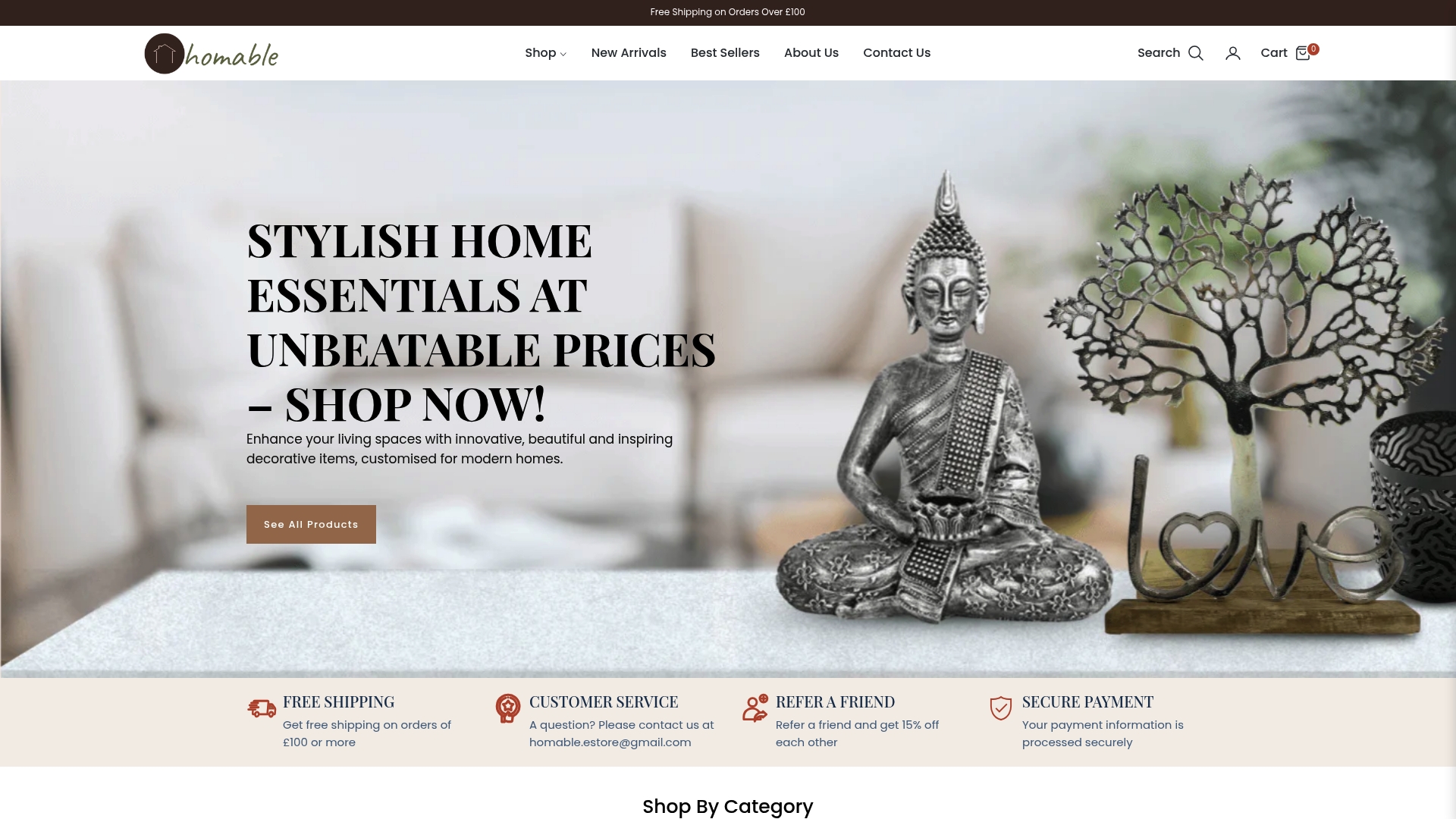
Homable offers unique pieces with versatile finishes that work across various colour palettes and styles. Our decorative silver flower candle holder adds elegant metallic accents that unify spaces, whilst our abstract silver couple ornament brings artistic character without overwhelming your palette.
Browse Homable’s home decor collections to discover pieces that effortlessly integrate with your cohesive home plan. Our curated range supports tasteful, timeless, and tailored styling approaches for every room, helping you maintain visual harmony whilst expressing your personal style.
FAQ
How do I choose a colour palette for a cohesive home?
Select one neutral colour as your foundation and add one to two supporting colours that appear throughout multiple rooms. This creates visual unity whilst offering enough variety to keep spaces interesting and distinct.
What lighting should I use to enhance cohesion?
Include ambient, task, and accent lighting in each room to add depth and serve different functions. Use warm colour temperatures (2700K to 3000K) in relaxing spaces and cooler, brighter light in work areas for consistency and appropriate mood.
How can I avoid a matchy-matchy look but still keep cohesion?
Mix furniture styles, eras, and textures to add personality and visual depth to your spaces. Repeat materials, wood tones, and accent colours strategically across rooms to maintain continuity without creating uniformity or a showroom feel.
How large should rugs be for a cohesive room?
Rugs must be large enough so furniture legs rest on them, particularly sofas and chairs in living areas. In dining rooms, ensure rugs extend at least 60cm beyond table edges, and in bedrooms, rugs should extend beyond the bed sides and foot to properly ground each space.