Cart
0
Living in a home that never quite has enough room is one of the most frustrating everyday challenges, whether you own your property or rent it. Belongings accumulate faster than expected, and before long, surfaces disappear under clutter while cupboards refuse to close. The good news is that smart, stylish solutions exist that genuinely transform how a space looks and functions, without requiring a full renovation or a bigger budget than you have. This checklist walks you through a practical, design-forward approach to reclaiming your home, from the essential first steps right through to long-term habits that actually stick.
Table of Contents
- Set the foundation: Decluttering for space
- Furniture that works double: Multifunctional essentials
- Design tricks: Creating the illusion of more space
- Long-term success: Maintenance routines and expert tips
- A fresh perspective on stylish space-saving
- Find your next stylish space-saver with Homable
- Frequently asked questions
Key Takeaways
| Point | Details |
|---|---|
| Declutter first | Remove unused items using structured rules before adding new solutions. |
| Choose multifunctional furniture | Opt for furniture that doubles as storage to maximise every metre. |
| Use smart design tricks | Apply mirrors, light hues, and slim furniture to visually open up rooms. |
| Keep habits simple | Maintain order with daily and monthly routines tailored to your life. |
| Personalise for your needs | Adapt solutions and checklists to fit your family’s lifestyle and preferences. |
Set the foundation: Decluttering for space
Before you invest in a single storage box or shelving unit, decluttering is the non-negotiable first step. It sounds obvious, yet most people skip straight to buying more organisational products, which simply creates tidier-looking chaos. The average home contains 300,000 items, and research shows that clutter tends to return within six months without a consistent maintenance routine in place. That statistic alone should motivate a proper clear-out before anything else.
Two methods stand out for making decluttering feel manageable rather than overwhelming:
- The 90/90 rule: Ask yourself whether you have used an item in the last 90 days and whether you will use it in the next 90. If the answer to both is no, it goes. This rule cuts through the “but I might need it” thinking that keeps unnecessary items in your home.
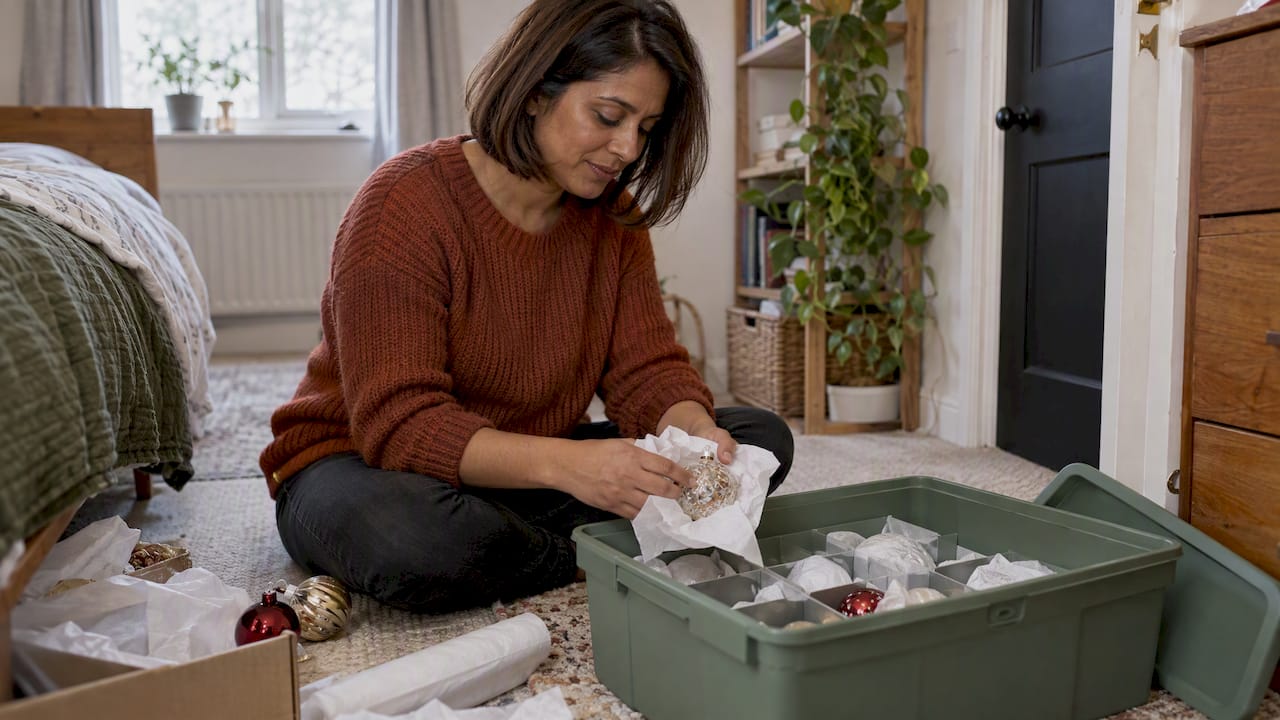
- The 4-Box Method: Label four boxes as Keep, Donate, Trash, and Relocate. Work through one room at a time, placing every item into a box. Nothing gets left in limbo, which is where clutter thrives.
The psychological benefits of decluttering are just as real as the practical ones. A cleared space reduces visual noise, which lowers stress and makes it far easier to think clearly. Once you have completed an initial declutter, you are also in a much better position to plan your small spaces workflow around what you actually own.
“Clutter is not just a physical problem. It is a decision that has been postponed. Making the decision, even once, frees up mental space as much as physical space.”
Pro Tip: Tackle one room or even one drawer per session rather than trying to do the whole house in a day. Smaller wins build momentum and make the process feel achievable.
Furniture that works double: Multifunctional essentials
Once clutter is addressed, the next step is to add items that do more than one job and look good doing it. Multifunctional furniture is the cornerstone of any successful small-space strategy, and the options available today are genuinely stylish rather than purely utilitarian.
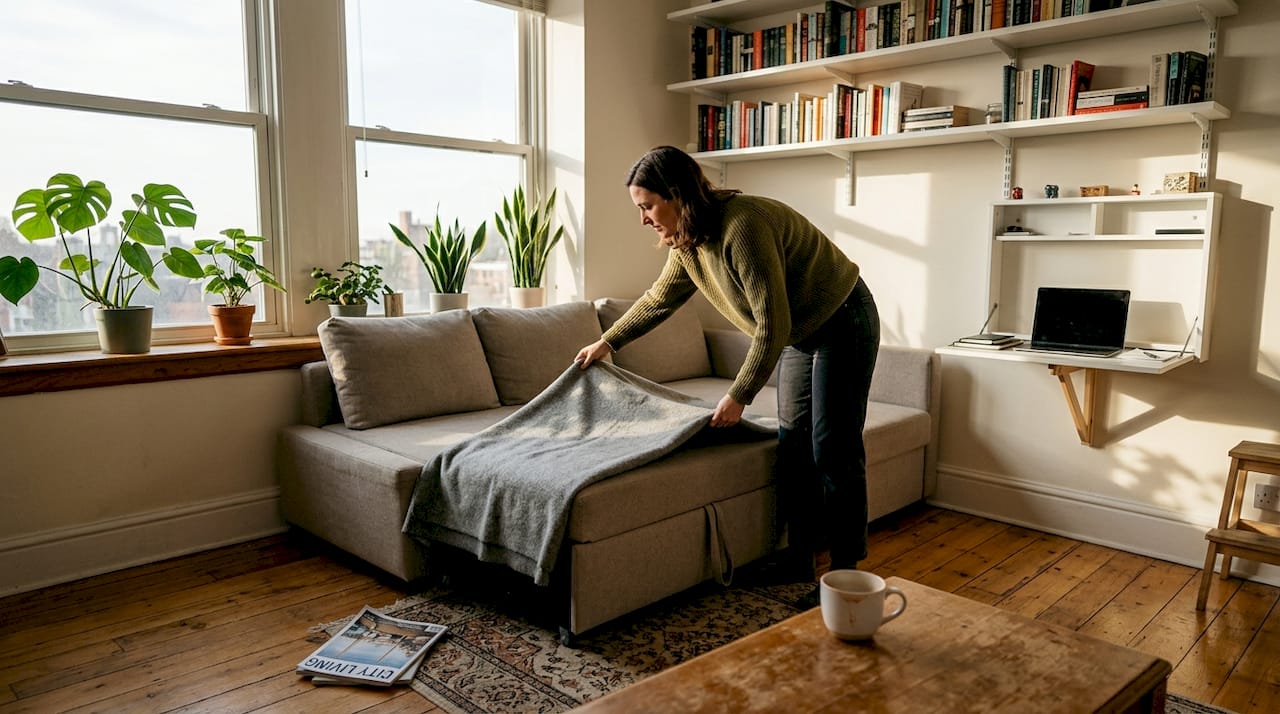
The best furniture for small spaces includes lift-up storage beds, fold-down wall desks, storage ottomans, and sofa beds. Each of these serves at least two purposes simultaneously, which is the key principle: every piece of furniture should earn its floor space.
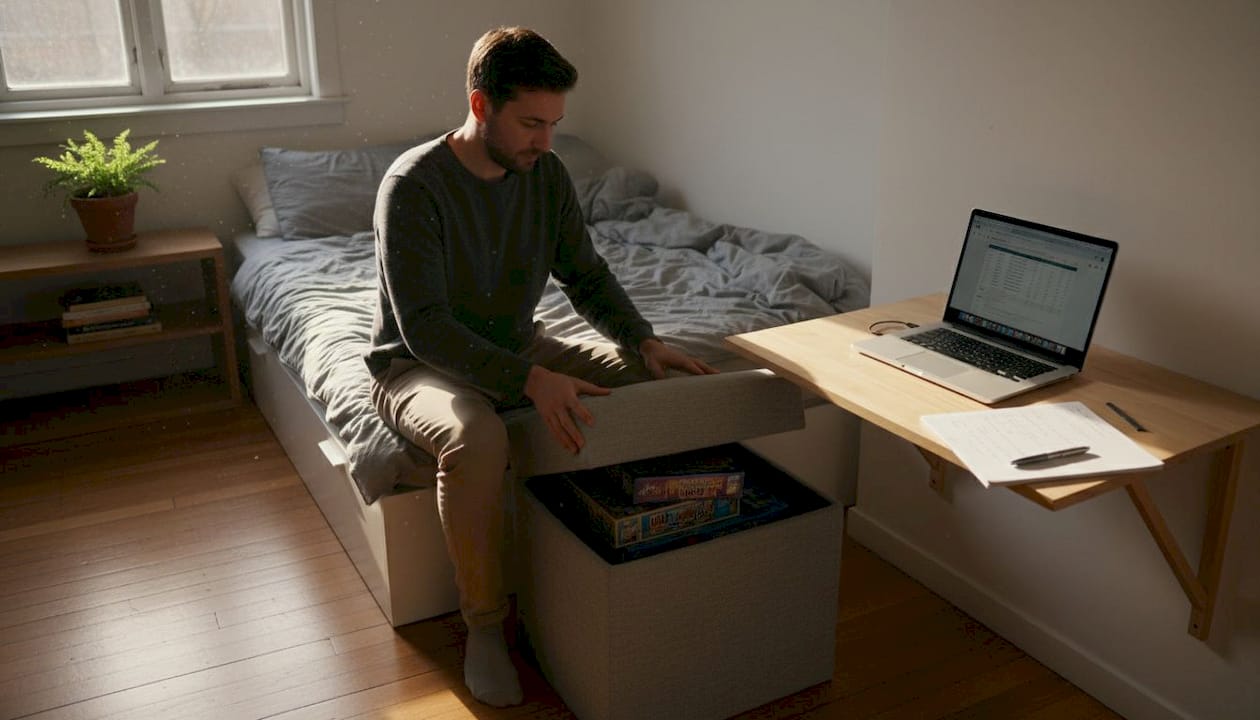
Here is a quick comparison to help you decide which pieces suit your home:
| Furniture piece | Primary use | Secondary use | Best for |
|---|---|---|---|
| Lift-up storage bed | Sleeping | Storing bedding, clothes | Bedrooms with no wardrobe |
| Storage ottoman | Seating | Storing blankets, toys | Living rooms, bedrooms |
| Fold-down wall desk | Work surface | Flat wall panel when closed | Home offices, studios |
| Sofa bed | Seating | Guest sleeping | Open-plan flats |
A few practical points worth noting:
- Lift-up beds offer a surprising amount of hidden storage but require clear floor space to open. Measure carefully before buying.
- Ottomans are the most versatile option. They work as a coffee table, extra seating, and a storage unit all at once.
- Fold-down desks are ideal for renters because most mount with minimal fixings and leave almost no trace when removed.
- Sofa beds vary enormously in quality. Spend a little more here, as a poor-quality mattress will discourage guests and make the sofa itself uncomfortable.
For inspiration on how these pieces integrate into a broader decorating plan, the stylish storage guide and creative storage ideas both offer excellent visual examples. You can also browse modern storage examples to see how real homes have applied these principles.
Pro Tip: When choosing multifunctional furniture, always prioritise the primary function. A sofa bed that is uncomfortable as a sofa will frustrate you every day, not just on guest nights.
Design tricks: Creating the illusion of more space
With practical furniture choices in place, smart design tweaks amplify the feeling of space even further. The good news is that most of these changes cost very little and can be reversed easily, which makes them perfect for renters.
Several
- Mirrors: A large mirror on a wall opposite a window bounces natural light around the room and creates the impression of depth. Even a cluster of smaller mirrors achieves a similar effect.
- Light colours: Pale walls, especially whites and soft greys, reflect light rather than absorbing it. Dark colours can be beautiful but make rooms feel smaller and more enclosed.
- Leggy furniture: Sofas, chairs, and tables raised on visible legs allow light to pass underneath, which makes the floor look larger and the room feel airier.
- High-placed curtains: Hanging curtains as close to the ceiling as possible, rather than just above the window frame, draws the eye upward and makes ceilings feel taller.
Here is a simple overview of the visual impact each trick delivers:
| Design trick | Visual effect | Effort level | Cost |
|---|---|---|---|
| Large mirror | Adds depth and light | Low | Medium |
| Light wall colour | Brightens and opens | Medium | Low |
| Leggy furniture | Expands floor visually | Low | Varies |
| High curtains | Raises perceived ceiling | Low | Low |
“The most powerful design tools in a small room are light and line. Control where the eye travels and you control how large the room feels.”
For more ideas on making the most of compact rooms, the decorative solutions and practical small space tips guides cover additional techniques worth exploring.
Long-term success: Maintenance routines and expert tips
A lasting space-saving home requires habits. Here is how to keep your efforts effective and low-stress in the long run, because the most beautifully organised room will descend back into chaos without a consistent approach.
Three core routines make the biggest difference:
- The 15-minute daily tidy: Set a timer and return everything to its designated place. This daily routine prevents small messes from compounding into overwhelming ones.
- The monthly donation cycle: Once a month, do a quick pass through your home and identify items that have not been used. Bag them up and donate or dispose of them before the end of the week.
- The finite space rule: Every category of belonging, whether books, clothes, or kitchen gadgets, has a designated space. When that space is full, a new item can only come in if an existing one goes out.
Research from UCLA shows that decluttering improves decision-making capacity and sleep quality, two benefits that make the effort well worth sustaining. Some people, particularly those who are neurodiverse or managing busy family homes, find that visible organisation works better than hidden storage. Clear boxes, open shelving with labels, and colour-coded zones reduce the mental effort of finding things and putting them back.
For families with children, involve them in the monthly cycle from an early age. When tidying becomes a shared habit rather than a parental chore, it sticks far more reliably.
Pro Tip: Use the step-by-step storage guide to map out zones in each room before you begin maintaining them. Knowing exactly where everything belongs makes the daily tidy genuinely quick.
“Organisation is not a personality trait. It is a system. Build the right system and tidiness becomes the path of least resistance.”
A fresh perspective on stylish space-saving
Here is something most home organisation content will not tell you: buying more storage is almost never the answer. The instinct when a home feels cluttered is to head to a shop and return with baskets, boxes, and drawer dividers. This feels productive. It rarely solves the problem, because it skips the foundational step of deciding what actually deserves space in your home.
The checklist above works precisely because it starts with subtraction before addition. Declutter first, then choose furniture that earns its place, then use design to make the most of what you have. That sequence matters enormously.
Style and function are not in conflict, but they do require honest self-assessment. A beautifully photographed fold-down desk is useless if your working style requires spreading papers across a large surface. A lift-up bed is a poor choice if you cannot commit to making the bed every morning, because the storage becomes inaccessible. Understanding the real impact of storage solutions on daily life helps you choose what will genuinely work for your household rather than what looks appealing in a photo.
The most effective space-saving homes are not the most minimal ones. They are the ones where every solution has been chosen to match the real habits and needs of the people who live there.
Find your next stylish space-saver with Homable
If this checklist has sparked ideas, the next step is finding products that bring those ideas to life without compromising on style or quality.
At Homable, every product is chosen with both function and aesthetics in mind, which means you will not have to choose between a room that works and a room that looks beautiful. Whether you are looking for a soft, non-slip bath rug set to add warmth and practicality to a compact bathroom, or a handcrafted woollen rug to anchor a living area and define zones visually, the collection has been curated to support exactly the kind of thoughtful, stylish home this checklist describes. Free shipping on orders over £100 makes it even easier to get started.
Frequently asked questions
What is the most effective first step for saving space at home?
Decluttering using a clear method, such as the 90/90 rule or 4-Box Method, ensures you only keep what you genuinely use and love, which makes every subsequent step far more effective.
Which furniture pieces are best for small spaces?
Lift-up storage beds, ottomans, fold-down desks, and sofa beds are the strongest choices because each one serves at least two functions, maximising the value of every square metre.
How can I make a small room feel bigger without renovating?
Mirrors, light wall colours, leggy furniture, and curtains hung close to the ceiling all create the illusion of a larger, brighter room without touching a single wall.
How do I keep spaces tidy long term?
A 15-minute daily tidy combined with a monthly donation cycle prevents clutter from creeping back, especially when paired with the finite space rule for every category of belonging.