Cart
0
TL;DR:
- Japandi combines Japanese wabi-sabi and Scandinavian hygge to create calming, intentional home spaces.
- It emphasizes natural materials, muted earthy tones, layered textures, and negative space for serenity.
- The style promotes mental well-being, sustainability, and timeless design adaptable to various home sizes.
Most people assume Japandi is simply a portmanteau trend, a quick marketing label slapped onto rooms with wooden furniture and neutral walls. In reality, it is a deeply considered design philosophy shaped by centuries of cultural exchange and two distinct worldviews about how we should live at home. Japandi’s roots trace back) to the 19th century, when Scandinavian designers first encountered Japanese aesthetics after Japan opened its borders to the world. What emerged was not a copy of either tradition but something quietly revolutionary. This guide unpacks the origins, the defining principles, and the practical steps you need to bring genuine Japandi harmony into your own home.
Table of Contents
- How Japandi design emerged: Roots and philosophy
- Core elements of Japandi interiors: Materials, palettes, and space
- Benefits of Japandi style for modern homes
- How to create a Japandi-inspired space at home
- Why Japandi is more than a fleeting trend
- Bring Japandi-inspired elegance to your home
- Frequently asked questions
Key Takeaways
| Point | Details |
|---|---|
| Japandi blends cultures | Japandi design unites Japanese minimalism with Scandinavian function for a uniquely calming style. |
| Natural materials are key | Woods, stone, and soft fabrics define the tactile feel of Japandi spaces. |
| Simplicity creates harmony | Clear lines, neutral tones, and purposeful décor help build a serene home. |
| Adaptable for any space | Japandi works as well in compact flats as in spacious homes, making it widely accessible. |
How Japandi design emerged: Roots and philosophy
The story of Japandi begins long before Instagram mood boards and interior design blogs made it a household term. When Japan ended its period of isolation in the mid-1800s, European designers, particularly those from Scandinavia, were captivated by the country’s approach to craft, simplicity, and the beauty found in imperfection. Both cultures, though geographically distant, shared a quiet reverence for nature, honest materials, and the idea that everyday objects could carry meaning.
This cultural dialogue simmered for well over a century before the term ‘Japandi’ gained mainstream traction. The term emerged around 2016), coinciding with a broader shift in how people were thinking about their homes. Fast living, digital overload, and disposable interiors had left many homeowners craving something more grounded. Japandi offered exactly that.
Two philosophical concepts sit at the heart of the style. From Japan comes wabi-sabi, the acceptance of imperfection and transience. A handmade ceramic bowl with an uneven rim is not flawed; it is honest. From Scandinavia comes hygge (pronounced hoo-gah), the Danish and Norwegian concept of cosiness, warmth, and the simple pleasure of being comfortable at home. Together, these philosophies create a space that feels both serene and genuinely liveable.
Understanding how Japandi differs from its parent styles is essential. It is not purely Scandinavian, which can lean towards brighter whites and bolder graphic patterns. Nor is it purely Japanese, which often tends towards even greater restraint and formality. Japandi sits in a considered middle ground.
| Feature | Scandinavian design | Japanese design | Japandi design |
|---|---|---|---|
| Colour palette | Bright whites, light greys | Deep indigos, stark whites | Warm neutrals, earthy tones |
| Key philosophy | Functionality and cosiness | Wabi-sabi and simplicity | Both combined |
| Texture | Minimal layering | Very restrained | Layered but curated |
| Greenery | Occasional | Rarely used | Integral to the space |
| Mood | Cheerful and bright | Meditative and still | Calm yet warm |
“Japandi is not about copying two cultures. It is about finding the values they already share and letting those values shape a home.”
If you are curious about how Japandi fits within modern design trends, you will find it sits at the intersection of several movements that prioritise meaning over novelty. It also connects directly to the styling trends for 2026, where intentional living and natural materials continue to dominate.
Core elements of Japandi interiors: Materials, palettes, and space
Step inside a well-executed Japandi room and you will notice it before you can name it. There is a stillness to the space, a sense that every object belongs exactly where it is. That feeling does not happen by accident. It is the result of deliberate choices about materials, colour, and the use of negative space.
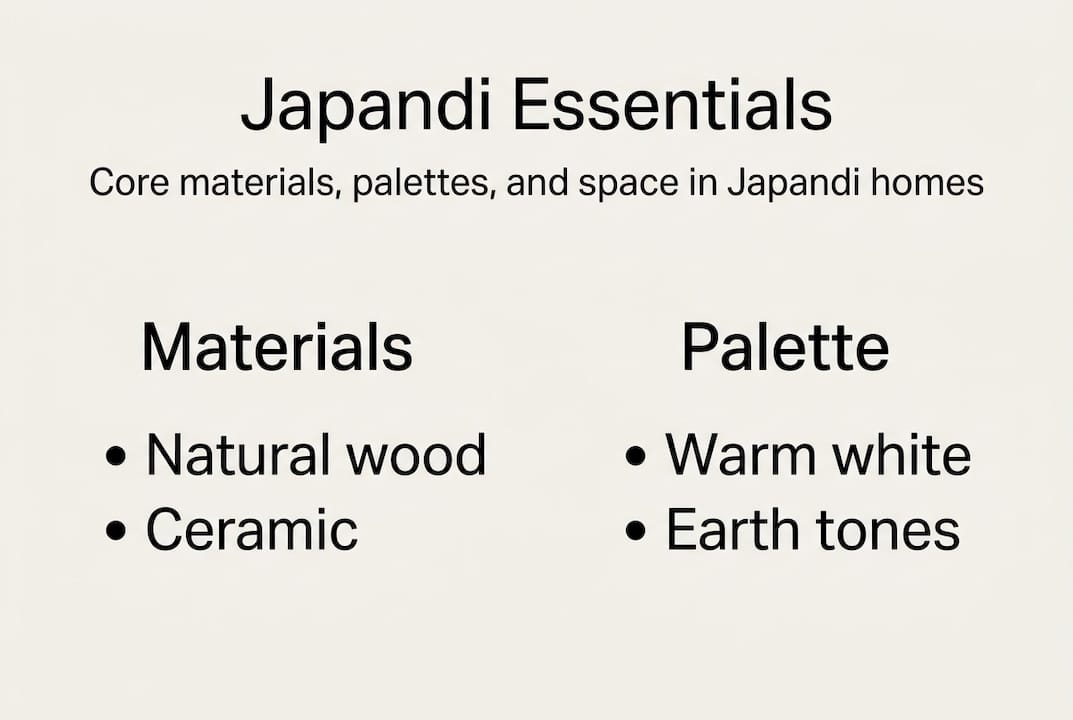
The Japandi style prioritises natural materials) and muted tones drawn from both Japanese and Scandinavian traditions. The most common materials you will encounter include:
- Wood: Light oak, ash, and walnut are favourites. Grain and texture are celebrated rather than hidden beneath paint or lacquer.
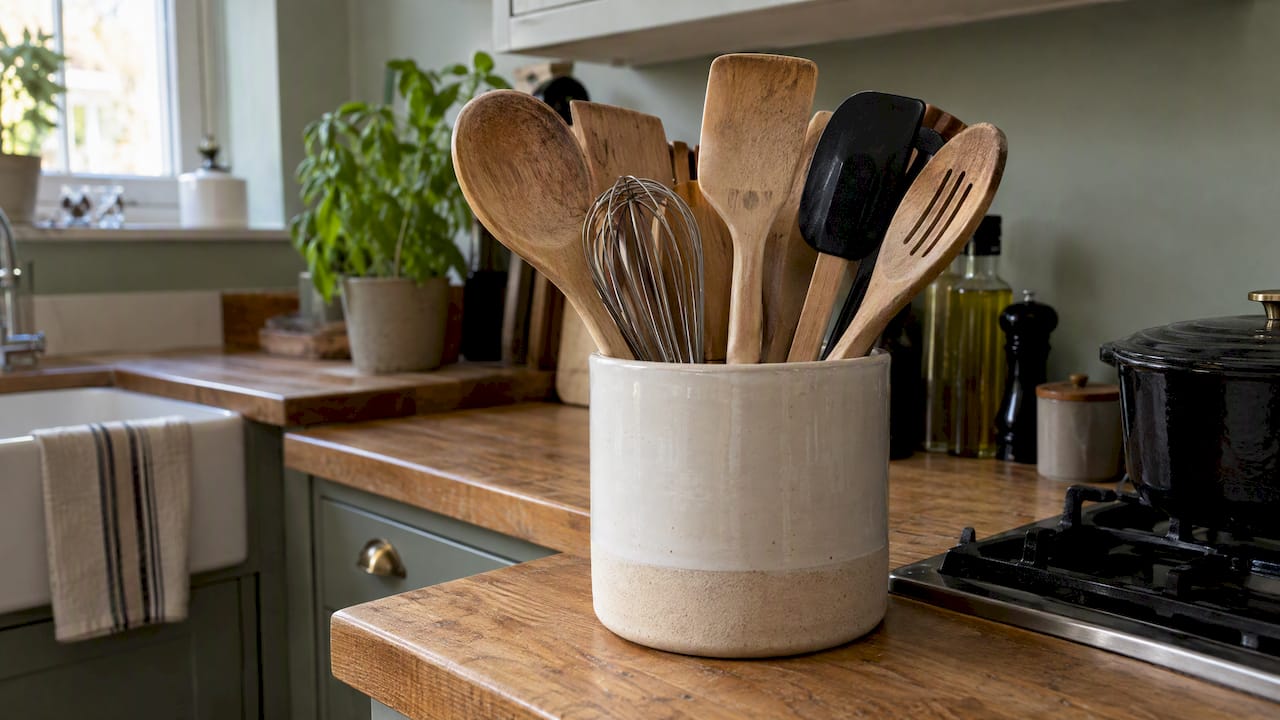
- Ceramics: Handmade, slightly irregular pieces in earthy tones. Think matte-glazed vases and textured bowls rather than glossy, mass-produced items.
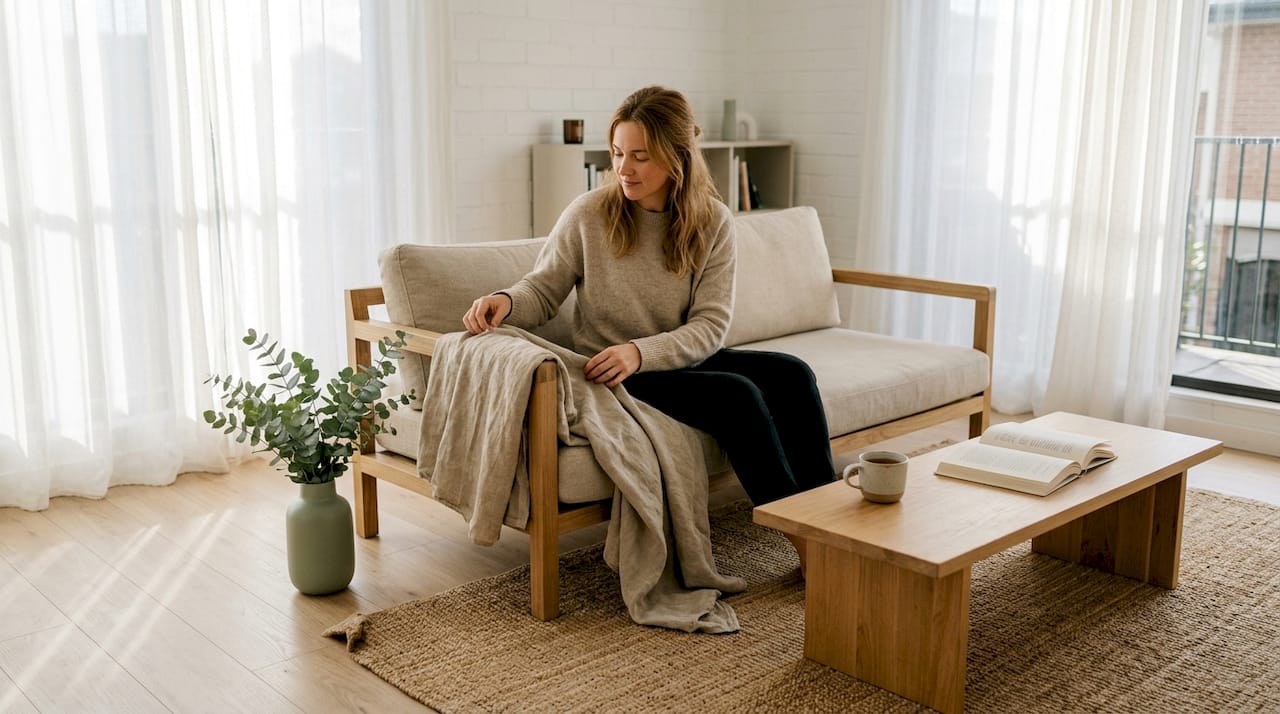
- Natural textiles: Linen, cotton, and wool in undyed or lightly toned shades. Throws and cushions add warmth without visual noise.
- Stone and concrete: Used sparingly for surfaces or decorative accents, adding a grounded, mineral quality to the space.
- Rattan and bamboo: Occasional woven elements that bring organic texture and a nod to Japanese craft traditions.
Colour is where many people stumble when attempting Japandi. The palette is intentionally restrained, but it is not cold or clinical.
| Colour | Emotion it creates | Best used for |
|---|---|---|
| Warm white | Openness and calm | Walls and ceilings |
| Soft taupe | Groundedness | Soft furnishings and rugs |
| Sage green | Connection to nature | Cushions and ceramics |
| Charcoal | Depth and contrast | Furniture legs and frames |
| Warm sand | Comfort and ease | Flooring and throws |
Understanding how to use these shades effectively is much easier when you explore transforming with colour schemes and the principles behind colour psychology for homes. Colour in Japandi is never arbitrary; each shade is chosen for the feeling it creates rather than its visual impact alone.
Space itself is a material in Japandi design. Negative space, the empty areas around and between objects, is as important as the objects themselves. Crowding a shelf or filling every corner removes the sense of calm that makes Japandi so appealing.
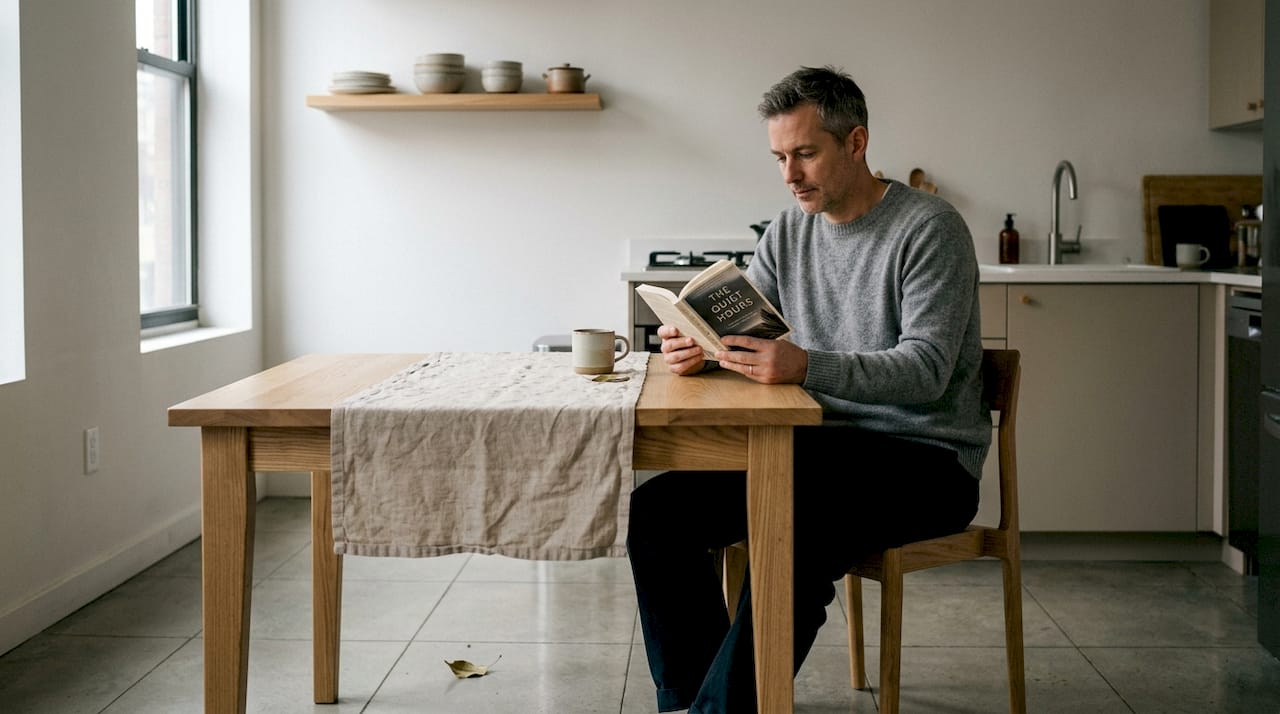
Pro Tip: Layer two or three different textures in the same tonal family rather than introducing new colours. A linen cushion on a wool throw on a wooden bench creates richness without clutter.
Benefits of Japandi style for modern homes
Japandi’s appeal is not purely visual. The style addresses something many homeowners feel but struggle to articulate: the exhaustion of living in spaces that demand attention rather than offer rest.
Japandi’s global popularity rose swiftly after 2016) as people sought calmer, more functional interiors in response to increasingly fast-paced daily lives. The benefits span the psychological, the practical, and the environmental.
Mental wellbeing: A decluttered, visually quiet space reduces cognitive load. When your eyes are not constantly processing competing colours, patterns, and objects, your mind settles more easily. Many people report feeling genuinely calmer in Japandi-inspired rooms, not just aesthetically pleased.
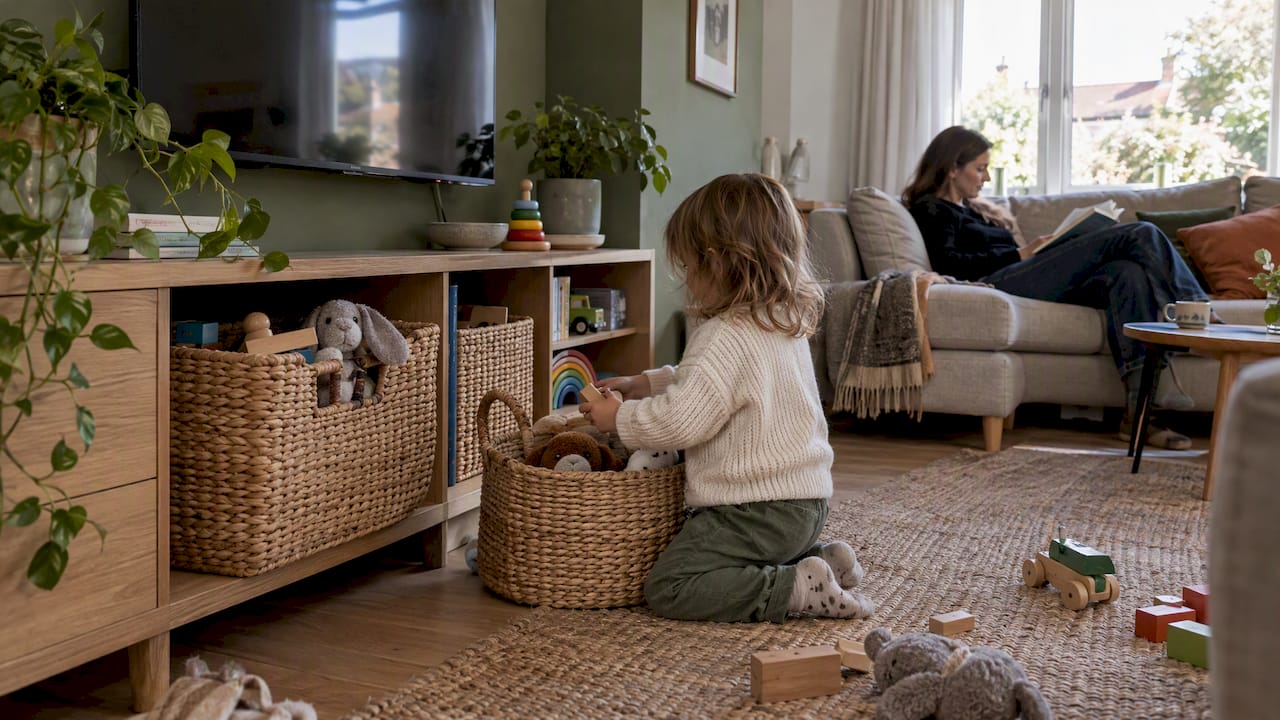
Flexibility across home sizes: Unlike design styles that require large, open-plan spaces to work, Japandi is equally effective in a compact flat. Its emphasis on function and the elimination of unnecessary items means even a small bedroom or living room can feel considered and spacious. You can explore bedroom styling tips to see how these principles translate to one of the most personal rooms in your home.
Sustainability: Japandi’s preference for natural, durable materials and its rejection of disposable trends aligns well with a more sustainable approach to consumption. Buying one well-made wooden stool that lasts twenty years is fundamentally more Japandi than replacing cheap furniture every few seasons.
Timelessness: Because Japandi is rooted in philosophy rather than fashion, it does not date in the way that trend-led styles do. A room designed around wabi-sabi and hygge will feel as relevant in a decade as it does today.
Here are the core benefits at a glance:
- Reduces visual stress and promotes calm
- Works in both small and large spaces
- Encourages sustainable, considered purchasing
- Ages gracefully without needing constant updates
- Suits a wide range of budgets and existing furniture
Pro Tip: When choosing furniture, prioritise pieces that serve more than one purpose. A storage bench at the foot of a bed, or a side table with a lower shelf, keeps the space functional without adding visual weight. For further inspiration on accessory styling for modern spaces, the principles of Japandi translate directly.
The role of colour in modern homes is also worth revisiting through a Japandi lens. Colour here is not decoration; it is atmosphere.
How to create a Japandi-inspired space at home
As Japandi requires thoughtful curation) rather than a superficial mix of two aesthetics, the process of creating it is as important as the end result. Rushing in with a trolley full of bamboo accessories and grey paint will not achieve it. Here is a grounded, step-by-step approach.
- Declutter first, decorate second. Before you buy a single new item, remove what does not serve a purpose or bring genuine calm. Japandi spaces are not sparse for the sake of it; they are curated. Every object earns its place.
- Choose your base colours. Work from the palette above: warm whites, soft taupes, and earthy neutrals. Paint walls first and let the room breathe before adding furniture.
- Select key furniture pieces. Focus on low-profile, natural wood furniture with clean lines. Avoid ornate detailing or glossy finishes. The grain of the wood should be visible and celebrated.
- Layer textures gradually. Add a linen cushion, a wool rug, a ceramic vase. Introduce each element one at a time and assess whether it adds to or detracts from the calm.
- Bring in natural elements. A single potted plant, a branch in a simple vase, or a smooth stone on a shelf connects the room to the natural world without overwhelming it.
- Refine your lighting. Warm, low lighting is essential. Avoid harsh overhead bulbs. Paper lanterns, wooden lamp bases, and candles all suit the Japandi mood perfectly.
Common mistakes to avoid include using colours that are too bold or saturated, overcrowding surfaces with accessories, and mixing too many different wood tones. Japandi is not about restriction; it is about intention.
Pro Tip: Start with just one room rather than attempting to transform your entire home at once. A single Japandi bedroom or living room corner will teach you more about the style than any amount of reading, and you will make fewer costly mistakes.
For practical guidance on stylish home accessories tips and a broader modern home styling guide, both resources offer excellent support as you begin your Japandi journey.
Why Japandi is more than a fleeting trend
Most design trends arrive with a burst of enthusiasm and fade when the next wave arrives. Japandi is different, and not simply because it looks good in photographs. It endures because it is built on principles that address something real in how people want to feel at home.
We live in an era of constant stimulation. Notifications, news cycles, and social media compete for attention at every moment. The home has become one of the last places where people can genuinely choose their environment. Japandi, with its emphasis on slow living and intentional choices, gives people a framework for making that environment restorative rather than exhausting.
What most guides overlook is that Japandi is not a fixed aesthetic destination. It is a way of thinking about your space that evolves with you. A room does not need to look like a design magazine spread to be genuinely Japandi. It needs to feel considered, calm, and honest. That is a standard any home can meet, regardless of size or budget.
The role of colour in design is one small part of a much larger picture. The real value of Japandi lies in how it changes the relationship between you and your home, shifting it from a backdrop to an active source of comfort and clarity.
Bring Japandi-inspired elegance to your home
Once you understand what Japandi truly stands for, finding the right pieces becomes far more straightforward. You are not hunting for a particular look; you are choosing objects that are honest, beautiful, and purposeful.
At Homable, we have curated a range of home accessories that sit naturally within the Japandi philosophy. From tactile ceramics to warm-toned decorative accents, each piece is chosen with the same care you bring to your own space. The Decorative Silver Flower Candle Holder is a perfect example: understated, elegant, and designed to add warmth without noise. With free shipping on orders over £100 and a broad selection of considered home accessories, Homable makes it easy to take your Japandi vision from inspiration to reality.
Frequently asked questions
Which colours best suit Japandi interiors?
Japandi interiors favour muted hues such as soft greys, taupes, warm whites, and earthy shades for a calming atmosphere. The Japandi palette) draws from both Japanese and Scandinavian traditions, prioritising tones that feel grounded rather than stark.
What materials are essential for Japandi design?
Use natural wood, stone, ceramic, and linen to achieve the tactile and organic feel at the heart of Japandi style. These natural materials) are chosen for their honesty and their ability to age beautifully over time.
Is Japandi suitable for small homes or flats?
Yes, Japandi works exceptionally well in compact spaces thanks to its focus on function, minimalism, and clever use of light. Its principles of calm) and intentional curation are actually easier to achieve in a smaller room where every choice carries more weight.
How is Japandi different from Scandinavian design?
Though closely related, Japandi blends the warmth and utility of Scandinavian style with the wabi-sabi calm and simplicity of Japanese interiors. The result is distinctly its own) aesthetic that feels warmer than pure Japanese design and more meditative than classic Scandi.