Cart
0
TL;DR:
- Prioritize high-impact areas such as lighting, textiles, and window treatments to create a cohesive and polished look on a budget.
- DIY projects and thrift shopping can enhance decor with volume and finish, making items appear more expensive than they are.
- Focusing on purposeful placement, textured textiles, and limiting decorative clutter results in a styled home that feels deliberate and sophisticated without overspending.
You want your home to look like it was styled with purpose and money. It wasn’t. That tension between how a space looks and what it cost to get there is something almost every household deals with, and the good news is that the gap between expensive and affordable decor ideas is far smaller than most people realise. The right choices, made in the right order, can make a rented flat or a family home feel genuinely polished without a significant outlay. This guide covers what to prioritise, what to skip, and how to pull it all together.
Table of Contents
- Key takeaways
- 1. Prioritise high-impact areas for affordable decor upgrades
- 2. DIY and thrift-based decor that looks genuinely expensive
- 3. Affordable kitchen decor refreshes for a weekend makeover
- 4. Common decor mistakes that cheapen a budget look
- 5. Textiles and purposeful placement
- My perspective on decorating well without overspending
- Style your home with Homable’s curated decor range
- FAQ
Key takeaways
| Point | Details |
|---|---|
| Prioritise visual anchors | Spend your budget on lighting, rugs, and curtains before buying small decorative pieces. |
| Layer, don’t accumulate | Group decor in sets of two or three with consistent colours and varied heights for a curated feel. |
| Avoid cheap-looking staples | Plastic frames, vertical blinds, and excessive wall decals undermine an otherwise stylish room. |
| DIY with volume in mind | Budget floral and mirror projects succeed when they prioritise fullness and finish over base materials. |
| Kitchen upgrades pay off fast | Small weekend changes like new hardware and a painted island create outsized visual impact. |
1. Prioritise high-impact areas for affordable decor upgrades
Before you spend a single pound on ornaments or accessories, you need to know where your money does the most work. The answer, consistently, is in the things your eye travels to first: light sources, floor coverings, and window treatments.
Lighting and textiles affect perceived cohesion and scale far more than a shelf of small decorative items ever will. Swapping harsh overhead bulbs for warm white LED options in the 2700K to 3000K range costs less than £20 and shifts the entire mood of a room. Add a floor lamp or a table lamp in a corner that currently goes dark in the evenings, and you have something that feels considered rather than accidental.
Curtains are one of the most underestimated budget tools available. Hang them close to the ceiling and extend the rail well past the window frame on both sides. This makes ceilings feel taller and windows feel larger, without buying anything expensive. Opt for plain linen-look fabrics in neutral tones. They read as far more costly than they are.
A rug, sized correctly, anchors a seating area and signals intention. Too small and the room looks unfinished. Appropriately sized rugs in the £100 to £200 range consistently outperform ten smaller purchases at the same combined cost.
- Swap all bulbs to warm white LED (2700K to 3000K) throughout
- Hang curtains high and wide, regardless of actual window size
- Choose a rug that fits at least the front legs of all seating
- Add throws and textured cushions in two or three tones
Pro Tip: Spend 70% of your decor budget on these four categories before buying anything else. What remains will feel intentional rather than cluttered.
2. DIY and thrift-based decor that looks genuinely expensive
The gap between a high-street centrepiece and a handmade one comes down to two things: volume and finish. Layering a full base of greenery before adding focal elements is what separates a professional-looking arrangement from one that looks sparse and homemade.
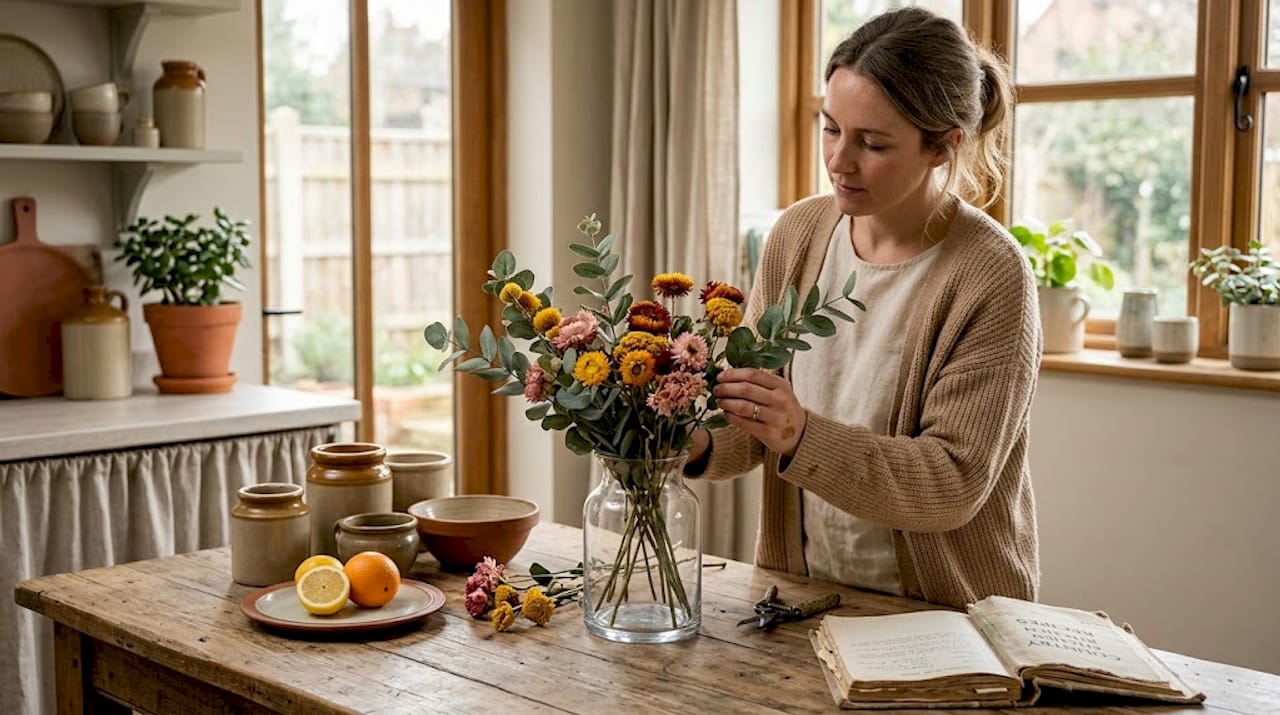
A spring or year-round floral centrepiece using budget craft shop or market florals, built on a base of faux foliage and finished with a few taller stems, can take under an hour and cost under £20. The key is not to stop too early. Most people underestimate how full a centrepiece needs to be before it reads as intentional.
Mirrors are another category where DIY mirror projects using inexpensive bevelled pieces and simple adhesives can produce statement wall pieces and mirrored trays that look far above their price point. The finish matters. Use gold or brushed metallic paint rather than chrome or plastic-look alternatives.
When thrift shopping, look specifically for:
- Statement mirrors with interesting frames (easily repainted)
- Oversized art or framed prints (the frame is the value)
- Ceramic vases and decorative objects in neutral tones
- Solid wood candlesticks or bowls (strip and restain if needed)
- Glass vessels that work as vases or lanterns
The collected look you want comes from mixing thrifted and new pieces. If every item comes from a charity shop, the room often reads as such. But one thrifted mirror paired with new cushions and a bought plant creates personality without the tell-tale signs.
Pro Tip: Style surfaces by starting empty and adding back only what you need. Groups of two or three items with consistent colours and varied heights consistently look more expensive than surfaces filled at random.
3. Affordable kitchen decor refreshes for a weekend makeover
The kitchen is the room most people assume requires a major spend to improve. It rarely does. A handful of targeted changes over a weekend can shift the look entirely without touching a single unit.
- Cabinet hardware: Swapping out dated handles for brushed brass or matte black alternatives costs under £30 for most kitchens and has a disproportionate effect on the overall feel.
- Paint one thing boldly: A painted kitchen island or pantry door in a deep tone (navy, forest green, charcoal) draws the eye and creates a focal point that reads as a deliberate design choice.
- Light fitting: Even a modest pendant replacement above a dining table or island changes the character of the space. Affordable kitchen refreshes also include ceiling medallions fitted around existing lights for architectural interest at minimal cost.
- Window covering: Replace plastic venetian blinds with a simple Roman blind or café curtain. Fabric softens a kitchen immediately.
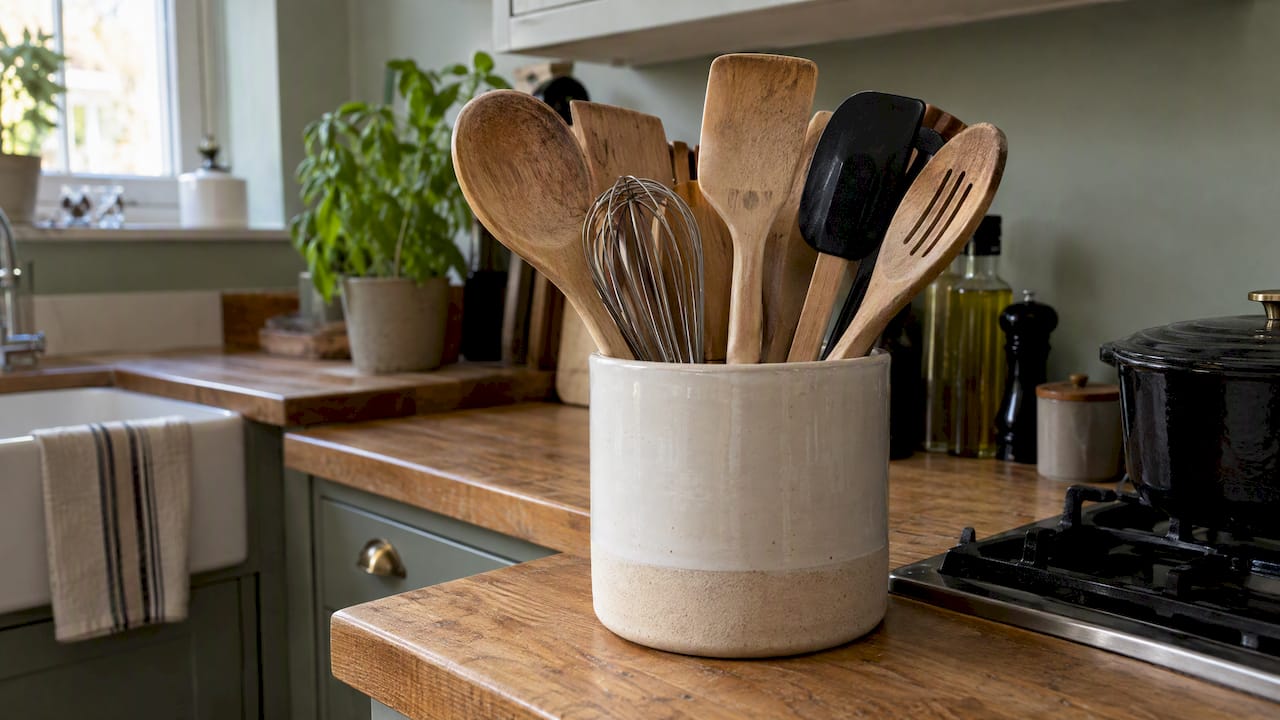
- Shelf styling: A row of matching storage jars, a wooden board leant against a tile splashback, and a small plant or herb pot creates a styled moment without any permanent changes.
- Bar stools: If your kitchen has an island or breakfast bar, seating with a simple silhouette in a natural material (rattan, wood) changes the room’s personality significantly.
The trick with kitchen decor is repetition. Pick one or two accent colours, then repeat them in your tea towels, a plant pot, the inside of a glass cabinet, and your blind. That repetition is what makes a kitchen look styled rather than assembled.
4. Common decor mistakes that cheapen a budget look
Knowing what not to do is often more valuable than any list of purchases. Cheap-looking decor staples are one of the most common reasons a well-intentioned room fails to land.
- Plastic picture frames: They catch light badly and signal low investment even when everything else in the room is considered. Spend a little more on wooden or metal frames, or find them secondhand.
- Vertical blinds: Few things date a room faster. Replace them with fabric panels, Roman blinds, or curtains at the earliest opportunity.
- Wall decals and quote art: Motivational quotes printed on canvas or applied as vinyl lettering rarely age well. They also compete with real focal points for attention.
- Excessive faux florals: One or two well-made faux stems in a good vase can work. A shelf of dusty plastic flowers does not. When in doubt, opt for a real trailing plant or simple dried stems.
- Overly themed rooms: A nautical bathroom or a travel-themed bedroom can work in moderation. When every item in the room references the theme, it tends to look novelty rather than designed.
- Oversized or cluttered gallery walls: A gallery wall works when it has breathing room. Too many pieces, too close together, with mismatched frames, reads as chaotic rather than curated.
Investing in your curtains and frames first, and scaling back everything else, is one of the most practical pieces of advice for decorating on a limited budget. These two elements draw the eye immediately and set the tone for how the rest of the room is perceived.
Window treatments and quality framing are the two categories where spending slightly more pays the clearest dividends. Everything else can be thrifted, DIYed, or bought cheaply without the same risk.
5. Textiles and purposeful placement
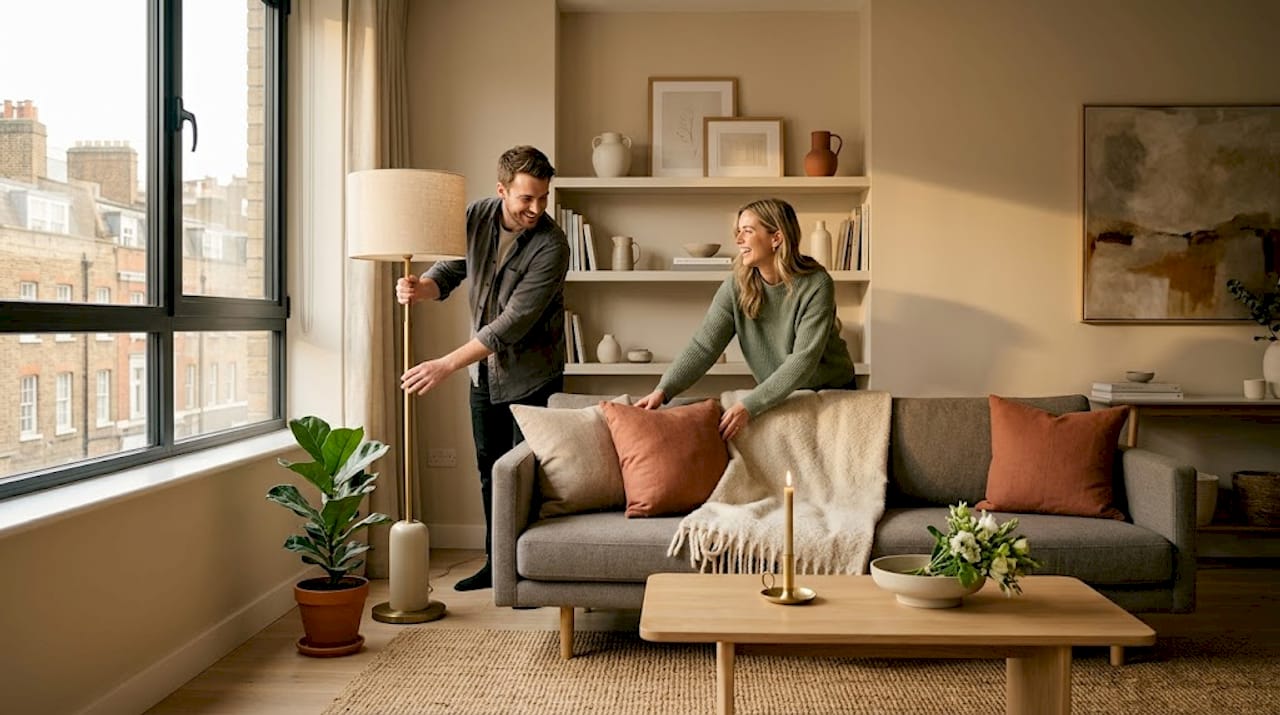
One of the most useful reframes for budget decorating is this: texture and placement matter more than price. A well-placed throw draped across a sofa corner, combined with two or three cushions in coordinating tones, changes how expensive the seating looks without buying the sofa.
The same principle applies to a coffee table. A small stack of books, a candle holder, and a single stem in a narrow vase create a moment that reads as styled. None of those items need to be costly. What matters is that they relate to each other in colour, scale, and material.
Linen, cotton, and wool textures all read as quality regardless of their actual price point. Synthetic velvet can also work well in the right context. What tends to undermine the look is very shiny, very stiff, or very thin fabric, even when the piece itself is attractive in isolation.
This approach to textiles and styling connects directly to the idea of affordable interior styling. When the surface-level choices are made with intention, the underlying cost becomes irrelevant to anyone looking at the room.
My perspective on decorating well without overspending
By Cristiano
I have seen a lot of rooms that spent money in the wrong direction. A beautiful vase on a shelf surrounded by mismatched frames and a vertical blind. A well-chosen sofa under a bare bulb on a plastic lampholder. The individual purchases were not wrong. The order and proportion were.
What I have learned, working with budget-conscious decorating for years, is that most people buy too many things too quickly. The instinct when a room feels flat is to add more. More cushions, more candles, more prints. What usually works better is to remove most of what is there, invest in one lighting upgrade and one textile layer, and then add back only what earns its place.
The other thing I genuinely believe, and which I think most decorating advice underplays, is how much a cohesive colour palette does for a room on a budget. You do not need expensive furniture when your cushions, throw, blind, and one or two accessories all share two or three tones. That repetition is what creates the sense that a room was designed rather than furnished.
DIY done with volume in mind can genuinely outshine expensive purchases. A full, layered floral arrangement on a dining table draws more admiration than a single expensive candle. But the version that does not work, the sparse, half-finished DIY, is worse than nothing. Commit to the volume and finish.
The rooms I return to as genuinely impressive on a small budget are always the ones that chose fewer, better things. Not cheaper things. Fewer things.
— Cristiano
Style your home with Homable’s curated decor range
Finding affordable decor ideas is one thing. Finding the actual products to bring them to life is another. At Homable, the focus is on pieces that work as visual anchors: rugs that ground a room, textiles that add warmth, and accessories that look far above their price point. The washable kitchen rug in coffee and black velvet is a good example. It is practical, easy to maintain, and adds the kind of texture and definition to a kitchen floor that transforms the whole space. For living areas, the Baluchi cannon pink woolen rug brings colour and character without the cost of a designer piece. Browse Homable’s full range and start with the visual anchors first.
FAQ
What are the best affordable decor ideas for renters?
Focus on reversible changes: warm LED bulbs, layered textiles, and an appropriately sized rug. These upgrades cost under £200 in total and require no permanent alterations to the property.
How do I make budget decor look expensive?
Group items in twos and threes with consistent colours and varied heights, and prioritise texture over quantity. Purposeful placement consistently outperforms buying more expensive individual pieces.
Which decor mistakes most cheapen a space?
Plastic picture frames, vertical blinds, and overcrowded gallery walls are among the most common culprits. Designers consistently highlight window treatments and quality frames as the two areas where a modest upgrade pays the clearest return.
Can DIY decor really look high-end on a tight budget?
Yes, provided you focus on volume and finish rather than the cost of materials. A layered floral centrepiece built on a full greenery base will read as expensive even when made entirely from budget craft supplies.
Where should I spend my decor budget first?
Start with lighting, curtains, and rugs before any small decorative items. These three categories shape how a room feels at a scale that no amount of shelf styling can match.