Cart
0
TL;DR:
- Stylish interiors can be achieved on a modest budget through intentional choices like lighting, textiles, and editing. Prioritizing cohesive color palettes, proper layering, and quality thrifted pieces enhances a space’s perceived value and style. Small upgrades such as warm LED bulbs, floor-to-ceiling curtains, and hardware swaps dramatically elevate the overall look without high costs.
Stylish interiors have never required a large budget. The gap between what you see in a beautifully decorated room and what it actually cost is often wider than you’d expect. These cost-effective decor tips are built around that reality: that intention, proportion, and a handful of well-placed choices do more for a room than a trolley full of new furniture. Whether you rent a flat or own a terrace house, you can achieve a genuinely polished look by rethinking how you shop, layer, and edit your space. Here’s exactly how to do it.
Table of Contents
- Key takeaways
- The criteria that make cost-effective decor actually work
- 1. Replace bulbs with 2700K warm white LEDs
- 2. Hang curtains floor to ceiling
- 3. Add real plants or quality faux greenery
- 4. Swap throw pillow covers seasonally
- 5. Create a gallery wall or hang an oversized mirror
- 6. Upgrade cabinet handles and light switch plates
- 7. Use rugs to anchor and layer
- How to shop smart for budget decor
- Common mistakes that make budget decor look cheap
- My honest take on decorating without overspending
- Refresh your space with Homable’s affordable decor collection
- FAQ
Key takeaways
| Point | Details |
|---|---|
| Lighting beats everything | Swapping bulbs to 2700K warm white LEDs is the single fastest ambience upgrade you can make. |
| Textiles offer the highest ROI | Curtains hung floor to ceiling and seasonal pillow cover swaps refresh a room without replacing anything structural. |
| Edit before you buy | Removing 30% of surface items makes spaces feel more expensive and polished before spending a penny. |
| Shop smart, not cheap | Thrift quality anchor pieces and buy new only for hardware, lighting, and paint. |
| Cohesion over quantity | A unified colour and material palette reads as expensive far more reliably than buying more things. |
The criteria that make cost-effective decor actually work
Before jumping into specific tactics, it helps to understand why some budget upgrades look thoughtful and others look cheap. The answer almost always comes down to the same handful of decisions.
Lighting warmth and layering sit at the top of the list. A single harsh overhead bulb will undermine even the most carefully chosen furniture. Layered lighting using floor lamps, table lamps, and warm bulbs alongside a ceiling fixture creates the kind of depth you associate with high-end interiors.
Textiles at the right scale are next. Curtains that fall from ceiling to floor, a throw draped with intention, and a rug large enough to anchor the seating area all signal that someone considered proportion rather than just filling space.
A coherent colour and material palette is where most budget decorating either succeeds or fails spectacularly. A unified visual language creates a 3x higher satisfaction outcome than rooms full of well-priced but mismatched pieces. Pick two or three colours and two or three materials, then stick to them throughout.
Here is what to prioritise before spending anything:
- Edit first. Walk through each room and remove anything that doesn’t belong in your chosen palette or that you genuinely don’t love.
- Audit your lighting. Count how many sources of warm light you have. If the answer is one, that’s your first fix.
- Check curtain length. If your curtains don’t reach the floor, they are actively shrinking the perceived height of your room.
- Assess furniture scale. Furniture that is too small for a room reads as undercommitted. It rarely reads as minimal.
- Identify one anchor piece per room. This is the item that sets the tone. Everything else should support it rather than compete with it.
Pro Tip: Before buying anything new, photograph each room on your phone. Viewing it through a lens removes the familiarity bias and shows you exactly what a visitor sees.
1. Replace bulbs with 2700K warm white LEDs
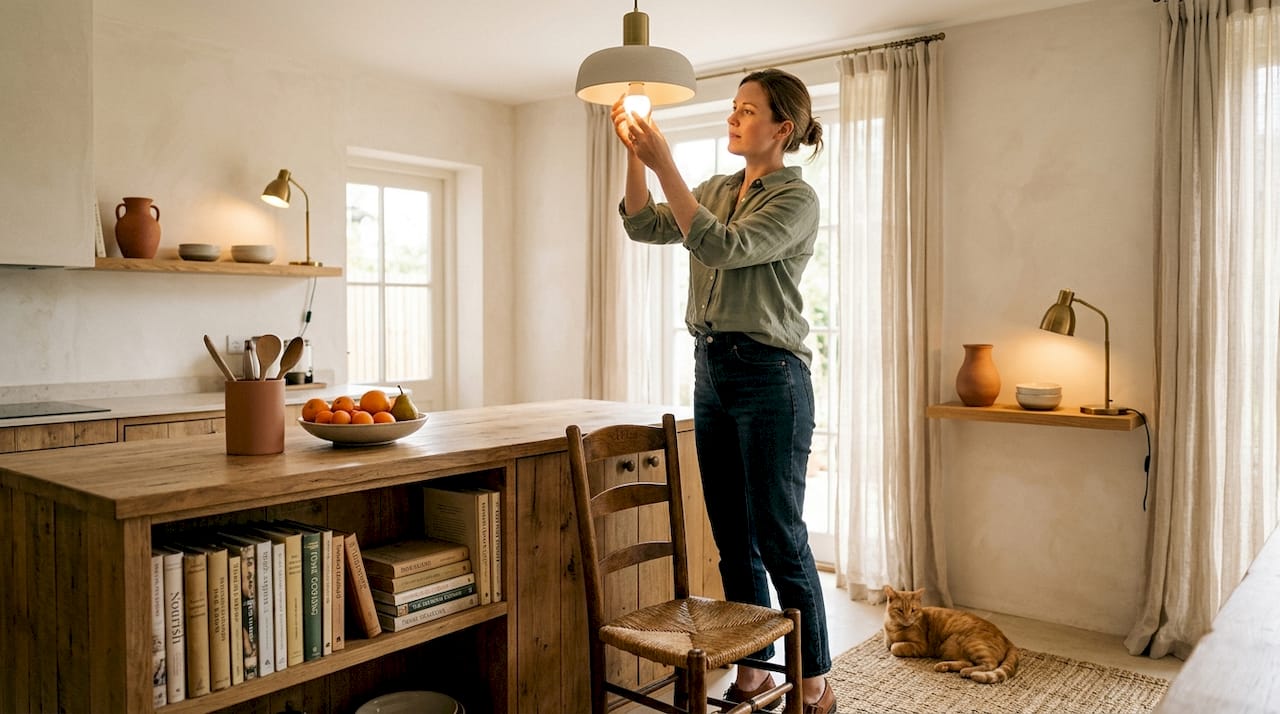
This is consistently the most underrated upgrade in affordable home decor strategies. Warm white bulbs and layered lighting transform the perceived quality of a room within minutes. Cool white or daylight bulbs flatten everything; warm white rounds it out and makes materials look richer. Replace every bulb in your main living areas with 2700K LEDs and pair them with at least one floor lamp or table lamp per room. The change is dramatic, the cost is minimal, and it works in any style of home.
2. Hang curtains floor to ceiling
Curtain placement is one of the most powerful cheap styling hacks available. Proper curtain length from ceiling to floor creates the illusion of height and makes windows look architecturally significant even in a rental with basic fixtures. Fix the curtain rod as close to the ceiling as possible and let the fabric graze the floor. Panels start at around £15 each. The cost is negligible; the visual impact is not.
3. Add real plants or quality faux greenery
Plants are one of the oldest thrifty decoration solutions for good reason. A well-placed fiddle-leaf fig or a trailing pothos on a shelf introduces organic texture, colour, and life that no printed cushion can replicate. Sensory layering through greenery, scent, and texture creates a cosy, considered atmosphere at very low cost. If you travel frequently or lack natural light, invest in quality faux stems rather than cheap plastic ones. The difference is immediately visible and worth the modest price difference.
4. Swap throw pillow covers seasonally
You don’t need new pillows. You need new covers. Throw pillow covers cost between £5 and £15 and can completely reset the colour story of a sofa or bed. Buy two or three sets in complementary tones and swap them when the seasons change or when you simply want a refresh. This is the easiest inexpensive room makeover tip that most people overlook because they think of decor as permanent rather than layered.
Pro Tip: When choosing pillow covers, pick one pattern and two plains that pull a colour from the pattern. It gives the arrangement structure without requiring any design training.
5. Create a gallery wall or hang an oversized mirror
Both of these work on the same principle: they give a blank wall purpose and scale. Oversized mirrors nearly double perceived room size and are consistently one of the highest-impact affordable home decor strategies. Thrifted mirrors repainted with spray paint in brass or matte black look far more expensive than their £18 origin suggests. Gallery walls, on the other hand, inject personality. Print artwork through budget online services, use secondhand frames in a unified colour, and you have a feature wall for under £40.
| Tactic | Approximate cost | Visual impact |
|---|---|---|
| Oversized thrifted mirror | £15 to £25 | Very high |
| Gallery wall with printed art | £25 to £45 | High |
| Floor-to-ceiling curtains | £30 to £60 | Very high |
| Warm LED bulb set | £10 to £20 | Very high |
| Seasonal pillow covers | £15 to £30 | Medium to high |
6. Upgrade cabinet handles and light switch plates
This is among the most underestimated of all cost-effective decor tips. Builder-grade hardware is almost universally beige, thin, and forgettable. Replacing cabinet handles with brass or matte black alternatives costs around £40 for a full set. Light switch plates in a matching finish cost as little as £2.50 each. Together they create the impression that the entire space has been professionally considered. This is the detail that interiors professionals notice first and that most homeowners address last.
7. Use rugs to anchor and layer
A rug that is too small floats in the middle of a room and makes everything around it look uncertain. The rule is simple: all front legs of the main seating should sit on the rug, or the entire seating group should sit on it. If a large rug is beyond budget right now, layer a smaller textured rug over a flatweave base. The layered rug look reads as intentional and adds warmth and dimension that a single rug rarely achieves on its own.
How to shop smart for budget decor
Knowing what to buy where is as valuable as knowing what to buy at all. The smartest affordable home decor strategies split your shopping into clear categories.
- Thrift for statements. Mirrors, art, occasional chairs, side tables, and decorative objects are all strong thrift candidates. The shape and scale matter more than the current finish, which you can always update.
- Buy new for hardware, bulbs, and paint. These items are low cost and the quality difference between budget and mid-range matters enormously. A cheap brush or low-coverage paint will cost you more time than it saves in money.
- Shop clearance and discount stores for textiles. Cushion covers, throws, and even curtains appear in clearance sections regularly. The quality is often identical to full-price stock.
- Allocate your budget by percentage. 60% on anchor furniture, 25% on secondary pieces, 15% on accents is the ratio that professionals use to avoid a room that looks randomly assembled.
- Build slowly and with intention. The collected look that you see in beautifully styled homes comes from patience, not a single shopping trip.
For most rooms, you can refresh three rooms for under £75 by focusing entirely on textiles and greenery over a single weekend. That figure alone reframes how transformative small changes can be.
Common mistakes that make budget decor look cheap
Even with a modest budget, these errors are the ones most likely to undermine your results.
- Buying cheap furniture instead of thrifting quality pieces. A £60 flat-pack side table almost always reads as exactly that. A £25 thrifted solid wood table reads as considered.
- Overfilling surfaces. Removing 30% of surface items is free and produces an immediate visual upgrade. More is not more in styling.
- Ignoring lighting entirely. Swapping a single bulb to warm white is a five-minute job. There is no easier win.
- Hanging curtains at window height. This is the single most common error in rented spaces and the easiest to fix.
- Mismatching metals throughout a space. Pick one or two metal finishes and repeat them in hardware, lighting, and accessories. Random metal mixing reads as unfinished.
- Skipping the editing stage. Professionals style surfaces with 3 to 5 curated objects. Clear your shelves and surfaces completely, then replace only what earns its place.
“The most expensive-looking rooms I’ve seen were often the most edited ones. They weren’t full. They were focused.”
My honest take on decorating without overspending
I’ve spent years looking at rooms that work and rooms that don’t, and the pattern is always the same. The ones that look expensive have restraint at their core.
What changed my own approach was learning to treat a coherent colour palette as a non-negotiable rather than a nice-to-have. I used to buy things I liked individually and wonder why rooms felt chaotic. Once I started committing to two neutrals and one accent colour per space, everything clicked into place without any additional spending.
The lighting swap genuinely surprised me the first time I did it. I replaced four bulbs in a living room and felt like the room had been repainted. It hadn’t. The furniture was identical. The warmth of 2700K warm LEDs does something to surfaces and textiles that I hadn’t fully appreciated until I experienced it.
Thrifting takes practice. The first few trips feel unproductive. But once you learn to look past the current finish and assess the bones of a piece, mirrors and side tables become genuinely exciting finds rather than compromises. A spray-painted frame that cost £12 can anchor a room as confidently as one that cost £200.
My most useful advice: edit before you buy anything. Removing clutter and reorganising what you already own will often reveal that the room has more potential than you thought. Most people skip this step and go straight to shopping. That’s how budget decor ends up looking busy rather than intentional.
Style is about knowing what to leave out as much as knowing what to put in. You don’t need more things. You need the right things, placed with care.
— Cristiano
Refresh your space with Homable’s affordable decor collection
If you’re ready to put these ideas into practice, Homable makes it straightforward to find the pieces that matter most.

Homable’s curated collection covers the items that deliver the highest return on investment for budget decorators: curtains, cushion covers, rugs, ornaments, and home accessories all chosen for their design quality and affordability. Whether you’re starting with a hardware swap or searching for the right throw to complete a living room, the range is built for people who want style without compromise. Free shipping on orders over £100 makes it even easier to build a considered look over time. Browse the full collection or explore Homable’s guides on affordable UK decor ideas to find your next starting point.
FAQ
What are the most cost-effective decor tips for renters?
The highest-impact changes for renters are lighting swaps, curtain placement, and throw pillow covers. None require permanent alterations and all three visibly transform a room within a single afternoon.
How much does an inexpensive room makeover typically cost?
You can refresh a room for as little as £30 to £75 by focusing on textiles, warm bulbs, and greenery. A weekend room refresh covering three rooms for under £75 is achievable with a clear plan.
What cheap styling hacks make the biggest visual difference?
Hanging curtains at ceiling height, replacing cabinet hardware, and adding an oversized mirror are the three cheap styling hacks that most consistently produce a high-end result at low cost.
How do I create a cohesive look on a budget?
Choose two neutral colours, one accent colour, and one or two metal finishes, then repeat them across every room. Cohesive design planning produces a far more satisfying result than buying individual pieces you simply like the look of.
Is thrifting better than buying cheap new furniture?
Yes. Quality thrifted pieces in solid materials almost always look better than budget flat-pack alternatives at the same price point. Assess the structure and scale of a piece rather than its current finish, which can nearly always be updated.