Cart
0
TL;DR:
- Thoughtful textile layering adds warmth, depth, and personality to interiors, transforming them from flat to inviting.
- Following principles like the 60-30-10 rule and subtracting excess ensures balanced, cohesive decor.
- Layering textiles enhances comfort, style, and adaptability across seasons, making rooms feel considered and alive.
Most people assume that layering textiles means piling things on until a room looks busy. That fear keeps perfectly good interiors feeling cold, flat, and unfinished. The truth is that understanding why layer textiles in decor matters changes everything. Done thoughtfully, layers of fabric in design create warmth, absorb sound, add personality, and produce the kind of room that photographs beautifully and feels even better in person. This guide gives you the practical frameworks and creative inspiration to do it with confidence.
Table of Contents
- Key takeaways
- Why layer textiles in decor: the core benefits
- Core principles for successful textile layering
- Creative techniques for layering textiles at home
- Common mistakes to avoid
- Seasonal and lifestyle layering
- My honest take on textile layering
- Layer with confidence using Homable
- FAQ
Key takeaways
| Point | Details |
|---|---|
| Layering creates visual depth | Mixing textures, patterns, and scales gives a room dimension that paint and furniture alone cannot achieve. |
| The 60-30-10 rule prevents chaos | Allocate 60% to a dominant textile, 30% to a secondary texture, and 10% to statement details for balance. |
| Subtract before you stop adding | After layering, remove one or two items to let each textile breathe and serve a clear purpose. |
| Seasons change, layers should too | Swapping throws and cushions is the most cost-effective way to keep your interiors fresh year-round. |
| Function and style work together | Textiles regulate temperature, absorb sound, and express personal style all at the same time. |
Why layer textiles in decor: the core benefits
The moment you start using textiles in decor intentionally, rather than decoratively, is the moment a room begins to feel genuinely designed. Layering adds depth, warmth, and personal character to spaces that would otherwise feel one-dimensional.
Here is what thoughtful textile layering actually delivers:
- Visual depth and dimension. A sofa draped in a wool throw alongside velvet cushions and a linen slipcover creates three distinct visual planes. Your eye travels across the space rather than landing on one flat surface.
- Thermal and tactile comfort. Thick rugs underfoot, layered throws on armchairs, and heavy curtains at windows all trap warmth. In a British home where temperatures shift dramatically, this is practical as much as it is stylish.
- Acoustic comfort. Cotton and wool fabrics naturally absorb sound, which is a significant advantage in open-plan homes where hard floors and minimal furniture create echo.
- Personal style expression. No two households layer textiles the same way. The choices you make, from a kilim rug to a heirloom quilt, tell the story of who lives in the space.
- Accessible sophistication. Textiles offer cost-effective mood shifts without major renovations. You do not need to repaint or remodel to transform a room. A new rug and two throws can do the work.
The importance of textile layers becomes most obvious when you strip them away. Remove every soft furnishing from a room and see what remains. Hard edges. Bare walls. Surfaces that bounce sound and light without warmth. Textiles are the layer between architecture and living.
Pro Tip: Start with one anchor textile, such as a large rug or a statement curtain, and build every other layer in relation to it. This gives your eye a resting point and prevents the room from feeling scattered.
Core principles for successful textile layering
Decorating with textiles without a framework produces exactly the clutter people fear. The good news is that professional designers follow a small set of principles that anyone can apply.
The 60-30-10 rule
This is the most reliable starting point for visual balance. 60% dominant fabric, 30% secondary texture, 10% statement details creates a curated look without uniformity. In practice, your dominant fabric might be a neutral linen sofa cover. Your secondary texture could be a printed cotton cushion collection. Your 10% might be a single velvet bolster or a metallic-thread throw.
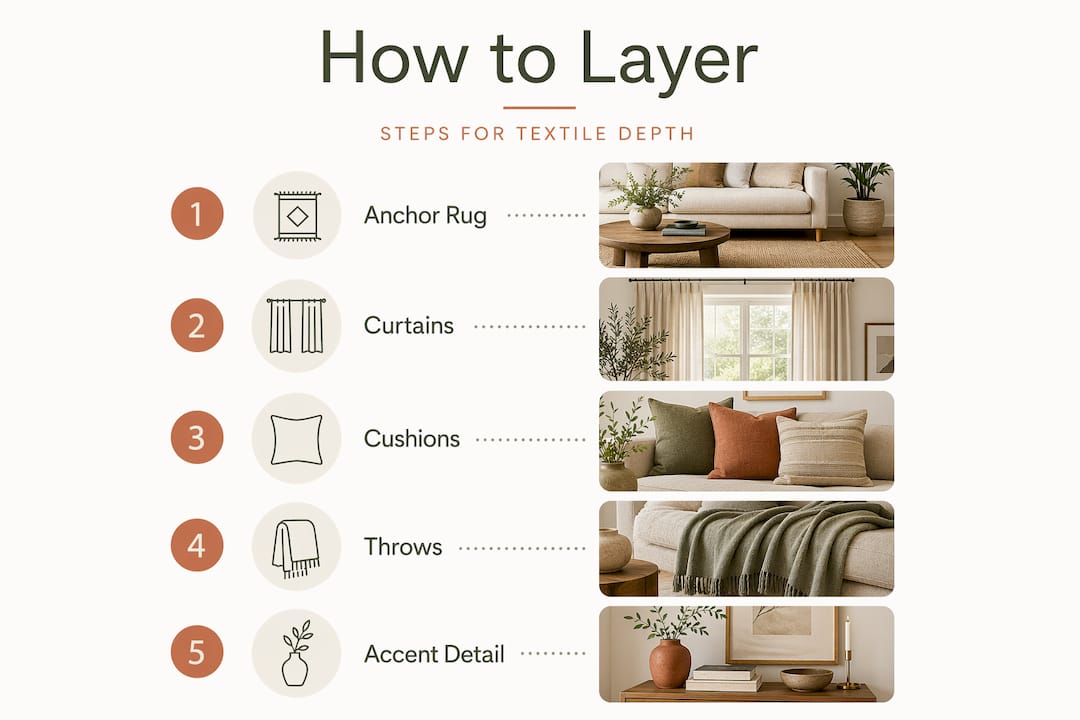
How to layer textiles step by step
- Choose your anchor piece. This is usually the largest textile in the room: a rug, a sofa fabric, or floor-length curtains.
- Select a secondary texture that contrasts in feel but complements in colour. Pair smooth with rough, matte with sheen, light with heavy.
- Introduce pattern at a different scale. If your rug has a large geometric print, your cushions should carry a smaller, more delicate motif.
- Add a statement detail. One item, whether metallic, embroidered, or in a bold accent colour, gives the eye somewhere to land.
- Subtract before you finish. Remove one or two items and assess. Designers finalise layering by removing elements until balance is achieved rather than adding more.
| Layering element | What it adds | Common mistake |
|---|---|---|
| Large rug | Grounds the space, defines zones | Choosing one too small for the furniture |
| Curtains | Adds height and softens light | Using a fabric weight that does not suit the room’s function |
| Throws and blankets | Warmth, texture, and casual elegance | Folding too neatly, which removes lived-in character |
| Cushions | Colour, pattern, and scale variety | Selecting all the same size, which flattens the arrangement |
| Framed textiles | Wall depth and tactile interest | Treating walls as an afterthought when textiles are considered |
Layering mirrors nature’s composition, breaking up light and creating organic warmth in much the same way that leaves, moss, and branches layer in a woodland scene. That instinctive comfort you feel in well-layered rooms is not accidental.
Pro Tip: When mixing patterns, stick to a consistent colour palette but vary the scale dramatically. A large abstract and a small geometric in the same three colours will always work together.
Creative techniques for layering textiles at home
In the bedroom
The bedroom is where the importance of textile layers is felt most physically. Layering sheets, duvets, and throws allows you to adjust thermal comfort through the night without disrupting sleep. Begin with a fitted sheet in a fine cotton weave. Add a mid-weight duvet. Fold a heavier wool throw across the foot of the bed. Pile three cushions in graduating sizes against the headboard.
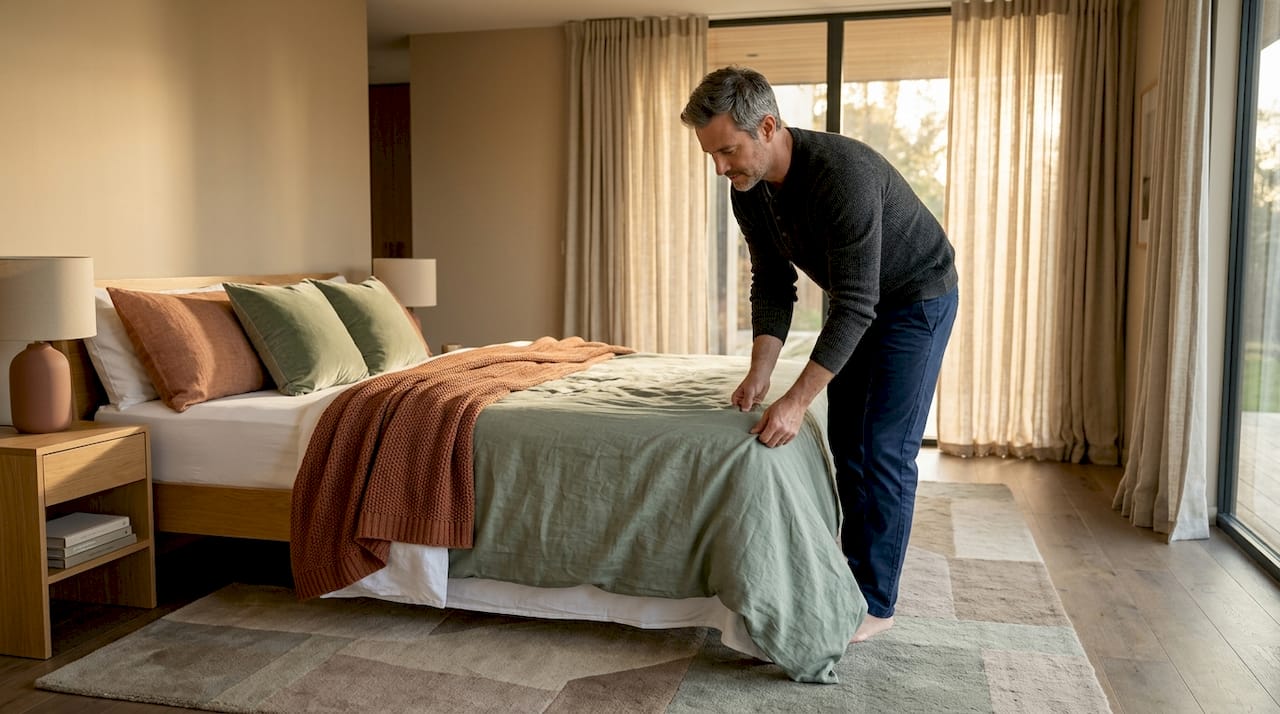
The practical benefit here is real. Sleep science supports the idea that thermal regulation improves sleep quality, and textile layering gives you precise control without touching the thermostat.
On the walls
Most people never think about this one. Textiles stretched onto frames create gallery-like wall art with a depth and warmth that a flat painting simply cannot replicate. A piece of vintage embroidery, a section of antique kilim, or even a length of interesting woven fabric mounted in a deep frame adds tactile richness to bare walls. Interior designers have used this technique for years, and it remains one of the more underused tricks available to homeowners.
Living room layering
This is where most people experiment, and rightly so. The living room benefits from multiple textile categories working together:
- Rugs in wool or cotton to ground the seating area and add warmth underfoot
- Throws in varied weights draped over seating rather than folded out of sight
- Cushions in at least three different textures, such as velvet, linen, and chunky knit
- Curtains that reach from ceiling to floor, which visually elongates the room
A note on contrast: Adding a velvet or corduroy texture alongside rougher weaves creates the kind of satisfying contrast that makes a room feel considered rather than accidental. Metallic or glass accessories placed among softer textiles also play a useful role, giving the eye a moment of sharpness before returning to softness.
| Room | Priority textile | Secondary layer | Statement detail |
|---|---|---|---|
| Bedroom | Layered bedding | Bed-end throw | Embroidered cushion or bolster |
| Living room | Area rug | Sofa throws and cushions | Framed textile or velvet accent |
| Kitchen | Washable cotton rug | Woven seat pads | Printed linen tea towels |
| Bathroom | Soft bath mat set | Waffle towels | Single printed hand towel |
Common mistakes to avoid
Knowing how to layer textiles is only half the skill. Recognising what goes wrong helps you course-correct before a room tips from curated into chaotic.
- Overloading the space. More is not always more. If every surface is covered, the eye has nowhere to rest. Adding layers incrementally and pausing to assess stops this from happening.
- Ignoring scale. Using cushions that are all the same size, or patterns that are all similarly sized, removes the visual interest that layering is supposed to create. Vary your scales deliberately.
- Skipping the subtract step. This is the mistake that separates well-layered rooms from cluttered ones. Each textile should serve a function or a clear visual purpose. If you cannot identify what a piece contributes, remove it.
- Choosing textiles without considering room function. Heavy, non-washable fabrics in a kitchen or playroom create practical headaches. Lightweight fabrics in a bedroom lose their thermal value. Match your textile weight and fibre to how the room is actually used.
- Treating layering as a one-time event. Rooms evolve. If you layer once and never revisit, the arrangement will date and lose its freshness. Plan to refresh it seasonally.
Pro Tip: Photograph your room before and after you remove two items. The camera reveals imbalances that your eye misses when you are standing in the space.
Seasonal and lifestyle layering
One of the most overlooked benefits of using textiles in decor is how easily they adapt to changing seasons and evolving tastes.
- Winter: Add a heavyweight wool throw to the sofa, swap to lined curtains, and layer a sheepskin or shearling rug over your existing floor covering.
- Summer: Replace heavy knit throws with loosely woven cotton or linen alternatives. Swap dark cushion covers for lighter, brighter tones that reflect rather than absorb light.
- Households with pets or children: Choose machine-washable textiles from the outset. Outdoor-grade fabrics have improved dramatically in terms of aesthetic quality and now work beautifully indoors without sacrificing durability.
- Budget management: You do not need to replace everything at once. Cushion covers and throws are the lowest cost, highest impact way to refresh a room. Invest in quality anchor pieces such as a rug or curtains, then rotate the smaller layers seasonally.
Textile layering enables owners to adapt to seasonal changes simply and without the cost or disruption of redecorating.
My honest take on textile layering
I have looked at a great many interiors over the years, and the ones that stay with me are never the ones with the most expensive furniture. They are the rooms where someone took the time to think carefully about texture. What I have come to believe is that layering textiles is both an instinct and a practice. The instinct is human. We are drawn to warmth, softness, and variety. The practice is what separates a room that feels cosy by accident from one that feels considered by design.
What surprises people most when they commit to layering is how quickly a room shifts emotionally. A thoughtful layering plan does not just change how a space looks. It changes how you feel when you walk into it. That is not a small thing.
My advice: treat your first attempt as an experiment. Layer too much, then subtract. You will find the balance faster that way than if you approach it cautiously from the start. And trust that you already have good instincts. Most people do.
— Cristiano
Layer with confidence using Homable

If you are ready to start layering, having the right products makes a real difference. Homable brings together a carefully chosen range of rugs, throws, cushions, and curtains designed to work together across different rooms and styles. Whether you are starting from scratch or refreshing a single space, the collection gives you quality pieces at accessible prices.
The Baluchi Cannon Pink Woolen Rug is an excellent anchor piece for living rooms or bedrooms, bringing rich wool texture and pattern that rewards layering. For kitchen spaces, the washable velvet kitchen rug combines practicality with style. Explore the full range at Homable and find the pieces that suit your space, your season, and your budget. Free shipping on orders over £100 makes it even easier to start well.
FAQ
What does layering textiles actually mean in decor?
Layering textiles means combining multiple fabrics of different textures, weights, and patterns within the same space to create visual depth, warmth, and comfort. It applies to rugs, cushions, throws, curtains, and even wall-mounted fabric pieces.
How many textile layers are too many?
There is no fixed number, but the subtract-first rule is your best guide. After layering, remove one or two items. If the room feels more balanced, those items were too many. Each textile should serve a clear visual or functional purpose.
Can you layer textiles on a limited budget?
Yes. Cushion covers and throws are the most affordable way to add layers without significant spend. Invest in one quality anchor piece such as a rug, then rotate less expensive accessories seasonally to keep the look fresh.
Does layering textiles work in small rooms?
It works particularly well in small rooms because layers create the illusion of depth and richness without requiring more floor space. Use lighter colours and finer weaves to avoid making the space feel heavy.
Which rooms benefit most from layered textiles?
Bedrooms and living rooms gain the most from layering in terms of comfort and aesthetics, but kitchens and bathrooms also benefit from practical textile layers such as washable rugs and quality towels that add warmth underfoot and visual interest.