Cart
0
TL;DR:
- Biophilic design integrates natural elements into spaces to support human health and psychological wellbeing. It relies on layering patterns like natural in the space, analogues, and spatial qualities for maximum benefit. Implementing natural light, materials, and spatial arrangements in homes enhances wellbeing and encourages ongoing nature contact.
Biophilic design is defined as the intentional integration of natural elements into built environments to support human health, creativity, and psychological wellbeing. The term draws on “biophilia,” the innate human affinity for nature, a concept popularised by biologist E.O. Wilson in the 1980s. Stephen R. Kellert later developed this into a practical design philosophy, arguing that spaces must offer repeated, sustained engagement with nature to genuinely support human biology. Research from Terrapin Bright Green confirms that layering multiple natural patterns reduces cortisol and sharpens focus. For anyone interested in interior design and environmental psychology, understanding biophilic design principles is the clearest path to creating a home that genuinely feels restorative.
What is biophilic design and what are its core principles?
Biophilic design rests on six foundational principles developed by Kellert. These are: an evolved human need for nature, place-based relationships, positive interactions with natural systems, multi-sensory engagement, integration rather than isolated features, and the creation of habitats that support human biology. Each principle reinforces the others. A single potted plant on a windowsill does not constitute biophilic design. A room that combines natural light, organic textures, views of greenery, and spatial variety does.
Terrapin Bright Green’s 14 Patterns of Biophilic Design organises these principles into three categories:
- Nature in the space: living plants, water features, natural light, dynamic airflow, and sensory stimuli from the natural world
- Natural analogues: organic shapes, natural materials, fractal patterns, and artwork depicting nature
- Nature of the space: spatial configurations that evoke evolutionary sensations, such as prospect (open views), refuge (sheltered enclosures), and mystery (partially revealed paths)
The 14 Patterns framework works best as an integrated toolkit rather than a checklist. Layering effects across all three categories produces the strongest physiological and psychological results. A room with a large window overlooking a garden (nature in the space), a wool rug with an organic pattern (natural analogue), and a reading nook tucked against a solid wall (nature of the space) achieves far more than any single element alone.
Pro Tip: When planning a room, aim to include at least one element from each of the three Terrapin categories. Even modest choices, such as a textured linen cushion or a curved shelf, contribute meaningfully when combined.
What are the proven benefits of biophilic design?
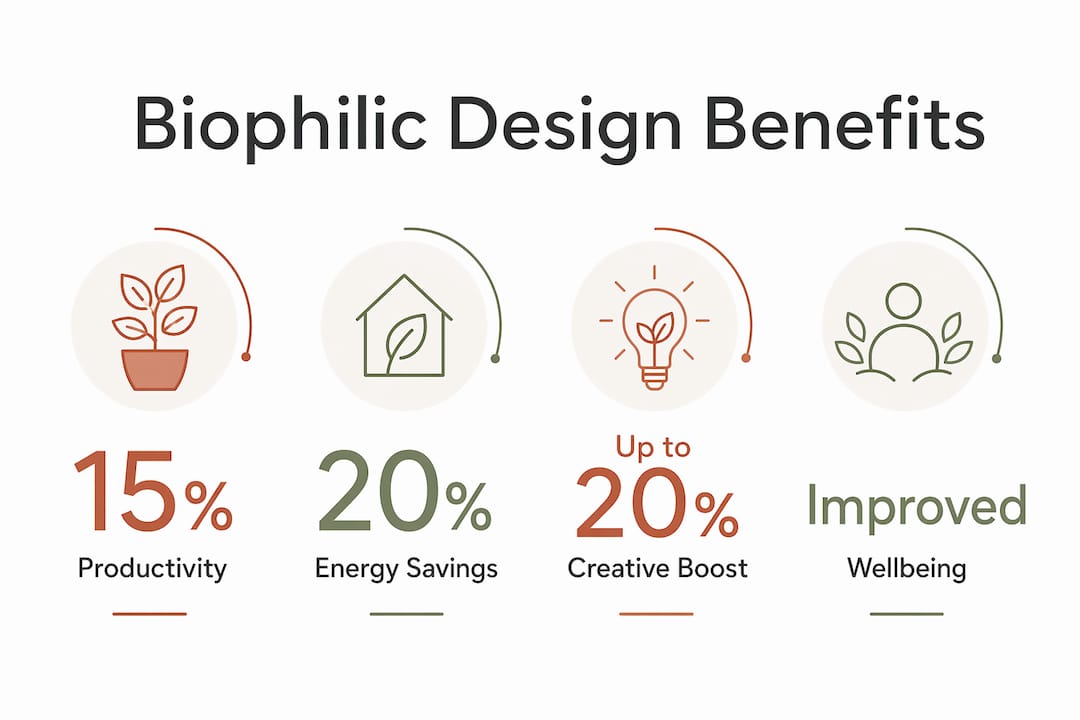
The evidence for biophilic design is substantial and growing. Productivity in offices with biophilic elements increases by between 9% and 15%, with gains sustained over two years. That figure matters because it shows biophilic benefits are not a novelty effect. They persist because the design addresses a genuine biological need.
Cognitive benefits extend beyond the workplace. Exposure to natural environments can improve creative performance by up to 50%, primarily by reducing rumination and increasing openness to new ideas. For anyone working from home or pursuing creative projects, this is a compelling reason to rethink how a study or studio is arranged.
The environmental case is equally strong. Buildings designed with biophilic principles reduce energy consumption by 20–30% compared to conventional buildings, largely through maximising natural light and integrating vegetation that regulates temperature. That reduction translates directly into lower energy bills and a smaller carbon footprint.
| Benefit | Evidence |
|---|---|
| Productivity | 9%–15% increase in office environments over two years |
| Creative performance | Up to 50% improvement through reduced rumination |
| Energy savings | 20%–30% reduction in buildings using natural light and vegetation |
| Stress reduction | Lower cortisol levels linked to layered natural patterns |
| Cognitive function | Improved focus and problem-solving from multi-sensory engagement |
The importance of biophilic design for personal wellbeing is not a trend. It reflects decades of research in environmental psychology showing that humans function better when their surroundings echo the natural world.
How does biophilic design differ from green building?
Biophilic design and sustainable design are related but distinct disciplines. Biophilic design prioritises human experience and biological connection, whereas green building focuses primarily on reducing resource consumption. A building can achieve LEED certification without containing a single biophilic element. Conversely, a home filled with natural materials, daylight, and organic forms can be deeply biophilic without meeting any formal sustainability standard.
The distinction matters because the two approaches serve different goals. Sustainable design asks: how do we reduce the building’s impact on the environment? Biophilic design asks: how does the environment inside the building affect the people who use it? Both questions are worth asking, but conflating them leads to spaces that are efficient yet sterile.
Kellert was clear that biophilic design excludes elements that do not connect to human evolutionary experience, such as alien species or purely decorative “natural” motifs with no sensory depth. A plastic plant, a green-painted wall, or a nature-themed wallpaper does not qualify. The test is whether the element creates a genuine, multi-sensory connection to the natural world.
Pro Tip: Before labelling a design choice as biophilic, ask whether it engages at least two senses and whether it would have been meaningful to humans living in natural environments. If the answer is no, it is decoration, not biophilic design.
How to implement biophilic design principles in your home
Applying biophilic design at home does not require a full renovation. The most cost-effective strategies involve spatial configuration and material choices that require minimal financial investment but deliver significant restorative effects.
-
Maximise natural light. Position desks, sofas, and reading chairs near windows. Use sheer curtains rather than blackout blinds in living areas to maintain a visual connection with the sky and changing light conditions throughout the day.
-
Create prospect and refuge. Place a chair or sofa with its back against a solid wall, facing an open view of the room or a window. This arrangement evokes the evolutionary sensation of safety combined with awareness, which the 14 Patterns framework identifies as one of the most restorative spatial configurations available.
-
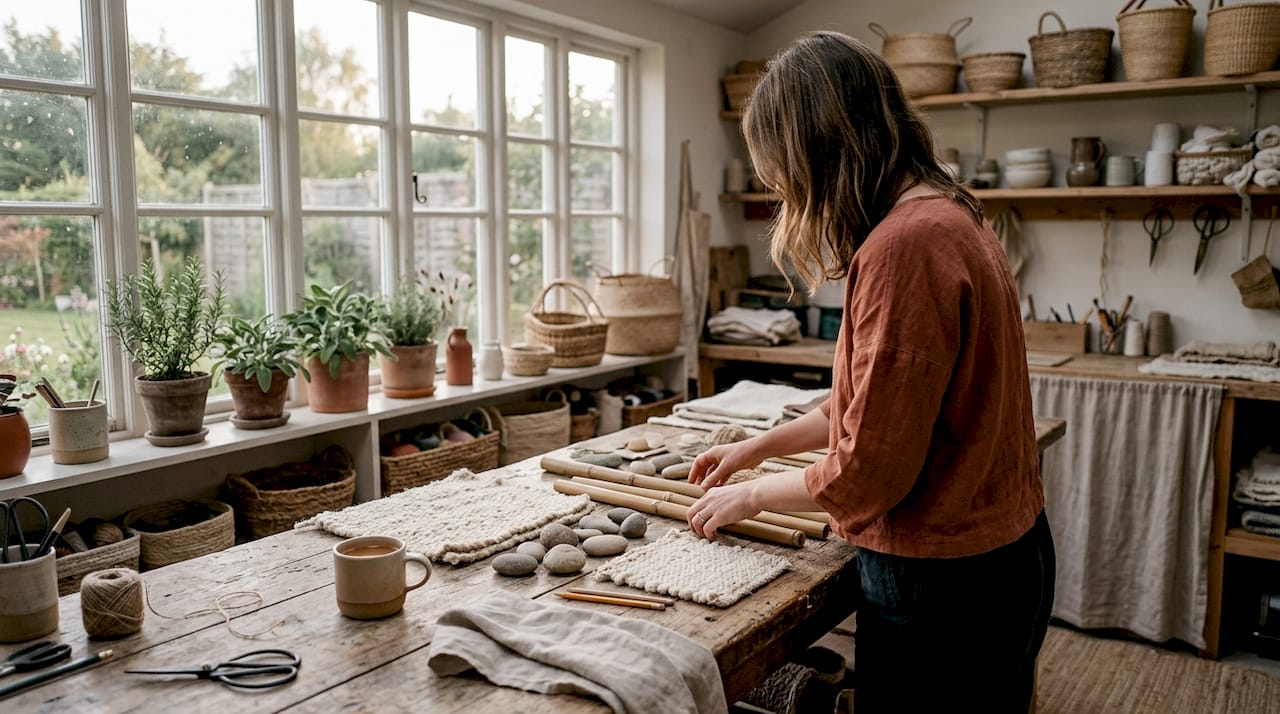
Introduce natural materials. Wool rugs, linen throws, timber shelving, and stone surfaces engage the sense of touch in ways that synthetic materials cannot. Tactile variety is a core component of multi-sensory biophilic engagement.
-
Use organic shapes and fractal patterns. Fractal patterns and organic forms trigger nature-related brain responses even without living systems present. Curved furniture, arched doorways, and rugs with flowing geometric patterns all contribute to this effect.
-
Layer multiple elements. A single biophilic element rarely achieves meaningful impact. Combine a living plant, a natural fibre rug, diffused daylight, and a view of the outdoors to create an environment that genuinely supports restoration.
The most common mistake is treating biophilic design as plant decoration. Plants are one element within a much broader system. A room with twenty plants but no natural light, no tactile variety, and no spatial depth is not a biophilic space. It is a greenhouse without the benefits.
For a practical framework on layering interior elements, the principle of building from the floor up, starting with natural textures underfoot, is one of the most accessible entry points for homeowners.
What do inspiring biophilic interiors actually look like?
The most effective residential examples of biophilic architecture share a common characteristic: they treat nature as a structural principle rather than an afterthought.
- Living walls and vertical gardens integrated into hallways or kitchen areas introduce continuous visual and tactile contact with plant life, regulate humidity, and soften acoustic harshness simultaneously.
- Timber-clad ceilings and exposed stone walls in living rooms create the sensation of shelter within a natural environment, engaging both sight and touch without requiring any living systems.
- Floor-to-ceiling glazing in bedrooms and studies maintains a visual connection with the sky, trees, and seasonal change, which research links directly to improved sleep quality and reduced anxiety.
- Water features, even modest indoor fountains, introduce dynamic sound that masks urban noise and creates the kind of sensory richness associated with natural environments.
“The goal of biophilic design is not to bring the outside in as a decorative gesture. It is to construct a habitat, a space where human biology can function as it evolved to function, in sustained relationship with the natural world.”
Homes that achieve this level of integration consistently report measurable wellbeing improvements. The connection between natural design and human health is not aesthetic preference. It is biology. For guidance on using art and natural imagery to reinforce these effects, art for home wellbeing offers a useful perspective on how visual choices shape mood and calm.
Key takeaways
Biophilic design works because it addresses an evolutionary need: humans function better in spaces that sustain genuine, multi-sensory contact with the natural world.
| Point | Details |
|---|---|
| Core definition | Biophilic design integrates natural elements intentionally to support human biology and wellbeing. |
| Layering is essential | Combining multiple patterns from Terrapin’s 14 Patterns framework produces the strongest results. |
| Productivity and creativity | Office environments with biophilic elements show 9%–15% productivity gains and up to 50% creative improvement. |
| Not the same as green building | Biophilic design targets human experience; sustainable design targets resource efficiency. |
| Accessible at home | Prospect and refuge configurations, natural materials, and layered light require minimal investment. |
Why I think most people are applying biophilic design backwards
Most people who discover biophilic design start by buying plants. That is understandable. Plants are visible, affordable, and immediately satisfying. But after years of observing how people actually live in their spaces, I am convinced that plants are the last thing to add, not the first.
The real foundation of a biophilic home is spatial and sensory. Get the light right. Get the materials right. Create a corner where you feel genuinely sheltered and calm. Then add living elements to reinforce what the space already does. A wool rug on a timber floor beneath a well-placed window does more for your nervous system than a shelf of succulents in a poorly lit, acoustically harsh room.
The other thing people consistently underestimate is repetition. Biophilia requires sustained exposure. A weekend in the countryside is restorative, but it does not compensate for fifty weeks in a space that offers no natural connection. The home is where the daily habit of nature contact either exists or does not. That is why the choices you make about materials, light, and spatial arrangement matter far more than any single decorative purchase.
The sustainable room styling guide from Homable is worth reading alongside this article if you want a practical framework for making these changes room by room.
— Cristiano
Natural textures that bring biophilic principles to life
Biophilic design begins underfoot. Natural fibre rugs introduce the tactile and visual warmth that synthetic materials cannot replicate, and they are one of the most accessible ways to layer organic texture into any room.
Homable’s range includes bamboo rugs that bring organic structure to living rooms and conservatories, and woollen rugs with flowing patterns that engage the eye and the sense of touch simultaneously. Both materials connect directly to the natural analogue category in Terrapin’s 14 Patterns framework. Free delivery is available on orders over £100, making it straightforward to add multiple layers of natural texture across different rooms without a large upfront commitment.
FAQ
What is biophilic design in simple terms?
Biophilic design is the practice of integrating natural elements, such as light, plants, water, and organic materials, into built spaces to improve human health and wellbeing. It is grounded in the idea that humans have an innate need for connection with nature.
Is biophilic design the same as having plants indoors?
Plants are one element of biophilic design, but the approach also includes natural light, spatial configurations, organic materials, fractal patterns, and sensory variety. A single plant does not constitute a biophilic space.
How do I start implementing biophilic design at home?
Begin with spatial changes: maximise natural light, position seating to create prospect and refuge, and introduce natural materials such as wool or timber. Layering multiple elements produces far greater benefits than any single addition.
Does biophilic design have measurable health benefits?
Research shows productivity gains of 9%–15% in biophilic office environments and creative performance improvements of up to 50% from natural exposure. Physiological effects include reduced cortisol and improved cognitive function.
What is the difference between biophilic design and sustainable design?
Sustainable design focuses on reducing a building’s environmental impact, whereas biophilic design focuses on the human experience inside the building. A space can be one without being the other, though the two approaches complement each other well.