Cart
0
TL;DR:
- Home aesthetics influence mental health by activating reward centers and reducing stress through sensory design. Decluttering, natural materials, lighting, and intentional color choices significantly enhance mood and cognitive function. Balancing personal style with neutral elements supports wellbeing while maintaining resale appeal.
Home aesthetics are defined as the combined visual, tactile, and spatial qualities of a living space that directly shape the occupant’s mood, behaviour, and mental health. This is not a matter of personal taste alone. Neuroaesthetics, the scientific study of how the brain responds to beauty and design, confirms that your home environment activates the same reward circuits in the brain as music or food. The concept of dopamine decor, where colour and pattern are used deliberately to trigger happiness, has seen search interest rise by over 110% year on year by December 2025. Understanding why home aesthetics matter is the first step to making your living space work for you, not against you.
Why home aesthetics matter: the neuroscience behind beautiful spaces
The brain does not passively observe your home. It responds to it. Neuroaesthetics research confirms that beautiful environments activate the medial orbitofrontal cortex, the brain’s primary reward centre, producing measurable reductions in stress hormones and improvements in mood. This is the same region activated by listening to a favourite piece of music or tasting something delicious. Your home, in other words, is constantly running a biological programme on your nervous system.
Multi-sensory design factors compound this effect. Research from the Johns Hopkins University International Arts + Mind Lab published in 2026 found that design integrating light, sound, texture, and natural shapes supports cognitive function and emotional regulation far more effectively than surface-level decoration alone. This field, known as neuroarchitecture, treats the home not as a backdrop but as an active participant in your daily mental health.
Clutter is one of the most underestimated threats to that mental health. Research from the Princeton Neuroscience Institute found that clutter competes for attentional resources, increasing cognitive load and elevating stress levels in the home. The practical implication is significant: a disorganised room is not just visually unpleasant. It is actively taxing your brain’s capacity to focus and recover.
Key design elements that engage the brain’s reward system include:
- Natural materials such as wood, linen, and stone, which trigger associations with safety and calm
- Biophilic patterns including leaf shapes and organic curves, which reduce physiological stress markers
- Balanced spatial organisation, where clear sightlines and defined zones reduce decision fatigue
- Layered lighting, which shifts the room’s emotional register from alert to restful depending on time of day
Pro Tip: Place a single natural element, a plant, a wooden bowl, or a woven throw, in the room where you spend the most time working. The effect on perceived stress is disproportionate to the cost or effort involved.
How does colour, light, and layout affect your mood at home?
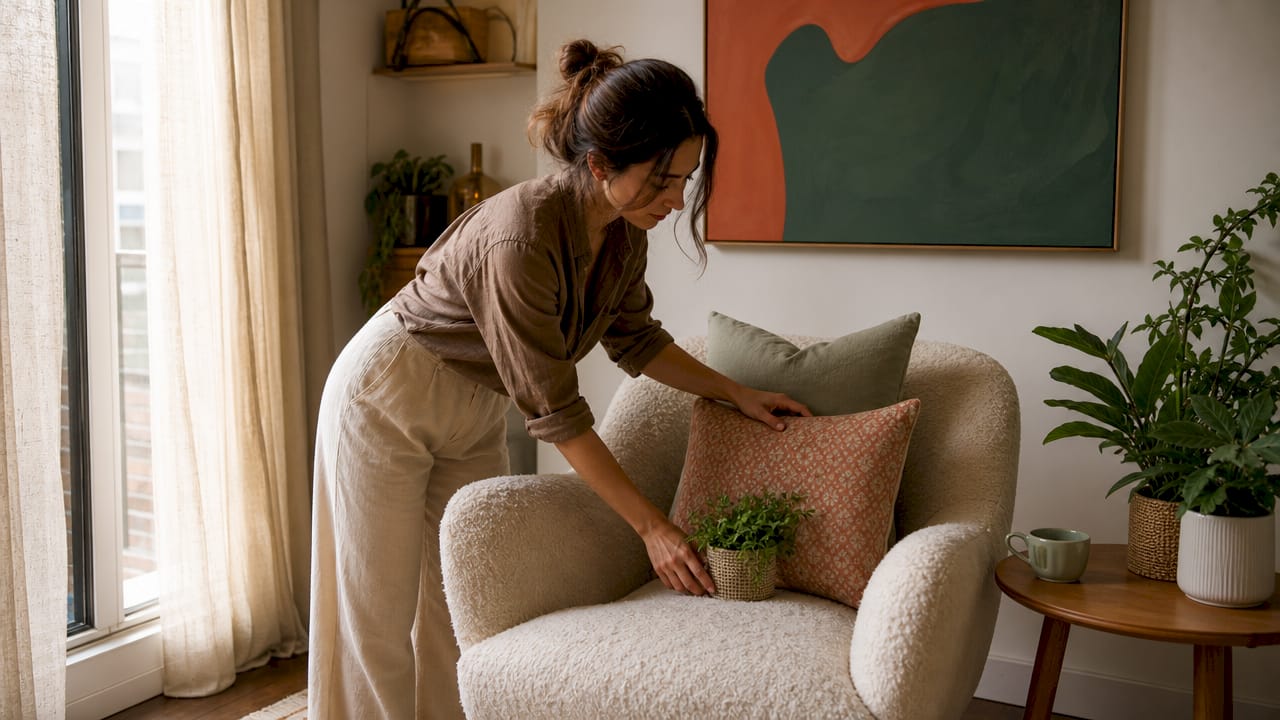
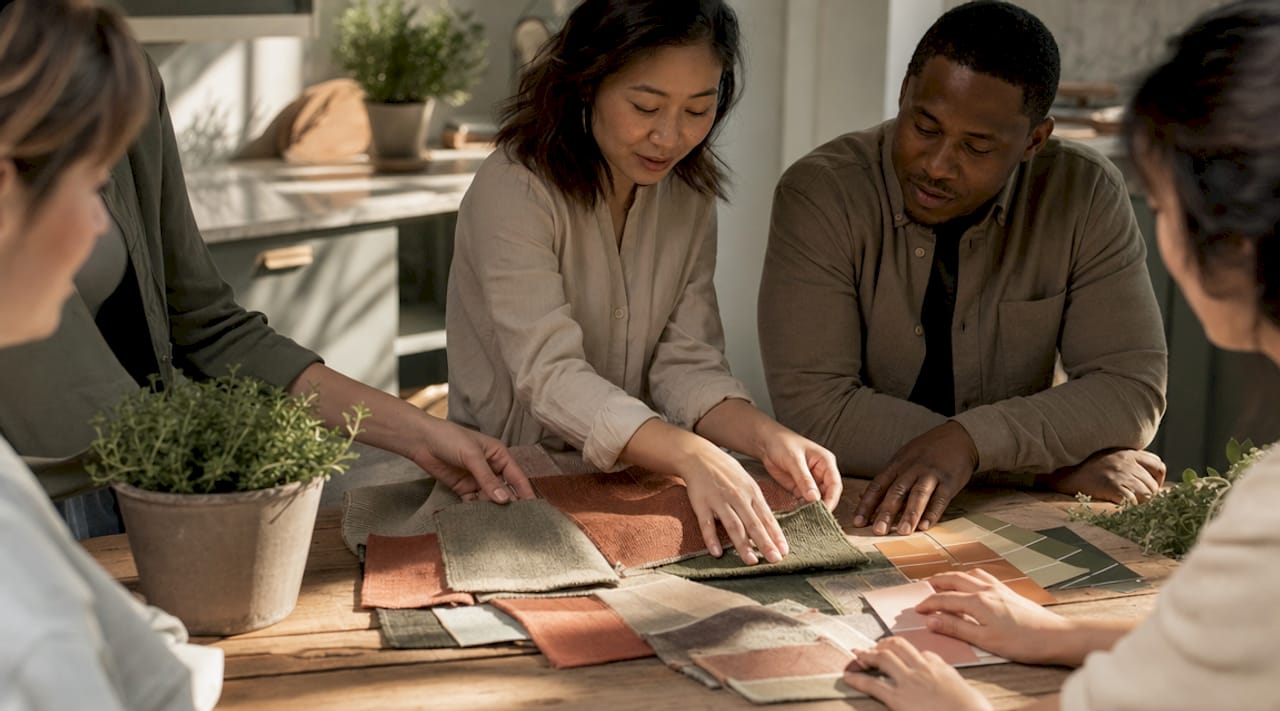
Colour is the most immediate aesthetic tool available to any homeowner, and its psychological effects are well documented. Blue tones, particularly muted navy and soft teal, lower heart rate and are consistently associated with calm and focus. Red and orange shades increase energy and appetite, which is why they appear frequently in dining spaces. Neutral anchors such as warm whites, greiges, and soft terracottas create visual rest without emotional flatness. Understanding colour psychology in home décor allows you to make deliberate choices rather than reactive ones.
Lighting deserves equal attention. Natural light exposure in homes regulates circadian rhythms, leading to better sleep quality, improved mood, and stronger cognitive performance throughout the day. A 2014 study published in Building and Environment found that office workers exposed to daylight slept longer and reported better quality of life than those without it. The same principle applies at home: maximising daylight in living areas and workspaces is one of the highest-return design decisions you can make.
Layout and spatial flow are the third pillar of mood-responsive design. A home that forces you to navigate around obstacles, lack storage, or live in poorly defined zones creates what designers call chronic low-level friction. Over time, this friction accumulates into subconscious irritation and mental fatigue. Thoughtful room-specific décor choices that define the purpose of each space reduce this friction significantly.
To apply these principles practically, work through your home in this order:
- Audit your lighting first. Identify which rooms receive the least natural light and introduce warm artificial alternatives that mimic daylight temperature (around 2700K to 3000K for living areas).
- Choose a colour anchor for each room based on its primary function: calm for bedrooms, energising for kitchens, neutral for multi-use spaces.
- Personalise with intention. Meaningful objects tied to memories stimulate the hippocampus and enhance emotional belonging, which is a measurable contributor to wellbeing.
- Define zones clearly in open-plan spaces using rugs, lighting, and furniture placement rather than walls.
Pro Tip: In a bedroom, swap high-contrast artwork for pieces featuring natural imagery such as landscapes or botanical prints. Visual art with natural imagery supports parasympathetic activation, which aids sleep onset and overall sleep quality.
Personal expression versus resale value: finding the right balance
The dopamine decor movement has given homeowners permission to be bold. Maximalist colour schemes, clashing patterns, and statement furniture are no longer considered design mistakes. They are expressions of identity that, according to neuroaesthetics, genuinely improve daily mood. The tension arises when personal joy collides with market expectations.
Estate agents consistently advise that bold interiors may alienate buyers who prefer neutral palettes and prefer to see a blank canvas rather than someone else’s personality. This does not mean you must live in a beige box. It means understanding which design choices are permanent and which are adaptable.
| Design approach | Best for |
|---|---|
| Bold colour on walls and ceilings | Personal joy and daily mood, but repaint before selling |
| Statement furniture and rugs | Strong personal expression with easy removal or replacement |
| Neutral base palette with colourful accessories | Balances emotional satisfaction with broad buyer appeal |
| Biophilic and natural material choices | Timeless appeal that adds value and supports wellbeing |
| Maximalist art and gallery walls | High personal impact, low structural commitment |
Balancing personal expression with neutral and timeless elements optimises emotional satisfaction without compromising resale value. The practical approach is to invest in a neutral structural palette for floors, walls, and fitted elements, then layer personality through textiles, art, and accessories that can be changed or removed. This strategy lets you live boldly without locking future buyers out of the picture.
Practical ways to improve your home’s aesthetics and wellbeing
Improving your home’s aesthetic impact on wellbeing does not require a full renovation or a large budget. The most effective changes are often the most targeted. Engaging with art in the home environment is consistently associated with reductions in depression and anxiety symptoms, comparable in effect to managing air quality or noise levels. A single well-chosen print in a frequently used room is a genuine mental health intervention.
Here are the highest-impact changes you can make, ranked by effort and return:
- Introduce biophilic elements. Plants, natural wood surfaces, stone accessories, and woven textiles all reduce physiological stress markers. Even a small potted plant on a desk has measurable effects on perceived calm.
- Layer your lighting. Replace single overhead bulbs with a combination of task lighting, ambient lighting, and accent lighting. This gives each room an emotional range rather than a fixed mood.
- Declutter with purpose. Reducing visual noise is not about minimalism as a style. It is about freeing up your brain’s attentional resources. Invest in smart storage solutions that keep surfaces clear without hiding the things you love.
- Display meaningful objects deliberately. A curated shelf of personal items, travel souvenirs, family photographs, and handmade objects, creates emotional anchors in your space. The key word is curated: ten meaningful objects have more impact than forty undifferentiated ones.
- Use textiles to shift the sensory register. Rugs, cushions, and curtains change a room’s acoustic quality as well as its visual warmth. A hard-floored room with no soft furnishings feels colder and louder, which increases subconscious stress.
- Consider upcycling and second-hand sourcing. Charity shops, online marketplaces, and vintage fairs offer genuinely distinctive pieces at low cost. Unique objects with history often carry more emotional resonance than mass-produced alternatives.
Personalising your space is not a luxury. It is a direct investment in your daily mental and emotional health, supported by consistent neurological evidence.
Key takeaways
Home aesthetics directly shape brain chemistry, stress levels, and emotional wellbeing through neuroaesthetic mechanisms that operate whether you are conscious of them or not.
| Point | Details |
|---|---|
| Aesthetics activate reward circuits | Beautiful environments stimulate the medial orbitofrontal cortex, reducing stress and improving mood. |
| Clutter impairs cognitive function | Visual disorder taxes attentional resources and elevates stress, making decluttering a health decision. |
| Lighting is the highest-return investment | Natural and well-layered artificial light regulates circadian rhythms and supports mood and sleep. |
| Bold decor and resale value can coexist | Use a neutral structural base and layer personality through removable textiles, art, and accessories. |
| Personalisation has neurological benefits | Meaningful objects stimulate the hippocampus and measurably enhance emotional belonging and wellbeing. |
Why I think most people are still treating aesthetics as decoration
Most homeowners approach their interiors as a styling exercise. They choose colours they like, buy furniture that fits, and add accessories that feel current. That is decoration. It is not the same as design, and the difference matters more than most people realise.
What I have come to understand, through years of reading the research and observing how people actually live in their spaces, is that the home is a health environment. Not metaphorically. Literally. The layout of your kitchen affects how much you move. The colour of your bedroom affects how quickly you fall asleep. The amount of clutter on your desk affects how well you concentrate. These are not soft claims. They are backed by fMRI studies, circadian rhythm research, and cognitive neuroscience.
The misconception I encounter most often is that function and beauty are in tension. People assume that a practical home must sacrifice style, or that a beautiful home must be impractical. Neuroarchitecture dismantles this entirely. The most functional home is also the most considered one: well-lit, spatially coherent, sensory-rich, and personally meaningful. Those qualities are aesthetic qualities.
My honest view is that the dopamine decor trend, for all its Instagram appeal, risks reducing a genuinely powerful idea to a colour palette. Bright rooms are not automatically happy rooms. What matters is whether the design choices you make are intentional, whether they serve the way you actually live, and whether they reflect something true about who you are. That is when aesthetics stop being decoration and start being architecture for your mental health.
— Cristiano
Transform your space with Homable
If this article has prompted you to look at your home differently, Homable is the natural next step. Homable offers a curated collection of home décor and accessories designed to help you apply exactly the principles covered here: biophilic textures, considered colour, smart storage, and meaningful personalisation. Every product is selected with both style and function in mind, so you are never choosing between the two. Whether you are refreshing a single room or rethinking your whole home, explore the full Homable collection and find pieces that genuinely support the way you live. Free shipping is available on orders over £100, making it straightforward to start making changes that matter.
FAQ
What does home aesthetics mean?
Home aesthetics refers to the combined visual, tactile, and spatial qualities of a living space, including colour, lighting, layout, texture, and décor, that shape how occupants feel and behave. It encompasses both the appearance and the sensory experience of a home.
How do aesthetics affect your mood at home?
Beautiful environments activate the medial orbitofrontal cortex, the brain’s reward centre, producing measurable reductions in stress and improvements in mood. Specific choices such as natural light, calming colours, and biophilic materials each have distinct and documented psychological effects.
Does clutter really affect mental health?
Research from the Princeton Neuroscience Institute confirms that clutter competes for attentional resources, increasing cognitive load and stress levels. Reducing visual disorder is one of the most direct and cost-free ways to improve your mental environment at home.
Can bold décor hurt my home’s resale value?
Estate agents advise that very bold interiors can deter buyers who prefer neutral palettes. The practical solution is to use a neutral structural base for walls and floors, then express personality through removable elements such as rugs, cushions, and art.
What is the easiest way to improve home aesthetics on a budget?
Introducing a single plant, decluttering one surface, or adding a warm-toned lamp to a frequently used room each produce measurable improvements in perceived comfort and calm. Upcycling and second-hand sourcing also offer distinctive pieces with emotional resonance at low cost.