Cart
0
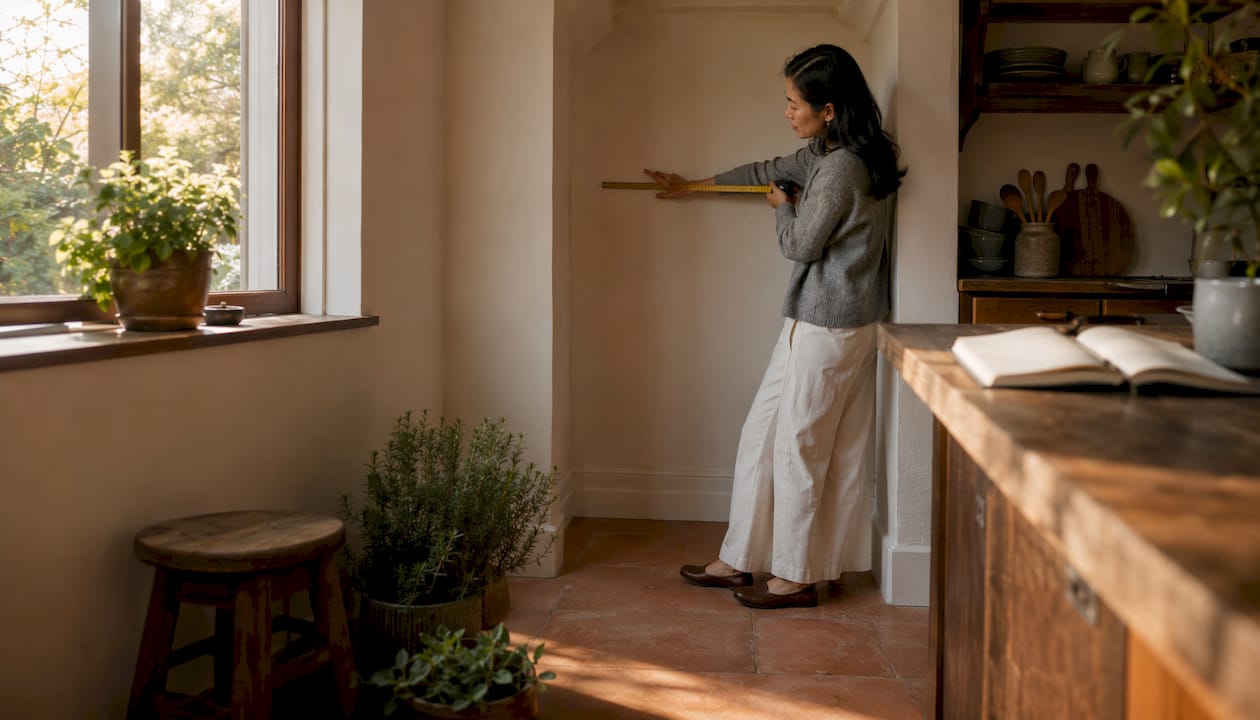
Pick a single clear function, anchor it with a scaled piece, then edit down to three accessories. That is the fastest, highest-impact way to turn a forgotten corner, alcove, or landing into a space that earns its place. Most underutilised areas fail not because they lack potential but because they lack a decision.
Three instant moves to start today:
- Define the function. Reading nook, drop-zone, display shelf — commit to one before you buy anything.
- Add an anchor piece. A bench, a console, or a floor-to-ceiling shelf gives the space a reason to exist.
- Add targeted light or a mirror. A wall sconce or a leaning mirror costs little and changes everything.
Start-now checklist (10–30 minutes): Walk the room, photograph every empty corner and alcove, write one function next to each photo, then measure width, depth, and height before you order a single thing.
Table of Contents
- What can you do with awkward corners, alcoves and nooks?
- How to follow a simple styling workflow from measure to finished space
- Which furniture and storage choices keep underused spaces tidy?
- How do vertical space, lighting, and mirrors change a small area?
- How do you make a shelf or vignette look intentional rather than cluttered?
- What should you buy first, and where do you find it in the UK?
- Quick micro-projects you can finish in an afternoon
- Key takeaways
- A stylist’s note on starting small
- Where to find the right accessories for your project
- Further reading and sources
What can you do with awkward corners, alcoves and nooks?
Small renovations consistently deliver disproportionate perceived improvement, which is why decorating unused corners is worth the effort even on a modest budget. Here are seven proven conversions for the spaces UK homes most commonly waste.
- Reading nook (corner or alcove). A compact armchair, a wall-mounted sconce, and a floating shelf above. Works because it assigns the corner a single, cosy purpose.
- Micro office (under-stairs or alcove). A slim floating desk, a pinboard, and a pendant light. Under-stairs areas suit pull-out desks and illuminated niches particularly well.
- Built-in bench with storage (hallway or bay window). Bench seating with a hinged lid hides clutter and adds seating where there was none.
- Under-stairs cloakroom or bar. A curtain or a set of modular units converts the sloped space into a drinks station or a concealed cloakroom.
- Display shelving (alcoves flanking a chimney breast). Floor-to-ceiling shelves with baskets on the lower runs keep the look curated without sacrificing storage.
- Slim utility drop-zone (narrow hallway gap). A console with hooks above and a basket below handles keys, bags, and post without eating into circulation.
- Plant corner. A tall potted fiddle-leaf fig or a cluster of varying-height pots turns a dead corner into a living focal point.
Pro Tip: Lara Clarke’s ‘hug the corner’ principle works brilliantly in UK Victorian terraces: push a banquette or built-in bench hard into the corner so it reads as intentional rather than abandoned. Add a cushion in a contrasting fabric and the corner becomes the most talked-about seat in the room.
How to follow a simple styling workflow from measure to finished space
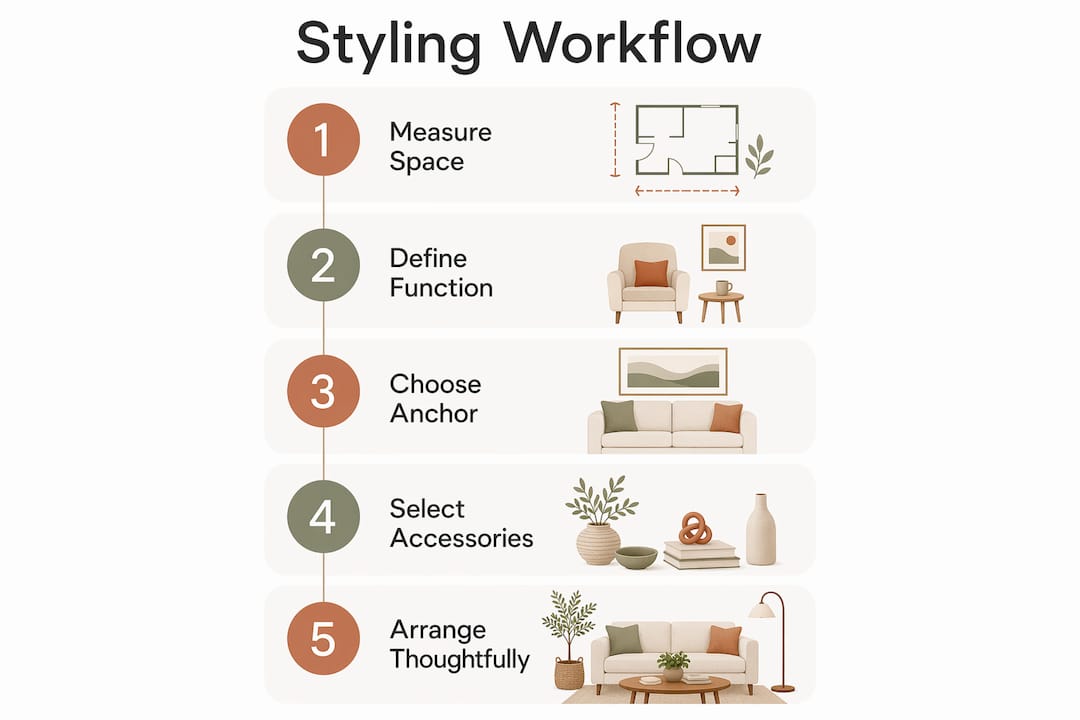
Rushing to buy before measuring is the single most common mistake. Follow these steps in order.
- Measure accurately. Record width, depth, and head height. Note outlet positions and any skirting-board projections. Allow at least 18–24 inches of clear walking space behind any console or seating piece.
- Pick one function. Write it on a sticky note and put it on the wall. Every purchase decision gets tested against it.
- Choose an anchor piece. This is the largest item: a shelf unit, a bench, or a console. Buy this first; everything else scales from it.
- Build storage and lighting. Add a basket or two for hidden clutter, then a light source at the right height for the function.
- Style, then live with it. Arrange accessories, then leave the space alone for two to four weeks before deciding what to remove or swap. The decorating small spaces workflow at Homable covers this editing phase in detail.
- Apply the three-item edit rule. After the trial period, remove anything that is not earning its place. Three well-chosen objects beat seven mediocre ones every time.
Which furniture and storage choices keep underused spaces tidy?
Multi-functional furniture reduces the total number of items on the floor and keeps a compact area feeling uncluttered. A bench with a hinged lid, a slim console with a drawer, or a modular shelving unit with baskets all do double duty without demanding extra floor space.
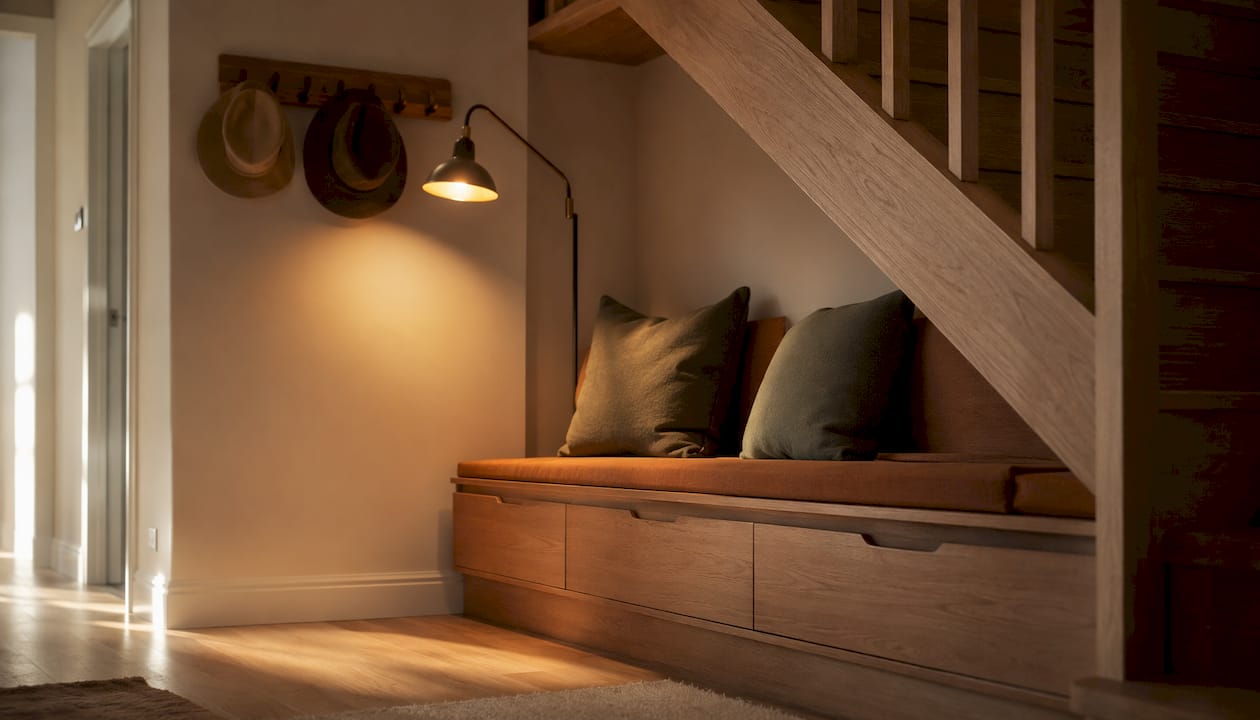
Sizing rules worth knowing: In a hallway, aim for a console no deeper than 30 cm so the circulation lane stays clear. For an alcove shelf, leave at least 5 cm of breathing room on each side rather than filling the opening edge to edge. Under-stairs units often have a sloped ceiling; prefabricated modular units handle this far more cheaply than bespoke joinery and can be reconfigured if you move.
Pro Tip: Choose ‘leggy’ furniture over chunky, floor-sitting pieces. When the floor continues visually beneath a console or side table, the room reads as larger. A slim-legged bench in a hallway does this better than a solid plinth-style cabinet twice the price.
For practical examples of stylish storage solutions that work in alcoves and under-stairs spaces, Homable’s blog covers a range of product types suited to UK homes.
How do vertical space, lighting, and mirrors change a small area?
Drawing the eye upward is the single most reliable trick for making a tight space feel generous. Floor-to-ceiling shelving, curtains hung high and wide, and wall-mounted sconces instead of floor lamps all keep the floor clear and push the perceived ceiling up.
| Technique | Measurement or placement rule |
|---|---|
| Curtain height | Hang 6–12 inches above the window frame |
| Curtain rod width | Extend 5–10 inches beyond each side of the frame |
| Curtain drop | Let fabric ‘kiss’ the floor for a polished finish |
| Walking clearance | Leave 18–24 inches behind seating or consoles |
| Mirror placement | Position opposite or adjacent to a window to amplify natural light |
Pro Tip: Place a large mirror on the wall facing a window rather than beside it. The reflection doubles the apparent depth of the room and bounces light into corners that would otherwise stay dim. A leaning floor mirror in a corner costs less than a pendant light and delivers more visual impact.
How do you make a shelf or vignette look intentional rather than cluttered?
Open shelving only works when surfaces are intentionally curated and everyday clutter is hidden elsewhere. The vignette recipe below applies to any shelf, ledge, or console.
- Start with an anchor object. One tall or visually heavy piece (a vase, a stack of books, a sculptural ornament) sets the scale for everything else.
- Group in odd numbers. Three or five objects read as deliberate; four reads as accidental symmetry.
- Vary heights. Place the tallest item at the back or one side, then step down in height across the group.
- Add texture. Mix a matte ceramic with a woven basket and a glossy leaf — the contrast is what makes a vignette interesting.
- Use negative space. Leave at least a third of the shelf surface empty. That gap is not wasted; it is what makes the objects read.
- Tie in a plant. A trailing pothos or a small succulent adds life without demanding much care. For ideas on decorative solutions for small spaces, Homable’s guides show how plants and accessories work together.
Keep surfaces clear by using accessible storage solutions for everyday items. Minimalism here is strategic, not sparse.
What should you buy first, and where do you find it in the UK?
Buy the anchor piece first. Everything else — lighting, mirrors, decorative accessories — scales from that decision. Splurge on lighting and any upholstered seating because quality shows and cheap versions rarely last. Economise on baskets, ornaments, and plants; these are easy to swap as your taste evolves.
Pro Tip: Before committing to bespoke joinery for an alcove or under-stairs space, price up a modular alternative first. The saving is often substantial, and prefabricated units can be painted to match your walls so they read as built-in.
Homable stocks curtains, storage baskets, rugs, pendant lights, mirrors, and decorative accessories suited to the kinds of micro-projects described here. Orders over £100 qualify for free shipping, payments are secure, and customer reviews are published on each product page. For a home organisation system that goes beyond accessories into fitted storage, specialist providers offer bespoke solutions worth comparing before you commit to joinery.
Quick micro-projects you can finish in an afternoon
These are low-cost, high-impact moves. Each one takes 30–120 minutes and requires only basic tools (a drill, a spirit level, and a tape measure).
- Floating shelf vignette. Mount two or three shelves in an alcove, style with the odd-number rule above. Cost: shelf brackets plus accessories.
- Under-stairs tidy and bench cushion. Add a modular unit and a cut-to-size cushion. Transforms a dumping ground into a reading spot.
- Hallway drop-zone. Fix three hooks at coat height, place a slim basket below, add a small mirror above. Done in under an hour.
- Window-seat styling. Lay a folded throw and two cushions on an existing window ledge or bench. Costs almost nothing; looks considered.
- Plant corner upgrade. Cluster three plants at different heights using a plant stand and two floor pots. Add a woven basket as a pot cover.
- Pegboard utility wall. Fix a pegboard in a narrow kitchen or utility gap. Add hooks, small shelves, and a rail for tools or utensils.
- Mirror-and-sconce corner. Hang a round mirror at eye level and a plug-in wall sconce beside it. No electrician needed; instant atmosphere.
- Gallery ledge. Install a picture ledge along a blank hallway wall and lean framed prints against it. Rearrange without re-drilling.
For a full space-saving checklist to plan these projects, Homable’s guide walks through each step.
Key takeaways
Styling underutilised spaces works best when you commit to one function per area, anchor it with a scaled piece, and edit ruthlessly before adding more.
| Point | Details |
|---|---|
| Function first | Decide on one clear use before buying anything — this single decision prevents wasted spend. |
| Anchor piece before accessories | Buy the largest item first; all other choices scale from it. |
| Vertical tricks expand perceived space | Hang curtains 6–12 inches above the frame and use floor-to-ceiling shelving to draw the eye up. |
| Edit after a trial period | Live with the arrangement for 2–4 weeks before committing to bespoke joinery or additional purchases. |
| Homable for accessories | Homable stocks curtains, baskets, mirrors, and lighting with free shipping over £100 and verified customer reviews. |
A stylist’s note on starting small
The advice that gets skipped most often is also the most useful: start with a micro-project before committing to anything structural. A floating shelf, a mirror, and a decent light fitting will tell you more about how a space wants to be used than any amount of planning. Once you have lived with that small change for a few weeks, the bigger decision — built-in bench, bespoke joinery, or simply a new rug — becomes obvious rather than daunting.
The spaces that tend to stay neglected are not the hardest ones to fix. They are usually the ones where the homeowner is waiting for a perfect plan before starting. Pick the smallest awkward corner in your home, apply the three-step method from the opening of this article, and do it this weekend. The rest follows naturally.
Where to find the right accessories for your project
Homable is a practical starting point for the accessories that make these micro-projects work. The range covers curtains, pendant lights, storage baskets, rugs, mirrors, and decorative ornaments — the exact categories that anchor and finish the kinds of spaces covered here.
A useful starter bundle for a hallway or corner project: one anchor piece (a mirror or a pendant light), one storage basket, and two or three decorative accessories. Keep the order above £100 and shipping is free. Payments are secured at checkout, and every product carries verified customer reviews so you can see how items look in real homes before you buy.
Browse the Homable collections to find accessories that fit your space and your budget, then use the workflow in this article to put them together.
Further reading and sources
- 5 clever ways to make a small space look bigger — NPR
- How to best utilise dead space and awkward nooks — Kitchens Bedrooms & Bathrooms
- 15 under-stairs wall space ideas — Styled Nesty
- 45 clever small space design ideas — House Beautiful
- Turning an awkward space into a stylish, functional room — Style Splash
- Timeless design ideas for small spaces — Houzz
- 10 smart design ideas for small spaces — HGTV
- Decorating small spaces workflow — Homable
- 7 practical tips for styling small spaces — Homable