Cart
0

TL;DR:
- Prioritize core function, set a modest performance budget, and design for perceived longevity in home accessories.
- Check that items perform reliably, are easy to maintain, and look right after years of use, not just in photos.
The three rules that reliably deliver a good design and performance balance for home accessories are: prioritise core function first, set a modest performance budget before you shop, and design for perceived longevity. In plain terms: an accessory must do its job without complaint, you should decide in advance what wear and maintenance you can tolerate, and it should still look right three years from now, not just on the day it arrives.
Quick checklist for point-of-purchase decisions:
- Does it fulfil its primary function without compromise?
- Can I clean or maintain it in under five minutes?
- Will the finish still look intentional after daily use?
Pro Tip: Before buying, run a two-pass filter: first check function (would this still be worth owning if it were plain white?), then check aesthetics. If it fails the first pass, no amount of styling rescues it.
Table of Contents
- What does design and performance balance mean for UK homeowners?
- What should you check before buying a home accessory?
- How do the trade-offs look room by room?
- Which materials and finishes last longest with least fuss?
- When should you spend more, and when is a compromise fine?
- How do you make functional pieces look intentional?
- Key takeaways
- The real reason most home accessories disappoint
- Homable: curated pieces that work as hard as they look
- Sources and further reading
What does design and performance balance mean for UK homeowners?
In the context of home accessories, aesthetic functionality balance means an item looks deliberate and attractive while reliably doing what it was bought to do. A doorstop that tips over, a rug that curls at the edges, or a storage basket that sags under light load has failed on performance regardless of how well it photographs.
The A’ Design Award’s design encyclopaedia frames this precisely: proportion, rhythm, and contrast should support user efficiency and emotional satisfaction rather than compete with them. Aesthetics, in other words, is a tool for enhancing usability, not a separate goal.
Academic research published in the Journal of Marketing confirms the practical limit of this: high styling improves how people evaluate a product, but only when core functionality is already acceptable. Style cannot rescue a product that fails its primary purpose. That finding matters when you are standing in a shop deciding whether a beautiful but flimsy lamp is worth the premium.
For UK homeowners, functional aesthetics means choosing pieces that earn their place through daily use, not just through appearance.
What should you check before buying a home accessory?
A structured checklist prevents impulse purchases you will regret by spring. Work through these seven criteria in order.
- Primary function — What must this item do every day? State it in one sentence before you look at the finish.
- Materials — Is the material suited to the environment (humidity, sunlight, foot traffic)?
- Maintenance — How long does cleaning take, and how often?
- Scale and fit — Does the size work with the room proportions, not just the product photo?
- Multi-functionality — Does it serve a second purpose without compromising the first?
- Lifetime cost — Purchase price divided by expected years of service gives a useful annual cost figure.
- Warranty and returns — Can you return it if the finish chips within six months?
| Criterion | Question to ask | Red flag |
|---|---|---|
| Primary function | Would I buy this if it were plain? | No clear function beyond decoration |
| Materials | Is this rated for the humidity/traffic level here? | Vague “premium” claims with no material name |
| Maintenance | Can I wipe it clean in under five minutes? | Requires specialist products to clean |
| Scale and fit | Have I measured the space, not just eyeballed it? | Only seen in styled photography |
| Lifetime cost | What is the annual cost (price ÷ years)? | No warranty or returns policy stated |
Red flags that should make you pause: no material specification listed, no care instructions provided, and a finish that looks different under natural versus artificial light in the product photos.
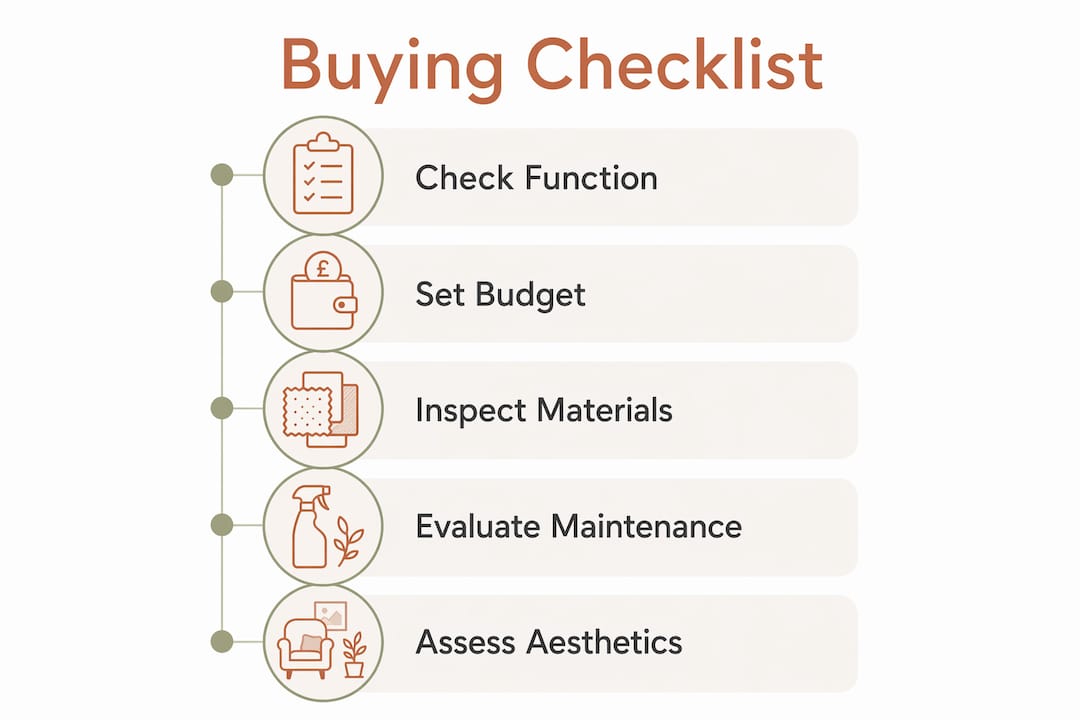
Setting a performance budget before you shop works as a guardrail: decide your maximum acceptable maintenance time and minimum expected lifespan before you fall in love with a finish.
How do the trade-offs look room by room?
Each room has a different performance demand, and the checklist criteria shift in priority accordingly.
| Room | Accessory example | Aesthetic role | Primary function | Durability priority | Maintenance |
|---|---|---|---|---|---|
| Living room | Decorative rug | Colour anchor, texture | Underfoot comfort, zone definition | Medium | Vacuuming, spot clean |
| Kitchen | Ceramic storage jars | Visual rhythm on worktop | Airtight food storage | High | Dishwasher-safe or wipe |
| Bathroom | Bamboo mat | Warmth, natural texture | Anti-slip, moisture absorption | Medium-high | Air-dry, replace annually |
| Bedroom | Woven storage basket | Softness, layering | Clothing or linen storage | Medium | Dust, spot clean |
| Hallway | Umbrella stand | First impression, focal point | Contain wet umbrellas, prevent drips | High | Wipe interior weekly |
The hallway is where performance demands are highest and styling budgets are often lowest. A family hallway sees daily impact, wet coats, and muddy boots; a guest bedroom sees almost none. Spend accordingly.
Shopper tips by room:
- Living room: a rug that looks stunning but sheds heavily will frustrate you within weeks; check pile construction before the colour.
- Kitchen: matte ceramic looks elegant but shows every fingerprint; gloss finishes are easier to maintain on frequently handled items.
- Hallway: prioritise durability and ease of cleaning over style; a scuffed umbrella stand undermines the first impression you were trying to create.
Pro Tip: For compact flats or open-plan rooms, optimising room layout for scale and proportion matters as much as material choice. An accessory that is 20% too large for a shelf reads as clutter, not décor.
Which materials and finishes last longest with least fuss?
Material choice is where improving design efficiency and longevity intersect most directly.
- Ceramic and stoneware: excellent durability, easy to wipe, resistant to humidity. Matte glazes show fingerprints; gloss is more forgiving in kitchens and bathrooms.
- Solid wood: warm, long-lasting, but needs occasional oiling in dry central-heated rooms. Avoid in high-humidity bathrooms unless sealed.
- Engineered wood (MDF, plywood): affordable and stable, but swells if water penetrates edges. Keep away from sinks and baths.
- Metals (powder-coated steel, brass, brushed nickel): hard-wearing and easy to clean. Unlacquered brass patinates over time, which some find attractive; others do not.
- Natural fibres (jute, seagrass, cotton): beautiful texture, but absorb moisture and stain. Best in low-traffic, dry rooms.
- Synthetics (polypropylene, polyester): practical for high-traffic areas; less premium in feel but far easier to maintain.
Quick care checklist for new purchases:
- Wipe down immediately after delivery to remove transit dust.
- Test the finish with a damp cloth in an inconspicuous spot before placing in situ.
- Note the care instructions and store them somewhere you will actually find them.
Pro Tip: In-store, run a fingernail lightly across a matte finish. If it marks immediately, it will mark at home. Gloss and satin finishes generally hide daily contact better than ultra-matte ones.
When should you spend more, and when is a compromise fine?
Total cost of ownership is a more honest measure than purchase price. The calculation is simple: divide the price by the number of years you expect the item to last.
A £60 rug that lasts three years costs £20 per year. A £150 rug that lasts eight years costs roughly £19 per year and looks better throughout. The expensive option is often the cheaper one over time.
- Spend more on daily-use items — rugs, kitchen accessories, bathroom mats, and storage that is opened and closed repeatedly. These earn back the premium through longevity.
- Accept trade-offs on low-contact decorative pieces — a vase on a high shelf, a framed print, a seasonal ornament. These see minimal wear; a lower-cost choice is sensible.
- Check repairability — a ceramic piece with a chipped rim can often be repaired; a moulded plastic item usually cannot. Repairability extends lifespan and reduces waste.
| Category | Justify higher spend? | Reason |
|---|---|---|
| Hallway rug or mat | Yes | Daily foot traffic, visible wear |
| Kitchen storage jars | Yes | Daily handling, food safety |
| Bedroom decorative cushions | Sometimes | Low contact; style-led choice |
| Bathroom accessories | Yes | Humidity accelerates wear on cheap finishes |
| Seasonal ornaments | No | Stored most of the year |
Home organisation systems that combine storage with aesthetic appeal tend to justify higher spend because they are used daily and visible constantly.
How do you make functional pieces look intentional?
The goal is not to hide utility but to frame it. A well-placed umbrella stand, a grouped set of storage jars, or a layered rug arrangement all read as deliberate choices rather than afterthoughts.
Four styling rules that preserve function:
- Scale first: one large piece reads as intentional; three small mismatched pieces read as clutter.
- Group in odd numbers: three jars, five books, one tray. Even numbers feel static.
- Colour anchor: repeat one colour from the accessory in at least one other element in the room (a cushion, a plant pot, a frame).
- Layer textures, not patterns: mixing a smooth ceramic with a woven basket and a matte metal piece creates depth without visual noise.
A functional piece styled with confidence becomes a focal point. An umbrella stand placed deliberately near the door, at the right height, in a finish that echoes the hallway’s hardware, stops looking like storage and starts looking like architecture.
Pro Tip: Resist the urge to conceal functional items behind doors or in cupboards. A beautiful storage basket on an open shelf does more for a room than a hidden plastic box, and you are more likely to use it.
Key takeaways
The most reliable approach to design and performance balance is to confirm core function first, set a maintenance budget before you shop, and choose materials suited to the room’s actual conditions.
| Point | Details |
|---|---|
| Function before finish | An accessory that fails its primary job cannot be rescued by styling, however attractive it looks. |
| Set a performance budget | Decide your maximum acceptable maintenance time and minimum lifespan before browsing. |
| Match material to room | High-humidity and high-traffic rooms demand different finishes than low-contact decorative spaces. |
| Calculate annual cost | Divide purchase price by expected years of service to compare true value across price points. |
| Homable’s curated range | Homable selects pieces that meet both aesthetic and functional criteria, with care guidance included. |
The real reason most home accessories disappoint
Most people buy accessories the wrong way round: they fall for the finish, then hope the function follows. It rarely does. The pieces that last and still look right after three years of daily life are the ones where the function was solid enough that the styling had something real to work with.
The design theory backs this up. The A’ Design Award treats proportion and contrast as tools for supporting usability, not competing with it. That is not an abstract principle; it is the reason a well-proportioned doorstop stays put and a poorly weighted one tips over regardless of how it looks in the catalogue.
What most buying guides miss is the maintenance reality of UK homes: central heating, condensation, hard water, and heavy foot traffic in narrow hallways. A finish that performs beautifully in a Scandinavian showroom may not survive a British winter without care. Choosing for your actual conditions, not the product photography, is the single most underrated skill in home styling.
Homable: curated pieces that work as hard as they look
Homable selects home accessories with both aesthetics and real-world performance in mind. Every piece in the range comes with material and care information so you know exactly what you are buying before it arrives. Free shipping on orders over £100, straightforward returns, and a curated selection updated regularly mean you spend less time second-guessing and more time enjoying your space.
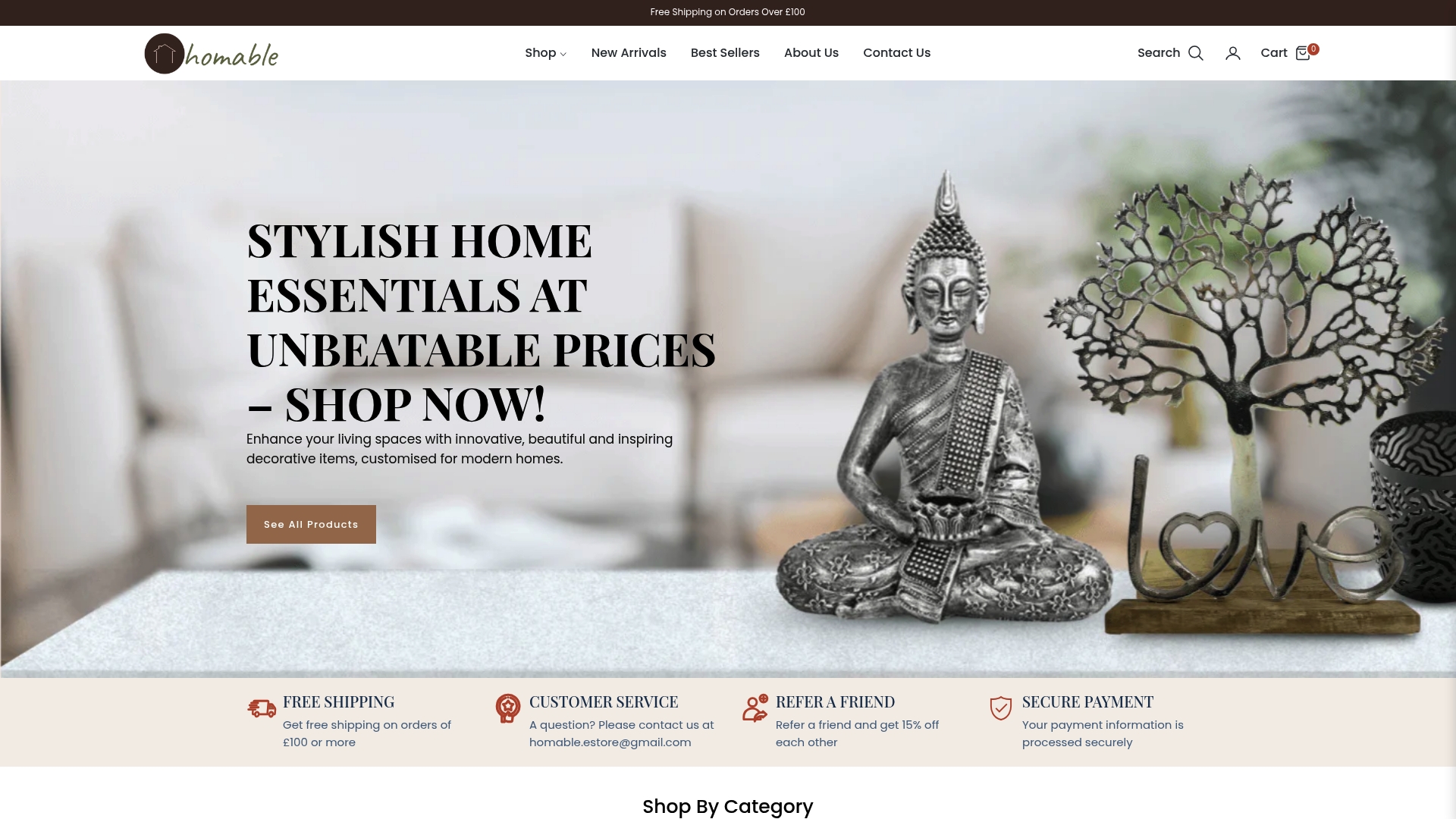
Whether you are looking for functional home décor that holds up in a busy hallway or a considered piece for a guest bedroom, Homable’s collections are built around the same checklist this guide covers. Browse the full range at Homable.co.uk and find pieces that earn their place in your home.
Sources and further reading
- A’ Design Award: functional versus aesthetic balance — design encyclopaedia entry on how proportion and contrast support usability and emotional satisfaction.
- Consumer response to overstyling (Wiley) — academic research on when styling improves product evaluation and when it cannot compensate for functional failure.
- Weighing aesthetics and performance — Designing for Performance — practical guide to performance budgets as guardrails for design decisions; the principles translate directly to physical product selection.
- Wings.design: design aesthetics and performance trade-offs — strategic overview of how aesthetics and performance work as interconnected levers rather than competing priorities.
- Homable: why prioritise design and function at home — Homable’s editorial guide to combining beauty and usability in residential interiors.
- One Day Doors & Closets: refresh your space without renovation — practical resource on fast, quality home refreshes with an emphasis on design quality and quick turnaround.