Cart
0

TL;DR:
- A bedroom styling checklist provides a sequence of decisions from function to finishing touches to create a calm, functional space. Following this order ensures proper furniture placement, textiles, lighting, and clutter management for a cohesive design. Prioritizing mood and function before shopping results in a bedroom that is both beautiful and restful.
A bedroom styling checklist is a structured, room-by-room plan for transforming your sleeping space into a calm, functional sanctuary by working through furniture, lighting, textiles, and storage in a deliberate order. Most people redecorate reactively, buying pieces they love without a plan, and end up with a room that looks busy rather than beautiful. This guide gives you the exact sequence professional interior designers use, from anchoring your layout with the bed to adding the final personal touches that make a room feel genuinely yours. Follow it once and you will not need to redo it.
1. Start with your bedroom’s function
Bedroom function must be identified first because it determines every furniture decision that follows. A sleep-only room needs a bed and two nightstands. A room that doubles as a dressing area or home office needs wardrobes, a desk, or a full-length mirror built into the plan from the start. Getting this wrong means buying furniture you later have to move or replace.
Designers at Chic Living Club recommend designing around a desired feeling first, whether that is calm, warm, or airy, and letting every purchase support that mood. Write down your room’s function and your intended feeling before you buy a single item. This two-sentence brief will save you hours of second-guessing.
- Decide: sleep-only, sleep plus dressing, or sleep plus work
- List the furniture categories you genuinely need
- Note any fixed features such as alcoves, radiators, or built-in wardrobes
Pro Tip: Sketch your room dimensions on paper and mark fixed features before ordering anything. A £20 tape measure prevents a £200 return.
2. Plan your furniture layout around the bed
The bed should anchor the layout first, with all other furniture arranged around it. Place the bed against the longest wall or the wall opposite the door for the strongest visual impact. Once the bed is positioned, map clear walking pathways of at least 24 inches around all sides so the room feels open rather than cramped.
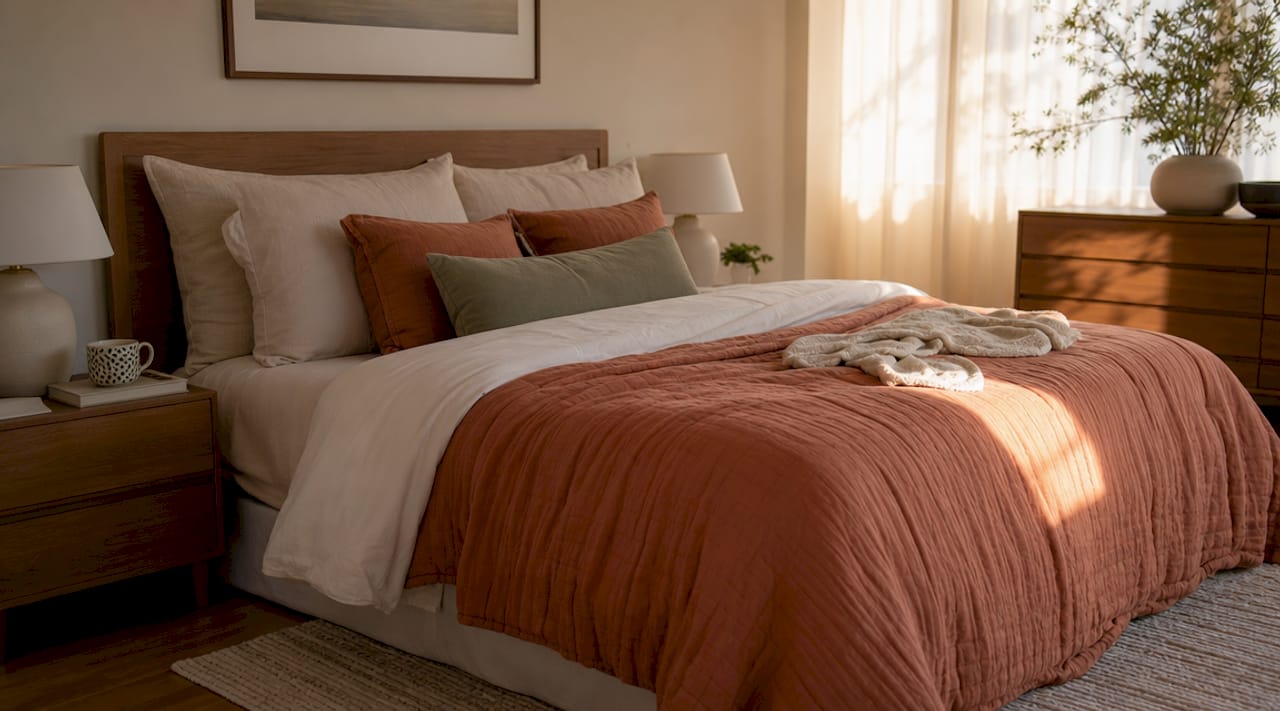
Nightstands scaled to the bed height and mattress depth are the next priority. Oversized nightstands crowd a small room; undersized ones look accidental. For storage, choose pieces that serve double duty: an ottoman at the foot of the bed, a wardrobe with internal organisers, or a bed frame with built-in drawers. You can find practical bedroom furniture advice that covers sizing and placement in detail.
Avoid the common mistake of filling every wall with furniture. White space is not wasted space. It is what makes a room feel considered rather than cluttered.
3. Layer your bedding for a polished, cosy look
The bedding layering formula used by interior stylists runs in this order: fitted base sheet, flat sheet or coverlet, plush duvet, and a throw blanket folded across the foot of the bed. Each layer adds texture and warmth without bulk. The throw at the foot serves both a visual and a practical purpose, giving the bed a finished, hotel-like quality.
Decorative pillows should be limited to two or three for a refined look that still feels liveable. More than three pillows tips the balance from styled to overdone, and they end up on the floor every night anyway. Mix textures rather than patterns for a subtler, more sophisticated result.
| Bedding layer | Material suggestion | Purpose |
|---|---|---|
| Fitted sheet | 100% cotton percale | Breathable base |
| Coverlet or quilt | Washed linen | Lightweight warmth |
| Duvet | Down or microfibre | Main insulation layer |
| Throw blanket | Chunky knit or velvet | Texture and finishing detail |
Pro Tip: Mixing linen, cotton, and velvet in the same tonal palette adds visual depth without clashing. Stick to two or three colours across all layers.
For a deeper look at how textile layering affects both warmth and visual appeal, the Homable guide on layering textiles for UK homes is worth reading alongside this checklist.
4. Size your rug correctly
Rugs should extend 18 to 24 inches beyond all sides of the bed to create visual harmony and a sense of intention. A rug smaller than the bed footprint makes the room look unfinished and actually makes the space feel smaller, not larger. This is one of the most common and most correctable bedroom decor mistakes.
For a standard double bed, a 200 x 300 cm rug is the minimum. For a king, go to 240 x 340 cm or larger. The rug should sit under the front two legs of the bed and extend generously on both sides so your feet land on it when you get up in the morning. That small sensory detail contributes more to a cosy bedroom than most people realise.
Choose a rug with enough pile to feel substantial underfoot but not so thick that it catches on the door. Flatweave rugs work well in smaller rooms because they read as less visually heavy.
5. Build a layered lighting scheme
Layered lighting requires three distinct sources: ambient overhead light, task lighting at the bedside, and accent lighting for atmosphere. Relying on a single ceiling light is the fastest way to make a bedroom feel like a waiting room. Each layer serves a different purpose and together they give you full control over the room’s mood at any time of day.
Use warm LED bulbs at around 2700K for all bedroom fittings. Cooler bulbs above 4000K suppress melatonin and make it harder to wind down in the evening. Lighting should be treated as an atmospheric tool rather than simply a practical necessity, and warm, layered light is the single biggest contributor to a soothing bedroom environment.
- Install a dimmable overhead fitting or ceiling pendant
- Add matching bedside lamps on both sides of the bed
- Place a floor lamp or soft glow lamp in a corner for accent light
- Fit dimmer switches to at least the overhead and bedside circuits
Matching bedside lamps on both sides of the bed creates symmetry and a sense of calm. Mismatched lamps, even attractive ones, introduce visual noise that works against a restful atmosphere.
Pro Tip: Smart bulbs such as Philips Hue allow you to programme a wind-down scene that gradually shifts from bright white to warm amber over 30 minutes. It is a small change with a noticeable effect on sleep quality.
6. Hang window treatments correctly
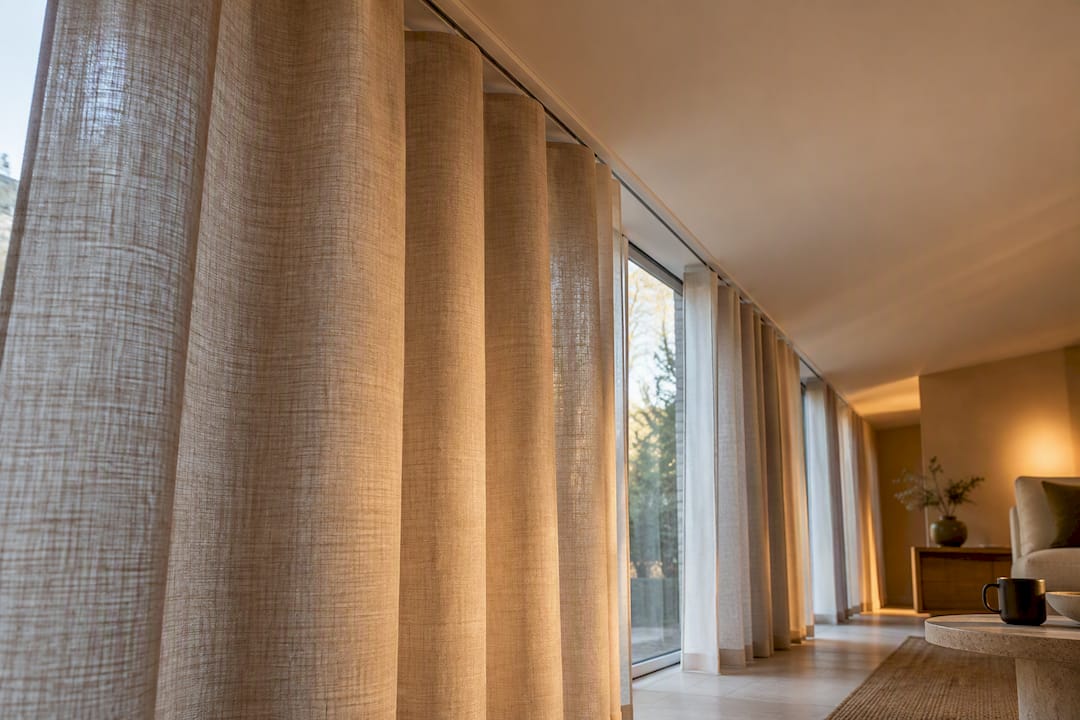
Curtain rods hung higher and wider than the window frame visually enlarge the window and add perceived height to the room. The standard advice is to mount the rod 10 to 15 cm above the window frame and extend it 15 to 20 cm beyond the frame on each side. Floor-to-ceiling curtains reinforce this effect and add a sense of elegance that shorter curtains cannot replicate.
For sleep quality, layering semi-sheer curtains with blackout shades gives you both daytime privacy and full light control at night. The sheers soften the window during the day while the blackout layer does the functional work after dark. Blackout curtain lining must control light bleed at the edges without showing the blackout texture through the face fabric. A visible grey backing ruins the look of an otherwise beautiful curtain.
- Mount the rod at least 10 cm above the window frame
- Extend the rod 15 to 20 cm beyond the frame on each side
- Choose floor-length drops for maximum visual impact
- Layer sheers with blackout lining for full light control
Pro Tip: Choose curtain fabric in a colour that sits within your room’s secondary palette, the 30% in the 60/30/10 rule. This ties the window treatment into the room without it competing for attention.
7. Apply the 60/30/10 colour rule
The 60/30/10 palette rule is the most reliable framework for achieving visual harmony in a bedroom. Sixty per cent of the room uses the dominant colour, typically walls and large furniture. Thirty per cent goes to secondary colour through textiles, curtains, and upholstery. Ten per cent is reserved for accent colour in accessories, artwork, and cushions.
This rule works because it mirrors the way the eye naturally scans a room. Too much accent colour becomes chaotic. Too little makes a room feel flat. The 10% accent is where personality lives, so choose it deliberately. A single warm terracotta, a deep forest green, or a dusty blush can define the entire character of the room when used sparingly.
If you are starting from scratch, choose your dominant colour first, then build the secondary and accent around it. Trying to work backwards from an accent piece you love rarely produces a cohesive result.
8. Manage clutter with styled storage
Clutter-free rooms with stylish storage feel calmer and more spacious, not because they have less personality but because every surface is intentional. The goal is not minimalism for its own sake. It is making sure that everything visible is either functional or beautiful, and ideally both.
For compact rooms, smart storage in small bedrooms can be achieved through under-bed drawers, wall-mounted shelving, and storage ottomans that replace standalone furniture. Woven baskets on open shelves look considered rather than makeshift. Lidded boxes on a wardrobe shelf keep seasonal items out of sight without requiring a separate storage room.
Keep nightstands styled with no more than three items: a lamp, something to read, and one personal object. Anything beyond that starts to accumulate and the nightstand becomes a dumping ground within a week.
- Use storage beds or under-bed boxes for seasonal items
- Replace open shelving clutter with lidded boxes or baskets
- Keep surfaces to a maximum of three intentional objects
- Edit the room once a month, removing anything that has drifted in
Pro Tip: Add one cosy personal detail to the room, such as a throw bench at the foot of the bed or a small jewellery dish on the dresser. One personal object grounds the room without cluttering it.
9. Add finishing touches last
Finishing touches such as art, plants, and personal accessories should always be added after the structural decisions are made. Adding art before you have settled on a colour palette or furniture layout means you will likely move it or replace it. Treat finishing touches as the final edit, not the starting point.
A single large piece of art above the bed headboard reads more confidently than a gallery wall of smaller frames. Plants add life and texture without requiring a redesign. A trailing pothos or a compact fiddle-leaf fig in the corner introduces organic shape that softens hard furniture lines. For a room-by-room approach to finishing touches across the whole home, the Homable guide on room-by-room decor tips offers a useful companion framework.
Do a final walk-through and remove anything that does not contribute to calm or function. If you cannot explain why an object is in the room, it probably should not be.
Key takeaways
A bedroom styling checklist works best when you follow the sequence: function first, furniture layout second, textiles and lighting third, and finishing touches last.
| Point | Details |
|---|---|
| Function before furniture | Decide whether the room is sleep-only or multipurpose before buying anything. |
| Bed anchors the layout | Place the bed first and plan 24-inch pathways before adding other pieces. |
| Layer lighting in three tiers | Use ambient, task, and accent sources with warm 2700K bulbs throughout. |
| Size rugs generously | Extend rugs 18 to 24 inches beyond the bed on all sides for visual harmony. |
| Finish with a final edit | Remove anything that does not serve calm or function before calling the room done. |
Why I think most bedroom refreshes fail before they start
Most people approach bedroom styling the way they approach a shopping trip: they see something they like, they buy it, and they try to make it work. I have seen this pattern produce rooms that are full of beautiful objects and yet feel completely wrong. The problem is not taste. It is sequence.
The rooms that genuinely work, the ones that feel calm the moment you walk in, are the ones where someone made a decision about how the room should feel before they bought a single thing. That decision shapes every choice that follows. A warm, cosy brief leads you towards linen, warm lighting, and muted tones. An airy, minimal brief leads somewhere else entirely. Without that brief, you end up with a room that is half of three different ideas.
The other mistake I see constantly is treating lighting as an afterthought. People spend weeks choosing the right bedding and then light the whole thing with a single cold overhead bulb. Warm, layered lighting does more for a bedroom than any accessory. It is the difference between a room that photographs well and a room that actually feels good to be in.
My honest advice: write down the feeling you want before you open a single browser tab. Then build the checklist around that feeling, not around whatever is on sale.
— Cristiano
Complete your bedroom refresh with Homable

Homable stocks a curated range of bedroom accessories designed to work with the checklist above, not against it. Whether you are looking for window treatments that combine light control with style or a rug that anchors your bed and adds warmth underfoot, the range is built around the same principles covered in this guide.
For window treatments, the bamboo curtain option offers a natural, textured look that complements both neutral and warm bedroom palettes. For flooring, the Baluchi Cannon Pink Woolen Rug delivers the kind of warmth and texture that makes a bedroom floor feel intentional rather than bare. Free shipping on orders over £100 makes it straightforward to tick off several checklist items in one go.
FAQ
What is a bedroom styling checklist?
A bedroom styling checklist is a structured sequence of decisions covering furniture layout, textiles, lighting, window treatments, and storage that guides you through a bedroom refresh in the correct order. Following the sequence prevents common mistakes such as buying furniture before measuring the room or adding accessories before settling on a colour palette.
How do I start styling a bedroom from scratch?
Start by defining the room’s function and the feeling you want it to create, then place the bed as the layout anchor before adding any other furniture. Every subsequent decision, from rug size to curtain colour, should support that initial brief.
What size rug do I need for a double bedroom?
A rug for a double bed should measure at least 200 x 300 cm and extend 18 to 24 inches beyond the sides and foot of the bed. A rug smaller than the bed footprint makes the room feel unfinished and visually smaller.
How many decorative pillows should a bed have?
Two to three decorative pillows strike the right balance between a polished, hotel-like look and everyday practicality. More than three tends to look overdone and ends up on the floor each night.
What colour temperature bulbs are best for a bedroom?
Warm LED bulbs at around 2700K are the standard recommendation for bedrooms. Cooler bulbs above 4000K interfere with the body’s wind-down process and make the room feel clinical rather than restful.