Cart
0
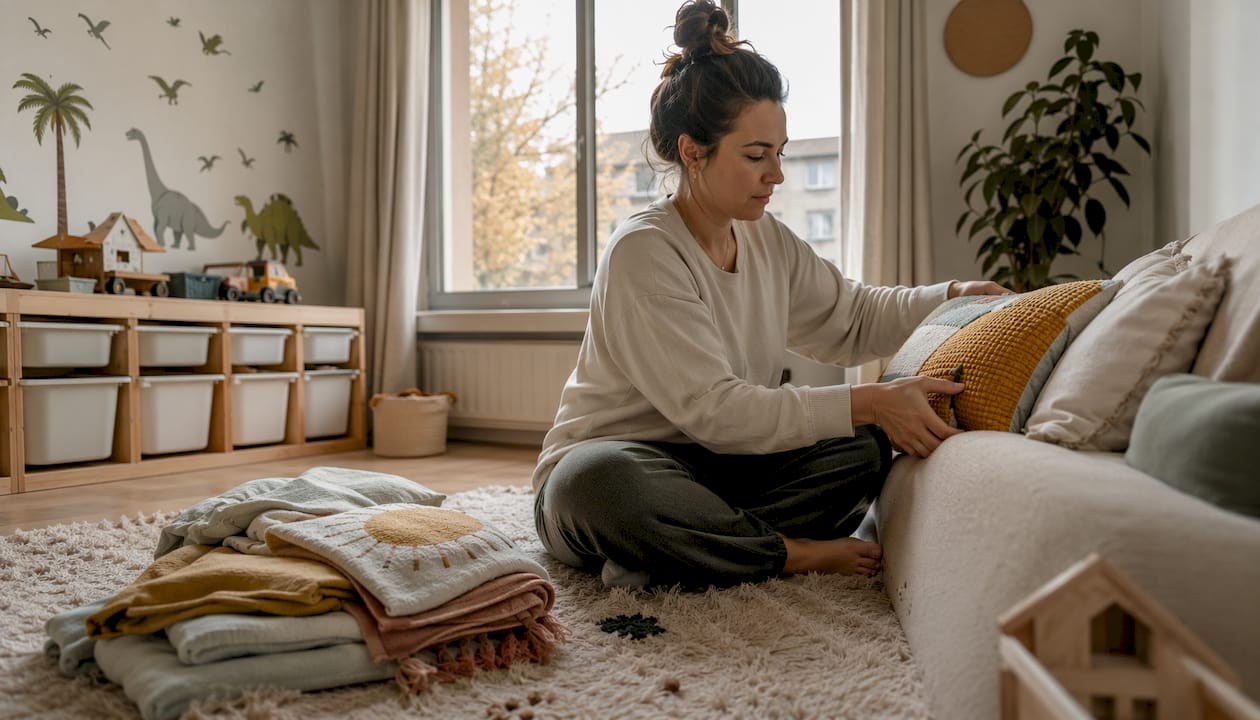
The best kids’ rooms share one quality: they’re designed to last. Not just through a single obsession with dinosaurs or unicorns, but through the full arc of childhood. The most effective approach is a neutral, durable base with swappable layers on top — walls, furniture, and flooring that stay put while textiles, art, and accessories do the changing. Here’s what that looks like in practice:
- Start with a neutral base. Sage, dusty blue, pale stone, or soft cream on walls and large furniture pieces give you a canvas that works at every age.
- Plan for zones. Even a small room benefits from distinct areas for sleep, play, study, and personal expression.
- Choose storage that children can actually use. Low, open, and accessible beats tall and lidded every time.
- Layer personality through textiles and accessories. Bedding, cushions, rugs, and wall art can be swapped in an afternoon without touching a paintbrush.
- Buy furniture that scales. A quality full-size bed or adult-proportioned wardrobe bought early will outlast three rounds of child-sized pieces.
Treating the room as a series of flexible layers rather than a fixed theme is the single principle that saves the most money and effort over time.
Table of Contents
- What colour schemes and wallpaper work best in kids’ rooms?
- Easy makeover ideas using paint, curtains, and upcycled furniture
- How to get storage right in a UK kids’ room
- Balancing personality with durability as your child grows
- How to zone and lay out a kids’ room for sleep, play, and study
- What UK safety regulations apply to kids’ room decor?
- Age-appropriate decor ideas from nursery to teenager
- Why eco-friendly materials matter in children’s room design
- Homable has the kids’ room pieces you actually need
- Key takeaways
What colour schemes and wallpaper work best in kids’ rooms?
Colour is where most parents go wrong first. The temptation is to paint the whole room in a child’s current favourite colour, which looks brilliant for about eighteen months and then requires a full repaint. A smarter approach is to keep the walls calm and let the accessories carry the personality.
Earthy tones such as dusty blue and terracotta create a calming atmosphere that suits both younger and older children, and they pair naturally with woven rugs and cotton throws for texture. Muted pastels — butter yellow, powder blue, soft blush — remain popular in UK interiors precisely because they’re timeless rather than trendy. Pair them with simple, minimalist wardrobes and drawers for a clean look that won’t feel dated in three years.
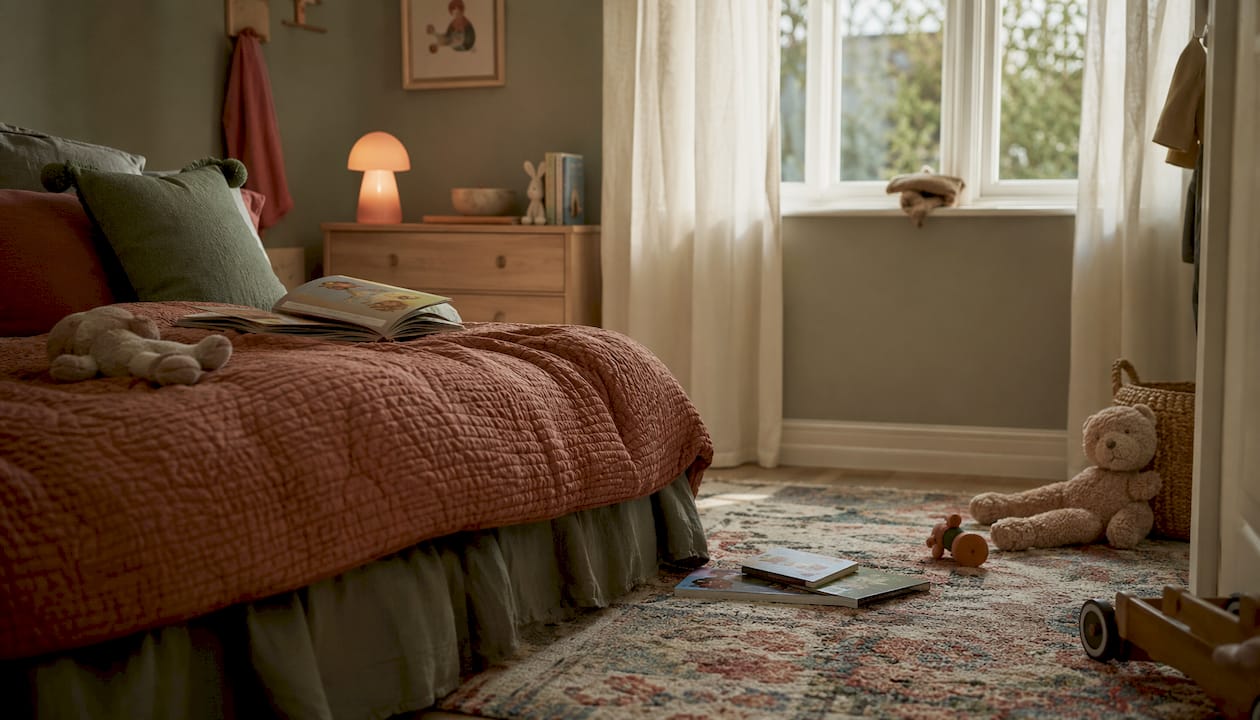
For wallpaper, a single feature wall is far more versatile than papering the whole room. Subtle geometric patterns, botanical prints, or gentle cloud and star motifs add charm without locking you into a theme. Avoid character-driven wallpaper on full walls; it dates quickly and is expensive to remove. Instead, bring in characters through bedding, a poster, or a peel-and-stick decal that lifts off cleanly when tastes change.
Pro Tip: Peel-and-stick murals and removable decals are genuinely excellent for kids’ rooms. They go up in an hour, come down without damaging plaster, and cost a fraction of a full repaint.
Easy makeover ideas using paint, curtains, and upcycled furniture
You don’t need a full renovation to transform a children’s room. A targeted refresh — new paint, fresh curtains, one upcycled piece — can shift the entire feel of a space for well under £200.
- Repaint the walls in a neutral shade. This is the highest-impact single change. A soft sage or warm white resets the room and makes everything else easier to coordinate.
- Swap the curtains. Colourful or patterned curtains add personality and control light without any permanent commitment. For layering window treatments that balance privacy and natural light, a blackout lining behind a printed fabric panel is the most practical combination for children’s rooms.
- Upcycle existing furniture. A coat of chalk paint on an old chest of drawers, new handles from a hardware shop, or fresh fabric on a tired chair can produce something that looks genuinely bespoke.
- Add a rug to define zones. A washable, low-pile rug in the play area instantly separates it from the sleep space without any building work.
- Introduce new bedding. Often the cheapest and fastest update. New duvet covers and cushion covers change the colour story of the whole room in minutes.
| Update | Approximate cost | Impact |
|---|---|---|
| Repaint walls (neutral) | £30 | High — resets the entire room |
| New curtains or blind | £50 | Medium-high — light control and colour |
| Upcycle chest of drawers | £10 (paint + handles) | Medium — unique, personalised piece |
| Washable area rug | £30 | Medium — defines zones, adds warmth |
| New bedding set | £20 | Medium — fastest colour refresh |
The key principle across all of these is that none of them are permanent. You can reverse or update any of them as the child grows, which is exactly the point. For more ideas on refreshing a room affordably, Homable’s guide to stylish, affordable UK decor covers the broader approach well.
How to get storage right in a UK kids’ room
UK new build second bedrooms often range from 6.5m² to 9m², which makes vertical storage not a nice extra but a genuine necessity. The floor space is too precious to fill with large, freestanding units that a child can’t reach into anyway.
- Go vertical. Wall hooks at child height, floating shelves, and under-bed drawers all clear the floor without sacrificing capacity.
- Use open-front, low shelving. This is the core of Montessori-inspired design: when children can see and reach their belongings independently, they’re far more likely to tidy up without being asked.
- Choose modular units. A low horizontal shelving unit works for a toddler and can be stacked vertically for a ten-year-old. Buying modular from the start means you’re not replacing the whole system every few years.
- Use baskets and storage cubes. Open-top baskets at child height are easy to grab from and easy to return things to. Label them with pictures for pre-readers.
- Don’t overlook doors and walls. Over-door organisers, pegboards, and wall-mounted hooks add significant storage without taking up any floor space at all.
Pro Tip: Rotating 6–10 toys every one to two weeks keeps the room feeling fresh and reduces the overwhelm that comes from having everything out at once. Store the rest in a labelled box in a wardrobe or under the bed. Children genuinely re-engage with “old” toys when they reappear after a few weeks.
| Storage type | Best for | UK space consideration |
|---|---|---|
| Under-bed drawers | Seasonal clothes, spare bedding | Works in rooms of any size |
| Wall hooks (child height) | Bags, coats, dressing-up clothes | Ideal for narrow rooms |
| Floating shelves | Books, display items | Keeps floor clear |
| Open baskets on low shelves | Toys, craft supplies | Encourages independence |
| Over-door organiser | Shoes, small toys, stationery | No floor space required |
For a broader look at decorative storage solutions that work in UK homes, Homable’s dedicated guide covers the options in detail.
Balancing personality with durability as your child grows
The most common mistake in children’s room design is going all-in on a theme. A fully character-themed room looks wonderful in photographs and exhausting to live with eighteen months later. The fix is straightforward: keep 80% of the room neutral and let the remaining 20% carry the personality.
- Invest in neutral base furniture. A white or natural wood wardrobe, a quality bed frame in a simple design, plain flooring — these don’t need replacing when tastes change.
- Limit character themes to accessories. Bedding, a poster, a lamp, a few cushions. These can be swapped in an afternoon for under £50.
- Avoid bold or character-specific finishes on hard surfaces. A character-themed wardrobe or painted mural on every wall is expensive to undo. Keep those surfaces plain.
- Invest in adult-scale, quality furniture from the start. A full-size bed and a proper wardrobe bought for a seven-year-old will still be appropriate at seventeen. Child-sized pieces rarely last beyond primary school.
Pro Tip: Monogramming a plain cushion or framing a piece of your child’s own artwork costs almost nothing and personalises the room far more meaningfully than a licensed character print. It also ages beautifully rather than dating.
How to zone and lay out a kids’ room for sleep, play, and study
The bed anchors everything. Place it first, ideally against a wall away from the door, and build the rest of the layout around it. From there, the room divides naturally into zones — and flexible zoning is what makes a children’s room genuinely future-proof, because the proportions shift as the child grows.
- Sleep zone. The bed, a bedside table, and appropriate lighting. Keep this area calm and free from screens and toys.
- Play zone. Defined by a washable rug, low storage, and open floor space. In a small room, this doubles as the reading area.
- Study zone. A height-adjustable desk and good task lighting. This zone grows in importance from around age seven onwards.
- Personal expression zone. A corkboard, a magnetic wire grid, or a gallery wall where the child controls what goes up. This is where the 20% personality lives.
Rugs, lighting, and furniture placement do most of the zoning work without any structural changes. A floor lamp in the reading corner, a desk lamp at the study area, and a dimmable overhead light for the whole room covers most scenarios.
| Zone | Key furniture | Lighting type |
|---|---|---|
| Sleep | Bed, bedside table | Dimmable overhead, bedside lamp |
| Play | Low storage, washable rug | Ambient overhead |
| Study | Height-adjustable desk, chair | Task lamp |
| Personal expression | Corkboard, display shelves | Flexible — matches adjacent zone |
Dimmable overhead lighting is worth installing from the start. It handles sleep routines, homework sessions, and play equally well, and it’s far cheaper to fit during a room refresh than to rewire later.
What UK safety regulations apply to kids’ room decor?
Safety in children’s rooms isn’t just common sense — parts of it are governed by specific UK and EU standards that are worth knowing before you buy.
The current UK guidelines recommend low-profile toddler beds with guardrails of at least 16cm above the mattress surface to prevent nighttime falls. For bunk beds and loft beds, both EU and UK standards (BS EN 747) require sturdy guardrails on all elevated sleeping surfaces and a secure ladder with non-slip tread. Bunk beds are recommended for children aged six and over. For babies, cot bumpers should be avoided entirely — they present a choking and suffocation risk.
Beyond beds, anchor tall furniture such as wardrobes and bookshelves to the wall to prevent tipping. Choose water-based, low-VOC paints for walls and furniture — these are widely available in UK DIY retailers and significantly reduce indoor air pollutants in a space where children sleep for ten or more hours a night. Avoid blinds with long looped cords, which pose a strangulation risk; cordless or short-cord options are the safer choice and are now the standard in most UK retailers.
Age-appropriate decor ideas from nursery to teenager
A room that works brilliantly for a toddler will frustrate a ten-year-old, and a teenager needs something different again. The neutral-base approach handles most of this automatically, but the zone proportions and accessories shift at each stage.
Nursery (0–2 years). Soothing neutrals or soft pastels, a crib, a nursing chair, a changing area, and plenty of accessible storage. Wall decal stickers or a patterned wallpaper band add personality without commitment. Keep the room simple — babies don’t need stimulation from every surface.
Toddler and early years (2–6 years). Lower the storage so the child can reach it independently. Add a small table and chairs for play and craft. A low bed or floor-level mattress reduces fall risk. This is the stage where a defined play zone matters most, because the floor is the primary workspace.
Primary school age (6–11 years). The study zone becomes genuinely important. A proper desk, a good task lamp, and wall space for displaying schoolwork. The play area can shrink slightly to accommodate this. Bunk beds become practical if space is tight or siblings share.
Teenager (12+ years). The play area typically becomes a social lounge or tech zone. Expand the desk for computers and study materials. Let the teenager lead on the 20% personality choices — posters, colour accents, display items. The neutral base you invested in years earlier will still look appropriate with whatever they choose to layer on top.
Why eco-friendly materials matter in children’s room design
Children spend more time in their bedrooms than almost any other room in the house, which makes material choices more consequential here than elsewhere. Natural, non-toxic materials — solid wood, organic cotton, water-based paints — reduce exposure to the VOCs and synthetic chemicals that off-gas from cheaper alternatives.
Solid wood furniture lasts decades and can be repainted or refinished rather than replaced. Organic cotton bedding is softer, more breathable, and free from the pesticide residues that standard cotton often carries. For flooring, engineered hardwood or luxury vinyl plank with a low-VOC finish is durable, easy to clean, and far more practical than carpet in a room where spills and mess are inevitable. A washable, low-pile area rug adds warmth and defines the play zone without trapping allergens the way fitted carpet does.
When buying paint, look for the EU Ecolabel or the British Coatings Federation’s environmental certification. These are widely available from UK retailers including Farrow & Ball, Little Greene, and Dulux’s Ecosure range, and they perform just as well as standard alternatives.
Homable has the kids’ room pieces you actually need
Decorating a child’s room is easier when the products you’re choosing from are already curated for style, practicality, and longevity. Homable brings together storage solutions, soft furnishings, lighting accessories, and decorative pieces that align with exactly the principles covered in this guide: neutral bases, swappable personality layers, and quality that lasts.

Every piece in Homable’s collection is chosen for design consistency and real-world function — not just how it looks in a photograph. Free shipping on orders over £100 and secure payment options make it straightforward to put together a full room refresh without the usual hassle. Whether you’re starting from scratch with a nursery or updating a primary-schooler’s space, Homable’s kids’ room accessories give you the building blocks for a room that grows with your child. Browse the full collection at Homable.co.uk and find the pieces that fit your space.
Key takeaways
A neutral base with swappable layers is the single most effective strategy for creating a kids’ room that stays functional, stylish, and relevant from nursery through to the teenage years.
| Point | Details |
|---|---|
| Neutral base, swappable layers | Keep 80% of the room neutral; use accessories for the remaining 20% of personality. Limiting character or theme-based elements to around 20% in accessories while maintaining a neutral foundation ensures the room grows with your child without frequent overhauls. |
| Vertical storage for small rooms | UK second bedrooms commonly have small dimensions, making wall hooks and floating shelves critical. |
| Child-accessible storage | Open-front, low shelving at child height encourages independence and tidier rooms. |
| Zone the room flexibly | Divide into sleep, play, study, and expression areas; adjust proportions as the child grows. |
| Homable for curated kids’ decor | Homable offers storage, soft furnishings, and accessories that support a layered, adaptable room design. |