Cart
0

TL;DR:
- Successful home decor requires assessing space, lifestyle, and personal style before purchasing.
- Creating a cohesive palette and moodboard helps establish a lasting, authentic decor theme.
- Phased planning, sustainable materials, and testing trends prevent costly regrets and ensure longevity.
Choosing a decor theme for your home sounds straightforward until you’re standing in a paint aisle, paralysed by 200 shades of grey, wondering how you ended up with a Scandi sideboard, a maximalist gallery wall, and curtains that belong in a different decade. Many UK homeowners know this feeling well. The good news is that selecting a cohesive, lasting decor theme is not about innate taste or a limitless budget. It’s about following a clear, repeatable process. This guide walks you through every stage, from assessing your space to avoiding the pitfalls that lead to costly regret, so you can decorate with genuine confidence.
Table of Contents
- Assess your space and set clear style goals
- Create a cohesive design vision with moodboards and colour palettes
- Practical planning: Budget, phasing, and sustainable choices
- Common mistakes and how to avoid them
- Our take: Finding genuine style beyond trends
- Next steps: Stylish essentials for your chosen decor theme
- Frequently asked questions
Key Takeaways
| Point | Details |
|---|---|
| Start with assessment | Audit your space, lighting, and needs before choosing a decor theme. |
| Prioritise cohesion | Build a moodboard and stick to a 2-3 colour palette for consistency. |
| Plan, phase, and future-proof | Set a realistic budget, phase your upgrades, and favour sustainable choices. |
| Avoid common regrets | Resist trend-chasing and don’t underestimate the importance of storage and natural light. |
| Express your style | Strike a balance between trends and personal comfort for lasting satisfaction. |
Assess your space and set clear style goals
Every successful decor theme starts long before you buy a single cushion. The foundation is a clear-eyed audit of your home: room dimensions, ceiling heights, natural light levels throughout the day, and any architectural character worth preserving or concealing. A Victorian terrace in Leeds has entirely different constraints and opportunities compared to a new-build flat in Milton Keynes. Recognising those differences early saves you from forcing a theme that fights your space rather than works with it.
Lifestyle is equally important. A household with young children and a dog has fundamentally different durability needs than a couple who entertain formally. Think about how you actually use each room, not how you wish you used it. Hobbies, storage demands, and how often you host all shape which themes are genuinely liveable for you.
Once you understand your space and lifestyle, you can explore personal style preferences honestly. The broad categories most designers use are:
- Minimalist — clean lines, neutral palettes, deliberate negative space
- Maximalist — layered patterns, rich colours, curated collections on display
- Eclectic — intentional mixing of periods, cultures, and styles
- Biophilic — natural materials, plant life, earthy tones
- Contemporary — current trends interpreted through quality materials
A useful exercise is collecting inspiration without editing yourself first. Save images to a Pinterest board, tear pages from magazines, or photograph rooms you admire. After two weeks, look for patterns. You’ll notice which elements repeat across your saved images, and that repetition is your authentic starting point. Use a decorating checklist to keep this audit structured and avoid missing important details.
| Room factor | Why it matters | What to record |
|---|---|---|
| Natural light | Affects colour perception significantly | Direction windows face, peak light hours |
| Room proportions | Determines scale of furniture and patterns | Width, length, ceiling height |
| Existing architecture | Can anchor or clash with chosen theme | Coving, fireplaces, alcoves |
| Fixed elements | Costly to change, so theme must work around them | Floor colour, tile, fitted units |
Pro Tip: Before committing to any theme, spend a week photographing each room at different times of day. Light transforms colour dramatically in UK homes, where overcast skies are the norm rather than the exception.
For deeper guidance on individual rooms, room-specific solutions can help you tailor your approach beyond a one-size-fits-all theme.
Create a cohesive design vision with moodboards and colour palettes
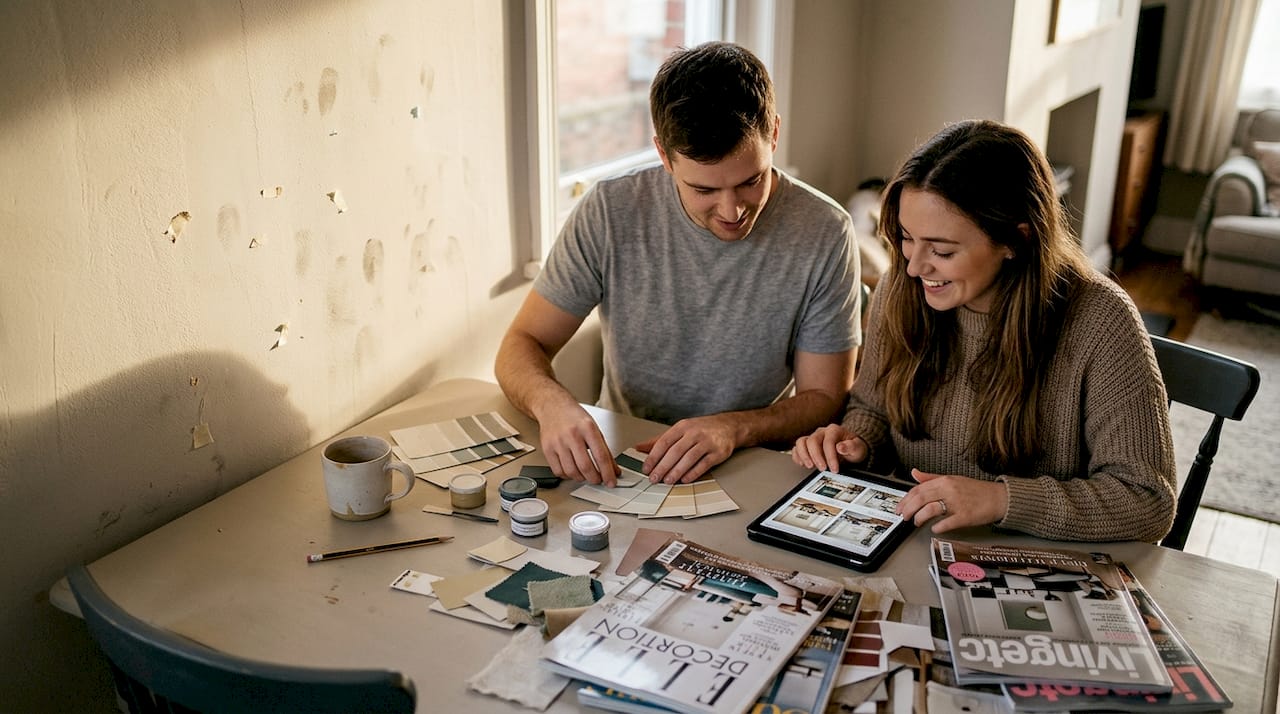
With your needs and inspiration in hand, it’s time to organise your ideas visually and establish your core palette. A moodboard is simply a curated collection of images, swatches, and textures that represent the feeling you want your home to evoke. It doesn’t need to be digital. A corkboard with magazine clippings works just as well, and the physical act of pinning and rearranging helps you see relationships between elements more clearly.
The key step is building a cohesive palette of two to three primary hues supported by complementary neutrals. More than three dominant colours creates visual noise rather than character. Your neutrals, whether warm whites, soft greiges, or deep charcoals, do the heavy lifting in tying everything together.
Here is how colour schemes typically pair with mood and theme:
| Colour scheme | Associated mood | Works well with |
|---|---|---|
| Warm neutrals (cream, terracotta) | Grounded, welcoming | Biophilic, Mediterranean, maximalist |
| Cool neutrals (grey, slate, white) | Calm, contemporary | Minimalist, Scandi, industrial |
| Deep jewel tones (navy, forest green) | Dramatic, cosy | Traditional, eclectic, maximalist |
| Earthy mid-tones (ochre, rust, sage) | Relaxed, natural | Biophilic, boho, contemporary |
Once your palette is set, the next challenge is applying it consistently. Repeating colour, texture, and materials across rooms creates a throughline that makes even eclectic collections feel intentional rather than accidental. A sage green that appears in your kitchen tiles, a living room cushion, and a bedroom throw creates continuity without being monotonous.
The steps to build your visual plan are:
- Gather at least 20 images that genuinely excite you
- Identify the three most common colours across those images
- Choose your two to three primary hues from that shortlist
- Select one or two neutrals that complement them
- Source physical swatches and test them in your actual rooms
Pro Tip: In open-plan layouts, colour repetition is your single most powerful tool for unity. Repeat at least one accent colour in each zone, whether through a vase, a throw, or a piece of art, to prevent the space from feeling fragmented. For a structured approach to the whole process, a modern interior design workflow can guide you step by step.
Practical planning: Budget, phasing, and sustainable choices
Once your vision is defined, ensure it’s achievable and stands the test of time. The most common reason decor projects stall or disappoint is an unrealistic budget applied all at once. A far more effective approach is phased implementation: prioritise the rooms you use most, then work outward.
A sensible phasing order for most UK homes looks like this:
- Phase 1: Paint and wall treatments (highest visual impact, lowest cost per square metre)
- Phase 2: Floor coverings and window treatments (structural feel of the room)
- Phase 3: Furniture and lighting (functional anchors of the space)
- Phase 4: Accessories, textiles, and art (the personality layer)
Sustainability is no longer a niche concern. 2026 UK trends strongly favour biophilic design, natural materials, and earth tones, but experts consistently advise building on neutral bases rather than committing to niche bold trends. The reason is practical: neutral foundations protect resale value and make future updates far less expensive.
Materials worth prioritising for longevity include solid wood, natural stone, linen, wool, and recycled metals. These age well and rarely feel dated. Contrast this with fast-fashion decor items, which often look tired within two to three years.
Nearly one in five UK homeowners regret following social media decor trends, with all-grey interiors and wall panelling among the most commonly cited regrets.
Pro Tip: Never invest heavily in a bold trend immediately. Buy one or two accessories in that trend first, live with them for a month, and only then decide whether it warrants a larger commitment. Explore top home styling trends for 2026 to see which directions have genuine staying power, and check best sellers in decor to understand what other UK homeowners are actually buying and keeping.
Common mistakes and how to avoid them
Any carefully chosen plan can go wrong if you miss the warning signs. Here’s how to avoid costly missteps that affect far more UK homeowners than you might expect.
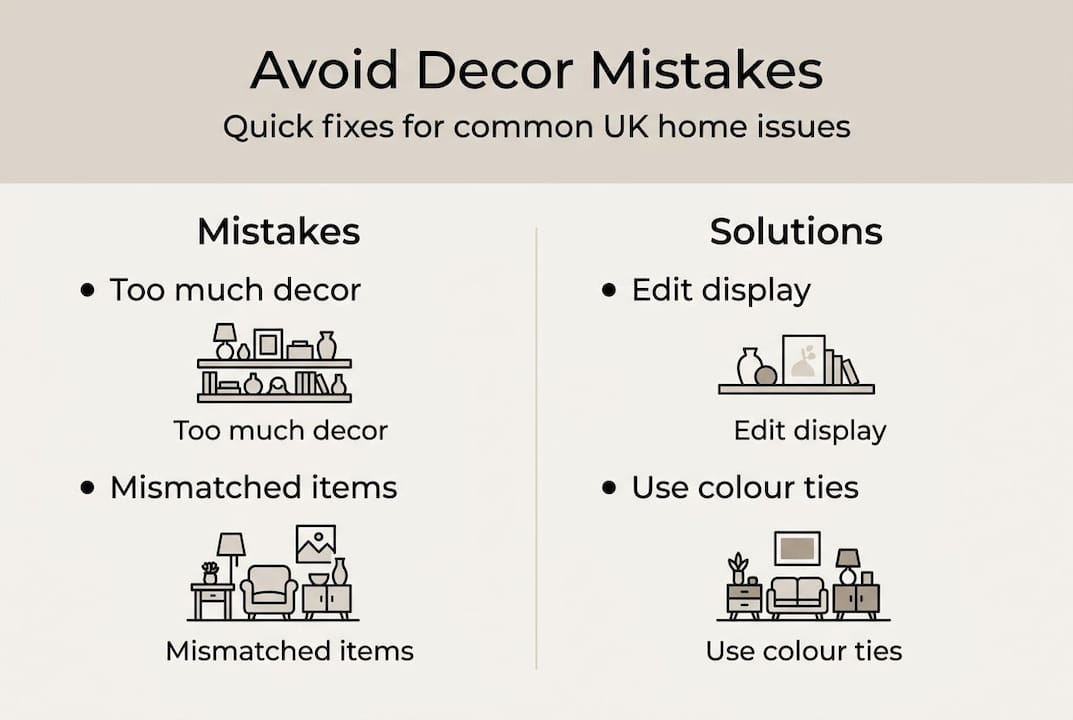
The most widespread regret is not aesthetic at all. 17% of UK homeowners report regretting a lack of storage, while 16% regret purchasing cheap flat-pack furniture that deteriorated quickly. These are functional failures that no amount of styling can fix. Overcrowding a room with decorative pieces while neglecting practical decorative storage solutions is one of the easiest traps to fall into.
Trend-chasing is the second major pitfall. The all-grey interior, once ubiquitous across UK homes, is now cited as a source of regret by 11% of homeowners. Wall panelling, heavily promoted on social media, follows a similar pattern. The issue isn’t that these trends are inherently bad. It’s that they were applied wholesale, without considering whether they suited the individual home or lifestyle.
Other common mistakes include:
- Ignoring the impact of limited natural light, which makes cool, dark palettes feel oppressive in many UK rooms
- Buying furniture at different scales without considering how pieces relate to each other
- Neglecting the ceiling and floor as part of the overall scheme
- Choosing window treatments last, when they should be considered early as they affect light and colour perception
| Mistake | Impact | Solution |
|---|---|---|
| Overcrowding with decor | Feels cluttered, lacks function | Prioritise storage before accessories |
| Trend-chasing without testing | Costly regret within 2-3 years | Trial with accessories first |
| Mismatched furniture scales | Incoherent, unsettled feel | Use a consistent scale reference |
| Ignoring natural light | Colours look wrong in situ | Test swatches at different times of day |
| No unifying throughline | Rooms feel disconnected | Repeat one colour or texture throughout |
For mismatched furniture you already own, bridging colours are your best tool. Paint an accent wall in a hue that picks up tones from both pieces, or introduce a rug that contains both colours. Staying current on design trends in 2026 can also help you identify which directions are genuinely enduring versus purely seasonal.
Our take: Finding genuine style beyond trends
There is a tension at the heart of home decor advice that rarely gets addressed directly. On one side, you have the argument for timeless cohesion: neutral bases, enduring themes, and interiors that photograph well and hold their value. On the other, there is the case for personal expression, the layered, lived-in look that reflects who you actually are rather than who a trend report says you should be.
Our view is that the second approach wins, but only when it’s executed with the discipline of the first. UK decor in 2026 is shifting away from the polished restraint of quiet luxury toward something warmer, more textured, and more individual. That shift is worth embracing. But embracing it doesn’t mean abandoning structure. It means building a solid, neutral foundation and then layering your personality on top with intention. The best home decor items are always the ones that mean something to you and work hard in your space, not the ones that were simply trending in January.
Next steps: Stylish essentials for your chosen decor theme
You’re ready to bring your vision to life. The research is done, the palette is set, and the plan is in place. What comes next is finding the right pieces to complete the picture.
At Homable, we’ve curated a range of home accessories and decorative essentials designed for exactly this moment in your project. Whether you’re looking for a characterful finishing touch like our woven fabric rabbit doorstop or browsing for statement pieces that anchor your chosen theme, our collection balances quality, style, and affordability. Orders over £100 include free UK shipping, making it straightforward to refresh multiple rooms in one go. Browse our new arrivals and best sellers to find pieces that genuinely fit your vision.
Frequently asked questions
How do I choose a decor theme if my rooms get little natural light?
Opt for lighter palettes and mirrors to reflect what light there is, and use natural textures like linen and rattan to add warmth without darkening the space. Avoid cool, dark palettes in north-facing rooms, as they tend to feel heavy rather than dramatic.
Should I follow the latest decor trends or choose a timeless style?
Experts recommend neutral bases for adaptability, adding trend colours and items through accessories that are easy and inexpensive to swap out. This approach protects your investment while keeping your home feeling current.
How can I prevent regretting design decisions?
Start with a moodboard, trial bold trends with small accessories before committing, and always prioritise storage and comfort over visual fads. Nearly one in five UK homeowners regret following social media trends, so taking your time pays off.
Is it possible to blend old and new items without looking mismatched?
Absolutely. Unite pieces with bridging colours and repeat key textures across the room to create harmony between different periods and styles. A shared colour across 60 to 70 percent of your surfaces is enough to make even eclectic collections feel deliberate.