Cart
0
TL;DR:
- Effective home organization begins with understanding household habits and customizing storage solutions accordingly. Decluttering prior to buying storage prevents misfits and promotes long-term success, while regular reviews and daily habits maintain order. Using full, one-third empty storage spaces and broad category labels ensures systems are efficient and adaptable over time.
The best practices for home organisation are built on one principle: your system must fit your household’s actual habits, not an idealised version of them. Generic storage solutions fail because they ignore how your family moves through the space. The National Association of Productivity and Organizing Professionals confirms that customised organisation systems have significantly higher long-term success than off-the-shelf approaches. That means designing around your real routines, decluttering before you buy a single basket, and building maintenance habits that stick. The tips below follow that logic, room by room and habit by habit.
1. Best practices for home organisation start with decluttering first
Decluttering is not a step you can skip. Bins and baskets only shift clutter; a thorough audit of your belongings must come before any storage purchase. Buying containers for items you do not need wastes money and creates misfit systems that collapse within weeks.
Work through one small zone at a time. A single drawer, one shelf, or a corner of the kitchen is enough for a single session. This prevents the paralysis that comes from pulling everything out of an entire room at once.
Sort every item into four categories: keep, donate, discard, and repair. This method forces a decision on each object rather than letting you shuffle things from one pile to another. Start with low-emotion items such as duplicate kitchen utensils or expired pantry goods, then progress to sentimental belongings once the habit feels natural.
Pro Tip: Set a timer for 20 minutes per zone. A short, focused session produces more progress than an open-ended afternoon that loses momentum after the first hour.
2. Design a system around how your household actually lives
Custom systems outperform generic ones because they reflect real behaviour. Items used daily must be stored in the most accessible locations, while seasonal items belong in harder-to-reach storage. This single rule reduces the friction that causes systems to break down.
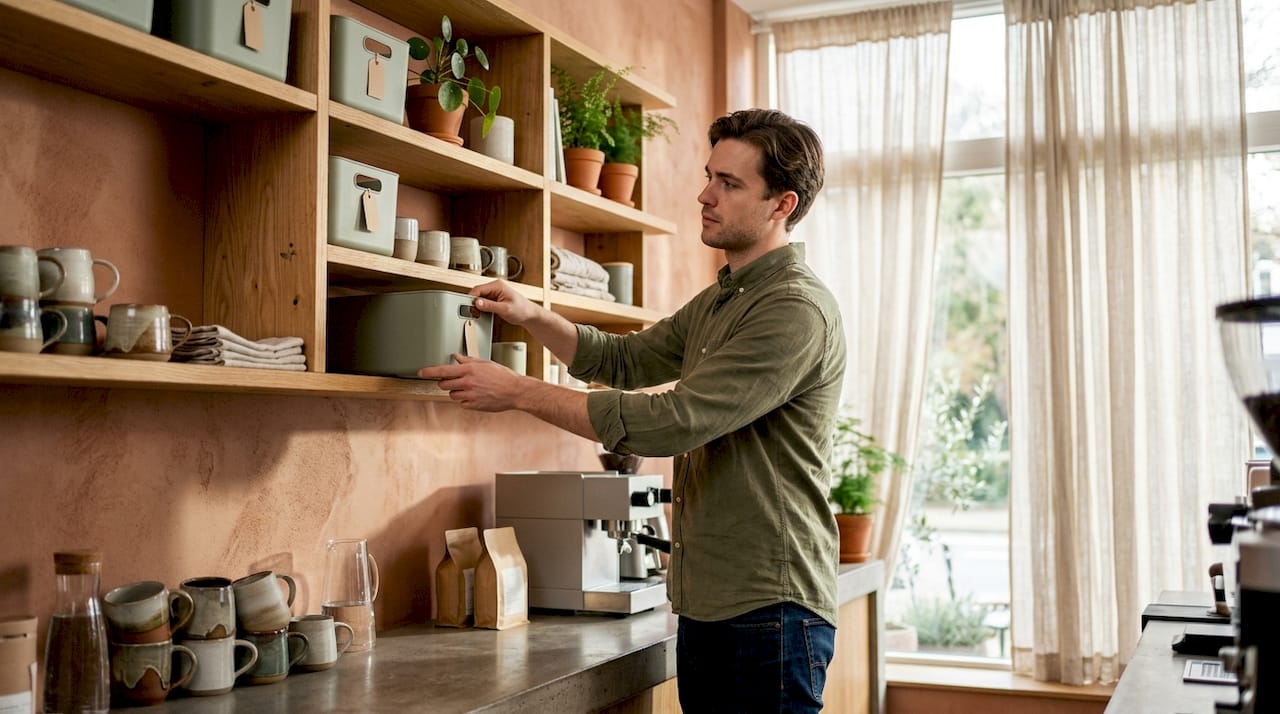
Map your household’s flow before you assign storage locations. Notice where bags land when people walk through the door, where charging cables pile up, and which surfaces attract clutter. Those friction points reveal exactly where dedicated homes are needed most.
Involve every household member in the design process. A system that one person imposes on others rarely survives. When children and partners help choose where things live, they are far more likely to maintain it.
“Multipurpose furniture with integrated storage enhances both space efficiency and aesthetic openness, especially in smaller homes. A well-chosen ottoman or storage bench does the work of two pieces of furniture in one.” — Architect Rachel Robinson, 2026
Multipurpose furniture is one of the most practical space-saving solutions available to homeowners with limited square footage. A storage ottoman, a bed frame with drawers, or a hallway bench with a lift-up seat all serve double duty without adding visual weight to a room.
3. Assign one dedicated home to every category
Assigning one clear home per category reduces decision fatigue and makes it easier for every household member to maintain the system. The key word is category, not individual item. A drawer labelled “batteries” is more useful than one labelled “AA batteries, AAA batteries, and torch batteries” because it accommodates variation without requiring reorganisation.
This approach also scales as your household changes. When a new item enters the home, it either fits an existing category or signals the need for a new one. That clarity prevents the slow drift back into clutter.
Apply this logic across every room. In the kitchen, group items by task rather than type: a baking zone, a coffee station, a snack area. In the bedroom, group by frequency of use. The system becomes intuitive because it mirrors how you actually reach for things.
4. Keep storage areas at least one-third empty
Storage areas should remain at least one-third empty to accommodate new items over time and prevent system collapse. A cupboard packed to capacity has no room to absorb the natural flow of household goods, so items end up on surfaces instead.
This rule applies to every storage space: wardrobes, kitchen cupboards, bathroom cabinets, and toy boxes. If a space is already full, that is a signal to declutter before adding more, not a reason to buy additional storage.
Think of the empty third as a buffer, not wasted space. It keeps the system breathing and gives you room to adapt without a full reorganisation every few months.
5. Label by broad category, not by specific item
Labelling by broad category reduces cognitive load and simplifies maintenance for every member of the household. A label that reads “Craft Supplies” works better than one that reads “Glitter, Scissors, and Glue” because it covers future additions without becoming inaccurate.
Category labels also reduce the number of decisions required to put something away. When the label is broad enough to be obvious, the action becomes automatic. That automaticity is what turns a system into a lasting habit.
Use clear, legible labels on baskets, bins, drawers, and shelves. Printed labels look tidier than handwritten ones and signal that the system is permanent rather than temporary. For families with young children, picture labels alongside words work particularly well.
Pro Tip: Label the outside of opaque containers, not just the inside. If you cannot see the label without opening the container, the system adds friction rather than removing it.
6. Use vertical and under-bed storage to maximise space
Most homes have significant unused vertical space. Shelving that reaches to ceiling height, wall-mounted hooks, and over-door organisers all turn dead space into functional storage. The creative storage solutions that make the biggest difference are usually the ones that use height rather than floor area.
Under-bed storage is equally underused. Flat storage boxes or bed frames with built-in drawers work well for seasonal clothing, spare bedding, and items used only occasionally. Keep these areas reserved for low-frequency items so daily-use belongings remain accessible.
Drawer dividers and cable management trays are small investments that prevent two of the most common sources of household clutter. A divided junk drawer becomes a functional utility drawer. Managed cables reduce visual noise and make cleaning easier.
7. Apply the 60-second rule every day
The 60-second rule is straightforward: if an item takes less than 60 seconds to put away, do it immediately. This daily habit is the single most effective way to prevent clutter from accumulating between deeper tidying sessions. Habit formation for this behaviour takes approximately 14 days of consistent practice.
The rule works because it removes the mental negotiation around small tasks. Putting a mug back in the cupboard, hanging up a coat, or returning scissors to their drawer each takes seconds. Leaving these tasks until later creates a backlog that feels overwhelming by the end of the day.
Pair the rule with a daily tidying routine that takes no more than 10 minutes. A short reset at the end of each evening keeps the home functional without requiring a weekend overhaul.
8. Follow the one-in, one-out rule for new acquisitions
The one-in, one-out rule prevents clutter from returning after a declutter by stabilising the total volume of household belongings. Every time a new item enters the home, one existing item leaves. This applies to clothing, kitchen gadgets, books, toys, and decorative objects.
The rule is most effective when applied at the point of purchase rather than after the fact. Before buying something new, identify what it will replace. This shifts the decision from “do I have space for this?” to “is this worth replacing what I already have?”
Families with children benefit from applying this rule to toys specifically. When a new toy arrives, one older toy is donated. Children adapt quickly, and the habit teaches them a useful relationship with possessions.
9. Track frustration points to target the right zones
Frustration identifies exactly where organising effort should be focused. When you find yourself annoyed by a specific area repeatedly, that is the zone to address next. Targeting high-friction areas produces the fastest visible improvement and builds momentum for tackling the rest of the home.
Keep a simple note on your phone for one week. Every time something in the home irritates you, write it down. At the end of the week, the list will show you a clear priority order for your next organising sessions.
Address one zone at a time to avoid burnout. Trying to reorganise the entire home in a single weekend is the most common reason organisation efforts fail. Small, focused improvements compound into a genuinely organised home over weeks rather than days.
10. Schedule periodic reviews every three to six months
Organisation is not a one-time project. Household needs change as children grow, seasons shift, and new items enter the home. A review every three to six months catches drift before it becomes a full-scale clutter problem.
Use these reviews to reassess whether storage locations still match how the household uses each space. A system that worked well in january may need adjustment by july as routines change. The review does not need to be a full declutter. It is a check-in to confirm the system still fits.
Pair reviews with natural seasonal transitions. The shift from summer to autumn is a natural moment to rotate clothing storage, reassess toy collections, and clear out items that accumulated over the warmer months. Seasonal timing makes the habit easier to remember and sustain.
11. Apply room-by-room organisation to maintain focus
Room-by-room organisation prevents the scattered effort that comes from trying to tackle the whole home at once. Each room has distinct functions, traffic patterns, and storage needs. Treating them separately produces better results than a whole-home approach.
The storage solutions checklist for each room should reflect its primary purpose. The kitchen needs task-based zones and accessible daily tools. The bedroom needs clothing storage that matches morning routines. The living room needs a system for remote controls, books, and children’s items that resets easily each evening.
Start with the room that causes the most daily friction. Completing one room fully before moving to the next gives you a working model to replicate elsewhere and a visible result that motivates continued effort.
Key takeaways
Lasting home organisation depends on custom systems built around real household habits, not generic storage products applied to an uncleared space.
| Point | Details |
|---|---|
| Declutter before buying storage | Audit and purge belongings first; containers cannot fix excess volume. |
| Design for actual behaviour | Store daily items within easy reach and involve all household members in the system. |
| Keep storage one-third empty | Leave buffer space in every cupboard and cabinet to prevent system collapse. |
| Use the 60-second and one-in, one-out rules | These two daily habits prevent clutter from returning after an initial declutter. |
| Review every three to six months | Periodic check-ins catch drift early and keep the system aligned with changing household needs. |
Why I think most people approach home organisation backwards
Most homeowners buy the storage first. They see a set of matching baskets or a modular shelving unit and imagine the tidy home it will create. The purchase feels like progress. It rarely is.
The homes I have seen stay genuinely organised over years share one trait: the owners spent time understanding their own habits before they spent money on products. They noticed where things piled up, why certain drawers stayed chaotic, and which family members were most likely to leave items on the stairs. That self-knowledge shaped every storage decision they made.
The other mistake I see constantly is treating organisation as a destination rather than a practice. People reorganise a room, feel satisfied, and then do nothing to maintain it. Within three months, the same problems return. The 60-second rule and the one-in, one-out rule exist precisely because organisation is a daily behaviour, not a weekend project.
Start with one frustrating zone. Fix it properly. Live with it for two weeks and adjust. Then move to the next. That iterative approach produces homes that stay organised because the system was built around real life, not around an aspirational version of it.
— Cristiano
How Homable helps you build a home that stays organised
A well-organised home deserves surfaces and textiles that hold up to daily life. Homable’s range includes practical, stylish pieces that complement the systems you build. A washable kitchen rug keeps your cooking area looking clean between deeper tidies, while a non-slip bath mat set adds order and comfort to a bathroom that sees heavy daily use. Homable offers free shipping on orders over £100, with secure payment and a curated selection built for modern homes. Browse the full range at Homable and find pieces that work as hard as your organisation system does.
FAQ
What should I do before buying storage products?
Declutter first. Purchasing bins and baskets before auditing your belongings leads to misfit containers and wasted money, as the storage will not match what you actually keep.
How long does it take to form a new organisation habit?
The 60-second put-away habit takes approximately 14 days of consistent daily practice to become automatic, according to professional organising guidance.
How full should my cupboards and drawers be?
Professional organisers recommend keeping storage areas at least one-third empty. This buffer prevents system collapse and accommodates new items without forcing a full reorganisation.
What is the one-in, one-out rule?
The one-in, one-out rule means that every time a new item enters the home, one existing item leaves. It stabilises the total volume of belongings and prevents clutter from returning after a declutter.
How often should I review my home organisation system?
A review every three to six months is sufficient for most households. These check-ins catch drift early and allow you to adjust storage systems as routines and household needs change.