Cart
0

The most important emerging design concepts for 2026 share a single underlying logic: resist the pull of AI-driven sameness by doubling down on what machines cannot replicate. The iF Design Trend Report 2026 frames this as four tension pairs, with recoupling design, skillization, and Symbiocene thinking as the most consequential countertrends. Adobe’s Creative Trends research reinforces the direction: multisensory immersion, connection-driven storytelling, and deliberate imperfection are where creative investment is concentrating. The pressure comes from three converging forces: AI ubiquity flattening visual culture, climate urgency demanding regenerative rather than merely sustainable outcomes, and attention fragmentation rewarding depth over polish.
The eight concepts to understand right now:
- Recoupling design — differentiation through cultural specificity and craft
- Skillization — designing productive friction and learning into experiences
- Symbiocene and regenerative design — partnering with nature, not just reducing harm
- Authenticity and material craft — visible imperfection as a quality signal
- Immersive 3D and spatial interfaces — multisensory brand and product experiences
- AI as a tool — generative systems with human judgement at the centre
- Materials, circularity and biomimicry — resilient material choices from the start
- Systems and relationship design — shifting from objects to long-term outcomes
Key takeaways
The central claim of 2026 design practice is this: human-centred differentiation — through craft, regenerative thinking, and systems design — is the most durable competitive position a designer or studio can hold as generative tools flatten visual culture.
| Point | Details |
|---|---|
| Recoupling beats optimisation | Cultural specificity and craft produce work that AI cannot replicate; treat them as strategic assets. |
| Skillization builds loyalty | Designing for user capability rather than frictionless ease creates deeper, longer-lasting engagement. |
| Symbiocene raises the brief | Writing ecological and social benefit into success criteria from day one changes what gets designed. |
| AI earns its keep in breadth | Use generative tools for ideation breadth; apply human judgement for depth, selection, and cultural fit. |
| Homable as a material reference | Homable’s curated home accessories offer UK designers tangible examples of craft-led material choices. |
Table of Contents
- 1. Why differentiation is the new premium: recoupling design
- 2. Skillization: why productive friction is good design
- 3. Symbiocene and regenerative design: partnering with nature
- 4. Authenticity, imperfection and material craft
- 5. Immersive 3D, spatial and multisensory interfaces
- 6. AI as a tool: what generative systems can and cannot do
- 7. Materials, circularity and biomimicry
- 8. Designing systems and relationships: from objects to outcomes
- 9. How UK designers and students can apply these concepts
- 10. Short case studies: concepts in practice
- 11. What clients and employers will pay for in 2026
- 12. How these trends were selected: key reports and further reading
- What this means for a UK design practice right now
- Homable: material-led design ideas for home and studio
- Sources
1. Why differentiation is the new premium: recoupling design
The term “recoupling design” describes a deliberate move away from the algorithmic middle ground. When generative tools optimise for broad appeal, they tend to produce what critics call a “homogenous gloss” — surfaces that are technically competent but culturally rootless. Recoupling is the counter-move: grounding work in specific cultural context, pre-digital craft traditions, and material honesty that AI cannot easily replicate.
For a UK studio, this might mean choosing a Staffordshire ceramicist’s hand-thrown vessels over a generative render for a brand identity shoot, or commissioning a typeface rooted in local signage history rather than selecting the nearest sans-serif from a global library. The choice is not anti-technology; it is about knowing when specificity outperforms optimisation.
Fast Company’s 2026 synthesis argues that the defining design story of the year is precisely this: how designers respond to AI by prioritising difference, community, and meaningful imperfection over efficiency alone.
Pro Tip: When using generative tools for concepting, set a “cultural constraint” before you prompt: name a specific place, maker tradition, or material history the output must reference. It forces the tool away from its statistical average and gives you a starting point worth developing.
2. Skillization: why productive friction is good design
For two decades, frictionless UX was the gold standard. Remove every obstacle, flatten every learning curve, and users will stay. The problem is that frictionless experiences tend to produce passive users who disengage the moment a competitor removes one more step. Skillization is the countertrend: designing experiences that build the user’s capability rather than bypassing it.
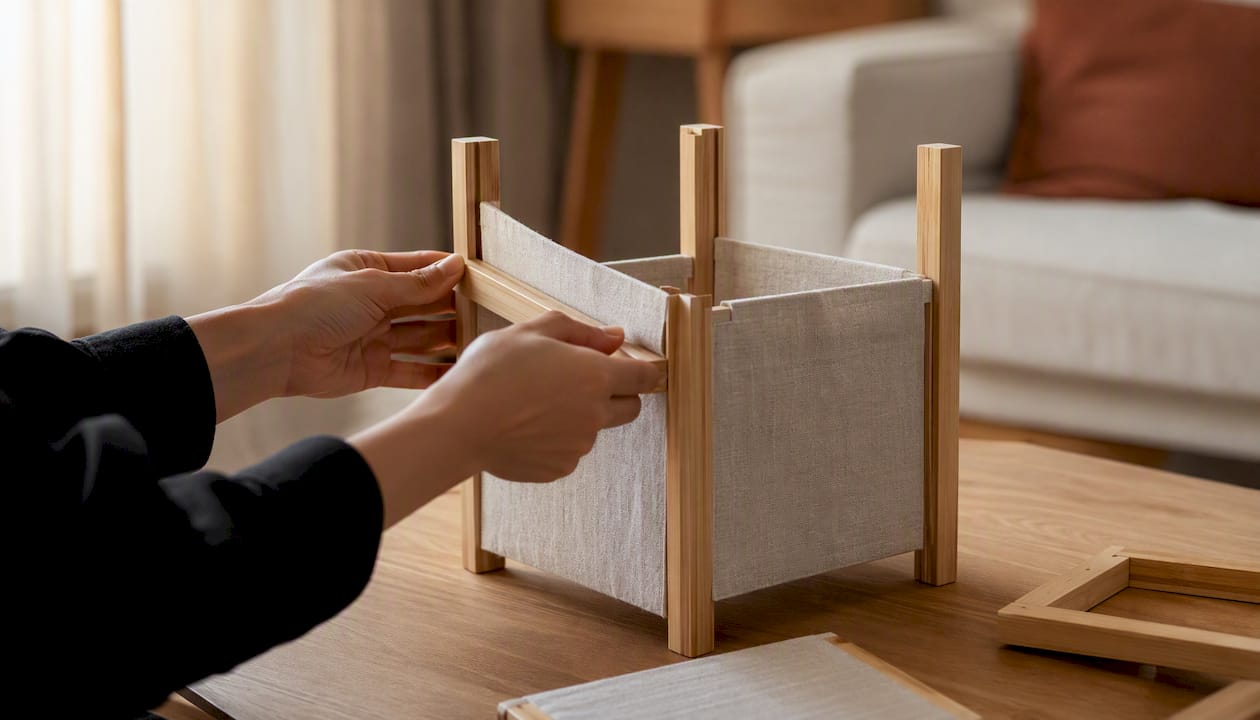
The iF report frames this as “Convenience Culture vs Skillization” — one of its four central tension pairs. In practice, it means interaction patterns that reward effort, interfaces that teach as they are used, and products that become more satisfying as the user develops skill with them.
Practical patterns that create useful friction:
- Progressive disclosure — reveal advanced features only after a user has demonstrated basic competence
- Deliberate pace controls — cooking apps that require the user to confirm each step before the next appears, building procedural memory
- Repair and maintenance affordances — products designed to be taken apart, serviced, and understood rather than replaced
- Legible feedback loops — dashboards that show the user what changed because of their action, not just the current state
- Mastery milestones — visible markers of skill progression that make effort feel worthwhile
Research published via the iDesignGPT framework found that structuring design workflows to increase coverage and diversity — rather than converging on the first plausible answer — produced gains of roughly +11.4% in coverage and +18.5% in diversity in experimental evaluations, with novice designers reporting clearer flow and lower cognitive workload. The implication for UX: structured challenge, when well-designed, reduces perceived effort even as it builds real capability.
For students, skillization is also a portfolio argument. A project that shows how you designed for user growth — with before/after capability evidence — is more compelling than one that simply removed steps.
3. Symbiocene and regenerative design: partnering with nature
Circularity asks designers to close loops. Biomimicry asks them to learn from natural forms. The Symbiocene goes further: it asks designers to treat non-human systems as clients, designing outcomes that benefit ecosystems and communities simultaneously.
The Symbiocene guide sets out nine guiding principles and 50 practical examples showing how designers can multi-solve across environmental, social, and cultural dimensions at once. The principles include designing for mutualism (both parties benefit), designing with place (specific ecology, not generic green), and designing for longevity over lifecycle management.
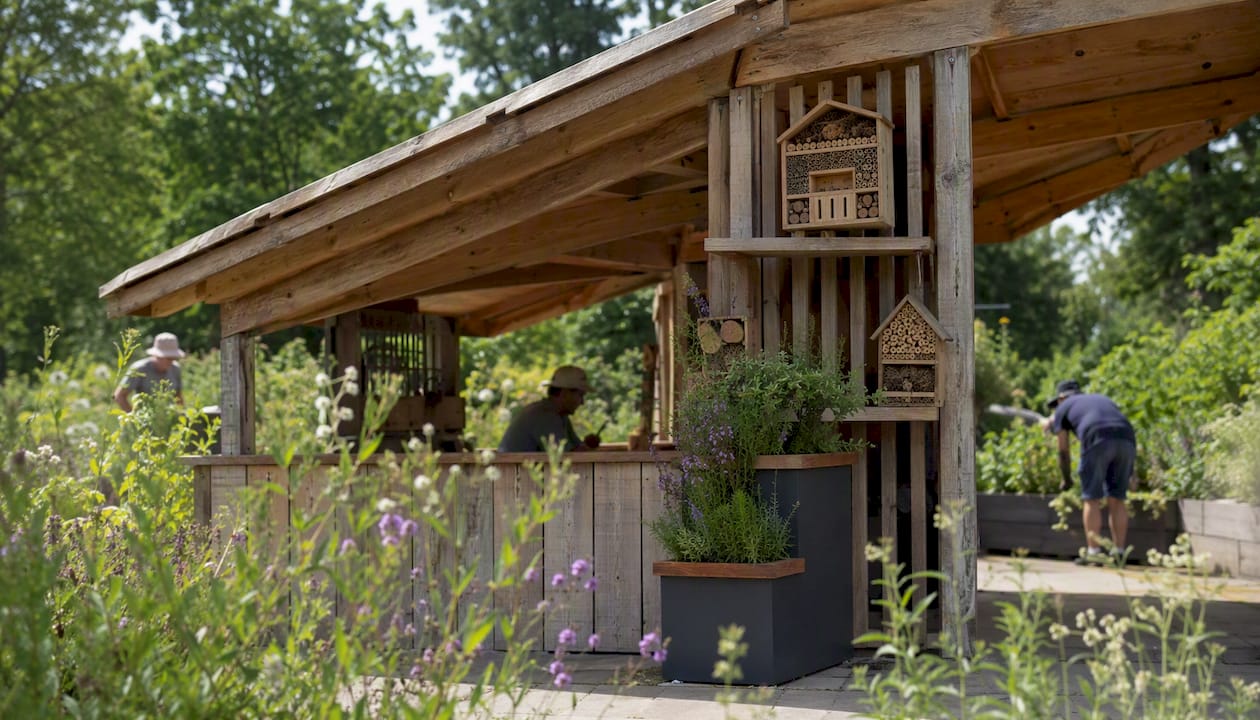
For a UK context, a practical application might be a community garden pavilion in a post-industrial northern town that uses locally sourced timber, creates habitat for pollinators in its roof structure, and functions as a skills-exchange space for residents. Each layer solves a different problem: ecological, social, and economic. That multi-solve logic is the Symbiocene signature.
This differs from circularity, which is primarily a material-flow concern, and from biomimicry, which borrows natural strategies for human ends. Symbiocene design is relational: it asks who else benefits, and whether the non-human world has a stake in the outcome. For interior and product designers, the sustainable decor workflow approach offers a practical starting point for applying these principles at domestic scale.
Pro Tip: On your next brief, add a “non-human client” column to your stakeholder map. List one ecosystem, species, or natural system affected by the project and write one design decision that serves it. It reframes the brief without requiring a complete overhaul.
4. Authenticity, imperfection and material craft
The turn toward authenticity is not nostalgia. It is a market signal: when digital surfaces can be perfected infinitely, visible imperfection becomes a mark of human presence and therefore of value. Visible joins, hand-drawn marks, natural fibres with irregular texture, glaze drips, and uneven weaves all communicate something a render cannot: that a person made a decision here.
A brand that photographs its products on uneven linen rather than a seamless white sweep, or that shows the back of a piece of furniture with its joinery exposed, is making a craft argument. It is saying: the making matters, not just the outcome. This is increasingly legible to consumers who have grown up with algorithmically perfect imagery and find it hollow.
Quick ways to introduce craft signals into projects and portfolios:
- Use analogue process documentation (sketches, material samples, process photos) alongside final renders
- Choose typefaces with visible calligraphic origins rather than geometric neutrals
- Specify natural materials with acknowledged variation (linen, cork, unpolished stone) rather than uniform synthetics
- Show construction logic: let the structure be part of the aesthetic rather than concealing it
- Introduce hand-lettered or hand-drawn elements at one touchpoint in a brand system
For UK designers, the upcoming design styles for UK homes guide illustrates how these material signals translate into domestic interiors — a useful reference when briefing clients on why craft-led choices command a premium.
5. Immersive 3D, spatial and multisensory interfaces
Spatial design is no longer a specialist discipline. As AR tools become accessible on standard hardware and 3D rendering integrates into mainstream design software, the expectation that a brand or product experience will have a spatial dimension is growing across retail, hospitality, and digital product design.
Adobe’s research identifies “All the Feels” — multisensory, immersive visual storytelling — as one of its primary creative directions for 2026. The category spans augmented reality overlays, spatial UI for mixed-reality headsets, 3D product configurators, and multisensory retail environments where sound, scent, and tactile surfaces work alongside visual design.
Tools UK designers can start experimenting with now:
- Spline — browser-based 3D design tool, no specialist hardware required, good for interactive web experiences
- Unreal Engine — industry-standard real-time rendering, free for most studio uses, strong UK community via Epic Games’ local events
- Reality Composer Pro — Apple’s spatial design tool for visionOS, relevant for brands investing in mixed-reality retail
- Figma with 3D plugins — for prototyping spatial UI concepts within familiar workflows
- Blender — open-source, powerful, and widely taught in UK design schools
Pro Tip: Scope your first immersive experiment to a single touchpoint: one product page with a 3D viewer, or one retail fixture with an AR overlay. Full spatial environments are expensive to govern and maintain. Prove the concept at one point of contact before committing to a system.
6. AI as a tool: what generative systems can and cannot do
The honest account of AI in design practice in 2026 is neither utopian nor dismissive. Generative and node-based tools are genuinely useful for specific tasks; they are genuinely poor at others. The designers who use them well understand the difference.
Node-based AI workflows — where outputs from one model feed into another as structured inputs — are particularly useful in early concepting. The iDesignGPT framework demonstrated this by integrating large language model agents with established design methods, producing measurable gains in the breadth and diversity of concepts generated.
Practical opportunities:
- Rapid ideation across many directions before committing to one
- Generating material and colour variations at speed for client review
- Synthesising research inputs (user interviews, trend data) into structured briefs
- Producing first-draft copy or content structures for critique and refinement
Clear limits:
- AI tools trained on global datasets tend toward cultural neutrality, producing work that fits nowhere specifically
- Hallucination in research synthesis can introduce plausible-sounding but false references
- Generative image tools struggle with physical plausibility, material honesty, and craft logic
- Ethical risks around training data provenance and cultural appropriation remain unresolved
As Lucept’s analysis of designing emergence notes, generative approaches shift authorship from fixed outputs to parameter-led growth — which can be productive, but requires designers to trust iterative feedback loops rather than controlling every decision. That shift in mindset is as important as the technical skill.
Pro Tip: Use AI to generate ten directions, then apply your critical judgement to select and develop one. The tool earns its keep in breadth; you earn yours in depth. Never let the generative output be the final artefact — treat it as a sketch, not a solution.
7. Materials, circularity and biomimicry
Material choice is where sustainability commitments become real. Circularity, biomimicry, and regenerative material strategies are distinct approaches that work best in combination.
A material checklist for early-stage selection and prototyping:
- Provenance — can you name the source region and verify extraction conditions?
- Longevity — does the material age well, or does it degrade in ways that accelerate replacement?
- End-of-life route — is there a credible reuse, repair, or compost pathway for this specific product context?
- Biomimetic logic — does the material’s structure or behaviour draw on natural strategies (mycelium composites, bamboo tensile properties, cork’s thermal performance)?
- Cultural fit — does the material carry meaning in the context where it will be used?
- Carbon and water intensity — is the processing footprint proportionate to the product’s lifespan?
A concrete example: cork flooring for a UK community space solves multiple problems simultaneously. It is harvested without felling trees, provides thermal and acoustic insulation (reducing energy costs), is naturally antimicrobial, and has a recognised end-of-life composting route. It also carries a legible craft and provenance story. That multi-solve logic is the standard to aim for. Interior door finishes that age with character rather than degrading — as explored in material and finish trends for interior joinery — follow the same principle: choose materials that improve with time rather than requiring replacement.
8. Designing systems and relationships: from objects to outcomes
The most significant shift in design thinking over the past decade is not a tool or a style. It is a change in what designers consider the unit of design. Objects are still designed, but the more consequential work is designing the relationships between objects, people, institutions, and environments over time.
Lucept’s framing of designing emergence captures this well: when you design parameters and feedback loops rather than fixed outputs, you are designing a system that evolves. That requires different evaluation criteria than a product launch.
Metrics and methods suited to systems-level work:
- Stakeholder resilience — does the system continue to function when one component fails or a participant leaves?
- Longevity indicators — is the system still in use, and still valued, two years after deployment?
- Multi-solve score — how many distinct problems does the system address simultaneously?
- Relationship density — how many meaningful connections between participants has the system generated?
- Adaptation rate — how quickly can the system incorporate feedback and change without requiring a redesign?
Sony’s ONE DAY, 2050 sci-fi prototyping project demonstrates one method for systems-level thinking: working backwards from a speculative future to identify present-day design decisions. It is a repeatable method, not a one-off creative exercise, and it translates well to studio and curriculum contexts.
Pro Tip: Map your system as a stakeholder ecosystem before you design any artefact. Draw every relationship — human and non-human — and mark which ones are currently broken or absent. Design to repair those relationships first; the objects will follow.
9. How UK designers and students can apply these concepts
Knowing the concepts is the easy part. The harder question is where to start, and how to build evidence of capability that clients and employers will recognise.
Starter skills mapped to the eight trends:
- Craft and material literacy — visit maker spaces, handle materials, take a short course in a physical discipline (ceramics, joinery, textiles)
- Systems thinking — learn stakeholder mapping, causal loop diagrams, and service blueprinting
- AI tooling — develop fluency in at least one generative image tool and one node-based workflow tool
- Immersive prototyping — build one Spline or Blender scene; prototype one AR experience in Reality Composer
- Regenerative principles — read the Symbiocene guide and apply one principle to a live or speculative brief
A suggested learning path for a term-length project:
- Weeks 1–2: Choose one trend as your primary lens. Write a one-page brief that names the human and non-human stakeholders affected.
- Weeks 3–4: Research material and cultural context. Visit a relevant maker, supplier, or site in your region.
- Weeks 5–6: Generate ten concept directions using a combination of analogue sketching and one AI tool. Apply your critical judgement to select one.
- Weeks 7–8: Prototype at low fidelity. Test with at least two stakeholder groups, including one non-expert.
- Weeks 9–10: Refine and document the system or object, including its end-of-life logic and relationship map.
- Weeks 11–12: Present with process evidence: material samples, rejected directions, stakeholder feedback, and a one-page systems map.
Aalto University’s Emerging Designs course structures student teams around exactly this kind of applied brief, with health and social-care challenges in rural contexts as the design problem. It is a useful model for UK tutors building studio curricula.
For speculative and long-horizon work, Osaka University’s “Imaginary Future Generations” method offers a structured way to force intergenerational thinking into briefs — asking designers to represent the interests of people not yet born.
Pro Tip: Keep your experimental practice and your client work in the same portfolio, but frame them differently. Client work shows you can deliver; experimental work shows you can think. Employers and commissioners want both — do not hide the speculative projects because they feel unfinished.
10. Short case studies: concepts in practice
Recoupling in graphic identity — a UK studio scenario
A London-based brand studio working with a Welsh food producer chose hand-lettered typography drawn from local chapel signage traditions rather than a contemporary geometric sans-serif. The result was a label system that could not have come from anywhere else. Sales at regional stockists outperformed projections in the first quarter, with buyers citing the label’s distinctiveness as a key factor. The replicable lesson: cultural specificity is not a constraint on commercial appeal — it is often the source of it.
Symbiocene design in public space — BIG’s Biosphere project
Bjarke Ingels Group’s Biosphere project exemplifies the multi-solve logic of Symbiocene design at architectural scale: a structure that functions as a habitat for species, a public gathering space, and a demonstration of regenerative building principles simultaneously. The design treats ecological performance and human experience as co-equal briefs rather than trade-offs. For UK designers working at smaller scales, the principle translates directly: a community garden structure, a school courtyard, or a retail fit-out can each carry ecological, social, and cultural benefit if the brief is written to require it.
AI-assisted concepting — iDesignGPT in practice
The iDesignGPT framework was evaluated across public design challenges, with multi-agent LLM workflows producing measurably broader and more diverse concept sets than single-model approaches. The practical lesson for studios: use structured multi-agent workflows for early ideation, then apply human critical judgement to select and develop. The tool improves breadth; the designer provides depth.
Skillization in product design — repair-first hardware
Several UK electronics brands have begun shipping products with repair manuals and modular components as standard, positioning repairability as a feature rather than an afterthought. The design decision is a skillization move: it invites the user into a relationship with the object that builds over time. The commercial logic is equally clear — a product that users repair is a product they keep, recommend, and feel ownership of.
11. What clients and employers will pay for in 2026
The commercial translation of these trends is straightforward once you understand what clients are actually buying. They are not buying trends; they are buying differentiation, resilience, and reduced risk.
Services and value propositions likely to attract investment in 2026:
- Craft-led brand identity — distinctive visual systems grounded in cultural specificity, positioned against AI-generated uniformity
- Regenerative design audits — a structured review of a client’s product or space against Symbiocene principles, with a prioritised action list
- Systems design retainers — ongoing relationships where the designer manages and evolves a service or product ecosystem rather than delivering a one-off artefact
- Immersive retail experience design — spatial and multisensory environments for physical retail, where the experience is the differentiator
- Material strategy consulting — advising on circular and biomimetic material choices at the brief stage, before procurement locks in decisions
- Skillization UX audits — reviewing digital products for passive-use patterns and recommending friction-positive redesigns
On pricing: experimental pilots and proof-of-concept projects are typically scoped as fixed-fee engagements, giving clients a defined risk. Systems design and regenerative audits suit retainer models because the value compounds over time. Dezeen’s 2026 designer predictions note that industry voices expect fewer but larger investments in future-proofed products and reliable systems — which supports positioning new services as strategic rather than executional.
In the UK procurement context, public-sector clients increasingly require sustainability evidence at tender stage. A regenerative design audit or a materials provenance report can serve double duty: it is both a design deliverable and a procurement document.
12. How these trends were selected: key reports and further reading
The eight concepts in this article were drawn from a cross-referenced set of primary sources: the iF Design Trend Report 2026, Adobe’s Creative Trends research, the Symbiocene Design guide published by Good Design, the iDesignGPT paper in Nature Communications, and Fast Company’s 2026 design synthesis. Secondary sources include Lucept’s analysis of designing emergence, Sony Design’s sci-fi prototyping documentation, and Aalto University’s Emerging Designs course structure.
The selection criterion was convergence: concepts that appeared independently across multiple sources, from different disciplinary perspectives, were prioritised over those that appeared in only one report.
For deeper study, the most useful primary sources are:
| Source | What you gain |
|---|---|
| iF Design Trend Report 2026 | The four trend/countertrend pairs and their strategic framing; essential for client presentations |
| Adobe Creative Trends 2026 | Visual direction evidence for immersive, sensory and connection-driven aesthetics |
| Symbiocene Design Guide | Nine principles and 50 examples; the most practical regenerative design reference available |
| iDesignGPT — Nature Communications | Peer-reviewed evidence for AI-assisted concepting workflows; citable in academic contexts |
| Fast Company — Five trends in design right now | Accessible synthesis of the human-centred recalibration narrative |
| Lucept — designing emergence | Conceptual framing for parametric and systems-level authorship |
| Sony Design — ONE DAY, 2050 | Practical sci-fi prototyping methodology for long-horizon briefs |
| Aalto University — Emerging Designs | Studio curriculum model for applied conceptual team projects |
When using these sources for studio-level evidence or academic citations, go to the primary report rather than citing a secondary summary. The iF and Adobe reports are updated annually; check the publication date before citing figures in client documents.
What this means for a UK design practice right now
The honest read on 2026 is that the profession is at an inflection point that rewards clarity of position. Studios that can articulate why they make the choices they make — why craft over optimisation, why regenerative over merely sustainable, why systems over objects — will attract the clients and commissions that matter. Studios that cannot will compete on price against tools that do not charge day rates.
The risk is not AI replacing designers. The risk is designers using AI in ways that make their work indistinguishable from everyone else’s. The counterweight is exactly what the iF report calls recoupling: grounding work in specific cultural context, material honesty, and human judgement that no prompt can fully specify.
For UK practices specifically, the opportunity is real. British design has a credible craft tradition, a strong materials manufacturing base in ceramics, textiles, and joinery, and a public sector that is beginning to require sustainability evidence at procurement stage. The concepts in this article are not abstract futures — they are the criteria by which work will be evaluated in the next three years.
My immediate recommendation for any UK studio or design course: write one brief this term that names a non-human stakeholder, requires a material provenance statement, and prohibits AI-generated final artefacts. The constraint is the point. It forces the kind of thinking that produces work worth remembering.
Homable: material-led design ideas for home and studio
Designers experimenting with material-led and craft-forward ideas need reference points that are physically real, not just rendered. Homable’s curated range of home accessories and decorative objects — from textured ceramics and natural-fibre rugs to handcrafted ornaments and tactile storage pieces — gives designers and students a tangible resource for exploring how material choices land in a domestic context.
Whether you are building a mood board for a regenerative interior brief, sourcing props for a craft-led brand shoot, or simply looking for UK-available examples of authentic material and finish choices, Homable’s collections offer a practical starting point. The contemporary home trends 2026 guide on the Homable blog maps current material and styling directions to specific product categories, making it a useful reference for client presentations. Browse the full range at Homable and explore the collections that align with your current brief.
Sources
The sources below are the primary references for this article. Each is worth reading in full for studio-level depth and academic citation.
- iF Design Trend Report 2026: Key Design Trends & Countertrends shaping innovation, AI, sustainability and future cities
- Adobe Creative Cloud — Creative Trends report
- A Guide to Symbiocene Design — Good Design
- iDesignGPT framework and evaluation — Nature Communications
- Five trends in design right now — Fast Company