Cart
0

TL;DR:
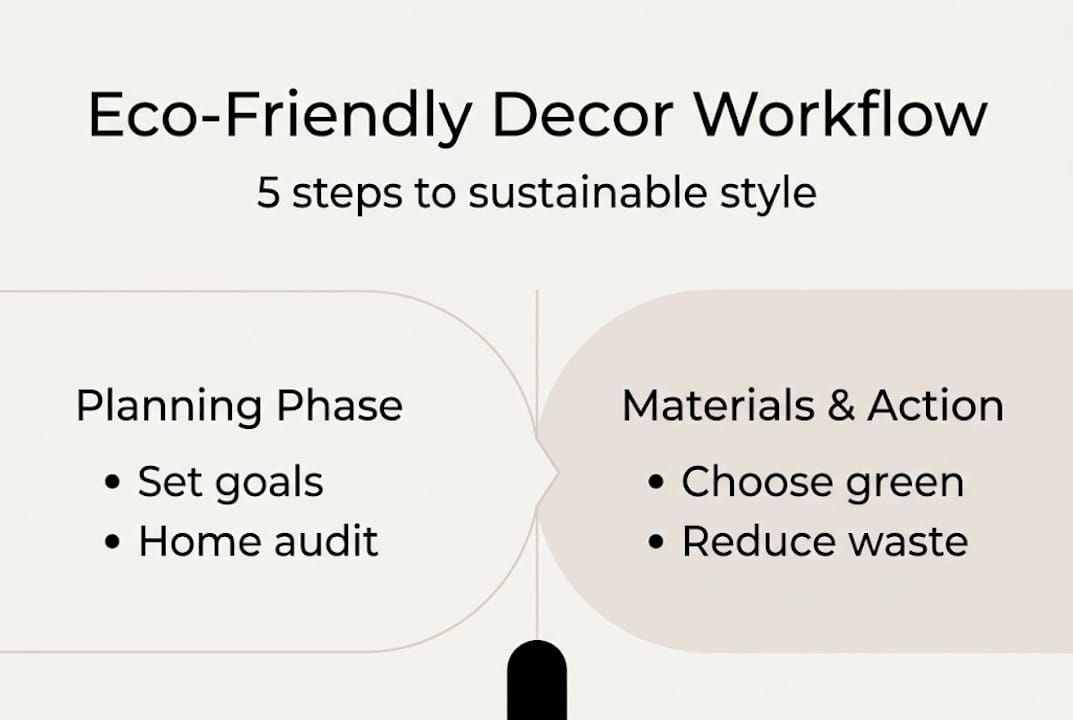
- Sustainable decorating starts with planning, goal setting, and home audits before purchasing.
- Choosing durable, reclaimed, or certified eco-friendly materials reduces waste and embodied carbon.
- Proper site preparation, mindful installation, and ongoing maintenance ensure long-term sustainability.
The home furnishing industry generates 12.1 million tons of waste every year, and much of it comes from well-meaning homeowners who simply didn’t know there was a better way. If you’ve been wanting to refresh your living space without the guilt of contributing to landfill, you’re in the right place. This article walks you through a practical, phase-by-phase workflow for sustainable decor, from the first plan on paper to the finishing coat of paint. You’ll come away knowing exactly how to make stylish, eco-conscious choices at every step, without sacrificing the look you love.
Table of Contents
- Laying the groundwork: planning for sustainable decor success
- Choosing eco-friendly materials: the heart of sustainable decor
- Waste minimisation and site preparation: efficiency from the start
- Smart installation and decor selection: from build to beautiful
- Finishing touches and maintaining a sustainable space
- What most guides miss about truly sustainable decor
- Enhance your sustainable home with curated decor
- Frequently asked questions
Key Takeaways
| Point | Details |
|---|---|
| Plan with sustainability in mind | Start by assessing your space, prioritising reuse, and defining clear eco-friendly goals. |
| Choose certified and reclaimed materials | Opt for FSC, recycled, or secondhand products to minimise environmental impact. |
| Organise for minimal waste | Prepare your site carefully, separating materials to maximise reuse and recycling. |
| Style for durability and adaptability | Select furniture and decor that is designed to last, can be repurposed, and supports a circular approach. |
| Maintain your eco efforts | Periodically update finishes, manage waste responsibly, and stay vigilant with sustainable habits. |
Laying the groundwork: planning for sustainable decor success
The most common mistake people make with sustainable decorating is jumping straight to shopping. Before you browse a single product, you need a plan. As the guide to sustainable interior design makes clear, a successful sustainable decor workflow starts with setting project goals, conducting a site audit, and using digital modelling to map out your space before anything is purchased or removed.
Start by defining your sustainability goals. Are you focused on reducing plastic waste, lowering your carbon footprint, or simply buying less and using more of what you already have? Writing these down gives you a filter for every decision that follows.
Next, walk through your home with fresh eyes and conduct a proper audit. Note what can be reused, repurposed, or simply moved to a different room. You might be surprised how many items already in your home can do a second job beautifully.
Digital modelling tools, sometimes called BIM (Building Information Modelling), allow you to visualise layout changes before committing to them. This prevents costly mistakes and reduces waste from impulse purchases. Even free online room planners can serve this purpose well.
Finally, build a procurement checklist that puts local, reclaimed, and low-impact materials at the top. Here’s a simple framework to follow:
- Reuse or repurpose items already in your home
- Source secondhand from local markets, charity shops, or online platforms
- Choose local suppliers to reduce transport emissions
- If buying new, prioritise certified sustainable materials
- Avoid single-use packaging where possible
Pro Tip: Before any project, consult a home renovation workflow guide to understand how sequencing decisions early can prevent waste later.
| Approach | Environmental impact | Cost to you |
|---|---|---|
| Buying new conventional items | High | High |
| Buying new certified sustainable | Medium | Medium to high |
| Sourcing secondhand or reclaimed | Low | Low |
| Repurposing existing items | Minimal | Negligible |
For inspiration on how a clear process translates into a beautiful result, the curtain installation workflow and the neutral home styling workflow both demonstrate how planning ahead makes execution far smoother.
Choosing eco-friendly materials: the heart of sustainable decor
With a plan in place, the next step is to tackle the core of sustainability: the materials you choose. This is where many projects either succeed or quietly fall back into old habits.
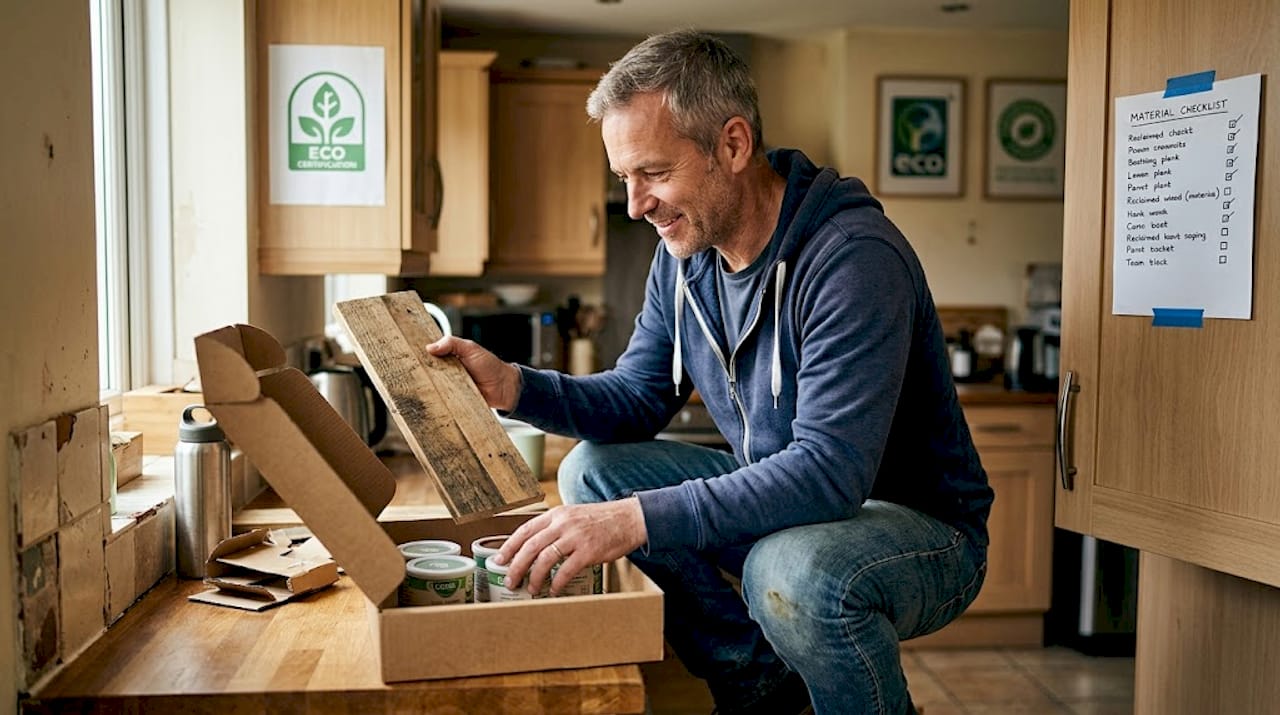
The 12.1 million tons of waste the home furnishing industry creates each year is largely driven by the disposal of cheap, short-lived products. The antidote is choosing materials built to last, and prioritising those that have already had a first life.
As sustainability experts note, reduce, reuse, and repair should always come before buying new. Upcycling and sourcing secondhand are the most effective actions available to homeowners wanting to minimise embodied carbon, which is the carbon produced during a product’s manufacture and transport.
How to evaluate materials:
- Check for FSC certification on all wood-based products
- Look for low-VOC (volatile organic compound) labels on paints, varnishes, and adhesives
- Ask suppliers about the origin and processing of natural fibres
- Assess whether a product can be disassembled and recycled at end of life
- Research the brand’s sustainability credentials before purchasing
For flooring specifically, eco-friendly floor refinishing is often far more sustainable than replacement, restoring existing boards to their former glory without the environmental cost of new materials.
Smart substitutions to consider:
- Replace synthetic cushion fillings with organic wool or recycled materials
- Swap mass-produced art for prints from independent makers using recycled paper
- Use natural beeswax or soy candles rather than paraffin-based alternatives
- Choose curtains made from organic linen or recycled fabric
Pro Tip: When in doubt, the modern home decorating workflow approach of prioritising design and function simultaneously helps you avoid impulse buys that look good on paper but don’t earn their place in your home long-term.
| Material | Sustainable alternative | Certification to look for |
|---|---|---|
| Tropical hardwood | Reclaimed or FSC-certified timber | FSC |
| Synthetic fabric | Organic linen or recycled polyester | GOTS, OEKO-TEX |
| Conventional paint | Low-VOC or natural clay paint | EU Ecolabel |
| Foam padding | Natural latex or recycled fibre | GOLS, Greenguard |
Waste minimisation and site preparation: efficiency from the start
Once the right materials are chosen, the focus shifts to execution, starting with how to prepare the site for minimal waste. This phase is often overlooked, but it’s where significant environmental savings can be made.
A pre-demolition audit for reuse and waste segregation is a recognised best practice in sustainable interior projects. Before anything comes down or comes out, identify what can be donated, sold, or stored for future use.
Step-by-step site preparation process:
- Photograph and catalogue every item being removed
- Sort into categories: reuse, donate, recycle, and dispose responsibly
- Contact local charities or furniture reuse networks before skipping anything
- Set up clearly labelled waste zones on site (timber, metal, plastics, textiles)
- Order only what you need by measuring twice and using digital cut lists
“Every item that leaves your home for landfill represents embodied energy that has already been spent. Redirecting it is always worth the extra effort.”
Lean thinking, borrowed from manufacturing, applies beautifully here. The principle of just-in-time delivery means materials arrive when needed rather than sitting in a skip or getting damaged on site. This approach reduces both surplus waste and stress.
Additional waste-reduction tips:
- Use offcuts from fabric or timber for small decorative details
- Return unused materials to suppliers where possible
- Avoid over-ordering by building a 5% contingency into quantities, not 20%
- Compost any natural material waste such as plant trimmings or paper packaging
If you’re working in a compact space, the decorating small spaces workflow and the organising small spaces workflow offer focused advice on making every square metre count without generating unnecessary waste.
Smart installation and decor selection: from build to beautiful
After preparing your site, it’s time to focus on the choices that bring your sustainable decor vision to life. This is the fun part, but it still requires discipline.
As sustainable design guidance consistently confirms, durable, secondhand, and modular options should be the first port of call for furniture and decor. Modular furniture, in particular, allows you to reconfigure your space as your needs change, avoiding the need to replace entire pieces.
Decor selection checklist:
- Choose pieces that can serve multiple functions (storage ottomans, extendable tables)
- Invest in quality over quantity; one well-made item outlasts three cheap ones
- Source from local artisans or certified sustainable brands where possible
- Prioritise natural materials that age gracefully, such as solid wood, stone, and linen
- Consider rental or borrowing schemes for items you’ll only need temporarily
“The most sustainable item is the one you never need to replace.”
Lighting is another area where smart choices compound over time. Energy-efficient LED systems integrated with smart controls can reduce energy use by 20 to 30% compared to conventional setups. That’s a meaningful saving across a home’s lifetime.
Pro Tip: Style for longevity by choosing a neutral base palette and layering in colour through accessories. This way, you can update the feel of a room seasonally using secondhand finds without changing the fundamentals. Explore how creating cohesive home decor and using curated collections for home decor can help you maintain that sense of harmony throughout.
Finishing touches and maintaining a sustainable space
With the main work complete, make your impact last by paying attention to final details and long-term care. These last steps are where sustainability becomes a lifestyle rather than a one-off project.
One of the most overlooked areas is paint. Conventional paints release VOCs into your home’s air for months after application. The final phase of a sustainable project should always include low-VOC or zero-VOC finishes, along with a recycling plan for leftover materials and a post-occupancy review of how the space is performing.
How to finish and maintain sustainably:
- Choose low-VOC or natural paint; read the eco-friendly painting options guide for a detailed breakdown
- Use any leftover paint on smaller projects or donate to community paint-recycling schemes
- Deep clean using non-toxic, biodegradable products only
- Schedule a six-month review to assess what’s working and what can be improved
- Replace worn accessories with secondhand or upcycled alternatives rather than buying new
Ongoing habits that make a real difference:
- Repair textiles instead of replacing them; learn basic mending skills
- Rotate decorative accessories seasonally using what you already own
- Keep a home sustainability log to track your progress and spot patterns
- Consider prioritising design in gifts when buying for others, encouraging sustainable choices as presents
Worth knowing: Homes using low-VOC finishes combined with good ventilation can see indoor air quality improve by a significant margin, benefiting both your health and the environment in equal measure.
What most guides miss about truly sustainable decor
Most sustainability content focuses on what to buy. Very little of it talks about the mindset that actually makes a lasting difference.
Here’s our honest take: sustainable decor is not a destination. It’s a practice. Perfection isn’t the goal, and chasing it leads to paralysis or, ironically, overconsumption of “eco” products that still have a footprint. The truth is that upcycling and secondhand sourcing remain the most impactful actions any homeowner can take, far ahead of buying expensive certified-new products.
Think of your home as an evolving ecosystem rather than a finished project. When you see your space that way, every small decision gains meaning. One reclaimed lamp, one repaired cushion, one wall painted with zero-VOC colour: these things accumulate. They shape habits. And they ripple outward.
The interior design workflow matters, but so does patience. The most sustainably decorated homes we admire weren’t finished in a weekend. They were built slowly, with intention, over time. That’s a more honest and more achievable version of sustainable living than any single product purchase can deliver.
Enhance your sustainable home with curated decor
If you’re ready to put this workflow into action, the good news is that you don’t have to search far for pieces that match your values. At Homable, we’ve curated a selection of home accessories designed to bring lasting style to your space without the environmental compromise.
From understated ornaments to functional storage solutions, every piece in our collection is chosen with both aesthetics and longevity in mind. A beautifully crafted decorative flower candle holder is a perfect example: a timeless accent that adds warmth without adding waste. Whether you’re completing a room refresh or making one considered addition, we’re here to help you style sustainably, one thoughtful choice at a time.
Frequently asked questions
What are the first steps for planning sustainable decor?
Begin by defining your sustainability goals, auditing your existing space, and listing materials that can be reused or upcycled before anything new is purchased. A clear workflow starting point prevents waste from the outset.
How can I choose truly eco-friendly decor materials?
Look for FSC-certified timber, prioritise reclaimed or secondhand items, and choose products with low-VOC finishes. Certified eco-materials carry third-party verification that makes greenwashing easier to spot.
How does sustainable decor reduce my home’s carbon footprint?
Reusing and upcycling cuts the embodied carbon of your project significantly, and smart energy systems can lower ongoing energy use by up to 30%, compounding your impact over time.
Which phase of the workflow typically generates the most waste?
Demolition and site preparation are usually the most wasteful phases, so a pre-demolition audit for reuse and segregation is essential before any work begins.
What habits keep a home sustainably decorated over time?
Regularly audit for items you no longer need, maintain durable pieces with proper care, and refresh your decor using secondhand and upcycled finds rather than buying new.
Recommended
- Decorating Small Spaces Workflow for Stylish Homes – Homable
- 5 Quick and Affordable Ways to Refresh Your Home Decor – Homable
- Why sustainable homeware matters: benefits and buying guide – Homable
- Modern Home Styling Steps for a Stunning Look – Homable
- Eco-Friendly Floor Refinishing Guide for Colorado Homes
- Why Choose Eco-Friendly Painting Options for Your Home