Cart
0

TL;DR:
- Core furniture includes a sturdy table, mixed seating, a sideboard, and optional display cabinets.
- Textiles like rugs and linens add warmth, with size, material, and color cohesion essential for style.
- Small dining rooms benefit from space-saving furniture, mirrors, and tone-on-tone colors for an inviting feel.
The dining room is one of the hardest spaces to get right. It needs to function for Tuesday night pasta, Saturday dinner parties, and everything in between. Many homeowners find themselves torn between pieces that look beautiful and those that actually work. The result is often a room that feels half-finished or cluttered with accessories that don’t quite belong. This guide cuts through the confusion by laying out the furniture, textiles, and tablescaping elements that genuinely earn their place in a well-styled dining room, along with practical advice on how to use each one with intention.
Table of Contents
- Core furniture essentials for any dining room
- Essential textiles: Table linens, rugs, and soft finishes
- Tablescaping elements: Glassware, crockery, and centrepieces
- Small dining room solutions: Maximising style and space
- An expert’s perspective on avoiding trends and lasting style
- Styling your dining room? Discover more accessories and inspiration
- Frequently asked questions
Key Takeaways
| Point | Details |
|---|---|
| Start with core furniture | A sturdy table, comfortable chairs, and smart storage form the foundation for any stylish dining room. |
| Layer textiles for warmth | Use rugs, runners, and quality linen to add comfort and style while protecting surfaces. |
| Style with versatile accessories | Glassware, crockery, and adaptable centrepieces create both everyday elegance and occasion-ready flair. |
| Optimise for small spaces | Smart furniture choices and subtle colour tricks can maximise both function and style in compact dining areas. |
Core furniture essentials for any dining room
With the stage set, let’s start with the furniture that truly defines your dining area. The right foundation makes every other decision simpler, and getting it wrong means no amount of candles or fresh flowers will rescue the room.
The dining table is the undisputed anchor. Everything else responds to it. Core furniture essentials for a well-styled dining room include a sturdy table, comfortable chairs, a sideboard for storage, and optionally a display cabinet or hutch. When choosing your table, consider the shape in relation to your room. Round tables suit square rooms beautifully, while rectangular tables work well in longer spaces. Solid wood and marble finishes tend to age well and feel timeless rather than tied to a particular era.
Chairs are where many people underinvest. You can follow modern home styling steps to learn how mixed seating, such as upholstered chairs at the ends and wooden ones along the sides, adds both comfort and visual interest without looking chaotic. Upholstered seats significantly improve comfort during longer meals and signal a considered, layered approach to design.
The sideboard is the unsung hero of the dining room. It provides surface space for serving dishes, concealed storage for table linens, and a display surface for decorative objects. A well-chosen sideboard can double as a drinks station for entertaining. For decorative value, a glazed display cabinet or open hutch lets you show off crockery, glassware, or collected objects that would otherwise be hidden.
“The dining room is as much about atmosphere as it is about eating. Every piece of furniture should earn its place by serving both function and feeling.”
Key furniture pieces to prioritise:
- Dining table: Choose a size that fits your space with at least 90cm clearance on all sides
- Chairs: Upholstered options increase comfort; mix styles for personality
- Sideboard: Essential for storage and a stylish display surface
- Display cabinet or hutch: Optional but excellent for showing off beautiful crockery
- Bench seating: Space-efficient and increasingly popular for relaxed, modern dining rooms
Pro Tip: Before buying furniture, tape out the footprint on your floor with masking tape. Living with the shape for a day or two reveals whether the scale truly works.
When selecting finishes, think about cohesion across tips for stylish home accessories that work across different rooms. A warm oak table pairs naturally with linen chairs and brass hardware on a sideboard. Cool tones like slate grey or dusty blue lean into a more contemporary look.
Essential textiles: Table linens, rugs, and soft finishes
Once the core furniture is in place, it’s the textiles that bring warmth and a designer’s touch. Textiles do something furniture cannot: they absorb sound, add tactile richness, and shift the mood of a room with relatively little effort or expense.
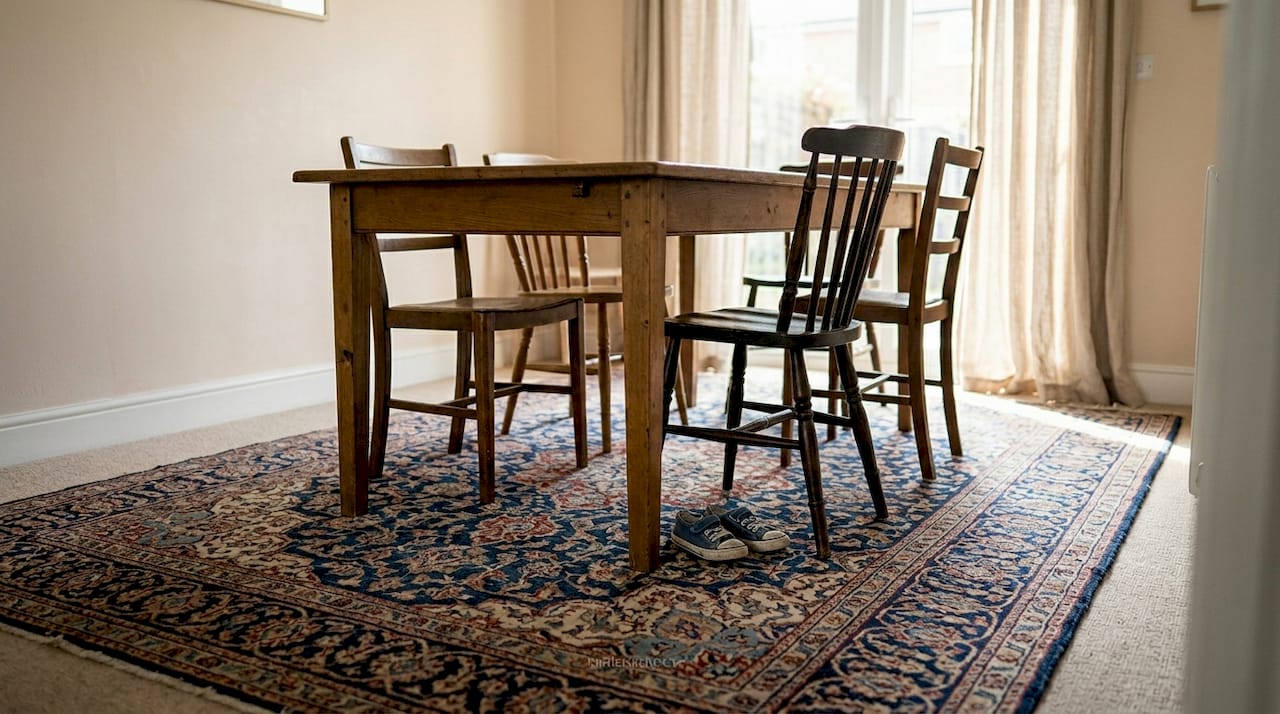
A well-chosen dining rug anchors the whole space and ties furniture together visually. The rule most people forget is size. The rug must be large enough so that chairs remain on it even when pulled out. A rug that’s too small looks like an afterthought. Natural fibres like wool or jute wear well underfoot and are forgiving with crumbs and spillages when treated properly. Following step-by-step table styling methods can help you approach the layering process with more confidence.
For the table itself, tablescaping methodology by designer Kelly Hoppen recommends layering like dressing: start with placemats or a runner, then add napkins, plates, cutlery, and glassware for height, finishing with flowers, foliage, and candles, keeping centrepieces low for everyday use. Tablecloths offer a formal, generous look. Runners are more relaxed and suit casual everyday dining beautifully.
Napkins are often treated as an afterthought, but they function as the jewellery of your table. Linen napkins feel luxurious and actually soften with each wash. A contrasting napkin colour can lift a neutral table setting and create a point of visual interest without any additional effort.
| Textile item | Best material | Ease of care |
|---|---|---|
| Tablecloth | Linen or cotton blend | Machine washable |
| Table runner | Linen, velvet, or jute | Spot clean or machine wash |
| Dining rug | Wool or natural fibre | Vacuum regularly, spot treat |
| Napkins | Linen or cotton | Machine washable |
Pro Tip: For busy households, choose textiles in mid-tones rather than pure white. Oatmeal, sage, and slate hide everyday marks far better and still look effortlessly elegant.
Colour cohesion across your textiles matters more than matching perfectly. A warm-toned room benefits from earthy, ochre, or terracotta linens. Cooler, more contemporary spaces suit smoky blues, greys, and sage greens.
Tablescaping elements: Glassware, crockery, and centrepieces
With linens set, your tabletop deserves the same considered approach to layering. Tablescaping is not simply about making a table look pretty. It’s about creating a sensory experience that encourages people to linger.
Kelly Hoppen’s layering methodology suggests building a tablescape in stages, much like dressing: placemats and runners first, then napkins, then plates, then cutlery, then glassware for height, and finally candles and foliage. Each layer adds depth and dimension.
How to build a tablescape step by step:
- Set your base layer: Placemats or a runner in a complementary colour or texture
- Add napkins: Fold or roll them simply; overcomplicated folds look fussy
- Place crockery: Stack a side plate on top of your dinner plate for formality
- Lay cutlery: Work outward from the plate in order of use
- Add glassware: Use varying heights to create visual rhythm
- Introduce foliage or flowers: Keep centrepieces below eye level for conversation
- Place candles: Even at daytime gatherings, candles soften the atmosphere instantly
Crockery and glassware choices carry enormous visual weight. A set of simple, textured stoneware reads as modern and artisanal. Classic white porcelain suits almost any setting. Mixing textures, such as matte plates with polished glassware, creates a deliberate, collected look rather than a showroom feel.
| Element | Everyday setting | Entertaining setting |
|---|---|---|
| Crockery | Casual stoneware, one set | Layered plates, mixed textures |
| Glassware | Simple tumblers | Stemware for wine, tumblers for water |
| Centrepiece | Single stem or candle | Low flowers, foliage, grouped candles |
| Napkins | Rolled linen | Folded or in a ring |
Centrepieces work hardest when they serve double duty. A bowl of seasonal fruit looks generous and welcoming on a Tuesday evening and, with the addition of a few candles and fresh flowers from the garden, transforms into a proper tablescape for guests on Saturday.
Small dining room solutions: Maximising style and space
Finally, let’s cover how smaller dining rooms can look and feel just as stylish, and often more clever. The assumption that small spaces require compromise is simply not true. In fact, a well-edited small dining room often feels more intimate and inviting than an oversized one.
For rooms under 2.5 by 2.5 metres, furniture selection becomes critical. Small dining room guidance recommends round or square tables, mirrors to reflect light, slim furniture profiles, benches, and extendable tables. Jewel tones or tone-on-tone colour schemes create intimacy far more effectively than stark white, which can actually make a small space feel cold and exposed. Exploring small space styling ideas offers practical direction for rooms of any size.
Key strategies for small dining rooms:
- Round table: Removes hard corners and allows easier movement around the room
- Extendable table: Compact for everyday use; expanded only when guests arrive
- Bench seating: Slides neatly under the table, freeing up floor space visually
- Wall-mounted mirror: Doubles the perceived depth of the room and reflects light
- Floating shelves instead of sideboard: Provides display and storage without bulk
| Strategy | Benefit | Best for |
|---|---|---|
| Round table | Saves space, improves flow | Rooms under 2.5m square |
| Extendable table | Versatile, compact when needed | Occasional entertaining |
| Bench seating | Reduces visual clutter | Contemporary or relaxed settings |
| Mirror placement | Expands perceived space | Any small room |
Pro Tip: Edit your accessories ruthlessly in a small dining room. Three well-chosen pieces on a sideboard look curated. Seven look chaotic. Use the space-saving checklist to identify what’s earning its place and what isn’t.
Colour plays a surprisingly powerful role in small spaces. A deep, moody tone on all four walls, what designers call a ‘tone-on-tone’ approach, actually makes a room feel larger by removing the visual interruption of a contrasting skirting board or ceiling line.
An expert’s perspective on avoiding trends and lasting style
Understanding the essentials is key, but let’s step back and explore what really defines great dining room style.
The most common mistake we see is homeowners redesigning their dining rooms around a trend they spotted on social media, only to feel tired of the result within eighteen months. Lasting style doesn’t come from following what’s current. It comes from starting with what Kelly Hoppen calls the ‘hard finishes first’ approach: mood board your materials before buying a single item. Choose your flooring, wall colour, and table finish first. Then layer in textiles and accessories that complement rather than compete.
The tablescaping wisdom here is also worth applying more broadly: adapt what you already own before replacing it. A new set of linen napkins and a different rug can transform a dining room that feels dated without a single item of new furniture. Personality comes from layering, not from buying new things.
Buy fewer, better pieces. Invest in the table and chairs. Save money on centrepieces and rotate them seasonally. That’s the approach that ages well.
Styling your dining room? Discover more accessories and inspiration
Ready to put these essentials into action? Here’s how Homable can help bring your vision to life.

At Homable, we’ve curated a range of dining room accessories designed for real UK homes. Whether you’re searching for a beautifully textured woollen rug for your dining room that anchors your furniture and adds warmth underfoot, or a practical and stylish natural bamboo dining room rug that suits a more relaxed, contemporary setting, you’ll find it here. We focus on quality, affordability, and designs that genuinely work in everyday homes. Browse our full collection of home accessories and find the pieces that make your dining room feel exactly the way you want it to.
Frequently asked questions
What are the absolute essentials for a dining room?
A dining table, chairs, and sideboard are the top three essentials for any dining room. Everything else builds personality and comfort around this core.
How can I make a small dining room feel larger and stylish?
Choose slim or extendable tables, use mirrors to reflect light, and opt for benches or tone-on-tone colour schemes to create an intimate, cohesive feel without visual clutter.
What makes a tablescape look professional?
Layering linens, matching glassware and crockery, and keeping centrepieces low so guests can see and speak to one another across the table all contribute to a polished, professional result.
How do I choose a dining room rug?
Pick a rug large enough for chairs to remain on it when pulled out, in a material that’s easy to spot clean, and in a colour that complements the overall palette of your dining room without competing with the table.
Recommended
- 7 Essential Tips for Stylish Home Accessories – Homable
- Transform your dining room with step by step table styling – Homable
- 7 Modern Home Accessories Tips for Stylish Living Spaces – Homable
- Step by Step Home Accessory Styling for Modern Spaces – Homable
- Why update kitchen design? Boost value, function & style - Precision Remodeling Solutions