Cart
0
TL;DR:
- Following a structured workflow ensures neutral interior schemes feel intentional and cohesive.
- Neutral styling offers versatility, longevity, and a calming impact, making spaces feel timeless.
- Proper planning and layering of textures prevent dullness and create a balanced, harmonious look.
Neutral home styling looks effortless on a mood board, yet many homeowners find the reality far trickier. You pick a warm beige, layer in some grey cushions, and suddenly the room feels flat, cold, or simply unfinished. The problem is rarely the colours themselves. It is the absence of a clear process. When you follow a structured workflow, every decision from your first paint swatch to your final accessory placement has a logical place in the sequence. This guide walks you through each stage so your neutral scheme feels intentional, welcoming, and genuinely beautiful rather than accidental.
Table of Contents
- Understanding neutral home styling and its impact
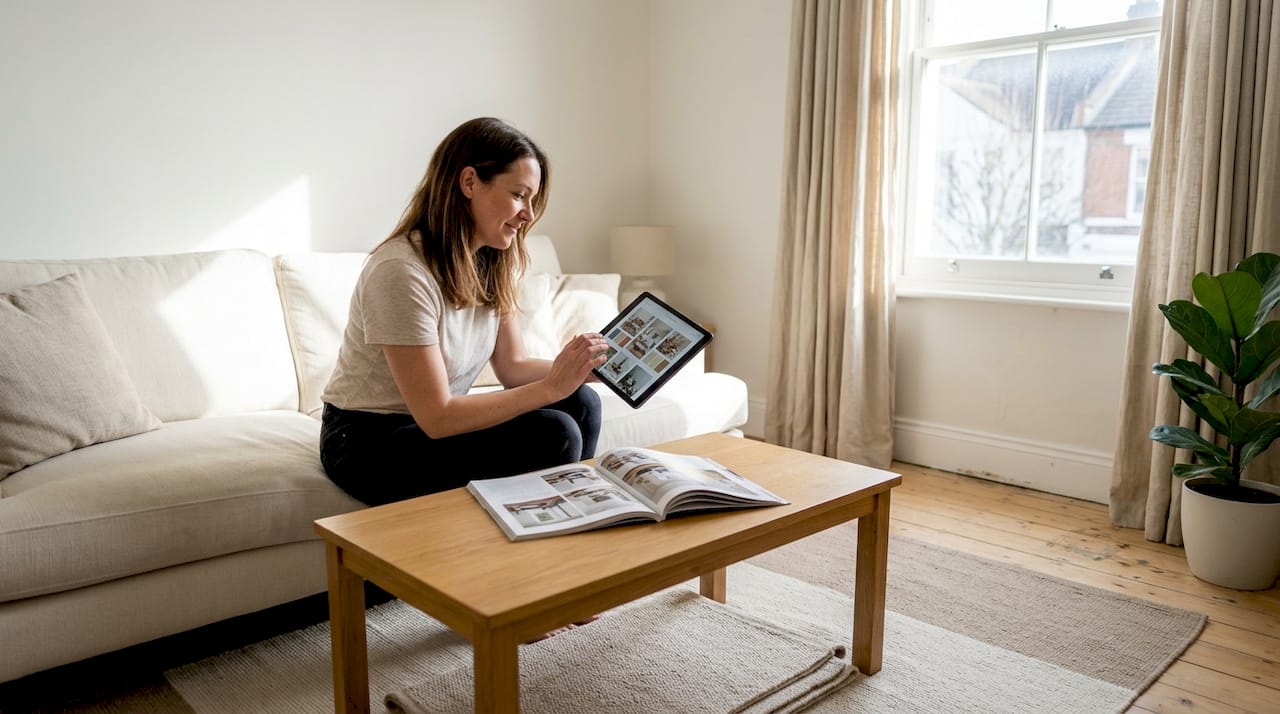
- Planning your neutral home styling workflow
- Executing the neutral styling workflow step by step
- Troubleshooting and avoiding common mistakes
- Our perspective: Why a workflow beats simple colour choices
- Explore more neutral styling resources
- Frequently asked questions
Key Takeaways
| Point | Details |
|---|---|
| Workflow delivers cohesion | A methodical approach ensures every element fits together, avoiding mismatched styles. |
| Texture prevents blandness | Using layered materials adds warmth and interest to neutral schemes. |
| Preparation avoids mistakes | Mapping out tools, colours, and a timeline reduces errors and saves money. |
| Easy to refresh style | Neutral foundations make it simple to update your home as trends change. |
Understanding neutral home styling and its impact
Neutral home styling is the practice of building a room’s visual identity around a restrained palette of whites, creams, beiges, taupes, and soft greys, then adding warmth and personality through texture, form, and carefully chosen accents. It is not simply painting every wall magnolia and hoping for the best. Done well, it is one of the most sophisticated approaches in interior design.
The appeal is well founded. Neutral schemes are remarkably versatile, working across architectural styles from Victorian terraces to new-build flats. They also have a measurable psychological effect. Calm, low-saturation environments reduce visual noise and help occupants feel more relaxed, which is why so many homeowners gravitate towards them after years of bolder choices.
Here is what neutral styling genuinely offers:
- Longevity: Neutral foundations rarely date the way trend-led colours do.
- Flexibility: Swapping accessories refreshes the look without redecorating.
- Light amplification: Pale tones reflect natural light, making rooms feel larger.
- Resale appeal: Neutral interiors are broadly appealing to buyers and renters alike.
- Stress reduction: Quieter colour environments support mental wellbeing at home.
The challenge is that neutral does not mean simple. Many homeowners fall into the trap of choosing colours they love in isolation, only to discover that the undertones clash when placed together. A cool grey sofa against a warm cream wall can look jarring rather than serene. This is precisely where a workflow saves you.
“Neutral colours work best when you treat the whole room as a single composition rather than a collection of individual purchases.” This principle underpins every successful neutral scheme.
For deeper inspiration, minimalist design examples show how restraint in colour actually amplifies the impact of every element you do include. External neutral decor advice also highlights how professionals approach palette cohesion from the outset, treating it as a non-negotiable first step rather than an afterthought.
Planning your neutral home styling workflow
With the importance of neutral styling established, the next step is planning the project effectively to avoid costly errors. Good planning is what separates a scheme that looks polished from one that looks like a series of compromises.
Start by outlining three core elements before you buy a single item:
- Concept: What mood do you want the room to evoke? Coastal calm, Scandinavian simplicity, warm country comfort?
- Colour palette: Select two to three base neutrals and confirm their undertones work together in your specific light conditions.
- Timeline: Assign realistic phases for painting, furniture delivery, and accessorising so decisions are not rushed.
A step-by-step decorating approach prevents the most common planning mistake, which is buying accessories before the walls are painted. Colours look entirely different once surrounded by your actual finishes.
| Planning stage | Common mistake | Better approach |
|---|---|---|
| Concept | Copying a single image | Define the mood in words first |
| Palette selection | Choosing colours digitally only | Test large swatches on actual walls |
| Budgeting | Spending heavily on paint, skimping on texture | Allocate budget across all layers |
| Timeline | Accessorising before painting | Complete base layers before adding detail |
Using professional workflow tools can also help you sequence tasks logically, especially if you are working across multiple rooms simultaneously.
Pro Tip: Write your concept statement in one sentence before you shop. For example: “I want this living room to feel like a calm, sun-warmed afternoon.” Every purchase decision can then be tested against that statement, which stops impulse buys that undermine cohesion.
A modern decorating workflow also recommends auditing what you already own before purchasing anything new. Existing furniture pieces often anchor the palette more effectively than you might expect, and building around them saves both money and effort.
Executing the neutral styling workflow step by step
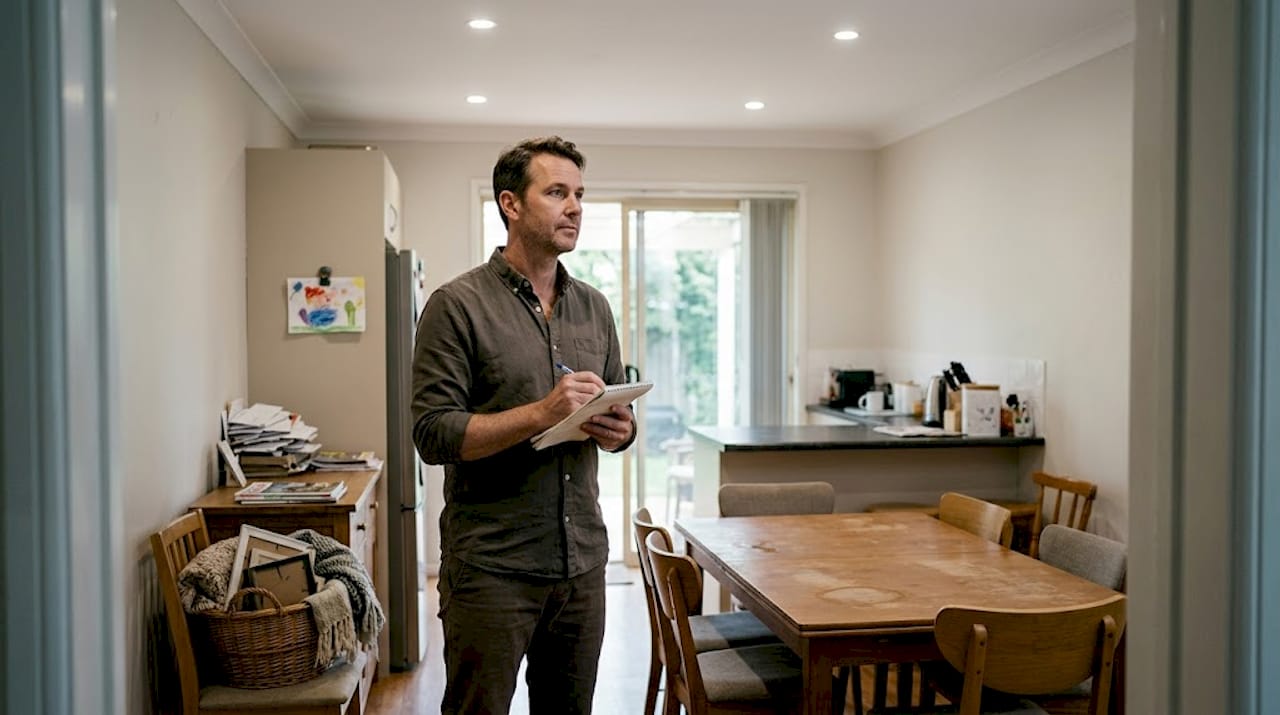
Once preparation is complete, it is time to move into hands-on execution with clear workflow steps. Following a sequence prevents the paralysis that comes from trying to make every decision at once.
- Prep the space: Declutter completely. Neutral styling is unforgiving of visual clutter because there is no bold colour to distract the eye.
- Paint walls and woodwork: Apply your chosen base neutral and allow it to fully dry before assessing. Natural daylight and artificial light will both affect the final result.
- Introduce large furniture: Sofas, beds, and dining tables establish the room’s tonal anchor. Choose pieces in complementary neutrals rather than exact matches for a more natural feel.
- Layer textiles: Rugs, curtains, cushions, and throws add the warmth and texture that stop a neutral room feeling sterile. Vary materials: linen, wool, cotton, and velvet all read differently.
- Add accessories last: Ceramics, plants, books, and artwork are the finishing details. Place them in odd-numbered groupings for a more organic arrangement.
Well-executed home styling steps can boost perceived value by up to 10%, which makes the effort genuinely worthwhile beyond personal enjoyment.
| Neutral tone | Undertone | Best used for |
|---|---|---|
| Soft white | Cool blue | North-facing rooms needing brightness |
| Warm cream | Yellow/pink | South-facing rooms, cosy spaces |
| Light greige | Neutral | Versatile, works in most orientations |
| Pale taupe | Brown/grey | Grounding larger open-plan spaces |
For smaller rooms, a small space workflow offers specific guidance on keeping neutral schemes from feeling cramped.
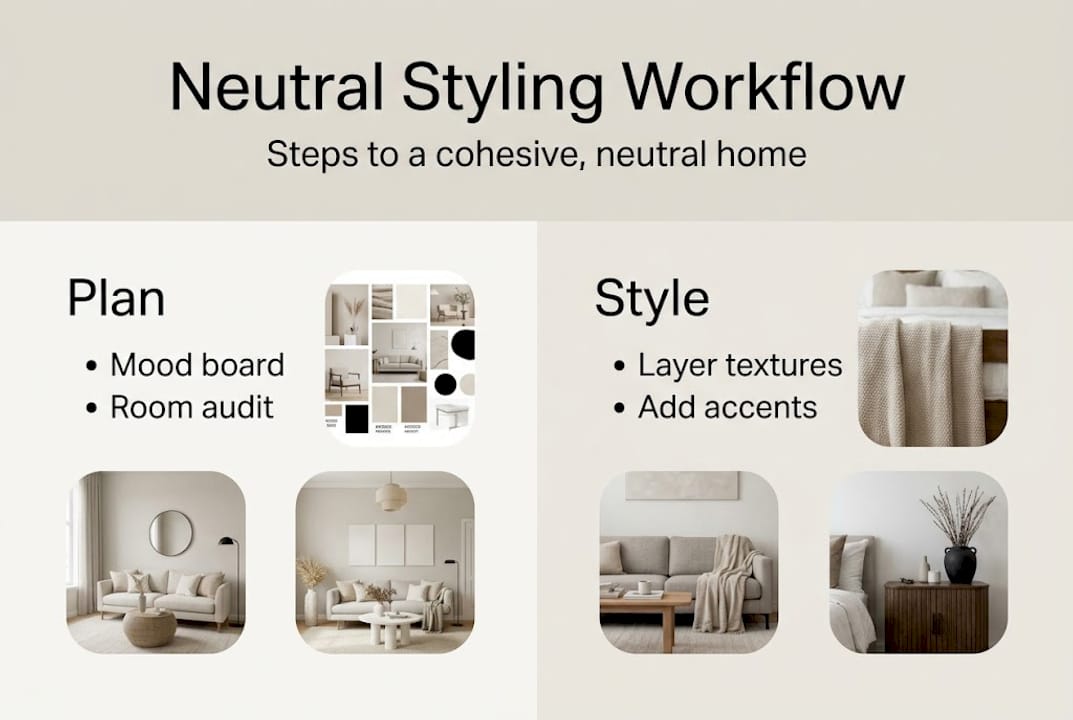
Pro Tip: To avoid a bland result, introduce one material that has genuine tactile interest. A chunky knit throw, a hand-thrown ceramic vase, or a natural jute rug adds the kind of subtle contrast that makes a neutral room feel considered rather than empty.
Troubleshooting and avoiding common mistakes
Even with a structured workflow, mistakes can happen. Here is how to spot and solve them for a flawless result.
The most frequent errors in neutral styling include:
- Mismatched undertones: Mixing cool and warm neutrals without intention creates visual tension. Always check undertones under the same light source.
- Lack of texture: A room decorated entirely in flat, smooth surfaces looks clinical regardless of how carefully the colours are chosen.
- Over-reliance on grey: Grey became so dominant in the 2010s that many homes now feel dated. Introduce warmer tones to modernise.
- Ignoring scale: Large rooms need bolder textural statements. Delicate accessories get lost and the space feels underfurnished.
- Neglecting the fifth wall: Ceilings painted in the same neutral as walls create a seamless, enveloping effect that many homeowners overlook.
To verify cohesion, stand in the doorway of the finished room and squint slightly. If your eye travels smoothly around the space without snagging on any single element, the scheme is working. If something jumps out, it is either too dark, too light, or a different undertone family.
“A neutral scheme that feels stale usually lacks contrast in value, not colour. Adding a darker accessory or a lighter textile often solves the problem instantly.”
Following modern interior design workflow best practices also means revisiting your scheme seasonally. Swapping cushion covers and throws for warmer tones in autumn and cooler ones in spring keeps the look fresh without a full redecoration. Explore cohesive decor strategies and affordable styling solutions for practical ways to refresh your scheme on any budget.
Our perspective: Why a workflow beats simple colour choices
Most people approach neutral styling by choosing a colour they love and building outward from there. We understand the instinct, but in our experience, it is the single biggest reason neutral schemes disappoint.
Colour is only one layer of a room. When you start with a workflow rather than a shade card, you are forced to think about proportion, texture, light, and sequence before you spend a penny. That discipline is what produces spaces that feel genuinely considered rather than assembled.
The homes that photograph beautifully and feel wonderful to live in share one quality: every element was chosen in relation to everything else, not in isolation. A workflow enforces that relational thinking. It prevents the “I loved it in the shop” problem, where individual pieces are beautiful but collectively incoherent.
We also believe that following an effortless workflow protects your investment. Neutral styling done methodically lasts years without feeling tired, whereas colour-first approaches often require expensive updates as tastes shift. The process is the point.
Explore more neutral styling resources
Ready to take your neutral scheme further? At Homable, we have curated a range of resources and products to support every stage of your styling journey.
From paint palette guidance to finishing accessories, our neutral styling resources cover everything you need to move from concept to completed room with confidence. Whether you are starting from scratch or refining an existing scheme, our workflow guide gives you a clear, structured path through every decision. Explore our curated collections of rugs, cushions, ceramics, and textiles, all chosen to complement neutral interiors and help you build a space that feels both stylish and genuinely liveable.
Frequently asked questions
How can I prevent a neutral home from looking bland?
Layer different textures such as linen, wool, and ceramic alongside subtle tonal variation to add depth. Minimalist design examples show how material contrast does the visual work that colour would otherwise provide.
What are the best neutral colours for a UK home?
Light greys, warm beiges, and soft whites suit British light conditions well and offer a timeless base. Colour scheme guidance recommends testing large swatches on your actual walls before committing.
How does a styling workflow help achieve a cohesive look?
A workflow guides each decision in sequence, ensuring your colour, texture, and accessories all relate to one another. Following a structured interior workflow prevents the mismatched results that come from shopping without a plan.
Can I update neutral styling easily if trends change?
Yes. Neutral foundations are designed for exactly this kind of flexibility, and swapping cushions, throws, or artwork refreshes the scheme without repainting. Cohesive decor strategies outline how to make accent updates feel intentional rather than piecemeal.
Recommended
- Modern Home Decorating Workflow for Effortless Style – Homable
- Master your curtain installation workflow for stylish home – Homable
- Modern Home Styling Steps for a Stunning Look – Homable
- Decorating Small Spaces Workflow for Stylish Homes – Homable
- Master the window treatment design process: custom style – Fabric Store in Columbia, SC | Drapery Making Services