Cart
0
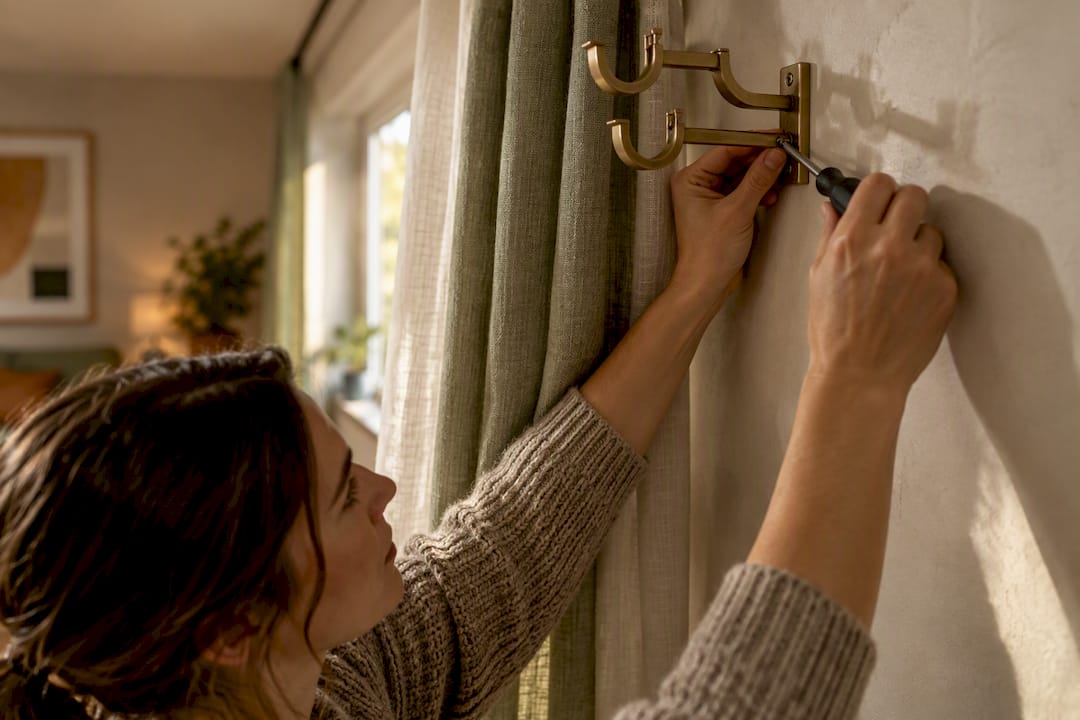
A double curtain rod holds two independent layers of fabric on one bracket, and its real job is giving you separate control over light and privacy. The setup most people should start with is a sheer on the inner rod and a heavier, opaque or blackout curtain on the outer rod. Try that pairing, then mount the rod high and wide to make the whole window look taller.
TL;DR:
- Mount double curtain rods 15 to 25 centimeters above the window frame and extend 15 to 20 centimeters beyond each side to enhance window height and visibility.
- Use heavy-duty fixings like stud anchors or toggle bolts, especially for long or heavy curtain spans, to prevent sagging and ensure stability over time.
- Pair sheer fabrics such as voile or linen-look materials with blackout or thermal-lined curtains for effective light control, privacy, and warmth retention.
- Allow sufficient stack-back space, roughly a third of the window width, so both layers fully clear the glass when open, avoiding shadowing.
- Measure curtain length precisely from the top of the pole or rings to ensure a clean fit, whether for floor, sill, or radiator clearance.
Table of Contents
- 10 double curtain rod ideas designers use
- How to hang double curtain rods
- Measuring, curtain length and fullness explained
- Choosing fabrics, textures and colours for layered curtains
- Installation pitfalls and expert fixes
- Styling finishing touches
- Author note: practical experience and Homable resources
- Where to buy coordinating curtains and hardware
- Sources
- FAQ
10 double curtain rod ideas designers use
A double rod earns its place when the two layers actually do different jobs. Design experts point to sheer and opaque pairing as the configuration that solves light and privacy independently, rather than treating the second layer as decoration.
- Sheer plus blackout: run a voile or linen-look sheer on the inner rod for daytime privacy, and a blackout panel on the outer rod for night.
- Mount high and wide: fix the rod 15 to 25 centimetres above the frame and 15 to 20 centimetres beyond each side so the window reads as taller and the glass clears fully when curtains are open.
- Mix header types: pair an eyelet inner layer, which sits close to the pole and moves easily, with a pencil pleat or ring-top outer layer for a fuller, more structured front.
- Hide the inner track: a shallow pelmet or valance across the top conceals the inner rod and rings, leaving only a clean drop of fabric visible.
- Choose double-track over double-rod: for shallow reveals or minimalist rooms, a slim double-track system sits flatter against the wall than two projecting poles.
- Go DIY with unusual materials: industrial pipe fittings or a length of reclaimed wood dowel make a characterful, low-cost double rod for anyone comfortable with basic fixings.
- Pick your length deliberately: floor-graze suits most living rooms, a puddle adds drama in a formal setting, and sill-length keeps things practical over radiators or window seats.
- Contrast textures: a voile inner layer against a velvet or thermal-lined outer curtain adds visual depth and helps the room hold warmth during colder months.
- Add tiebacks or holdbacks: a rope tieback on the sheer and a wall-mounted holdback on the outer drape change the whole composition when curtains are open.
- Plan stack-back: leave enough rod extending past the frame so both layers can stack fully clear of the glass rather than shadowing the window.
Pro Tip: Fit the sheer layer on the rod closest to the glass and the heavier fabric on the rod nearest the room. It is easier to draw and keeps the blackout panel from crushing the voile.
How to hang double curtain rods
Bracket-hung double rods suit most homes and are simple to adjust later; a double-track system is worth the extra installation effort only where you want a flush, minimal look or have limited depth on the reveal.
- Mount the rod 15 to 25 centimetres above the window frame and extend it 15 to 20 centimetres beyond the frame on each side.
- Fix into wall studs wherever possible; where you must use plasterboard, choose heavy-duty toggle anchors rated for the bracket’s load.
- Allow stack-back space equal to roughly a third of the window width on each side so both layers clear the glass when open.
- Keep a short tool list ready: drill, spirit level, stud finder, appropriate wall plugs or toggles, tape measure and pencil.
A double rod carries far more weight and leverage than a single one, and standard drywall screws often fail under that load without stud fixings or toggle bolts. Check bracket type and wall fixing before you drill, not after the first sag appears. Our own installation workflow guide walks through the same checklist in more depth.
Measuring, curtain length and fullness explained
Measure the drop from the top of the pole if the heading sits above it, or from the bottom of the rings if the curtain hangs from clip rings, since the two methods can differ by several centimetres.
- Floor-length curtains should finish about 1 centimetre above the floor for a clean graze without dragging.
- Curtains near a radiator should stop 2 to 3 centimetres above the unit to protect airflow and reduce fire risk.
- Sill-length panels should end roughly 1 centimetre above the sill.
- For fullness, aim for panels totalling 2 to 3 times the width of the rod so the fabric folds properly when closed.
A sash window usually takes a single width per side; a wide bay needs a bendable or multi-arm track; patio doors benefit from panels wide enough to stack fully clear when open. Our curtain size guide breaks these calculations down by window type.
Choosing fabrics, textures and colours for layered curtains
Pick voile or a linen-look weave for the inner layer, since both let light filter through while still softening the view in. The outer layer does the heavy lifting: velvet or a thermal-lined blackout fabric blocks light and helps retain warmth.
- Contrast texture deliberately: a fine sheer against a substantial weave reads as intentional rather than mismatched.
- Treat a closed pair of curtains as a wall in the room and choose neutrals if you want them to recede, or a bold pattern if you want a feature.
- Check lining before buying: a lined outer curtain drapes better and offers stronger sun protection than an unlined one.
- Read up on sheer versus blackout fabric before choosing, since the right pairing depends on the room’s light and privacy needs.
Installation pitfalls and expert fixes
Lightweight wall plugs are the most common cause of a sagging double rod. The combined weight of two fabric layers plus the rod itself puts real strain on the fixing point, and only stud fixings or properly rated toggle anchors hold that load reliably over time.
For long spans or heavy outer drapes, add a centre bracket roughly every 80 to 100 centimetres rather than relying on end brackets alone. Check for sag every few months, tighten brackets as needed, and dust or vacuum poles and rings during routine cleaning. Call a professional fitter for solid masonry, listed buildings, or spans wider than about 3 metres.

Pro Tip: If a bracket already feels loose, do not simply retighten the same screw. Fill the hole, let it dry, and refix into a stud or a fresh anchor point.
Styling finishing touches
A shallow pelmet across the top hides the inner rod and rings, leaving a tidy front view. Place tiebacks around two thirds of the way down so curtains fall in a relaxed curve rather than a tight pinch.
- Mix metal and wood rod finishes on purpose, matching one to your light fittings and the other to your flooring or furniture.
- Keep curtain hems clear of radiators and door swings so fabric never scorches or catches.
- Choose holdback height to suit the room: lower for a cosy feel, higher for a formal one.
Author note: practical experience and Homable resources
I have measured and hung more double rods than I can count, and the failures are almost always the same: wrong fixing, wrong height, not enough stack-back. Home styling resources provide measuring and installation guides, and offer product selections to help get started once measurements are taken.
— Cristiano
Where to buy coordinating curtains and hardware
Once you know your measurements, browsing pairs that already work together saves a lot of trial and error. There are curtain options available, including bamboo styles, alongside rugs and storage pieces to finish a room once the windows are sorted.

- Browse the Homable storefront for curtains and coordinating accessories by room.
- Check a bamboo curtain listing as an example of a textured option that pairs well against a plain sheer.
- Read the measuring guide and installation workflow before you order, so panel width and drop are right first time.
For readers also planning wall features alongside new curtains, this black wall art placement guide is a useful companion for balancing a room once the windows are dressed.
Sources
- These Double Curtain Rods Ideas Are How Designers Add Instant Dimension, Depth, and Detail to Window Dressings
- How to measure curtains: simple guide to curtain measurements
- Window stack to keep your home cool in a heatwave
FAQ
How to style a double curtain rod?
Hang a sheer on the inner rod and an opaque or blackout curtain on the outer rod, then mount the whole assembly 15 to 25 centimetres above the frame for a taller look. Add a pelmet if you want to hide the inner track, and finish with a tieback for a relaxed, open-curtain shape.
Are double curtain rods a good idea?
Yes, because they let sheer and opaque layers work independently, giving you daytime privacy without losing natural light and full blackout at night. Design experts describe this as the main functional advantage over a single rod with layered panels.
What is the best way to hang double curtains?
Fix brackets into wall studs where possible, or use heavy-duty toggle anchors on plasterboard, since standard fixings often fail under a double rod’s combined weight. Add a centre bracket on long spans and leave enough stack-back so both curtain layers clear the glass.
What do you use a double curtain rod for?
A double curtain rod is used to hang two curtain layers, typically a sheer and a heavier opaque panel, on the same window so each can be drawn separately. This gives control over light, privacy and insulation without needing two separate window fittings.