Cart
0
Pick one purpose for your balcony, choose a single hero piece to anchor it, then layer floor, lighting and textiles on top. Measure your door swing and usable depth before buying anything, and start with a removable, polypropylene outdoor rug rather than anything plush. Everything else on your balcony, from planters to string lights, should support that one hero piece, not compete with it.
TL;DR:
- Measure your balcony’s width, depth, and door swing radius carefully to ensure furniture fits without blocking access or drainage.
- Prioritize rail-mounted planters, foldable furniture, and short-pile outdoor rugs to maximize space and promote quick drying.
- Match plants to the balcony’s light exposure and layer greenery from tall at the back to trailing over rail for visual interest.
- Use weather-resistant cushions, layered lighting under 300 lumens, and privacy screens that avoid drilled holes for renter-friendly decor.
- Regularly check drainage and secure all furniture and planters to prevent damage or safety hazards, especially for children and pets.
Table of Contents
- Balcony decor ideas that make the biggest difference
- Plan your balcony makeover before you buy anything
- Furniture and layout that suits small footprints
- Plants and greenery for every light level
- Flooring and textiles that drain and dry
- Lighting and ambience without mains wiring
- Privacy solutions that stay renter-friendly
- Maintenance and safety checks that prevent disputes
- What the designer rules actually mean for you
- Refresh your balcony through the seasons
- Safety considerations for balconies with children or pets
- Editor’s perspective: priorities over perfection
- Shop the pieces that bring these ideas together
- Sources
- FAQ
Balcony decor ideas that make the biggest difference
Small balconies punish clutter fast. Every extra object either earns its floor space or steals it from something better, so the ideas below are ranked by impact rather than novelty. Some you can finish in an afternoon; a couple need a weekend and a drill.
-
Rail-mounted planters and vertical gardens. Clipping planters to the railing keeps every centimetre of floor free for people. Look for boxes with secure hook fixings rather than balancing pots on the ledge, especially above street level.
-
A foldable bistro set or over-rail table. A two-seat folding set that leans flat against the wall, or a table that clamps directly onto the railing, gives you a dining surface without eating into your walking space. Apartment Therapy’s survey of real small balconies found that a compact bistro set or a single low-profile bench is usually the most practical hero piece for small balconies.
-
A low bench or pouffe instead of a chair. Anything under knee height keeps sight lines open across the space, which matters enormously on a balcony narrower than 4 feet.
-
A polypropylene outdoor rug with a short pile. Skip the shaggy indoor-style rugs. The Strategist recommends polypropylene with a pile of around 0.25 inches or less, because deeper piles trap water and dry slowly.
-
Removable decking tiles over the existing floor. Interlocking wood-effect tiles hide tired concrete instantly and lift out in minutes when you move, which matters if you’re renting.
-
Three layers of lighting. A small lantern on the table, a cluster of string lights along the rail, and a solar stake near the plants. Aim for ambient sources under 300 lumens each, the same low-lumen guidance that outdoor lighting specialists use for cosy rather than floodlit results.
-
A removable privacy screen. Reed panels or a tension-rod curtain solve overlooking neighbours without a single screw going into brickwork.
-
Weather-resistant cushions. Solution-dyed acrylic fabric (the type used in Sunbrella-style ranges) shrugs off rain and UV in a way cotton cushions never will.
-
A storage bench. One bench that lifts open for cushions or gardening tools solves seating and storage in the same footprint.
-
A small herb corner. Basil, mint and thyme in a rail trough do double duty as scent, greenery and something useful for the kitchen.
-
One statement piece. A round mirror, a sculptural ceramic planter, or a bold-coloured side table gives the eye somewhere to land. Pick one; two competing statement pieces just look busy.
The through-line across all eleven is repetition and restraint. Designers consistently push layering plants and repeating finishes rather than mixing five materials and six colours in a four-square-metre space.
Plan your balcony makeover before you buy anything
Grab a tape measure before you touch a shopping cart. Open your balcony door fully and measure the arc it sweeps. That curve is dead space for furniture, and door swing regularly eats into usable balcony floor far more than people expect.
- Measure width, depth, and the door swing radius separately, then subtract the swing from your usable depth.
- Decide one primary use (dining, lounging, or gardening) and one secondary use it needs to accommodate.
- Narrow balconies (under 4 feet deep) suit a rail table plus two folding stools, positioned along the long wall.
- Square balconies (roughly 6x6 feet) fit a bistro set on the diagonal, which reads larger than a square placement.
- Deep, narrow balconies suit a bench along one rail with planters on the opposite side, leaving a clear walking channel.
- Before buying, confirm drainage isn’t blocked, check your lease for rules on fixtures or open flames, and check any listed weight limits on rail planters.
Furniture and layout that suits small footprints
Choose leggy, low-profile silhouettes. Furniture that shows floor beneath it makes a small balcony feel bigger than solid-sided pieces of the same size. Folding, stacking and storage-forward designs earn their keep twice over, once as seating and once as something you can flatten against a wall.
- Lightweight aluminium and synthetic wicker resist rust and don’t need annual treatment.
- Treated wood looks warmer but needs a yearly oil or sealant refresh to hold up outdoors.
- Measure clearance with the door fully open, not closed, so seating can still be pulled back for someone to walk past.
- Favour anything you can carry indoors in under a minute when a storm rolls in.
Pro Tip: Keep one folding chair permanently stored flat behind a planter. It’s the fastest way to add a seat for a guest without buying a second full-size piece.
Plants and greenery for every light level
Match plants to the light your balcony actually gets, not the light you wish it had. South or west-facing balconies suit herbs, geraniums and most Mediterranean plants. Part-shade spots do well with begonias and coleus, while a north-facing balcony that barely sees direct sun still supports ferns and hostas.
- Layer height: a tall plant at the back, mid-height pots in front, trailing varieties spilling over the rail or a shelf edge.
- Rail planters and hanging pots free the floor entirely; self-watering versions cut down on missed waterings during a busy week.
- Water pots daily in summer heat, roughly every three days in cooler months, and check moisture with a finger before topping up.
- Bring anything frost-tender indoors, or wrap terracotta pots, before the first hard frost.
Flooring and textiles that drain and dry
Skip plush indoor rugs outdoors entirely. A short-pile polypropylene flatweave dries in hours rather than days, and it won’t hold the mildew smell that heavier rugs develop after a few damp weeks.
Pro Tip: A rug pile of 0.25 inches or less is the working benchmark outdoor styling specialists use to avoid trapped moisture. Anything deeper, treat as an indoor-only rug.
- Choose open-backed, breathable deck tiles rather than solid interlocking mats, which trap water underneath.
- Never lay decking or rugs directly over a drainage grille or outlet.
- Cushions and throws should use solution-dyed acrylic fabric, which resists fading and mould far better than cotton blends.
- Lift the rug after heavy rain and let the floor beneath dry before putting it back.
Lighting and ambience without mains wiring
Three light layers beat one bright one every time. Put an overhead or rail-mounted string above head height, a small lantern at table level, and a single accent light tucked near your plants.
- Keep ambient sources under 300 lumens; anything brighter reads as a floodlight, not a mood.
- Solar and battery fixtures avoid trailing cables entirely, which matters for a rented space.
- Cluster lights in pools rather than spacing them evenly along the rail, which creates flat, even light with no atmosphere.
- Charge solar lights fully and test battery runtime for a full evening before you rely on them for a dinner outdoors.
Privacy solutions that stay renter-friendly
Zip-tied reed or bamboo panels attach to railings without a single drilled hole and come down just as fast. Tension-rod curtains work well on inset balconies with a frame to brace against.
- Semi-opaque fabric that filters 40 to 60% of the view keeps some light through while blocking direct sightlines.
- A trellis panel with a climbing plant does the same job more slowly, but looks intentional from day one.
- Weight the bottom of any hanging screen and tie it securely to the rail. Wind catches unsecured fabric hard at height.
Maintenance and safety checks that prevent disputes
Never let decking or a rug cover a drain. Blocked drainage is one of the most common causes of landlord disputes over balcony decor, and it’s entirely avoidable with breathable materials.
- Check your lease for rules on fixed planters, drilled fittings or open flames before you commit to anything permanent.
- Secure planters and lightweight furniture against wind, especially above the third floor.
- Cover furniture, bring tender plants in, and check every fixing is still tight each season.
What the designer rules actually mean for you
The two rules worth remembering are the rule of layers, floor plus lighting plus textiles, and treating your balcony as an extension of the room behind it, matching tones so the two spaces read as one.
- Measure first, always. It stops you buying furniture that never fits.
- Repeat one or two finishes across pots, cushions and furniture instead of mixing five.
- Homable stocks pieces built around exactly this brief, including the vidaXL Balcony Planter, sold in packs of two with a wicker finish and PE lining, a straightforward way to add the tall-and-trailing layer designers recommend.
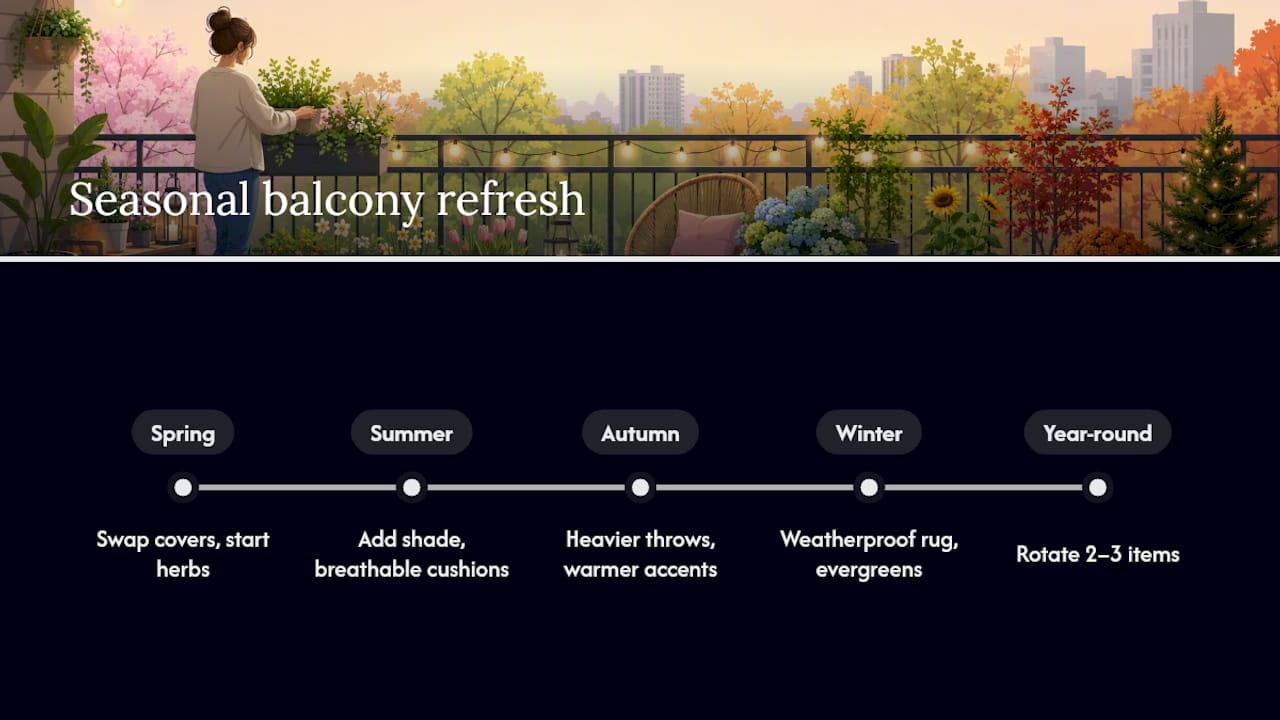
Refresh your balcony through the seasons
A balcony that only looks good in June is a balcony half-used. Spring is the easiest reset: swap heavy winter cushion covers for lighter cotton or acrylic blends, and get herb pots started while the light is improving but the heat hasn’t arrived yet.
Summer asks for shade and airflow more than decor. A retractable shade sail or a market umbrella, paired with lighter, breathable cushion fabric, does more for comfort than another ornament. This is also when your evening lighting layer earns its keep, since you’ll actually be out there after dark.
Autumn is about warmth and texture. Swap thin summer throws for something heavier, bring tender plants indoors before the first frost, and lean into deeper colours in cushions or a lantern with a warmer glow. A small pumpkin or two by the door costs nothing and does a lot of visual work.
Winter is the season most people abandon the balcony entirely, which is a waste if you’ve built it well. A weatherproof rug stays down year round if it’s genuinely outdoor-rated, and a single battery lantern by the door makes even a five-minute coffee break outside feel worth having. Evergreen planters in the rail boxes carry the greenery through when everything else has gone dormant.
Rotating two or three items each season, rather than redecorating from scratch, keeps costs down and means you’re never storing a full set of unused decor indoors.
Safety considerations for balconies with children or pets
Railings built to older safety standards can have gaps wide enough for a small pet or a child’s head, so check gap width before assuming the railing alone is enough protection. Adding a mesh or acrylic panel behind decorative railings closes that risk without hiding the design underneath.
Keep trailing cables from string lights and solar chargers tucked along the rail rather than crossing the floor, where they become a trip hazard for both toddlers and pets. Choose planters with no sharp edges at knee height, and avoid trailing wires or fairy lights, low enough for a curious pet to chew.
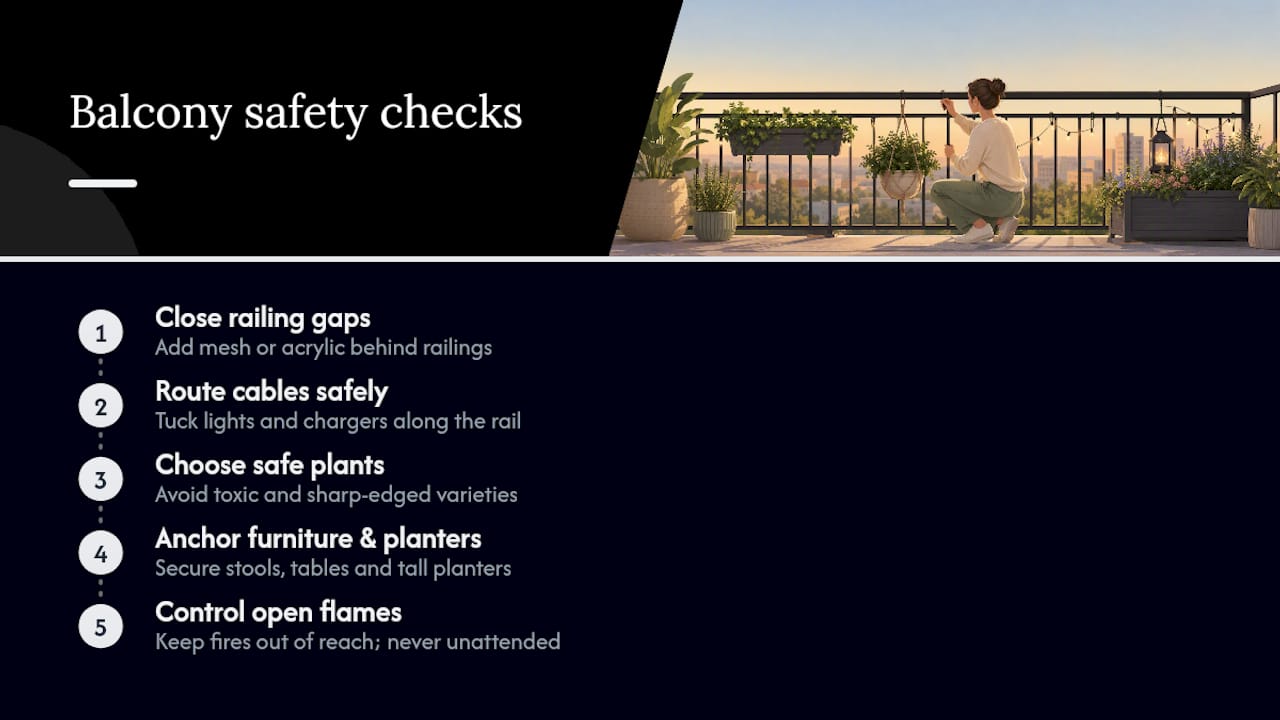
Skip toxic plants entirely if pets have access to the balcony; oleander, lily and sago palm are common offenders that cause serious harm if chewed. Secure any furniture that could tip, especially stools and small tables, and anchor tall planters so a determined toddler or an excitable dog can’t pull them over. If you use a fire pit, citronella candle, or any open flame, keep it well out of reach and never leave it unattended with children or pets nearby.
Editor’s perspective: priorities over perfection
Most balcony guides list forty ideas and leave you paralysed. Pick one purpose, one hero piece, then layer floor, lighting and textiles, in that order. The recurring mistake is buying decor before measuring, which means chairs that clip the door and rugs that never fully dry.
— Cristiano
Shop the pieces that bring these ideas together
Once you’ve measured your space and picked a hero piece, the fastest way to close the gap is sourcing textiles, planters and storage that were built for exactly this brief. An outdoor range leans into the same materials this guide recommends: weather-resistant fabrics, low-profile storage furniture, and planters designed to sit securely on a rail rather than wobble.

The vidaXL Balcony Planter, two pieces with a wicker finish and PE lining, is a good example of the tall-and-trailing layer designers push for, giving you an instant vertical garden without eating into floor space. For the tabletop styling layer once your bistro set is in place, something like the decorative silver flower candle holder adds the small, intentional detail that makes a balcony feel finished rather than furnished. If storage is your bigger headache, Homable’s guide on creative storage designs pairs well with a bench-style seat that hides cushions and tools in one move. Browse the balcony and outdoor collection to see what fits your measurements before you buy.
Sources
- How to Decorate Small Apartment Balconies | The Strategist
- 20 Small Balcony Ideas to Make the Most of Your Tiny Terrace | Architectural Digest
- Balcony styling edit | Livingetc
- Small Balcony Ideas: 10 Decor and Layout Tips from Real Homes | Apartment Therapy
FAQ
How can I make my balcony look nice on a small budget?
Start with one polypropylene outdoor rug and a set of rail planters. Both cost little, transform the look instantly, and can be swapped or removed if you move.
What are some good items to decorate a small balcony with?
A folding bistro set, rail-mounted planters, a short-pile outdoor rug, weather-resistant cushions and a layer of low-lumen lighting cover most of what a small balcony needs.
What should I put on my balcony if I have very little floor space?
Prioritise anything that mounts to the railing rather than sitting on the floor, such as planters, a clip-on table, and string lighting, so you keep the deck itself clear for walking.
What are some easy DIY ideas for decorating a balcony?
Zip-tie a reed screen to the railing for instant privacy, paint a set of terracotta pots in one repeated colour, or clamp a small shelf to the rail for extra plant space, all doable in an afternoon with no drilling.
How do I stop my balcony rug or decking from getting mouldy?
Choose a polypropylene rug with a pile of roughly 0.25 inches or less, lift it after heavy rain, and use open-backed deck tiles that let moisture escape rather than trapping it underneath.