Cart
0
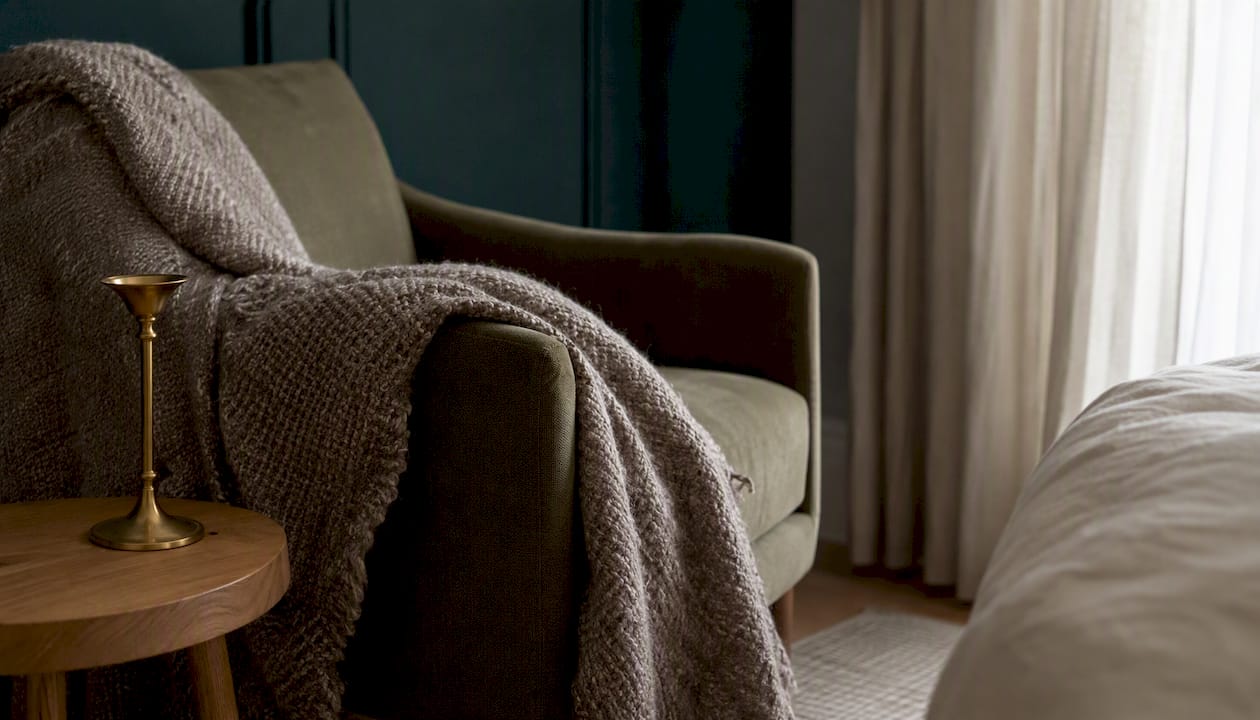
The five trends shaping British homes right now are quiet luxury, neo-naturalism, a Modern Deco revival, tactile wall finishes (limewash and wallpaper), and cocooning colour palettes built around chocolate, burgundy, and warm olive. If you do nothing else this weekend: swap one synthetic cushion for a linen or bouclé version, pick up a paint sample in a deep earthy tone, and replace two drawer handles with brushed brass. Those three moves cost under £50 combined and will tell you more about your home’s direction than any mood board.
The broader design trends analysis for 2026 consistently points in one direction: away from disposable, fast-fashion decor and towards pieces that feel genuinely made. Pantone’s Cloud Dancer, Graham & Brown’s warm stone edits, Dulux’s earthy neutrals, and Little Greene’s deep jewel tones all signal the same shift. Lick’s curated palette releases reinforce it. The consensus from colour trend reporting is that layered blues, burgundy, and warm greens are the palette directions to watch.
Quick actions for this weekend:
- Swap at least one soft furnishing for a natural-texture piece (linen throw, wool cushion)
- Order a paint sample in a cocooning tone: chocolate brown, deep olive, or dusty burgundy
- Replace two pieces of hardware (handles, a lamp shade) with a Deco-inflected alternative in brushed brass or matte black
Key takeaways
The single most durable move for 2026 is to replace one synthetic piece per room with a natural-material equivalent and treat colour as a commitment rather than a backdrop.
| Point | Details |
|---|---|
| Lead with natural materials | Linen, wool, bouclé, and raw wood age better and anchor the quiet luxury direction more effectively than synthetic alternatives. |
| Test colour before committing | Order paint samples and live with them for a week across different lighting conditions before buying full tins. |
| Start with accessories | Cushions, hardware, glassware, and lamps let you test Modern Deco and earthy palettes at low cost before investing in furniture. |
| Layer your lighting | At least three light sources at 2700K–3000K, with dimmers, prevent dark palettes from feeling oppressive. |
| Homable for low-risk testing | Homable’s curated accessories — textiles, ceramics, lighting — let UK homeowners trial 2026 trends without large upfront spend. |
Table of Contents
- Why 2026 interiors are shifting — the cultural drivers behind the trends
- Which colours should you use in 2026?
- What materials and textures should you prioritise?
- How to add Modern Deco character without a full renovation
- Limewash, wallpaper and statement ceilings — which finish suits your home?
- How to create moody rooms without shrinking the space
- Five steps for testing and applying trends at home
- What to buy now and what to invest in — UK shopping advice
- How regional differences across the UK shape design choices
- The 2026 trends that actually work in everyday UK homes
- Homable makes it easy to test 2026 trends without the commitment
- Sources
Why 2026 interiors are shifting — the cultural drivers behind the trends
The move away from fast, disposable decorating has been building for several years, but 2026 feels like the point where it becomes the default rather than the exception. Three forces are converging.
First, sustainability is no longer a niche concern. Low-VOC paints, FSC-certified timber, and reclaimed furniture are increasingly baseline expectations in trade commentary, not premium add-ons. Buying less but buying better is the operating principle.
Second, there is a genuine backlash against the frictionless, AI-generated aesthetic. Homeowners want surfaces that show a hand — limewash that catches the light differently at different times of day, a linen weave you can feel, a piece of wood with visible grain. The Wren 2026 Home Trends Report shows rising retail search interest in vintage-inspired tiles, colour drenching, and warm timber finishes, with Pinterest data supporting the Neo Deco resurgence.
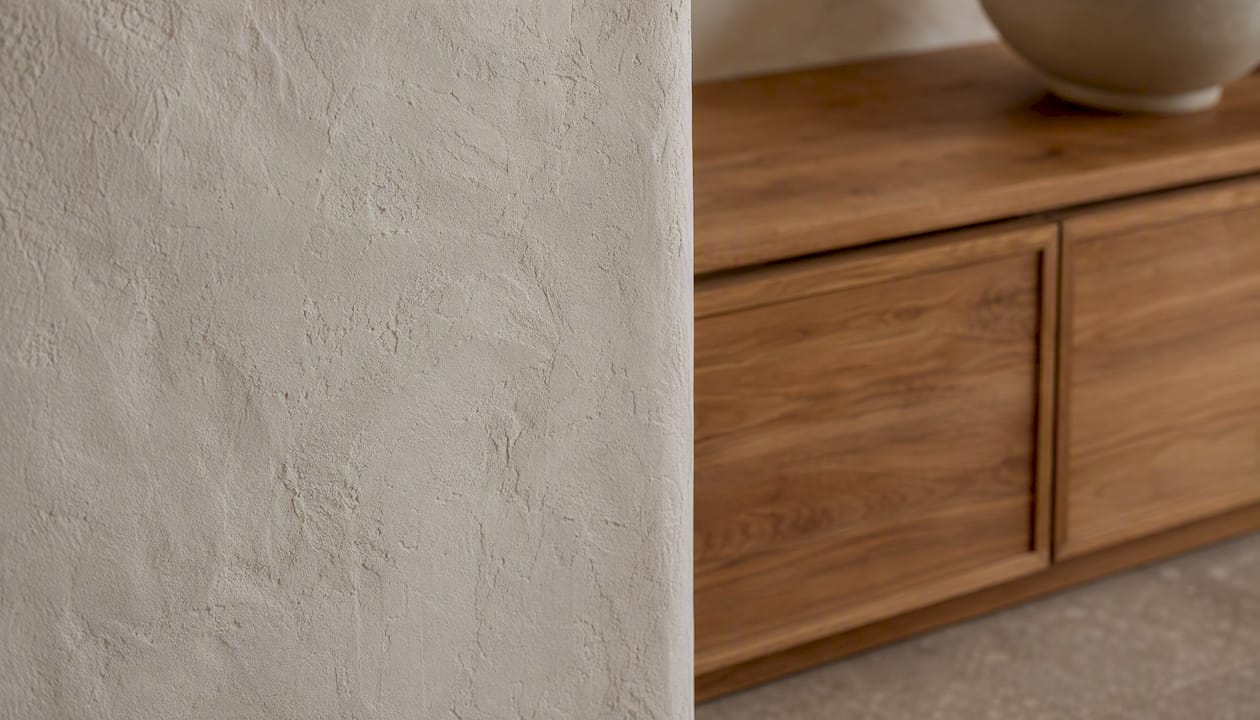
Third, the home has become a sanctuary in a way that demands more from it emotionally. People want rooms that feel cocooning, expressive, and personal.
Key forces at work:
- Durability over disposability: investment in fewer, better pieces
- Tactility as a counter to digital fatigue
- Sustainability moving from aspiration to expectation
- Expressive colour replacing safe, neutral minimalism
Which colours should you use in 2026?
The headline palettes this year are earthy and warm: chocolate brown, terracotta, clay, and burnt sienna anchor the cocooning direction. Warmer greens — olive, eucalyptus, and sage — work as both primary wall colours and accent tones. Moody jewel tones (burgundy, deep teal, inky blue) are gaining ground in living rooms and bedrooms. Nuanced whites in the Cloud Dancer register (warm, slightly creamy, never stark) remain the safest backdrop for layering.
Pairing rules that actually work:
- Drench a room in one deep tone but keep the ceiling two shades lighter to preserve height
- Use butter-yellow or muted dusty blue as accent colours against chocolate or dark olive walls
- In small rooms, dark colours work best on a single feature wall or in an alcove, not all four walls at once
Room-by-room suggestions:
- Living room: deep olive or warm terracotta walls, cream woodwork, brass hardware
- Kitchen: warm sage cabinetry or a vintage-tile splashback in earthy tones (Wren’s retail data shows this category surging)
- Bedroom: burgundy or deep teal on the headboard wall, linen bedding in oat or stone
- Hallway: chocolate brown or inky navy — hallways can take the darkest tones because they are transitional spaces, not rooms you sit in for hours
Graham & Brown, Dulux, Little Greene, and Lick are all worth consulting for sample pots before committing. Their 2026 colour edits are directional guides, not prescriptions.
What materials and textures should you prioritise?
Quiet luxury and neo-naturalism share a material vocabulary: linen, wool, raw and dark-stained woods, honed stone, bouclé, and suede or mohair as tactile accents. These materials age well, which is the point. A linen sofa cover that softens over time is more interesting in three years than a polyester one that pills.
Buying checklist:
- Fabric content: look for at least 80% natural fibre in upholstery and soft furnishings
- Joinery: dovetail or mortise-and-tenon joints in wooden furniture outlast dowel-and-glue construction
- Finishes: honed or brushed surfaces hide wear better than high-gloss
- Supplier guarantees: a five-year structural guarantee on upholstered furniture is a reasonable minimum
Care is straightforward if you choose correctly. Linen and wool both benefit from airing rather than frequent washing. Raw wood needs an annual oil treatment. Bouclé attracts lint but resists staining better than it looks. When a piece shows wear, reupholstery is almost always more cost-effective than replacement for solid-frame furniture.
Pro Tip: Anchor each room with one well-crafted, natural-finish piece — a solid oak side table, a wool rug, a linen curtain panel — before adding decorative accessories. That single investment sets the material register for everything else.
How to add Modern Deco character without a full renovation
Modern Deco in 2026 is not the full-theatrical 1920s revival. Designers are recommending small Deco accents — brushed brass, fluted glass, geometric cushions — rather than committing to sweeping architectural changes. The result is confident and characterful without feeling costumed.
What Modern Deco looks like at this scale: sculptural silhouettes on lamps and mirrors, fluted detailing on cabinet doors or radiator covers, brushed brass on handles and taps, and geometric patterning used in one place (a rug, a cushion, a piece of glassware) rather than everywhere at once.
Dos:
- Use metallics on hardware and lighting where they catch the eye without dominating
- Introduce geometry through a single rug or a pair of cushions
- Choose one fluted or ribbed surface per room (a vase, a lamp base, a side table)
Don’ts:
- Avoid mixing more than two metallic finishes in one room — brass and matte black work; add chrome and it becomes busy
- Don’t apply geometric pattern to both the floor and the walls in the same space
Low-risk Deco buys to try first:
- Brushed brass cabinet handles (£3–£8 each from most UK hardware suppliers)
- A fluted glass vase or carafe
- A geometric-print cushion in a warm tone
- An arched or sunburst mirror
- A ribbed ceramic lamp base with a linen shade
Changing interior door hardware is one of the highest-impact, lowest-cost moves in this category.
Limewash, wallpaper and statement ceilings — which finish suits your home?
Tactile finishes and the wallpaper revival are among the most enduring choices of 2026 precisely because they reward close attention. A limewashed wall looks different at 8am than at 8pm. A botanical wallpaper on a ceiling changes a room’s entire atmosphere.
Techniques at a glance:
- Limewash: a mineral-based finish applied in layers; breathable, slightly matte, and beautifully uneven. DIY-able but unforgiving on poorly prepared surfaces. Expect to pay £40–£80 per litre for quality product; a professional application adds £200–£400 per room
- Hand-finished paint: colour-washed or rag-rolled effects using standard emulsion; lower cost, more control, easier to correct
- Bold wallpaper: the statement-ceiling trend (the ‘fifth wall’) is the most dramatic low-commitment option — one roll of wallpaper on the ceiling transforms a room without touching the walls
- Grasscloth and textured papers: add tactility without pattern; work well in hallways and dining rooms
Pros and cons:
Limewash is durable and improves with age but requires a sound, clean substrate and is difficult to patch invisibly. Wallpaper is faster and more reversible but quality papers cost more upfront. Hand-finished paint is the most forgiving for DIY beginners.
Pro Tip: Always test a sample panel of at least A3 size in the actual room before committing. Limewash and textured finishes look entirely different under artificial light than they do in a showroom.
How to create moody rooms without shrinking the space
Dark palettes work when lighting does the heavy lifting. Layered lighting and warm accessories are what separate a cocooning room from a gloomy one.
Lighting checklist:
- Aim for at least three light sources at different heights (overhead, mid-level lamp, floor lamp or candles)
- Set colour temperature at 2700K–3000K (warm white) for all bulbs in a dark room
- Install dimmers on every circuit you can — they cost around £15–£25 per switch and change everything
- Use mirrors and reflective glassware to bounce light without adding more fittings
Styling notes: contrast dark walls with lighter ceilings (even just one shade lighter reads as breathing room), use textured rugs in warm tones to add ground-level warmth, and keep at least one surface in the room pale — a linen sofa, a stone-coloured shelf unit.
Pro Tip: Test a single wall or alcove in your chosen dark colour before painting the whole room. Living with it for a week across different times of day costs nothing and prevents expensive regret.
Five steps for testing and applying trends at home
A reproducible workflow prevents impulse purchases and wasted paint. Follow this before spending anything significant.
- Assess your home: walk each room and note what already works — existing wood tones, flooring, fixed tiles. Your trend choices need to complement these, not fight them.
- Set a budget and split it: roughly 70% for investment pieces (furniture, rugs, curtains), 30% for accessories and paint. Accessories are where you test; furniture is where you commit.
- Source samples first: order paint samples, fabric swatches, and wallpaper samples before buying. Most UK suppliers post samples free or for under £5.
- Test in-situ for at least a week: pin fabric swatches to the wall, tape paint samples at different heights, and observe them across morning and evening light.
- Invest only after the test confirms it: once a colour or material passes the week-long test, buy the full quantity. For furniture, check lead times — bespoke pieces can take 8–16 weeks.
Quick wins vs long-term investments:
- Buy now (under £50): cushions, throws, candles, glassware, hardware, small ceramics
- Mid-range (£50–£300): rugs, lamps, mirrors, curtain panels, framed art
- Invest (£300+): sofas, dining tables, wardrobes, statement rugs, bespoke joinery
What to buy now and what to invest in — UK shopping advice
The 13 recurring trend themes identified by bespoke design studios — colour drenching, warm minimalism, statement stone, tactile finishes — map neatly onto a buy-now versus invest framework.
| Category | Buy now | Invest in |
|---|---|---|
| Textiles | Linen cushion covers, wool throws | Upholstered sofa in natural fabric |
| Lighting | Ceramic table lamp, linen shade | Sculptural pendant or floor lamp |
| Storage | Wicker or rattan baskets | Solid wood sideboard or cabinet |
| Wall treatment | Paint sample, small wallpaper panel | Full limewash or wallpaper installation |
| Hardware | Brass handles, switch plates | New interior doors with period detailing |
Immediate styling updates (buy this week):
- Two linen cushion covers in oat or clay
- A bouclé or wool throw in warm grey or camel
- One piece of fluted glassware (vase or carafe)
- A brass or matte-black picture light or wall sconce
- A small ceramic or stone ornament in an earthy tone
For sourcing, UK vintage markets and platforms such as Vinterior and eBay’s vintage category are worth checking for mid-century and Deco pieces before buying new. Local makers and independent ceramicists often produce the most characterful small objects at competitive prices.
Pro Tip: Replacing door handles, light switch plates, and lamp shades costs under £100 for a whole room and shifts the mood more noticeably than a new piece of furniture placed in the wrong context.
How regional differences across the UK shape design choices
Design trends do not land uniformly across Britain. London and the South East tend to adopt quieter, more restrained versions of quiet luxury — smaller rooms and higher property prices push homeowners towards multi-functional furniture and careful colour editing. The North of England, particularly cities like Manchester and Leeds, has a stronger appetite for bolder colour and more expressive pattern, partly reflecting a longer tradition of textile craft and a more relaxed attitude to maximalism.
Scotland’s design culture leans towards natural materials by default — stone, wool, and dark wood feel native rather than trend-driven, which means neo-naturalism lands there as confirmation rather than novelty. Wales and the West Country show similar tendencies, with a preference for locally sourced materials and muted, landscape-derived palettes.
Availability also varies. Specialist limewash suppliers and bespoke joinery studios are concentrated in urban centres and the South. Homeowners in more rural areas often find that independent local makers — potters, weavers, furniture restorers — offer the most characterful pieces at the most reasonable prices, and those pieces tend to fit the neo-naturalism direction naturally.
The 2026 trends that actually work in everyday UK homes
The temptation with any trend report is to treat it as a shopping list. The more useful frame is to ask which of these directions already exists in your home in embryonic form — and then amplify it rather than starting from scratch.
Most UK mid-sized living rooms already contain at least one natural material (a wooden floor, a cotton sofa) and at least one neutral wall. That is the foundation. The 2026 shift asks you to make those choices more deliberate: a darker wall tone, a more tactile textile, one piece of hardware that has genuine character.
The longevity question matters here. Quiet luxury and neo-naturalism are not micro-trends. They are corrections to a decade of fast, disposable decorating, and the materials they favour — linen, wool, solid wood, honed stone — are the same ones that have furnished well-made homes for centuries. Choosing them now is not following a trend. It is opting out of the replacement cycle.
Homable makes it easy to test 2026 trends without the commitment
The most practical way to try quiet luxury or Modern Deco is to start with accessories — pieces you can swap out if your taste shifts, without the cost or disruption of repainting or reupholstering. Homable’s curated collections are built precisely for this: decorative objects, cushions, rugs, lighting, and home accessories that reflect the earthy, tactile aesthetic the 2026 trend analysis points towards.
Free shipping on orders over £100 means a small haul of accessories — two cushion covers, a ceramic ornament, a linen throw — arrives without an added delivery charge. The range spans the categories most relevant to testing trends cheaply: small decorative objects, brass-finish hardware, textured textiles, and statement lighting. Customer reviews on each product give an honest read on quality before you commit.
Browse the Homable new arrivals to find pieces that fit the quiet luxury and Modern Deco directions — or use the best-sellers collection as a shortcut to what other UK homeowners are already testing in their own spaces.
Sources
This article synthesises trend reports, retail behaviour data, colour-of-the-year announcements, and design press commentary from the following sources:
- The Biggest Autumn/Winter 2026 decorating trends have one thing in common – they’re full of personality
- Wren Trends Report sets out the big home trends to look out for in 2026 - Installer Online
- The colour trends that will define our homes in 2026
- Insiders on 16 homeware trends that will be big in 2026
- Interior Design Trends 2026 UK | What’s In & Out | HouseJester
Named designers and curators referenced across these sources include Kunal Trehan, Anna Ross, Simon Mayhew, and Kiya Kelly-Paine. Their commentary consistently reinforces the quiet luxury and neo-naturalism direction.
Homable’s editorial approach — combining retail curation with practical trend guidance — is grounded in the same synthesis. For further background, the Homable design trends guide for 2026 covers room-scale application in more detail.