Cart
0
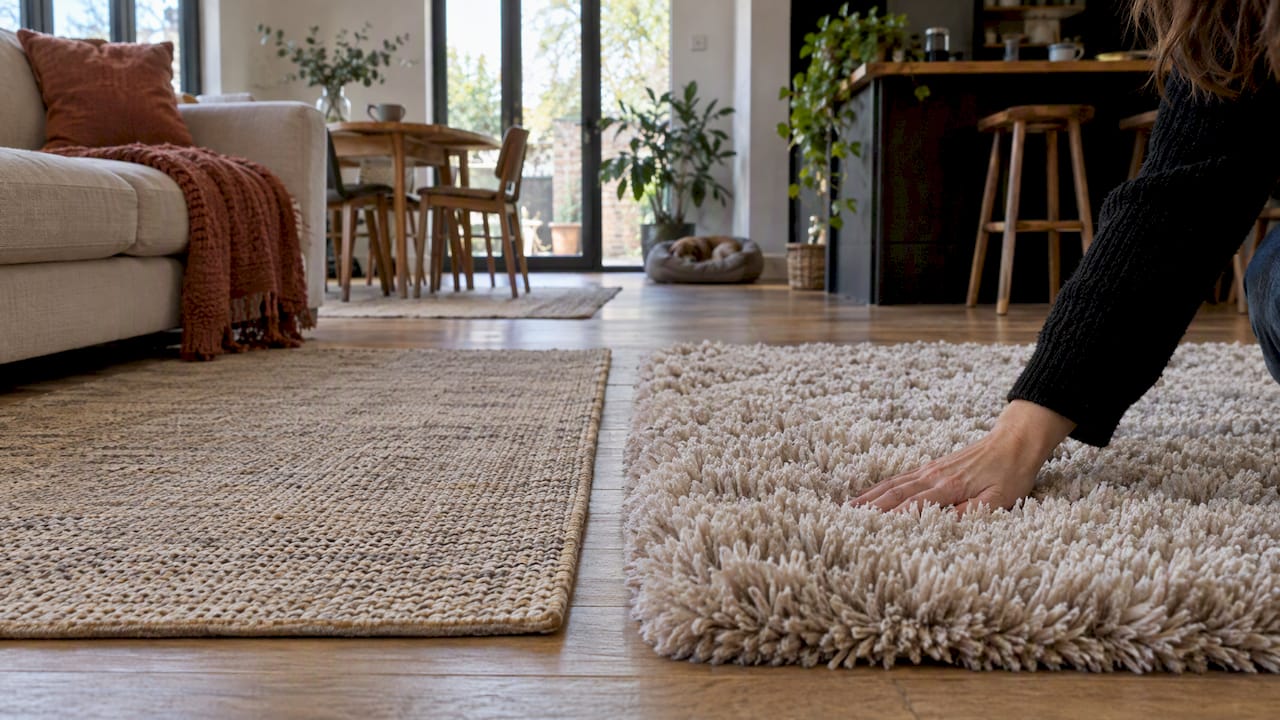
For most living rooms, hallways and homes with children or pets, low pile wins on practicality: it cleans up faster, resists matting and holds its shape under daily traffic. High pile earns its place in bedrooms and quiet corners where comfort matters more than upkeep. The comparison below breaks down exactly where each one fits.
TL;DR:
- Low pile rugs are more practical for high-traffic areas like hallways and kitchens, as they are easier to clean and resist crushing.
- High pile rugs provide superior comfort and insulation, making them ideal for bedrooms and quiet lounge spaces with light footfall.
- Pile height affects how dirt, pet hair, and spills behave, with taller fibers trapping debris deeper and taller piles taking longer to spring back.
- Fibre type and construction significantly influence maintenance, with wool being resilient but shedding initially, and synthetics resisting stains but requiring gentle vacuuming.
- Use a non-slip pad and check underfloor heating guidelines when choosing rugs, especially for areas with children, pets, or heated floors.
Table of Contents
- Low pile vs high pile at a glance
- What pile height actually means
- Advantages and disadvantages of low-pile rugs
- Advantages and disadvantages of high-pile rugs
- How fibre and weave change the way pile behaves
- Matching pile height to your room and lifestyle
- Keeping each pile type looking its best
- A short checklist before you buy
- Practical rules worth following
- Why the “just pick what looks nice” advice falls short
- A practical low-pile option worth a look
- FAQ
- Sources
Low pile vs high pile at a glance
Low pile rugs have short, dense fibres that sit close to the backing, usually feeling firm and flat underfoot. High pile rugs have longer fibres that stand up and move, giving a softer, plusher feel but a less stable surface for furniture and foot traffic.
- Look and feel: low pile reads flat and tailored; high pile looks fuller and feels cushioned.
- Cleaning: low pile vacuums quickly and shows less debris; high pile traps dirt deeper in the fibres and needs gentler, more frequent attention.
- Pets and children: low pile hides crumbs and pet hair less effectively but is far easier to wipe clean and less likely to snag claws.
- Best rooms: low pile suits kitchens, hallways and dining rooms; high pile suits bedrooms and low-traffic lounges.
- Underfloor heating: thinner, low-pile constructions generally let heat through more easily, something worth checking against your underfloor heating guidance before buying.
If your priorities are durability and easy maintenance, low pile is the safer start. If comfort and visual softness matter more than upkeep, high pile deserves a closer look.
What pile height actually means
Pile height is simply the length of the fibres measured from the top of the backing to the tip of the yarn, usually given in millimetres. It is the single number most retailers use to describe how a rug will feel and perform, though construction and density affect that just as much.
A practical range used across rug guides divides pile height into categories such as flatweave, low pile, medium pile, high pile, and deep shag, with approximate boundaries commonly given in millimetres, though these vary between retailers and should be used as a general guide rather than fixed standards. These figures vary between retailers and should be treated as a guide rather than a fixed standard, so always check the rug for your flooring against the seller’s own specification sheet.

Taller pile generally compresses more under furniture legs and takes longer to spring back, while shorter pile resists crushing and is far quicker to vacuum. Taller fibres also trap more warm air, which is part of why high pile feels warmer underfoot in winter.

Advantages and disadvantages of low-pile rugs
Low pile earns its reputation as the practical choice because it does the basics well without demanding much attention.
- Easier cleaning: spills sit on the surface rather than soaking into deep fibres, so blotting works before a stain sets.
- Better under furniture: chair legs and table feet do not flatten or distort short fibres the way they do with longer pile.
- High-traffic friendly: hallways, kitchens and stair runners hold their appearance far longer than a plush equivalent.
- Less plush underfoot: the trade-off is a firmer, flatter feel that some find less cosy for bare feet.
A washable, low-pile kitchen runner is a good example of the category working exactly as intended: durable, easy to wipe down and unfazed by daily footfall.
Pro Tip: Pair a low-pile rug with a non-slip pad underneath; the firmer backing can shift more easily on hard flooring than a heavier high-pile equivalent.
Advantages and disadvantages of high-pile rugs
High pile exists for comfort first, and it delivers that in ways low pile simply cannot match.
- Underfoot comfort: longer fibres cushion steps, which matters most in bedrooms and reading corners.
- Insulation and sound: the extra fibre depth muffles footsteps and holds warmth better than a flat surface.
- Visual depth: shadows and texture give high-pile rugs a richer look in photographs and in person.
- Harder maintenance: dirt and pet hair work down into the fibres and resist a standard vacuum pass.
The practical downside shows up fastest in busy spots: a high-pile rug placed in a hallway or under a dining table will mat and flatten far quicker than one kept in a low-traffic bedroom. Treat deep pile as a comfort investment for rooms where footfall is light, not a general-purpose flooring solution.
How fibre and weave change the way pile behaves
Pile height only tells half the story. Fibre type and construction decide how a rug sheds, stains and ages, in much the same way that fabric weight and fibre content together govern how a curtain fabric behaves once it is hung.
Wool offers natural resilience and bounces back from crushing, though it can shed in the first few months. Polyester and other synthetics tend to resist stains well and are easier to maintain day to day, trading some of wool’s natural texture for lower upkeep. Natural flatweaves such as bamboo or jute are inherently low pile, hard-wearing and suited to kitchens and busy family rooms, while cotton sits comfortably in either low or medium constructions depending on the weave. Dense, tightly stitched yarn performs better than loosely packed fibre at the same height, so two rugs with identical millimetre ratings can behave very differently in practice.
Matching pile height to your room and lifestyle
The right pile depends less on taste and more on what happens in the room day to day.
- Pets and children: low pile is generally the safer recommendation, since it shows less trapped hair and crumbs and wipes clean faster, though a washable or stain-resistant construction and a secure, non-slip pad still matter more than pile height alone.
- High-traffic zones: entryways, hallways and dining areas favour low pile for its resistance to crushing.
- Bedrooms and quiet lounges: high pile rewards you with comfort where footfall is occasional rather than constant.
- Underfloor heating: a rug that exceeds roughly 2.5 tog can insulate too well and block heat from reaching the room, so check our underfloor heating guidance before placing anything thick over heated flooring.
When a room serves more than one purpose, such as a living room that doubles as a play area, lean towards the lower end of the pile-height range rather than the plushest option available.
Keeping each pile type looking its best
Maintenance effort is often the deciding factor readers overlook until after they have bought the rug.
- Vacuum low pile weekly on a standard setting; the short fibres handle regular suction without resistance.
- Vacuum high pile every few days using suction-only or a gentle upholstery attachment, since a rotating beater bar can pull and damage longer fibres.
- Blot spills immediately on both types rather than rubbing, working from the edge of the stain inward.
- Shake out grit from low-pile rugs outdoors periodically, since abrasive particles wear down short fibres faster than they appear to.
- Call a professional cleaner for deep-set stains or heavy matting in high-pile rugs, where home treatment often cannot reach the base of the fibres.
Pro Tip: Rotate a high-pile rug every few months so traffic wears the fibres evenly instead of flattening one section.
A short checklist before you buy
A few checks before checkout save most of the common regrets.
- Measure the space with tape or a paper template, allowing for furniture to sit partly on or fully off the rug.
- Check the stated pile height in millimetres, the fibre content and any washing instructions listed on the product page.
- Confirm tog or underfloor heating guidance if your floor is heated, since this is rarely obvious from photos alone.
- Add a non-slip pad at checkout, especially for hard flooring or homes with children.
- Ask about returns or samples where offered, since colour and pile depth can look different under home lighting than in product photos, an effect similar to how curtain fabric weight reads differently in a showroom than in a finished room.
Placement matters too: our living room rug placement guide is worth a quick read before finalising a size.
Practical rules worth following
A handful of simple habits solve most pile-related problems before they start. Secure any rug on top of carpet with a grip pad, since two soft surfaces stacked together shift more than people expect. Keep rugs under 2.5 tog on underfloor heating to avoid trapping warmth at floor level. Expect some shedding from new wool rugs in the first few weeks; it settles with regular vacuuming rather than signalling a fault.
Why the “just pick what looks nice” advice falls short
Most rug buying guides spend too much time on appearance and not enough on what a rug has to survive. A deep-pile rug photographed in a styled living room looks identical whether it is destined for a quiet bedroom or a hallway that sees muddy boots twice a day, and that gap between presentation and function is where most buyer regret comes from.
The pile-height ranges circulating across retail sites are useful, but they are guides, not guarantees. Two rugs at the same height can behave completely differently depending on density and fibre, so the stated millimetre figure should inform your decision rather than settle it entirely. What matters more than chasing an exact number is matching the rug to what actually happens in that room: footfall, pets, spills and whether it sits over heating.
If you take one thing from this comparison, let it be this: buy for the floor’s job, not for the photograph.
— Cristiano
A practical low-pile option worth a look
If easy care and durability top your list, bamboo flatweave rugs are built for exactly that kind of daily use: naturally low pile, simple to wipe down and suited to kitchens, hallways or any room that sees constant footfall.

Browse the Bamboo Rugs collection or start with the Natural Bamboo Rug to see how a low-pile flatweave handles a busy room before committing to a larger space.
FAQ
Is low pile or high pile carpet better?
Neither is universally better: low pile suits high-traffic areas, pets and easy cleaning, while high pile suits comfort-focused spaces like bedrooms with lighter footfall. The right choice depends on the room’s daily use rather than one type being superior overall.
What are low pile rugs good for?
Low pile rugs work best in kitchens, hallways, dining rooms and under furniture, where their short, dense fibres resist crushing and clean up quickly. They are also a practical match for homes with children or pets because spills and debris are easier to spot and remove.
What are the downsides of high pile carpet?
High pile fibres trap dirt and pet hair deeper than a flat surface, so they need gentler, more frequent vacuuming with suction-only or an upholstery attachment. They also compress and mat faster in high-traffic spots, making them a poor fit for busy hallways or entryways.
What are the disadvantages of low pile carpet?
Low pile offers less cushioning and warmth underfoot compared with a plush, high-pile equivalent, which some homeowners find less comfortable in living spaces. It also tends to show wear patterns on bare backing sooner once the short fibres flatten in heavily walked paths.
Sources
- The Best Fabric for Curtains and Drapery: A Practical Guide
- How to choose curtain fabric: fibre, weight and light
- How to Choose the Right Rug for Your Flooring