Cart
0
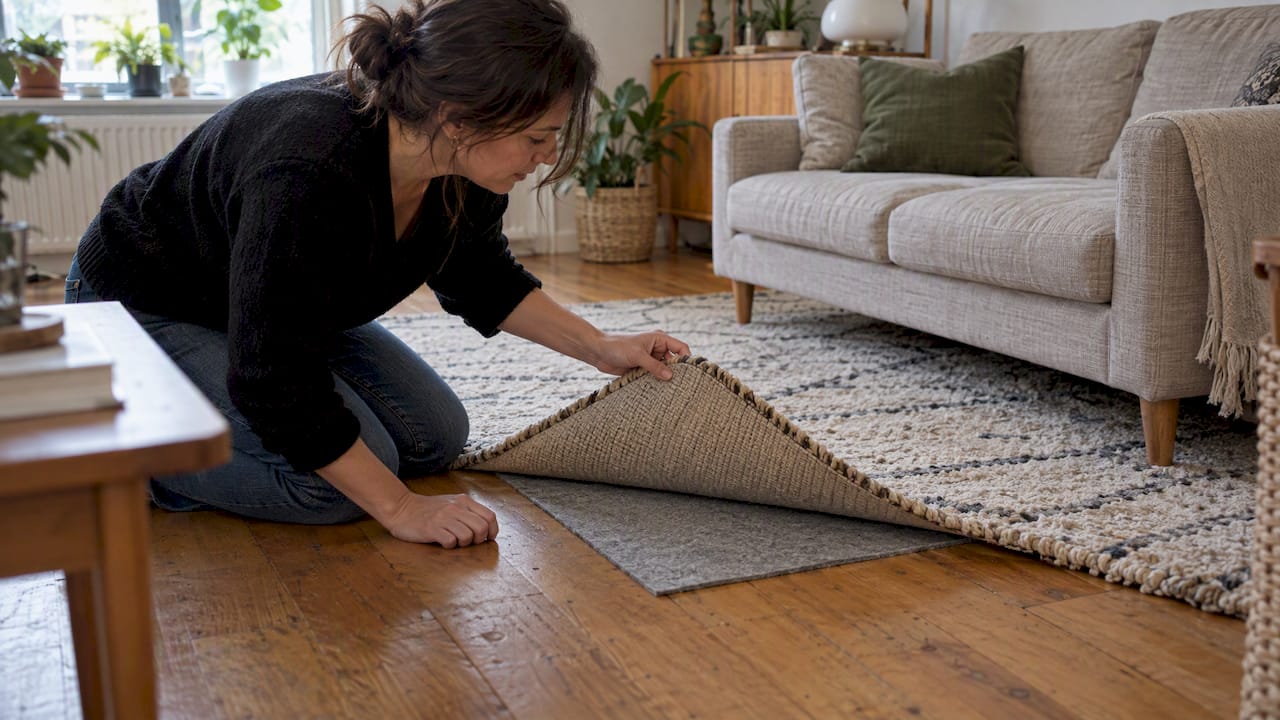
Yes, you can and should use rugs on hardwood floors, provided you choose breathable materials and a pad labelled safe for hardwood. The one thing that matters most is the pad underneath: felt, natural rubber or a felt-rubber blend. Avoid PVC, vinyl or adhesive backings, which can trap moisture and chemically react with wood finishes.
TL;DR:
- Wool rugs are the most durable and breathable option for high-traffic living spaces, outlasting cheaper synthetics by years.
- Use a pad made of felt, natural rubber, or a felt-rubber blend labeled safe for hardwood, avoiding PVC, vinyl, or solvent-based adhesives.
- Rug sizing should be 1 to 2 centimeters smaller than the rug itself, with the thickest possible pad fitting under door clearance.
- Regularly vacuum both the rug and the exposed floor to prevent grit buildup that can scratch the finish over months.
- Contrasting colors and low-pile textures are recommended for larger, warm-toned wood floors, while tonal shades suit darker or smaller rooms.
Table of Contents
- Which rug materials work best on hardwood floors
- Choosing a rug pad: materials, sizing and what to avoid
- How to size and position rugs in every room
- Routine maintenance to protect both rug and hardwood beneath
- Best rug choices for kitchen, hallway, entry and pet-friendly homes
- Choosing colour, texture and layering that flatter wooden floors
- What commonly damages hardwood under rugs and how to fix it
- Homable’s practical checks and resources for buying rugs safe for hardwood
- Editorial take: protection beats decoration
- Find rugs built for wood floors, not against them
- FAQ
- Sources
Which rug materials work best on hardwood floors
Not every rug fibre behaves the same way once it sits on a wood floor for months on end. Breathability, weight and how a backing is finished all affect whether your flooring stays in good condition underneath.
Wool is the most forgiving choice for main living spaces. It breathes well, resists crushing, and its natural fibres do not trap moisture against the floor the way some synthetics can. It costs more than other options, but it tends to outlast cheaper rugs by years, which matters if you are covering a well-used sitting room or hallway.
Cotton rugs are soft underfoot and usually machine washable, which makes them a sensible pick for casual rooms, kids’ spaces or anywhere spills happen often. They flatten and wear faster than wool, so they suit low-traffic or secondary rooms better than a main living space.
Plant fibres, including jute, sisal and bamboo, give a flatweave, natural look that many people like against wood tones. Sisal and jute rugs work well in several typical rooms, though the fibres can feel coarse underfoot and may shed loose strands for the first few months. A natural bamboo flatweave rug is a practical version of this style, durable and breathable, without the shedding issue some jute weaves have.
Polypropylene and other low-pile synthetics are the practical choice for high-traffic zones and washable areas. They resist stains and clean up fast.
- Wool: durable and breathable, best for living rooms and hallways that see daily use.
- Cotton: soft, washable, suited to casual or lower-traffic rooms.
- Jute, sisal, bamboo: flatweave texture with a natural look, durable but can shed or feel coarse.
- Polypropylene and low-pile synthetics: strong for washable, high-traffic spots, but check the backing is not solvent-coated.
The backing matters as much as the fibre. A rug with a solvent-based or adhesive coating on the underside can cause the same finish problems as a bad pad, regardless of how breathable the top material is.
Choosing a rug pad: materials, sizing and what to avoid
The pad does more work than most people assume. It stops the rug sliding, cushions footsteps and, done right, protects the finish underneath rather than damaging it.
Felt, natural rubber, and felt-rubber combination pads labelled safe for hardwood are the recommended choice, according to Bona’s guidance on rug pads for wooden floors. These materials grip the floor without reacting with the finish.
PVC, vinyl and solvent-based adhesive pads are the ones to avoid. Bona warns that plasticisers in these materials can migrate into a wood finish over time, causing yellowing or a sticky residue that is difficult to reverse without professional refinishing. This is not an instant reaction. It happens slowly, often over months, which is why a cheap vinyl pad can seem fine at first and cause a visible stain a year later.
Sizing is simple once you know the rule:
- Cut or buy the pad roughly 1 to 2 centimetres smaller than the rug on every side, so no pad edge peeks out.
- Choose the thickest pad your door clearance allows. A thicker felt or felt-rubber pad cushions better and lasts longer.
- Check door swing and furniture clearance before buying, especially in older homes with lower door gaps.
When a full pad will not fit under a door or in a tight space, corner grippers or non-slip strips are a reasonable substitute. Independent testing from Better Homes & Gardens on the best rug pads found that some adhesive grippers work well on hardwood when they are specifically designed for hard floors and solvent-free, though reviewers still recommend checking the manufacturer’s notes and testing a small area first.
Pro Tip: Lay the pad down first, place the rug on top, then press along the edges with your palm. If you feel any ridge or lump, the pad is likely too large or folded underneath.

For a few other quick fixes to stop a rug sliding, our non-slip rug solutions for UK homes walks through options that work without a full pad swap.
How to size and position rugs in every room
Getting the size right is what makes a rug look intentional rather than like an afterthought, and it also determines how much floor stays protected.
In a living room, you have two workable approaches. The first is “all legs on”, where every piece of furniture sits fully on the rug, which suits larger rooms and creates a grounded, anchored look. The second is “front legs on”, where only the front legs of sofas and chairs rest on the rug, which works better in smaller rooms where a full-coverage rug would feel oversized or cost more than it is worth.
Dining rooms have a stricter rule: the rug needs to be large enough that chairs stay on it even when pulled fully out from the table. Measure the table, add around 60 to 70 centimetres on each side to account for chair movement, and check the result against the room before buying.
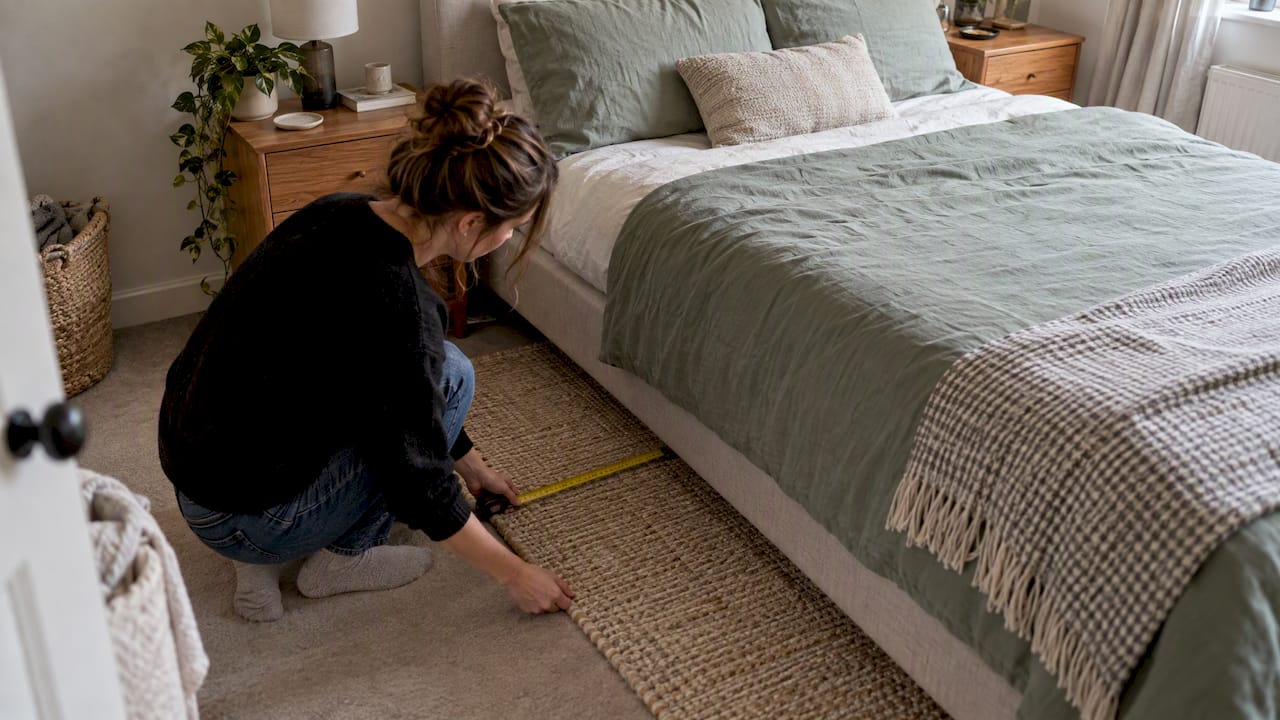
Bedrooms work best when the rug extends past the sides and foot of the bed, so your feet land on rug rather than cold wood when you get up. A narrower runner on each side of the bed is a budget-friendly alternative to one large rug, and it is easier to lift for cleaning.
- Living room: choose all-legs-on for larger rooms, front-legs-on for smaller ones.
- Dining room: size the rug so pulled-out chairs stay on it, not the bare floor.
- Bedroom: extend the rug beyond the bed’s sides and foot, or use two bedside runners instead.
- Kitchens and hallways: size runners to fit the main work path or walkway, leaving enough clearance for doors to swing freely.
Kitchens and hallways are narrow, high-traffic spaces, which makes a runner the natural choice. A washable kitchen runner in a low-pile weave handles foot traffic and the odd spill without needing to come up for deep cleaning every month.
Routine maintenance to protect both rug and hardwood beneath
A rug that sits untouched for months does more harm than good. Grit and dust work their way underneath and grind against the finish every time someone walks over the rug, acting much like fine sandpaper according to NWFA’s hardwood maintenance guidance.
A simple, repeatable routine keeps both the rug and the floor beneath it in good shape:
- Vacuum the rug weekly on a setting suited to its pile height, and vacuum the exposed floor around its edges at the same time.
- Lift the rug every few months to check for trapped grit, dust or signs of moisture, and vacuum or wipe the bare floor underneath before putting it back.
- Spot-clean spills immediately: blot wool and cotton rugs with a damp cloth, and check manufacturer care instructions before using any cleaning product on jute or sisal, since water can mark these fibres permanently.
- Call a professional cleaner for deep stains or odours that spot-cleaning does not resolve, particularly on wool or natural-fibre rugs that can be damaged by the wrong product.
Which? recommends adjusting vacuum settings for hard floors and vacuuming along rug edges and underneath regularly, since trapped grit is one of the main causes of fine scratching on wood finishes over time.
Doormats at entry points help enormously here. Placing a breathable rug or mat at doorways traps grit before it ever reaches the rest of the floor, a point the NWFA homeowner’s handbook raises specifically for households with pets, where tracked-in dirt and claws add extra wear. Regular grooming and more frequent vacuuming in pet households reduce this risk further.
Best rug choices for kitchen, hallway, entry and pet-friendly homes
Some rooms need rugs chosen for durability and cleanability first, with comfort as a secondary concern.
- Kitchens: washable runners or low-pile synthetics with a breathable pad handle grease and spills better than plush pile, though they trade some softness underfoot for easier cleaning.
- Entry and hallway: dense flatweaves paired with a breathable pad hold up to daily foot traffic, and an absorbent doormat placed just inside or outside the door catches grit before it spreads further.
- Pet areas: low-shed, stain-resistant weaves combined with frequent vacuuming and grooming cut down on trapped fur and dander under the rug.
- Wet rooms: regular rugs are not a good match for unfinished or poorly sealed hardwood in bathrooms or utility areas; a waterproof mat is the safer option there.
A washable kitchen carpet runner covers most of these needs in one product for busy kitchens.
Choosing colour, texture and layering that flatter wooden floors
Wood tone drives most of the colour decision. Against warm, honey-toned floors, a contrasting rug in cool greys, blues or deep charcoal gives a room definition and stops everything blending into one tone. Against darker or more neutral wood, a tonal rug in soft beige or cream keeps things calm and works well in smaller rooms where contrast can feel busy.
Texture balances the look as much as colour. A low or flat pile reads as modern and pairs easily with wood grain, while a higher pile adds warmth but shows footprints and needs more frequent vacuuming to stay looking fresh.
- Use contrast in larger rooms or where the wood tone is strong and warm.
- Use tonal shades in smaller rooms or where you want a calmer, more neutral base.
- Flat and low-pile textures suit high-traffic rooms; higher pile suits bedrooms and quieter spaces.
- Layering a smaller textured rug over a flatweave works visually, but keep both breathable, since stacking two non-breathable layers traps moisture against the floor.
What commonly damages hardwood under rugs and how to fix it
A handful of mistakes account for most of the finish damage people report under rugs, and nearly all of them are avoidable before you even buy.
- Red flags when shopping: a PVC or vinyl label on a pad, a noticeable solvent smell, or an adhesive backing not explicitly marked safe for hard floors.
- Sizing mistakes: a pad cut larger than the rug, leaving visible edges that catch dirt and wear unevenly.
- Seasonal neglect: leaving rugs down through humid months without lifting them, which lets moisture build up underneath.
- Skipped cleaning: never vacuuming beneath the rug, letting grit accumulate and scratch the finish with every step.
Pro Tip: If you spot yellowing, a sticky residue or a faint odour under a rug, pull the pad immediately. Let the floor air out for a day, then switch to a felt or natural-rubber pad before putting anything back down.
If discolouration has already set into the wood, a flooring professional can advise whether a light sand and refinish is needed, rather than attempting a DIY fix that might spread the damage.
Homable’s practical checks and resources for buying rugs safe for hardwood
We spend a lot of time looking at how rugs behave on wood floors over months of real use, not just how they look on day one. A few checks consistently separate a good purchase from a problem one.
- Check the rug’s backing material before checking its colour: avoid anything marked PVC, vinyl or solvent-based.
- Match the pad to the rug size rather than buying a generic one, since an ill-fitting pad causes most of the slipping and edge-curling complaints.
- Favour washable options for kitchens, hallways and anywhere pets or children spend time, since these rooms generate the most spills and wear.
Our guide to securing a rug on carpet and our outdoor rug care advice cover related situations where the same breathability and backing principles apply, just under different conditions.
Editorial take: protection beats decoration
Most rug advice online is written as though the hardest decision is colour matching. It is not. The decision that actually protects your floor and your money is the pad, and it gets a fraction of the attention that styling does.
The conventional advice tends to treat a rug pad as an afterthought, something you grab cheaply at the till. That is backwards. A £15 difference in pad quality can be the gap between a floor that still looks new in five years and one that needs refinishing because a vinyl backing quietly reacted with the finish for months before anyone noticed.
If you take one thing from this, prioritise the pad label over the rug’s pattern. Breathable materials, a felt or rubber pad marked safe for hardwood, and a habit of lifting the rug every few months will do more for your floor than any amount of careful colour coordination.
— Cristiano
Find rugs built for wood floors, not against them
We offer flatweave and washable options suitable for breathability and backing considerations, aiming to combine function with style. Our Natural Bamboo Rug gives you the flatweave look that works well over hardwood, and our washable kitchen runners handle the spills a busy kitchen throws at them.

- Browse the full Bamboo Rugs collection for flatweave options suited to living spaces.
- Check our washable kitchen runner in coffee brown for a low-maintenance hallway or kitchen fit.
- Shipping options and promotions vary; check the website for current details.
Visit our full collection at Homable to find the right size and weave for your floor.
FAQ
Is it okay to put a rug on hardwood floors?
Yes, rugs are safe on hardwood when you choose a breathable material and pair it with a felt, natural-rubber or felt-rubber pad labelled safe for hardwood. Avoid PVC, vinyl or solvent-adhesive backings, which can react with the finish over time, as the Bona rug pad guidance explains.
What type of rug is best for hardwood floors?
Wool rugs are generally the most durable and breathable choice for main living spaces, while cotton suits casual rooms and low-pile synthetics work well in high-traffic or washable areas. Flatweave options like jute, sisal or bamboo give a natural look and hold up well, though some can feel coarse or shed at first.
What colour rug goes best with a wooden floor?
Contrasting colours such as grey, blue or charcoal work well against warm, honey-toned wood and help define a room, while tonal shades like beige or cream suit darker wood or smaller spaces where you want a calmer look. The right choice depends more on room size and existing wood tone than on any fixed rule.
What to put under a rug on a hardwood floor?
Use a felt, natural-rubber or felt-rubber combination pad labelled safe for hardwood, cut slightly smaller than the rug itself. Avoid PVC, vinyl or solvent-based adhesive pads, since these can chemically affect the finish and cause yellowing or a sticky residue, according to Bona’s guidance.
Sources
- Homeowner’s handbook to real wood floors (NWFA)
- Best rug pads for wooden floors (Bona)
- The 6 Best Rug Pads, Tested by BHG
- How to vacuum your home effectively (Which?)