Cart
0
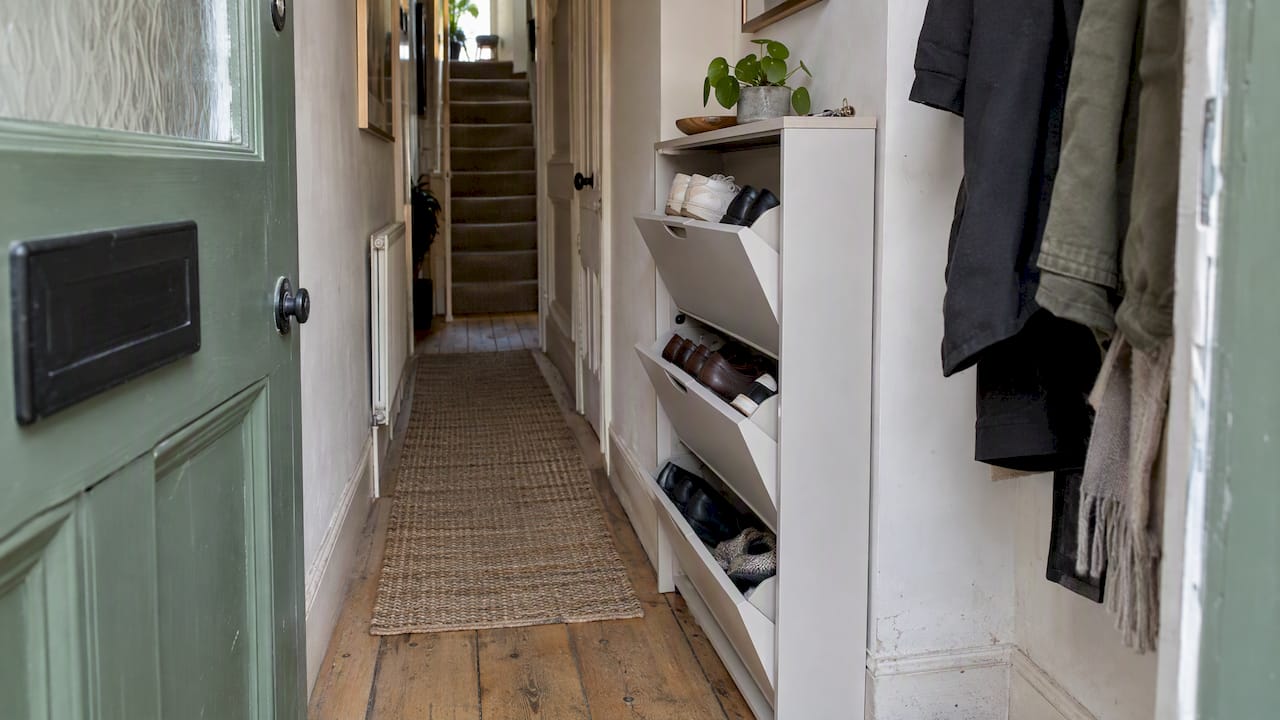
For most narrow halls, a slim pull-down cabinet or a shallow shoe bench gives the best balance of capacity and circulation. Choose the cabinet when floor space is scarce and you need doors to hide clutter; choose the bench when you also want somewhere to sit while putting shoes on. Both sit comfortably within the dimensions we see on curated entryway cabinets like those stocked on Homable.
TL;DR:
- Keep at least 90 cm of clear passage after placing storage, and check the unit’s listed depth plus its door swing before buying.
- Slim cabinets typically measure 24 to 33 cm deep; choose open racks for airflow, or wall mounted shelves when floor space is unavailable.
- Store only current season footwear in the hallway and move occasional pairs elsewhere; a 10 pair cabinet can then serve a larger collection year round.
- Before drilling shelves, match anchors to the wall type and check their load limits; seek a fitter if the wall is thin or unclear.
Table of Contents
- Practical product options that work in narrow halls
- How to choose: measure, count and set priorities
- Layouts and small hacks to save space
- How to style the storage and keep it fresh
- Why we recommend these approaches
- Shop Homable: curated entryway storage that fits slim halls
- FAQ
- Sources
Practical product options that work in narrow halls
The right format depends on how many shoes you own and how much wall you can spare. A few categories cover almost every narrow hallway scenario.
- Slim pull-down cabinets: depths commonly range from about 24cm to 33cm, typically holding several pairs behind closed doors, ideal for hiding clutter in a tight passage.
- Shoe benches with concealed storage: slightly deeper footprints that trade some capacity for a seat, useful where someone needs to sit to put boots on.
- Open racks and stackable trays: the most breathable option for daily wear, since shoes air out rather than sitting shut away, though they leave footwear on show.
- Wall-mounted shelves, hanging pockets and over-door racks: the choice for the tightest spaces, since they use no floor depth at all.
Price-comparison listings show that many slim cabinets fall into a wide range from around £90 up to £180 depending on size and finish, with larger capacity units sitting towards the top of that band. Some e-commerce product pages list several vidaXL cabinets and benches at varying depths, which gives a useful sense of what “slim” actually looks like in practice before you commit to a purchase.
How to choose: measure, count and set priorities
Buying the wrong depth is the most common mistake in a narrow hall, so measurement comes before style.
- Measure the clear width between opposite walls or doors, then subtract at least 90cm for comfortable passage, since this is the minimum most layouts need to stay walkable.
- Measure the depth available against the wall you plan to use, then check it against the cabinet’s listed depth, not the box dimensions.
- Measure ceiling height if you are considering a tall cabinet, allowing clearance for any door swing or light fitting above it.
- Count your everyday pairs (not the full wardrobe) and add a few extra slots for guests or seasonal boots.
- Decide whether concealment, ventilation or seating matters most to you, since that single priority usually narrows the shortlist to one category.
- Confirm shelf spacing, assembly requirements, footprint when open, and the delivery and returns policy before paying.
Aggregator sites such as idealo’s shoe rack listings commonly show slim units with depths generally in the range that is typical for narrow halls, which is a handy benchmark when comparing products side by side. Homable’s vidaXL Shoe Cabinet Grey 50x28x58 cm sits right in that shallow bracket, while the vidaXL Shoe Cabinet Black 57.5x33x80 cm trades a little extra depth for taller, higher-capacity storage.
Pro Tip: Measure with a shoebox or an actual pair of boots held against the wall, not just a tape measure. It is the easiest way to spot whether a door will clip the unit when it swings open.

Layouts and small hacks to save space
A narrow hall rewards clever placement more than expensive furniture. Three layouts solve most problems:
- Single slim unit plus a floating shelf above it: the cabinet handles daily shoes while the shelf holds keys, post or a small lamp, keeping the floor clear.
- Bench at the far end with vertical shelving beside it: the bench anchors the space for sitting while narrow shelving uses the dead corner that most hallways waste.
- Stacked low units under a console or mirror: this keeps visual weight low, which matters in a tight corridor where a tall cabinet can feel like it is closing in.
Wall-mounted shelves need anchors rated for the wall type (plasterboard fixings differ from masonry), and anything carrying real weight, such as a loaded boot shelf, is worth checking against the fixing’s stated load limit before drilling. Call a fitter if the wall is unusually thin or if you are unsure what is behind it.
Rotating seasonal footwear out of the main unit and into an under-stair box or spare-room container is one of the simplest ways to free capacity. Keeping only the current season’s shoes in the hallway unit means a 10-pair cabinet effectively covers a much larger shoe collection across the year. A boot tray by the door, a narrow runner to hide scuffs, and breathable storage bags for occasional shoes all add function without eating floor space. As a rule of thumb, leave at least 90cm of clear passage width wherever people need to pass, since narrower gaps become a trip hazard once doors, bags or pushchairs are added into the mix.
How to style the storage and keep it fresh
Finish matters as much as footprint in a narrow space. Pale woods, mirrored cabinet doors and slim metal legs all help a tight hallway feel wider, since they reflect light rather than absorbing it the way a heavy, dark cabinet does.
- Use internal dividers or small boxes to stop shoes sliding into a jumble every time the door opens.
- Swap in breathable fabric bags for shoes you wear less often, since they protect without trapping moisture.
- Add a cedar or charcoal sachet inside closed cabinets to manage odour between cleans.
- Fit a washable liner on the base shelf, which catches grit and mud and is easier to clean than bare wood.
Pro Tip: A five-minute tidy once a week, plus a proper sort-through once a month, keeps a slim cabinet from becoming a dumping ground. For more finish ideas suited to tight entryways, our entryway styling tips cover colour and material choices in more detail, and a well-placed light fitting from Lights & Things’ entryway lighting ideas can lift a narrow hall without taking up any floor space at all.
Why we recommend these approaches
We favour measurement over guesswork because a cabinet that is 5cm too deep ruins a narrow hall far more than a slightly smaller capacity ever does. Our product pages, including the vidaXL cabinets and benches, exist to show real depths and finishes side by side rather than offer an exhaustive market comparison. We curate for design and affordability, not volume, and our entryway storage ideas guide is a good next stop if you want more inspiration before you measure up.
— Cristiano
Shop Homable: curated entryway storage that fits slim halls
There is a small, considered range of entryway pieces rather than an overwhelming catalogue, which makes choosing faster once you know your measurements. The vidaXL Shoe Cabinet Grey 50x28x58 cm suits the tightest halls where every centimetre of depth counts, while the vidaXL Shoe Cabinet Black 57.5x33x80 cm fits homes with a few more pairs to store. For households wanting extra height without extra floor space, the vidaXL Shoe Cabinet Grey 60x28x90 cm Fabric adds vertical capacity while keeping a shallow footprint.
- Shipping policies include free shipping when orders exceed certain amounts; customers should check the basket total before checkout.
- Measure your hallway depth and clearance before ordering, since returns take time and a snug fit saves a second delivery.
- Browse the full range on our entryway collection when you are ready to compare finishes and sizes side by side.
FAQ
What is the best way to store shoes in a narrow hallway?
A shallow cabinet or bench between 24cm and 33cm deep works best, since it holds several pairs behind closed doors without narrowing the passage. Choose a bench instead if you also want somewhere to sit while putting shoes on.
What are some good ideas for shoe storage in the entrance hallway?
Slim pull-down cabinets, benches with concealed storage, open racks for daily wear, and wall-mounted shelves or hanging pockets for very tight spots all work well. A floating shelf above a low cabinet adds extra storage without using any floor space.
What is the best way to organise a lot of shoes?
Separate everyday pairs from seasonal or occasional ones, keeping only the current season in the hallway unit and moving the rest to a box or spare-room container. Use dividers or small boxes inside the cabinet so pairs stay sorted rather than piling up.
Where can I store shoes when I have no room?
Wall-mounted shelves, over-door racks and hanging fabric pockets use vertical space rather than floor space, making them the practical choice for the tightest halls. A narrow stackable unit against a single wall can also add capacity without blocking the passage.