Cart
0
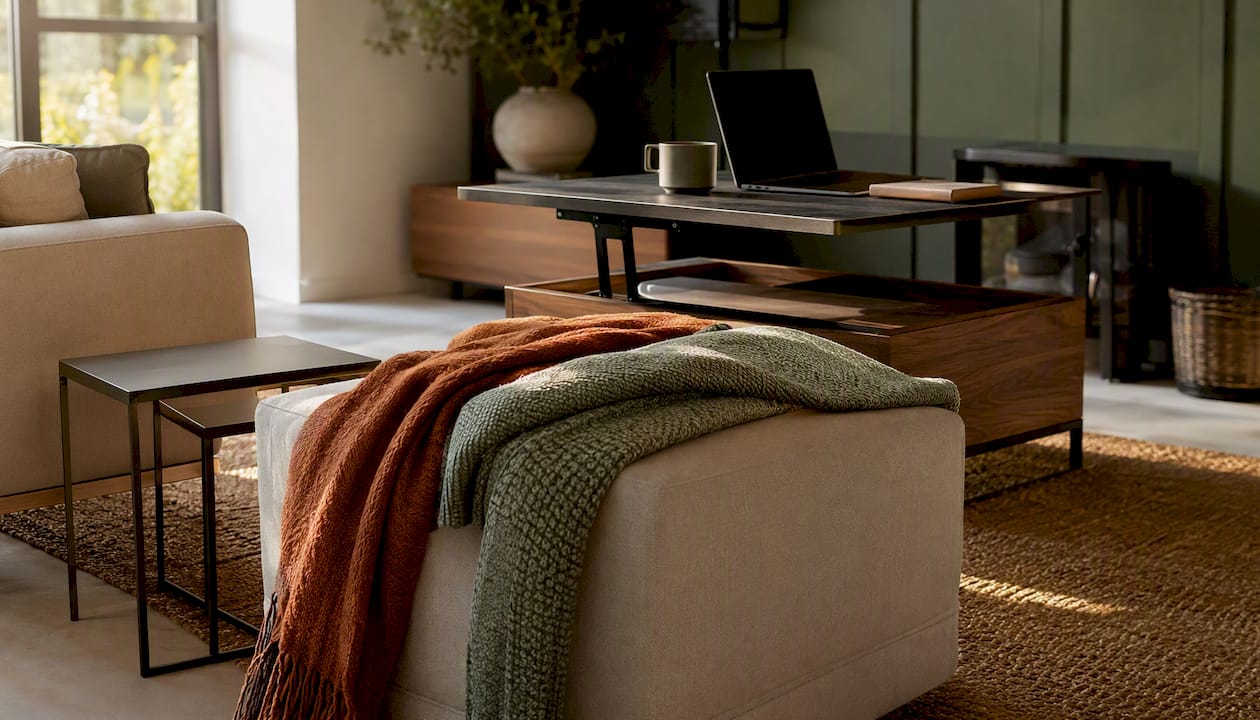
The most recognisable examples of functional design in homeware are storage ottomans, lift-top coffee tables, nesting side tables, stackable dinnerware, pull-out spice racks, modular shelving, ergonomic kitchen tools, and integrated storage beds. Every one of them solves a real problem while looking considered rather than purely utilitarian.
Here is a quick-scan list you can use as shopping search terms right now:
- Storage ottoman with lid (seat + storage in one)
- Lift-top coffee table (desk-height surface on demand)
- Nesting side tables in oak or walnut
- Stackable prep bowls and dinnerware sets
- Pull-out kitchen drawer organisers
- Modular wall shelving with adjustable brackets
- Ergonomic stainless-steel vegetable peeler
- Bedside shelf with integrated USB charging port
- Hallway bench with under-seat shoe storage
- Bathroom cabinet with mirrored door and internal shelving
Quick UK search phrases to paste straight into a retailer search:
storage ottoman UK, nesting side tables oak, lift-top coffee table UK, ergonomic vegetable peeler stainless, modular shelving adjustable, storage bed frame double UK, pull-out spice rack drawer insert, hallway bench shoe storage
Pro Tip: Save two or three of these search phrases to your phone’s notes app before you visit a showroom. Spotting a piece in person is far easier when you already know the category name.
Key takeaways
Functional design pieces earn their place by solving a real problem every day, not just looking good on a product page. The best ones combine solid materials, reliable mechanisms, and timeless shapes that stay relevant for years.
| Point | Details |
|---|---|
| Start with the problem | Identify the daily friction point first (clutter, lack of surface, poor storage) before choosing a piece. |
| Check the mechanism | Soft-close runners, piano hinges, and replaceable covers separate lasting pieces from short-lived ones. |
| Prefer solid materials | Solid wood, brushed steel, and stain-resistant textiles outlast bonded composites and cosmetic veneers. |
| Choose timeless shapes | Neutral forms in muted tones age well in British interiors and reduce the urge to replace. |
| Homable for UK shoppers | Homable curates storage, kitchenware, and multi-functional accessories with free UK delivery over £100. |
Table of Contents
- What makes something functionally designed? The principles behind the best pieces
- Room-by-room functional design examples and how each one works
- How to choose functional pieces: a buying checklist that actually helps
- Why functional design is better for the planet
- How to make functional pieces look intentional in a British interior
- What to expect to pay and how to keep pieces in good condition
- Homable’s approach to curating functional pieces
- Where to start shopping for functional homeware
- Sources
What makes something functionally designed? The principles behind the best pieces
The A’ Design encyclopaedia defines functional ware as objects designed primarily for practical use, with ergonomics, durability and utility at the centre, while still allowing aesthetic consideration. For homeware, that translates to a simple idea: beauty that comes from doing the job well, not from decoration applied on top.
The Japanese concept of kinoubi captures this precisely. As Fujioh’s essay on functional beauty explains, removing superfluous decoration and focusing on core function produces objects that are both genuinely useful and enduringly attractive. The Muji wall-mounted CD player is a classic example: the only visible feature is the pull cord, and the result is iconic. For functional aesthetics in your own home, the same logic applies to a well-proportioned storage jar or a drawer organiser with clean lines.
Three principles to apply when you are evaluating any piece:
- Utility: Does it solve a specific, recurring problem in your home?
- Ergonomics: Is it comfortable and intuitive to use daily, not just once?
- Longevity: Are the materials and mechanisms built to last, or will they fail within two years?
Pro Tip: Check the hidden mechanisms first. Soft-close drawer runners, piano hinges, and replaceable cushion covers are the details that separate a piece that lasts a decade from one that frustrates you within six months.
Room-by-room functional design examples and how each one works
Designers quoted by Sunset Magazine consistently recommend built-ins, pull-out organisers, hidden charging stations and multipurpose furniture as the highest-impact changes a homeowner can make. Here is how those ideas translate room by room.
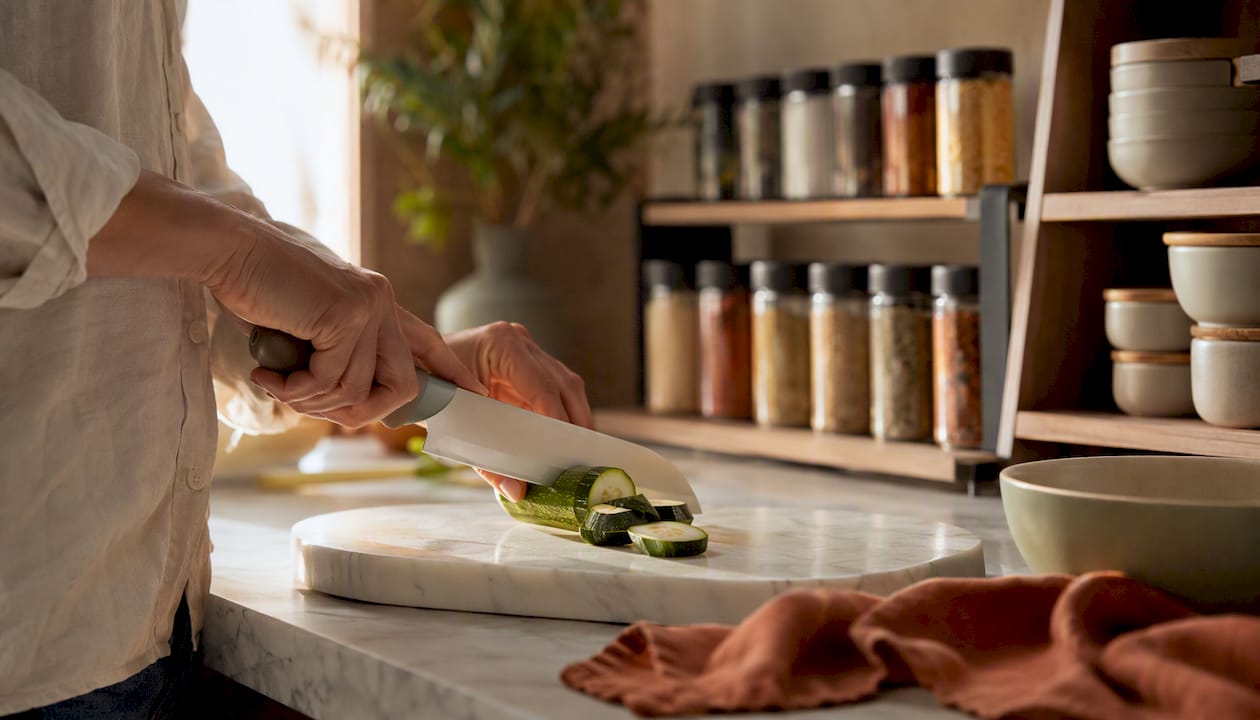
Kitchen: Stackable prep bowls nest flat in a drawer and double as serving dishes. Pull-out spice racks use dead vertical space inside a cabinet. An ergonomic peeler with a soft-grip handle reduces wrist strain during repetitive prep. Ideal for: small flats, families cooking from scratch daily.
Living room: A storage ottoman replaces a coffee table, a footrest, and a toy box simultaneously. A lift-top coffee table rises to laptop height for remote workers. Nesting side tables slide apart for guests and tuck away when not needed. Ideal for: open-plan flats, households with young children, home workers.
Bedroom: A storage bed frame with hydraulic lift gives you the equivalent of a chest of drawers under the mattress. A bedside shelf with a USB port removes the trailing cable from the floor. Ideal for: small bedrooms, rentals where built-in storage is limited.
Bathroom: A mirrored cabinet with internal shelving hides toiletries and adds light. A tiered shower caddy keeps products off the bath edge. Ideal for: shared bathrooms, compact en suites.
Hallway: A bench with under-seat shoe storage handles the drop-zone problem that most hallways suffer from. A wall-mounted umbrella stand with a drip tray keeps the floor dry. Ideal for: families, terraced houses with narrow entries.
Garden/outdoor: Stackable garden chairs free up patio space when not in use. A storage bench doubles as seating and weatherproof tool storage. Ideal for: small gardens, balconies.
| Example | Primary function | Ideal home type |
|---|---|---|
| Storage ottoman | Seating + hidden storage | Small flat, family house |
| Lift-top coffee table | Work surface + coffee table | Home-worker flat |
| Nesting side tables | Flexible surface area | Any size, rental |
| Storage bed frame | Under-bed storage | Small bedroom |
| Hallway bench with storage | Shoe storage + seating | Terraced house, family |
| Stackable garden chairs | Space-saving outdoor seating | Balcony, small garden |
How to choose functional pieces: a buying checklist that actually helps
Functionality in design comes down to a handful of questions most product descriptions skip over. Work through this list before you buy.
- Scale: Does it fit the room with space to move around it? Measure the footprint, not just the height.
- Ergonomics: Can you operate it comfortably? Open the lid, pull the drawer, lift the top.
- Materials: Is the frame solid wood, steel, or engineered board? Solid materials repair; bonded composites usually do not.
- Mechanism reliability: Are the hinges, runners, and joints rated for daily use? Ask specifically about soft-close runners and hinge material.
- Replaceable parts: Can the cushion cover be removed and washed? Are spare parts listed on the manufacturer’s site?
- Warranty and returns: What is the returns window, and does the warranty cover mechanical failure?
- Maintenance: Does the finish need annual oiling, sealing, or specialist cleaning?
Red flags to avoid:
- Excessive glued joints with no mechanical fixing
- Flimsy plastic hinges on pieces that will open and close daily
- Cosmetic wood-effect finishes over very thin substrates
- Single-use novelty features with no secondary function
A good answer to “what material is the hinge?” sounds like: solid brass or steel, rated for 50,000 cycles. A bad answer is silence or a vague reference to “quality hardware.”
Why functional design is better for the planet
Functional design reduces waste by encouraging long-term ownership. A piece built from solid materials with replaceable components stays out of landfill for decades; a trend-led item with a bonded composite frame and a glued-on veneer typically does not survive a second home move.
The sustainability case for functional home goods rests on a straightforward argument: simple, durable forms and high-quality finishes reduce premature obsolescence and the waste stream compared with disposable, trend-driven products. Aesthetic timelessness reinforces this. A piece in a neutral, enduring shape does not look dated in three years, so you are less likely to replace it.
Practical steps to extend the life of what you already own:
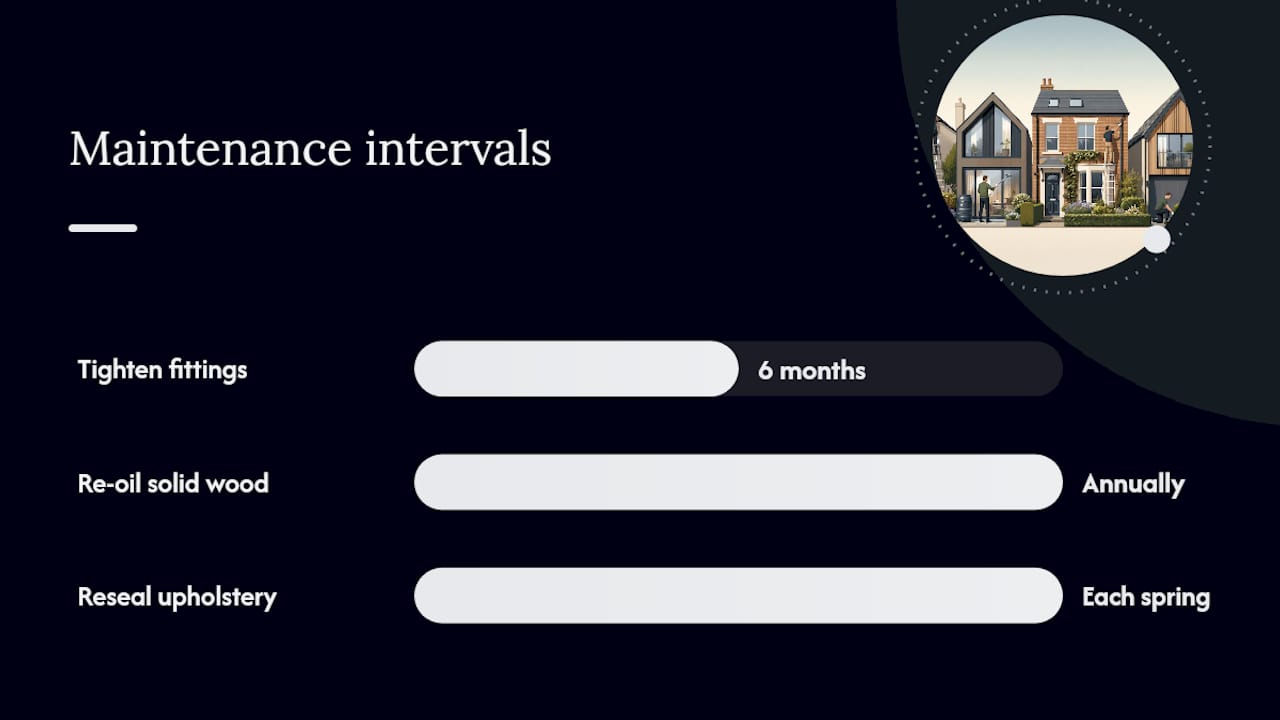
- Tighten all fittings every six months, particularly on chairs and tables
- Re-oil solid wood surfaces annually with a food-safe or furniture oil
- Reseal fabric upholstery with a stain-resistant spray each spring
- Replace worn drawer runners rather than replacing the whole unit
- Store outdoor pieces under covers or indoors during winter
Pro Tip: Before buying, search the manufacturer’s name alongside “spare parts” or “replacement covers.” If nothing comes up, assume the piece is not repairable and factor that into the price comparison.
How to make functional pieces look intentional in a British interior
Functional pieces can look curated. The difference between a storage ottoman that looks purposeful and one that looks like an afterthought is almost always about grouping, material repetition, and scale.
Four styling tactics that work in British homes:
- Use a tray to define a surface. A wooden or stone tray on top of a storage ottoman signals that the surface is intentional, not just a lid. It also keeps remotes, candles, and books from sliding off.
- Repeat one material across the room. If your nesting tables are oak, echo that tone in a wooden bowl or a picture frame. Repetition reads as considered rather than accidental.
- Layer textiles to soften hard-working pieces. A linen throw over a storage bench or a jute runner under nesting tables adds warmth without hiding the function.
- Balance scale deliberately. A large storage ottoman needs at least one tall element nearby (a floor lamp, a tall plant) to avoid looking squat.
Pro Tip: Group items in odd numbers on open shelving. Three objects of different heights always look more deliberate than two or four of the same size.
Pro Tip: Warm, muted tones (terracotta, sage, warm white, natural oak) age well in British light and sit easily alongside both modern and period interiors. Avoid very high-contrast finishes that date quickly.
What to expect to pay and how to keep pieces in good condition
Maintenance varies by material. Solid wood needs annual oiling; brushed steel needs only a damp cloth; stain-resistant textiles need periodic resealing. Budget for upkeep when you compare prices.
The trade-off at the budget end is usually mechanism quality and material thickness. A £40 ottoman may have a flimsy hinge that fails within a year; a £120 version with a piano hinge and a solid frame will outlast several replacements of the cheaper one.
Upkeep by category:
- Furniture: check and tighten all fixings every six months; oil wood annually
- Textiles: remove covers before washing; air-dry to preserve shape
- Metalware: wipe with a damp cloth; dry immediately to prevent rust on uncoated steel
- Ceramics and stoneware: dishwasher-safe pieces are worth the small premium for daily-use items
Homable’s approach to curating functional pieces
At Homable, the selection criteria come down to three questions: does it solve a real problem, will it last, and does it look good doing it? That filters out a lot of novelty pieces that photograph well but disappoint in daily use.
The categories that align most closely with the examples in this article — storage solutions, ergonomic kitchenware, and multi-functional furniture — are the ones Homable focuses on most closely. Every product listed goes through a review of materials, mechanism quality, and finish before it reaches the site. Free shipping on orders over £100 and a clear returns policy mean you can order with confidence and return anything that does not work in your space.
Where to start shopping for functional homeware
Homable’s curated collections give you a practical starting point without the noise of a general marketplace. The storage and kitchen accessories categories are the quickest way to find pieces that match the examples in this article.
Browse Homable’s full range and filter by room or category to find pieces that fit your space. Free UK delivery on orders over £100, secure checkout, and customer reviews on every product page make it straightforward to compare options before you commit. Start with function: choose the piece that solves your biggest daily friction point, then match the finish and colour to your existing interior.
Sources
- A’ Design Award and Competition - Design Encyclopedia - Functional Ware
- What is Functional Beauty? Lessons Learned from Real-Life Products|Kitchen Interiors for a More Comfortable Home; Discover Japandi Style with FUJIOH.
- This Is What Makes a Home Functional, According to Designers – Sunset Magazine
- Functional home goods aesthetics → Area → Sustainability