Cart
0

TL;DR:
- Modern interior design relies on restraint, layered textures, and functional lighting to create comfortable spaces.
- Focusing on key elements like a neutral base, one hero piece, and thoughtful zoning enhances both style and usability.
The most effective modern design techniques come down to five things: clean lines, layered materials, layered lighting, purposeful editing, and zoning without walls. Get those right, and every other decision follows naturally.
Here is a quick checklist to act on today:
- Set a neutral base (off-white, warm greige, or soft stone) before adding any colour
- Choose one hero piece per room and edit everything else around it
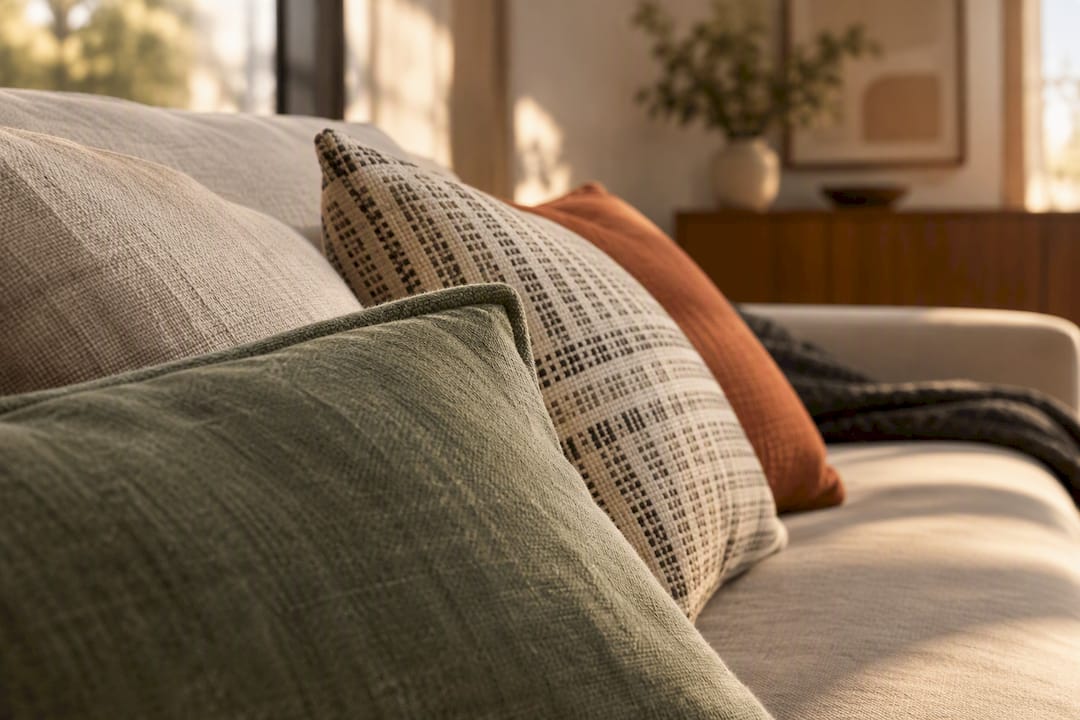
- Layer at least three textures (e.g. wool, oak, matte plaster) rather than relying on colour alone
- Plan three light sources: ambient, task, and accent
- Define zones with rugs and furniture placement, not partitions
- Conceal everyday storage so surfaces stay clear
- Mix decades rather than competing styles, keeping a shared material language throughout
Nielsen Norman Group’s usability research frames this well: remove everything that doesn’t support a task, but stop before you remove things people actually need. That balance is the whole game. Homable’s curated collections are built around exactly this principle, offering finishing pieces that earn their place.
Table of Contents
- What are the core principles behind modern interiors?
- How to layer materials, textures, and colour so rooms feel warm
- How do layered lighting and zoning work in open-plan UK homes?
- What furniture, storage, and layout choices make modern design functional?
- Room-by-room techniques for UK homes
- A simple three-step planning workflow for a room makeover
- Common minimalism mistakes and how to avoid them
- Budget-friendly tips and durable finish recommendations for UK homes
- How to incorporate sustainable and eco-friendly materials
- How do modern design techniques adapt to different UK home layouts?
- How to integrate smart home technology without disrupting the aesthetic
- Where to source modern design furniture and decor in the UK
- How to balance natural and artificial light in UK homes
- Heating and insulation in modern UK interiors
- Key takeaways
- Why restraint is harder than it looks
- Curated finishing pieces from Homable
- Useful sources and further reading
What are the core principles behind modern interiors?
Modern interiors rest on four principles: clarity of form, function-first thinking, restraint, and texture depth. None of them require a large budget or a complete renovation.
Clarity of form means keeping sightlines open. In a small London flat, that translates to furniture with legs (so the floor reads as continuous), mirrors placed to extend the room, and nothing on a surface that doesn’t belong there. Function-first means every piece justifies its presence. A beautiful lamp that also provides reading light earns its spot; a decorative object that collects dust probably doesn’t.
Restraint is the hardest principle to apply consistently, because the instinct is always to add. The signal-versus-noise principle from NN/g is useful here: keep all task-critical cues visible, and eliminate everything with low informational value. Applied to a living room, that means one large rug rather than three small ones, and grouped storage rather than scattered baskets.
Texture depth is what stops a restrained scheme from feeling cold. Layer materials, not just colours, and the room gains warmth without visual noise.
Pro Tip: Keep one hero piece per room and edit accessories down substantially from what you started with. The perceived value of each remaining piece rises immediately.
- Clarity of form: open sightlines, leggy furniture, mirrors
- Function-first: every item justifies its presence
- Restraint: fewer, larger-scale pieces over many small ones
- Texture depth: layer materials to add warmth without clutter
How to layer materials, textures, and colour so rooms feel warm
Layer materials, not only colours, and use a restrained palette with one strong accent. That single rule prevents modern schemes from reading as cold or generic.

Three pairings that work reliably in UK homes:
| Material palette | Where to use it | Why it works |
|---|---|---|
| Oak + matte brass + wool | Living room, hallway | Warm tones, mixed finishes, tactile contrast |
| Plaster wall + velvet + raw linen | Bedroom, sitting room | Soft sheen against matte, layered weight |
| Engineered stone + warm timber + cotton | Kitchen, bathroom | Durable, easy to clean, visually grounded |
For colour, start with a neutral base and introduce one accent. Test paint samples in both natural and artificial light before committing — a warm greige can read pink under tungsten and grey under daylight. Farrow & Ball’s Elephant’s Breath and Railings are popular UK choices precisely because they shift subtly with the light rather than fighting it.
Dos and don’ts:
- Do keep a shared material language when mixing decades — a vintage oak sideboard sits happily with a contemporary sofa if both share warm timber tones
- Do use one vintage or antique piece to anchor a collected look
- Don’t mix competing styles (industrial + maximalist floral, for example) without a unifying material thread
- Don’t introduce a second accent colour until the first is working
Explore layering in home styling for practical examples of how texture and colour work together room by room.
How do layered lighting and zoning work in open-plan UK homes?
Good lighting is structural. Treat it as part of the room’s geometry, not decoration, and the furniture and architectural lines read clearly at all times of day.
Lighting checklist:
- Statement pendant or ceiling fixture for ambient light
- At least two table or floor lamps for warmth at eye level
- Directional accent lights (picture lights, shelf spots) to highlight the hero piece
- Dimmers on every circuit
- LED bulbs at around 2700K for a warm, residential feel
For zoning in open-plan spaces, furniture arrangement and flooring transitions do the work that walls would otherwise do. A large rug anchors the seating area; a pendant light directly above the dining table signals a separate zone. In studio flats, a change in floor-level lighting (a low lamp versus overhead) shifts the mood and the perceived function of each area.
Smart lighting controls reinforce zones without adding visual clutter. Adjustable scenes mean the kitchen can stay bright while the living area dims for the evening, all without a single partition.
What furniture, storage, and layout choices make modern design functional?
Pick pieces that earn their place. Function-first furniture with clean silhouettes and integrated storage is the foundation of a modern interior that actually works to live in.
Layout checklist:
- Allow sufficient circulation clearance around main furniture
- Choose leggy sofas and chairs to preserve visual lightness and floor continuity
- Anchor seating groups with a single large rug rather than multiple smaller ones
- Keep table clearances generous to ensure comfortable seating space
For storage, vertical storage, storage beds, and extendable tables are the compact-home essentials. In period properties, bespoke joinery that follows the alcoves keeps the character of the room while hiding everyday clutter. Concealed cabinets, multipurpose ottomans, and grouped baskets for quick tidy-up all reduce visual noise without sacrificing function.
For upholstery and finishes, prioritise durability. Washable fabric covers, low-VOC paints, and FSC-certified timber are practical choices for UK family homes. For compact spaces, multi-purpose furniture trends show how fold-away desks and nesting tables solve the space problem without compromising the aesthetic.
- Leggy furniture preserves visual lightness
- Bespoke joinery suits period UK homes
- Washable fabrics and low-VOC paints for family living
- Multipurpose pieces for compact flats
Room-by-room techniques for UK homes
Living room: one hero piece, layered seating, and three light sources.
- Choose a statement sofa or artwork as the hero piece
- Layer a large rug to anchor the seating zone
- Add a floor lamp and table lamp alongside the main ceiling fixture
- Keep surfaces clear: one tray, one plant, one object
Kitchen: clean worktops, concealed storage, and warm task lighting.
- Specify handleless cabinetry or recessed pulls for a clean line
- Use under-cabinet LED strips at 2700K for task lighting
- Keep the worktop clear of appliances not used daily
Bedroom: calm palette, concealed storage, and considered bedroom styling.
- One bedside lamp per side, dimmable
- Storage bed or built-in wardrobes to eliminate freestanding clutter
- Limit the palette to two tones plus one textile accent
Bathroom: hard materials, soft textiles, and a single accent.
- Engineered stone or large-format tile for surfaces
- Warm towels and a bath mat in a contrasting texture
- One plant or framed print as the accent
Hallway: the first impression sets the tone.
- A console table with concealed storage below
- A mirror to extend the space visually
- One pendant or wall light at eye level
For city flats, fewer and better pieces always outperform a crowded room. Country homes can carry more texture and provenance — a reclaimed timber bench, a woven runner, a ceramic lamp base.
A simple three-step planning workflow for a room makeover
The most reliable approach is a three-step workflow: audit the room, set simple rules, then implement in phases.
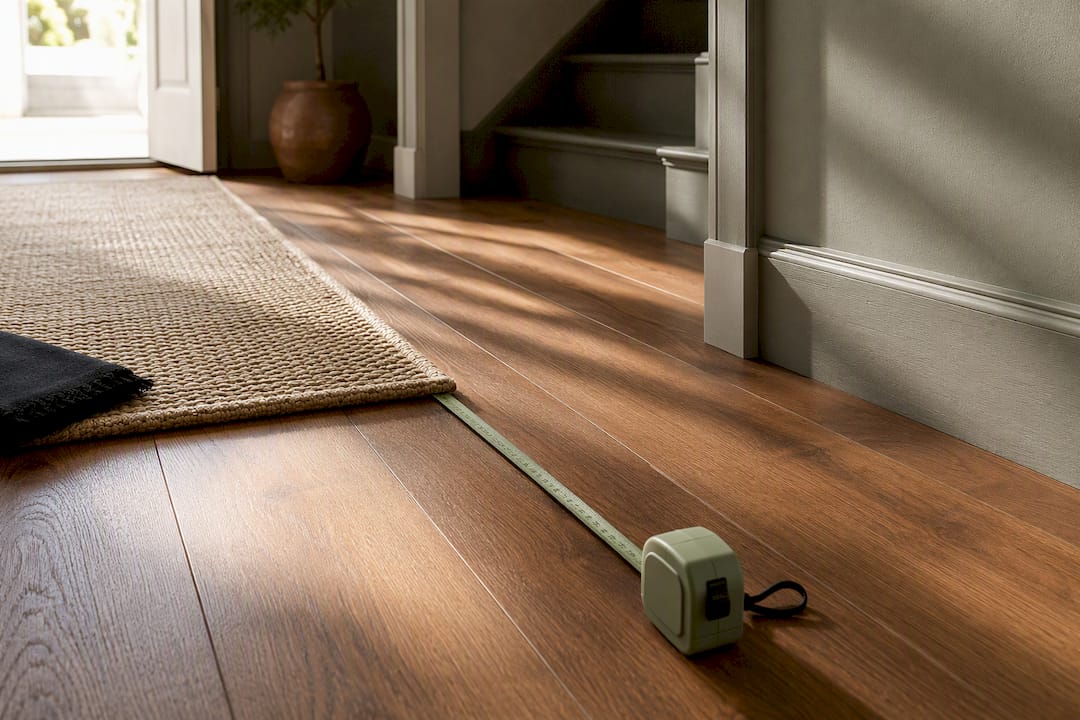
- Audit: measure the room, photograph it, and list every item. Mark what stays, what goes, and what needs replacing.
- Set rules: choose your neutral base, your one accent, your hero piece, and your three light sources before buying anything.
- Implement in phases: order finishes and large furniture first; add lighting next; finish with textiles and accessories last.
| Budget tier | What to invest in | Where to save |
|---|---|---|
| Low (budget-friendly) | One quality rug, dimmable bulbs, paint | Accessories, cushions, small prints |
| Mid (moderate spend) | Sofa or bed, bespoke storage, pendant light | Side tables, decorative objects |
| Invest (higher spend) | Bespoke joinery, quality upholstery, engineered stone | Seasonal textiles, plants |
A modern interior design workflow walks through each phase in detail if you want a printable plan to follow.
Common minimalism mistakes and how to avoid them
The two most frequent errors are opposite: under-editing (clutter) and over-editing (missing function). Both make a room harder to live in.
- Too many small objects → replace with fewer, larger-scale pieces; a single sculptural vase beats five small ones
- Single overhead light source → add task and accent lighting; one ceiling fixture flattens a room
- Matching everything → mix wood tones and eras while keeping a shared material language
- Hiding too much → keep frequently used items accessible; concealed storage that requires effort gets abandoned
- Ignoring scale → a small sofa in a large room reads as timid; proportion matters as much as style
Pro Tip: Apply NN/g’s signal-versus-noise test to every surface: if an object doesn’t help you use the room or make you genuinely happy to look at it, it’s noise. Remove it.
Budget-friendly tips and durable finish recommendations for UK homes
Durability and budget are not in conflict. Engineered stone, quality laminates, and FSC-certified timber cost more upfront but outlast cheaper alternatives by years, which makes them the better value over time.
For paint, mid-range British brands offer excellent coverage and washability. Spend on the finish (eggshell for walls, satin for woodwork) rather than the brand name. A single tin of a well-chosen colour transforms a room for under £50.
Accessories are where budgets stretch furthest. A large jute rug, a ceramic lamp base, and two linen cushions in a coordinated palette cost a fraction of new furniture and do most of the visual work. Homable’s affordable UK decor ideas are a practical starting point for finishing a scheme without overspending.
How to incorporate sustainable and eco-friendly materials
Sustainable choices and modern aesthetics align more naturally than most people expect. Natural materials — linen, jute, reclaimed timber, wool — are both low-impact and visually warm, which solves the “cold modern room” problem at the same time.
Specify FSC-certified timber for joinery and furniture. Choose low-VOC paints to improve indoor air quality, particularly relevant in well-insulated UK homes where ventilation is limited. Opt for natural fibre textiles over synthetic alternatives where possible; they age better and biodegrade at end of life.
Second-hand and vintage pieces are the most sustainable option of all, and they add the provenance that anchors a modern scheme. One well-chosen antique in a contemporary room does more for the atmosphere than any new accessory.
How do modern design techniques adapt to different UK home layouts?
A Victorian terrace, a 1930s semi, and a new-build flat each present different constraints, and the same techniques apply differently to each.
In a narrow terrace, the priority is preserving the sense of depth. Use mirrors on the end wall of each room, keep furniture low, and run flooring in the direction of travel. In a 1930s semi with original features, work with the period details rather than against them: paint cornicing in the same tone as the ceiling to soften it, and choose furniture that references the era without replicating it. In a new-build flat with low ceilings, avoid pendant lights that hang too low, and use vertical storage to draw the eye upward.
Small flats benefit most from the rule of fewer, better pieces. Every item must earn its place twice over. Larger houses can carry more layers — more texture, more provenance, more variation in scale — without the room feeling busy.
How to integrate smart home technology without disrupting the aesthetic
Smart technology works best in a modern interior when it disappears. The goal is function without visual noise.
Recessed smart speakers, in-wall controls, and flush-mounted sockets keep surfaces clean. Choose smart lighting systems with physical dimmer switches as well as app control — guests should not need a phone to turn on a lamp. Underfloor heating eliminates radiators entirely, which is the single biggest visual simplification available in a renovation.
For renters or those avoiding major works, plug-in smart bulbs and a single smart hub on a concealed shelf achieve most of the same results. The key is to plan cable routes and charging points before decorating, not after.
Where to source modern design furniture and decor in the UK
The UK market offers strong options across every budget tier. For investment pieces, independent makers and British craft studios produce furniture with the quality and provenance that anchors a modern scheme. For mid-range, department stores with own-brand ranges offer consistent quality and good return policies.
For finishing pieces — rugs, lighting, storage, textiles, ornaments — Homable’s curated collections cover the categories that complete a modern interior without requiring a designer budget. Free shipping on orders over £100 makes it practical for consolidating a room’s accessories in one order.
Charity shops and auction sites remain the best source for vintage anchor pieces. A single well-chosen item from a previous decade, kept within the room’s material language, adds the layered quality that new furniture alone cannot replicate.
How to balance natural and artificial light in UK homes
The UK’s grey skies make natural light a premium resource. Maximise it before adding artificial sources.
Keep window treatments light and minimal: sheer linen panels or Roman blinds in a neutral tone let light through while maintaining privacy. Avoid heavy curtains in rooms that already feel dark. Position mirrors opposite or adjacent to windows, not facing them directly, to bounce light into the room without glare.
For artificial light, the layered approach described earlier (ambient, task, accent at around 2700K) compensates for the low light levels of a British winter. Dimmers are not optional — they are the single most cost-effective upgrade in any room. A room that can shift from bright and functional to warm and atmospheric with one adjustment works harder for its occupants.
Heating and insulation in modern UK interiors
Modern design and good thermal performance are easier to reconcile than they used to be. Underfloor heating is the cleanest solution aesthetically, but it requires planning permission in some listed buildings and significant disruption in a retrofit.
For most UK homes, the practical approach is to work with existing radiators rather than remove them. Specify slim, column-style radiators in a finish that matches the room’s palette (anthracite, white, or brushed steel). Position them under windows where possible to counteract cold downdrafts, which also keeps the main wall space free for furniture.
Draught-proofing and secondary glazing are the highest-return insulation upgrades for period properties. Both are largely invisible once installed, and both reduce the heating load enough to make a real difference to comfort and running costs. Thermal lining on curtains adds insulation without changing the appearance of the window treatment from the outside.
Key takeaways
Modern design techniques work because they apply a consistent logic: restraint plus texture, function before decoration, and layered light as structure rather than afterthought.
| Point | Details |
|---|---|
| Start with a neutral base | Choose off-white, warm greige, or soft stone before introducing any colour or accent. |
| One hero piece per room | Edit accessories around a single focal point to raise perceived value and reduce clutter. |
| Layer materials, not just colours | Combine oak, wool, plaster, and linen for warmth; a restrained palette with one accent prevents coldness. |
| Treat lighting as structure | Use ambient, task, and accent sources at around 2700K with dimmers on every circuit. |
| Homable for finishing pieces | Homable’s curated rugs, lighting, storage, and textiles complete a modern scheme at an accessible price point. |
Why restraint is harder than it looks
The conventional wisdom on modern interiors focuses almost entirely on what to remove. That is only half the work. The harder skill is knowing what to keep, and why.
A room stripped of everything personal is not modern — it is a show home. The techniques in this article are not about achieving a photographable blank canvas. They are about creating a space that functions well, feels genuinely comfortable, and reflects the people who live in it. The hero piece is not a styling trick; it is a decision about what matters. The layered lighting is not a luxury; it is what makes a room usable at 7pm in January.
UK homes present specific constraints — period features, limited square footage, grey natural light, and a climate that demands thermal comfort alongside visual calm. The techniques here are chosen because they address those constraints directly, not because they photograph well on social media.
Sustainability and durability are not afterthoughts in this approach. Buying fewer, better pieces and choosing materials that last is both a modern aesthetic and a responsible one. Homable’s product range is selected with that in mind: pieces that earn their place and hold their quality.
Curated finishing pieces from Homable
Knowing the techniques is one thing. Finding the right pieces to complete them is where most homeowners get stuck.

Homable’s collections cover the finishing categories that make the biggest visual difference: rugs and textiles, statement lighting, concealed storage, and decorative accessories chosen for quality and longevity. Every order over £100 ships free, payments are secure, and the range is curated specifically for modern UK interiors. Customer reviews are published on the site, so you can see how pieces perform in real homes before buying. Browse the modern home styling guide for budget-tier suggestions, or go straight to the shop to find the finishing piece your room is missing.
Useful sources and further reading
- Nielsen Norman Group — Aesthetic and Minimalist Design (Usability Heuristic #8): the signal-versus-noise framework applied to usability; directly relevant to editing decisions in any room.
- Gemma Budworth Interiors — Modern English Country Style 2026: detailed designer guidance on layered lighting, material pairings, and mixing decades for UK homes.
- Supervivo — How do you decorate your home with a modern style?: practical, consumer-facing guidance on planning, durable finishes, and the audit-to-implement workflow.
- Design Legends — Smart Zoning for Modern Homes: zoning techniques using furniture, flooring, and lighting for open-plan and compact spaces.
- Homable — Upcoming design styles for UK homes in 2026: palette and trend context for 2026 schemes.
- Homable — 7-step home decorating checklist: a printable planning checklist to complement the audit-to-implement workflow above.