Cart
0
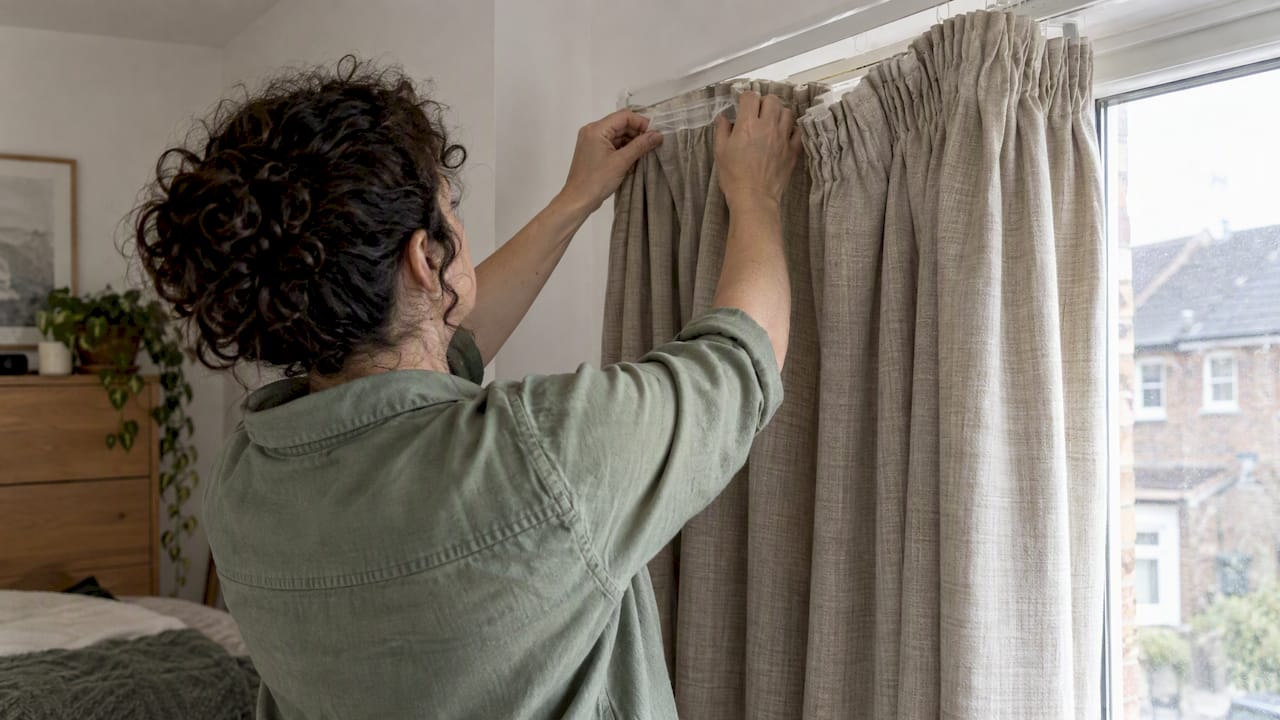
You can shorten ready-made curtains in an afternoon with a tape measure, an iron and hemming tape, or with a needle and thread if you want the hem to last. Which route is right depends on the curtain: its heading, its lining and its weight matter more than how many centimetres need to come off. This guide covers measuring, each method step by step, what a professional alteration costs in the UK, and the mistakes that ruin a pair.
TL;DR
- Hang the curtains first, measure from the pole or track to your finished length, and check the line twice before you cut or fold anything.
- Iron-on hem tape is the fastest no-sew fix for light and medium fabrics. A sewn hem is the more durable choice for heavy, lined, thermal or blackout curtains.
- Pencil-pleat curtains are often better shortened from the top, so the factory-made hem stays intact. Do not do this with eyelets, metal rings or a patterned top border.
- Renting? Clips or a temporary fold-up avoid permanent changes.
- Professional shortening is priced by width and construction, so lined and blackout pairs cost noticeably more than plain ones.
Table of Contents
- Measure first: the length decides everything
- Choose your method
- Method 1: iron-on hemming tape
- Method 2: sewing the hem
- Method 3: shorten from the top
- Method 4: temporary fixes for rentals
- How much does a professional charge?
- Our view: shorten less, buy right
- Common mistakes to avoid
- Where a new pair or a different style makes more sense
- Shop home decor at Homable
- FAQ
- Sources
Measure first: the length decides everything
Most failed alterations are measuring failures, not sewing failures. Put the curtains up on the pole or track exactly as they will hang, with the rings or hooks in place. Then decide where the hem should land.
There are three common finishes, and each suits a different room:
- Just clear of the floor. Published guidance suggests around 2 cm above the floor for a practical finish that does not drag or gather dust. This is style guidance, not a rule, but it works well in kitchens, hallways and anywhere with pets or children.
- Sill length. The hem sits just below the window sill. It is neat behind a sofa or radiator, but it leaves the window looking shorter.
- Floor-grazing or puddled. A formal look, but the fabric catches dirt and is harder to keep tidy.
If you are unsure which suits your window, our guide to UK curtain length rules shows how to measure at three points, because floors and rails are rarely perfectly level. For the full measuring routine before you buy, see how to measure curtains for UK homes.
Mark the line properly
- Measure from the rail or pole down to the finished position, not from the top of the curtain.
- Mark the same line at several points across the width with pins or tailor’s chalk, not just at the edges.
- Step back and look. Check the line against the floor at both ends and the middle.
- Measure again. Then add the hem allowance: a simple hem is commonly around 1.5 inches, or roughly 4 cm, folded up.
A worked example: your window drop from pole to floor is 230 cm, you want the hem 2 cm above the floor, so the finished curtain length is 228 cm. Your ready-made pair is 250 cm long. You must lose 22 cm. With a 4 cm hem folded up, that means folding 11 cm of fabric up twice at 5.5 cm… or, more simply, cutting off the excess and then turning the hem. Work out which approach before you touch the scissors, because folding up a large excess leaves bulky, heavy layers at the bottom.
Leave cutting until last. If the curtain has a lot of extra fabric, fold and pin first, hang it, and only cut once you are happy.
Choose your method
| Method | Best for | Skill | Permanent? | Watch out for |
|---|---|---|---|---|
| Iron-on hem tape | Unlined or lightly lined cotton, polyester, many ready-mades | Beginner | Fairly, if applied correctly | Heat sensitivity, adhesive bleed |
| Hand or machine sewing | Heavy, lined, thermal, blackout, velvet | Intermediate | Yes | Matching the original stitching and weighting |
| Shortening from the top | Pencil-pleat curtains | Intermediate | Yes | Unpicking and re-attaching heading tape |
| Clips or fold-up | Rentals, short-term fix | Beginner | No | Visible bulk on heavy fabric |
| Professional alteration | Expensive, patterned or complex curtains | None | Yes | Cost rises with lining and width |
Method 1: iron-on hemming tape
This is the answer to “no sew curtain hem” and the most popular fix, because it needs no machine. The method below follows the steps in Ideal Home’s guide and a published hem tape tutorial.
What you need
- Iron-on hemming tape, wide enough for the fabric weight (one published example uses ⅝-inch tape on heavy polyester)
- Tape measure, pins, tailor’s chalk
- Iron and ironing board, plus a pressing cloth
- Sharp fabric scissors, if cutting
Steps
- Read the care label. Heat is not interchangeable across fabrics. Polyester, velvet, linen and cotton each need different treatment, and a simple-looking job can fail through shine, melting or shrinkage rather than bad measuring.
- Hang, measure and mark as above.
- Lay the curtain flat on the board with the wrong side up. Press the fabric first so it lies flat.
- Fold the hem up along your marked line and press the crease. If you are cutting off excess, leave enough fabric for the turn, and fold the raw edge under once more so it does not fray.
- Place the tape inside the fold, close to the upper edge of the hem, so the adhesive sits between the two layers of fabric.
- Iron according to the tape’s instructions, not a guess. Heat and timing vary between products, and some tapes forbid steam. One guide describes holding the iron in place for several seconds rather than sliding it, then letting the fabric cool.
- Let it cool completely before you handle or hang it. The bond sets as it cools.
- Test a spare area first. A scrap or an inconspicuous corner will show you whether the tape marks or stiffens the fabric.
Why tape hems fail
Usually it is one of four things: skipping fabric preparation, the wrong tape for the fabric weight, too little heat or pressure, or steam where the tape forbids it. If your curtain is heavy, choose a stronger, wider tape and work in sections. If it is a thick blackout or thermal, consider sewing instead.

Method 2: sewing the hem
A sewn hem is the safer choice when curtains are heavy, lined, frequently washed or opened and closed daily. You do not need a machine: a slip stitch or blind hem stitch by hand is nearly invisible from the front.
- Unpick the existing hem if you are making the curtain shorter by a small amount and want to reuse it. For a larger cut, trim the excess, leaving the hem allowance.
- Press a double-turn hem: fold the raw edge up once, then again, so no raw edge shows.
- Pin along the fold at regular intervals.
- Sew with a blind stitch, catching only a thread or two of the front fabric so stitches do not show.
- Press the finished hem lightly, following the care label.
If the curtains are lined, treat the lining and the main fabric separately. The lining is normally hemmed slightly shorter than the curtain so it does not peek out. Keep that small difference when you re-hem, or the lining will show at the front.
Method 3: shorten from the top
Here is the least obvious decision in the whole job. A plain unlined curtain can usually be hemmed at the bottom. But pencil-pleat curtains are often better shortened from the top, because the factory hem, which is neat and weighted, stays untouched. A UK tutorial on pencil-pleat curtains covers that process, including lined pairs.
The principle is simple: unpick the heading tape, cut or fold the excess from the top, then reattach the tape and re-thread the cords. It takes patience, because you must keep the pleats even.
Do not use this approach if the curtains have:
- eyelets or metal rings set into the fabric
- a contrasting or patterned top border
- a very specific heading style that you cannot reproduce
In those cases, hem from the bottom or use a professional.
Method 4: temporary fixes for rentals
If you are renting and moving later, a permanent alteration is not worth it. Curtain hem clips, or small clear or white clips that fold the fabric up inside, are described by renters as nearly invisible from the front. They work best on lightweight fabric. Heavy blackout or thermal curtains can look bulky, and the weight may pull the clips off.
Other options for a short-term fix:
- Fold the hem up and secure it with safety pins along the back, then check the front from across the room.
- Move the pole or track higher or lower, if your tenancy allows it. Mounting 15 to 25 cm above the frame can change the proportions of a window in the right way, though always check what your landlord permits.
- Swap the rings or hooks for a different set, which shifts the hanging point by a centimetre or two.
If your curtains are far too long, or the drop is unusually tall, it may be better to find a different pair than to fight the length. Our curtain size guide explains how to read sizes in millimetres so you can buy closer to your window the first time.
How much does a professional charge?
Prices vary by region, construction and shop, and the published figures below are local examples, not a national average.
- A January 2025 price list from a Bracknell sewing service quotes £12 per metre of width for shortening plain curtains, £17 per metre of width for lined curtains, and £22 for shortening from the top with heading tape.
- A Farnham alteration service lists £20 per voile or sheer panel and £25 for unlined, and its list goes higher for lined, blackout and interlined curtains.
- A Stitch n Sew price list shows another model: £19 per 54 inches (137 cm) of width for unlined curtains shortened from the bottom, and £24 for lined or blackout.
The pattern is clear: curtain work is priced by width or panel, and it increases for lining, thermal layers, blackout construction and top-heading work. That is why a curtain quote can look high next to a trouser hem. Ask for a quote on the complete pair, and check whether it is per panel or per metre of width. Take the whole curtains, not just measurements, because heading style, lining, fabric weight and pattern all change the job.
A quick example using the Bracknell figures: a pair of lined curtains each 1.5 m wide, 3 m of total width, would come to 3 × £17 = £51 at the quoted lined rate, before any extras. Your own quote may differ, so treat this as an illustration of how width drives price, not a promise.
When is it worth paying? If the curtains are expensive, patterned, interlined or have a heading you cannot easily rebuild, a professional is cheaper than a ruined pair.

Our view: shorten less, buy right
At Homable we sell home decor, and we see the same pattern in curtains again and again. People buy a standard drop, find it a few centimetres off, and then face a hem job they did not plan for. Our view, based on what we publish about measuring and curtain length, is that most of the pain comes before the alteration, at the measuring stage.
Three habits help. First, measure the window drop at three spots, not one, because floors slope. Second, decide on the finish (floor-clear, sill or puddled) before you look at sizes. Third, if the pair you love is slightly too long, accept that a good hem is a small, ordinary job and do it properly: press, check twice, then fix.
We would also say this plainly: heavy, lined and blackout curtains deserve a sewn hem or a professional’s hands. Tape is a good tool for lighter fabrics, and for a quick fix, but it is not magic. And if the shortening is more than a few centimetres, think about whether another size would have saved you the work.
— Cristiano
Common mistakes to avoid
- Cutting before hanging. Fabric stretches under its own weight and with the rings attached. Always measure on the rail.
- Ignoring the care label. Ironing at the wrong temperature can leave shine or melt the fabric. Follow the tape instructions as well as the label.
- Shortening pencil pleats at the bottom without thinking. You lose the neat factory hem and then struggle to recreate it.
- Making the curtains different lengths. Measure both panels separately and mark them from the same reference line.
- Forgetting the lining. Keep the lining slightly shorter than the curtain.
- Skipping a test patch. Adhesive can bleed through lighter fabric.
Where a new pair or a different style makes more sense
Sometimes shortening is the wrong answer. If the curtains are made for a much taller window, if you are changing the room’s style, or if the fabric is delicate, a fresh pair is a cleaner choice. For light control, the choice between sheer and blackout matters more than length, and our room-by-room comparison helps you decide. For tricky windows, see our bay window curtain ideas.
Shop home decor at Homable
If you are redoing a room, Homable has home decor and household accessories, including bamboo curtains and bamboo roller blinds, ornaments, rugs, kitchen mats, tea towels, wall shelves and kids’ storage. You can see the bamboo rugs and the ornaments collection online, and orders over £100 ship free.
FAQ
How can I shorten curtains that are too long without sewing?
Use iron-on hemming tape. Hang the curtains, mark the new length at several points, fold and press the hem, place the tape inside the fold and iron according to the tape and care-label instructions. Let it cool before hanging. For a temporary fix, hem clips or safety pins do the same job without heat.
Is hem tape as strong as sewing?
Not for every curtain. Tape is quick and gives a clean hidden finish on suitable fabrics, but a sewn hem is the more durable choice for heavy, lined, thermal or blackout curtains and for ones that are washed often. If you are unsure, test the tape on a scrap first.
How much extra length should I allow for the hem?
A simple hem is commonly around 1.5 inches (about 4 cm) folded up. Add that to your finished-length calculation before you cut. Thick fabrics may need a little more, so fold and pin first to see how it hangs.
How much does it cost to have curtains shortened in the UK?
It depends on width, lining and location. One Bracknell list from January 2025 quotes £12 per metre of width for plain curtains and £17 for lined, and a Farnham service quotes £25 for an unlined panel. These are local examples, so get a quote for your own pair before agreeing to any work.
Can I shorten eyelet curtains from the top?
No. Eyelets and metal rings are set into the heading, so cutting from the top would remove them. Hem eyelet curtains from the bottom, or ask a professional if the fabric is lined or heavy.
Sources
- How to shorten curtains, Ideal Home
- How to hem curtains with hem tape, LL Home
- How to hem curtains without sewing, Sewing Trip
- How to shorten curtains the easy way, We’re in Stitches
- Alterations price list, Bracknell Sewing Service (January 2025)
- Alterations in Farnham, price list
- Prices, Stitch n Sew