Cart
0
The best vase fillers are clean, heavy enough to steady the vessel and chosen to suit what is in the vase. Glass pebbles, lemons, dried grasses, pine cones and sea-worn stones all work well. Which one is right depends on whether you want to support fresh flowers, hide a bare stem base or make the vase look good with nothing growing in it.
Below you will find ideas grouped by the job they do, a few that look lovely but are not worth the risk, and a simple way to choose for your own room.
TL;DR
- Fillers do two jobs: they add weight and a little stem support, and they add texture and colour (or hide a murky waterline).
- For tall or heavy-headed fresh flowers, use a tape grid across the vase mouth as well. Fillers alone will not hold them.
- Safe, easy picks: glass pebbles, lemons and limes, pine cones, dried grasses, shells, smooth stones and fairy lights.
- Avoid water beads, especially in homes with young children. UK product safety officials warn of serious harm if swallowed.
- Match the filler to the season and the room, and keep the vase itself as the quiet star.
Table of Contents
- What a vase filler actually does
- Natural vase filler ideas
- Decorative vase fillers for a more styled look
- Vase fillers for dried and faux arrangements
- What to avoid: water beads
- How to fill a vase with fresh flowers
- Choosing the right filler for your room
- Our view: let the vase do the work
- Pair your vase with the right accessories
- Using colour and seasonal interest
- FAQ
- Sources
What a vase filler actually does
Most people think of fillers as decoration. They are, but they also do some practical work.
A filler adds weight at the bottom of a top-heavy vase, which matters if you have a tall, narrow glass and a few long stems. It gives stems something to lean against, so they do not collapse sideways. It also hides the things you would rather not see: the cut ends of stems, a floral foam block, a slightly cloudy waterline.
The second job is purely visual. A clear glass vase shows everything inside, so what you put there becomes part of the design. Think of the filler as a layer of the arrangement, not a thing you bury.
One limit is worth knowing. For tall stems or heavy flower heads, florists tend to rely on a grid across the vase mouth rather than fillers alone. Better Homes & Gardens also points out that the vessel itself should suit the flowers: tulips, for example, do better in a straight-sided vase, while tall branches or top-heavy blooms need a sturdier container. So choose the vase first, then the filler.
Natural vase filler ideas
Natural materials are the easiest to live with. They are inexpensive, they suit most colour schemes and many cost nothing if you have a garden or a walk near the coast.
Lemons, limes and oranges
Whole citrus fruit in a tall glass cylinder looks fresh and bright, and it suits a kitchen or dining table. Pack the fruit to about two-thirds of the way up, then add water and stems if you like. Yellow lemons with white flowers is a reliable pairing. If the vase will be on show for more than a week or so, swap the fruit before it softens.

Pine cones, conkers and acorns
Autumn is the right moment for these, and they are free from any hedgerow or park. Pine cones in a wide bowl-shaped vase look good with no flowers at all. Add a few sprigs of eucalyptus and the arrangement lasts for weeks. If you collect cones outdoors, leave them somewhere warm and dry for a day or two first to shake out any insects.
Smooth stones, pebbles and sea glass
River stones and beach pebbles give weight and a calm, minimal look. Wash them in warm water before use. Layered by colour (pale at the top, darker at the bottom), they look rather like a landscape in section.
Shells
Small shells or cockleshells suit a bathroom or a coastal-style hallway. Rinse well, and let them dry completely before they go in. If you use them with fresh flowers, change the water often, because salt residue can build up in the vase.
Coffee beans
Coffee beans make a dark, dense layer that looks striking in a clear vase with pale flowers, and they smell nice. They are best kept for dry arrangements or faux stems, since beans left sitting in water will go mouldy.
Dried beans, lentils and grains
Mixed pulses give you stripes of colour in a straight-sided glass. They suit a rustic kitchen. Keep them dry and use them as a base layer for faux or dried stems.
Decorative vase fillers for a more styled look
If you want the vase to look considered rather than casual, these are worth a try.
Glass pebbles and marbles
Clear, frosted or tinted glass pebbles are the classic choice for fresh flowers. They let light through, they weigh enough to steady stems, and they do not discolour the water. Mixed colours look playful. A single tone, such as clear or pale green, looks calm and modern. They are sold in bags of varying sizes, so check the dimensions against the width of your vase mouth, because a pebble that is too large will leave gaps and a pebble that is too small will sink to the bottom and pack down.
Fairy lights
A string of battery-powered LED lights coiled inside a large glass vase turns it into a lamp. This is the easiest option for a mantelpiece or windowsill in winter. Choose warm white for a cosy room, and tuck the battery pack at the back or beneath the filler.
Faux fruit and berries
Artificial berries, small pumpkins or fake apples give you seasonal colour without waste. They are a good answer to the question of what to put in a vase when you do not want to buy flowers every week.
Baubles
In December, clear glass baubles in red, gold or silver fill a large vase in seconds. Mix matt and shiny finishes for depth. Fine in the run-up to Christmas, then pack them away and use something different in January.
Yarn balls, fabric and paper
Chunky wool balls, scrunched tissue paper or rolled fabric add softness. These are more suited to opaque vases or to dry arrangements, because they will soak up water.
Decorative balls and spheres
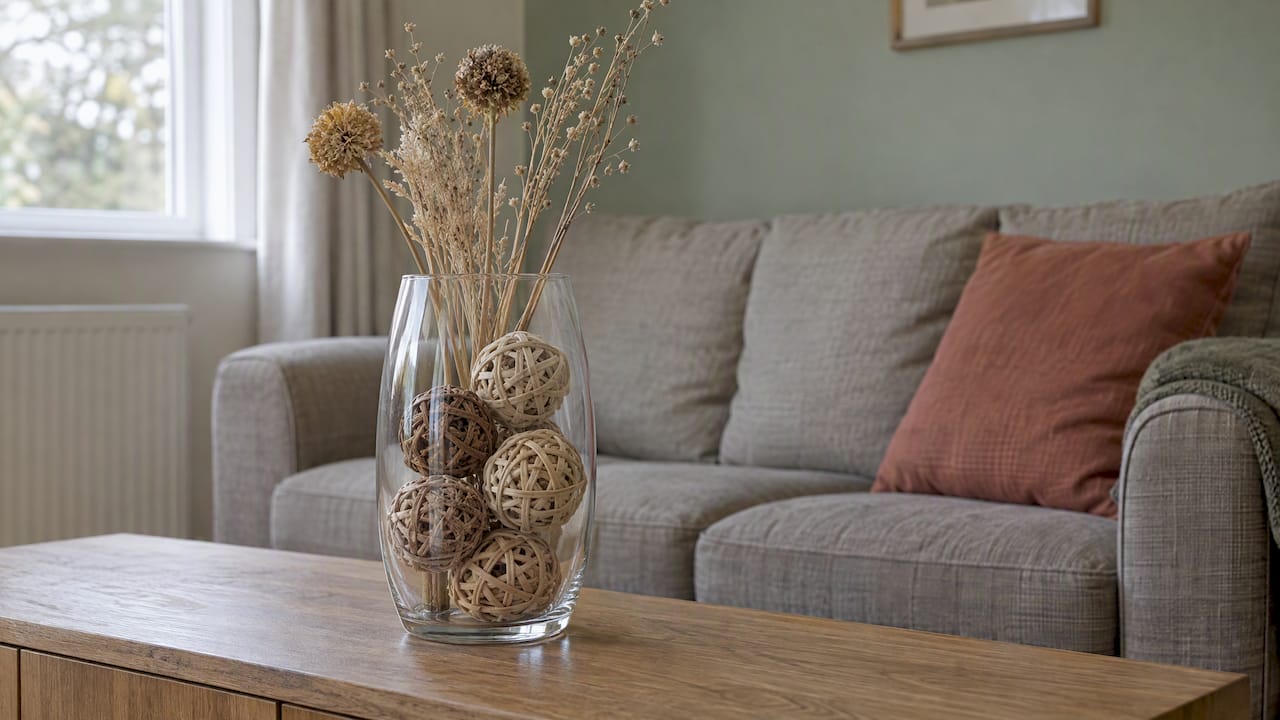
Wooden, rattan or woven spheres give a neutral, textured base. A handful in an oversized glass vase looks tidy, and you can tuck dried stems in among them. If you like that textured look, you will find it echoed in our step by step centrepiece guide, which covers layering height and texture on a table.
Vase fillers for dried and faux arrangements
Dried stems are a good partner for a styled filler, because nothing is sitting in water and you have a free choice of materials.
The RHS explains that statice, grasses, yarrow, poppy seedheads and sunflowers are well suited to simple air drying, with no special equipment. So a bunch cut from the garden in late summer can stand in a vase all winter.
A few combinations that work:
- Pampas or other tall grasses in a floor vase, weighed down with a layer of stones so it does not topple.
- Dried lavender over pale pebbles, which suits a bedroom or bathroom.
- Branches in a tall vase with a base of pine cones, which looks good by an entrance. For more on styling a hallway, see our entryway styling tips.
- Faux stems on a bed of wooden spheres, for a low-maintenance living room look.
When a vase will hold dry stems only, you can use fillers that you would never put in water, such as paper, pulses, moss or fabric.
What to avoid: water beads
Water gel beads are sold as colourful vase fillers, and they look pretty. But they carry a real safety risk. The Office for Product Safety and Standards says in a GOV.UK product safety alert that water beads can cause gastrointestinal blockage requiring surgery, or choking. It advises keeping them away from children under 5, and allowing older children to use them only with close adult supervision.
GOV.UK has also published a product safety report on a water bead product sold online and listed with vase filler use.
If you have young children, pets or visiting toddlers, there are plenty of better choices. Glass pebbles that are too large to swallow, large stones or lemons give a similar look. Whatever you choose, think about the smallest piece in the vase and whether a small child could reach it.

How to fill a vase with fresh flowers
Some fillers suit fresh stems better than others. Follow these steps.
- Start clean. The RHS recommends always using clean vases. If one is dirty, wash it thoroughly with detergent and a bottle brush.
- Add the filler first, and rinse it so it does not cloud the water.
- Pour in the water, then dissolve some cut-flower food in it. The RHS notes this feeds the flowers and helps keep the water fresher.
- Trim stems and arrange. Work from the largest stems to the smallest, pressing them gently among the filler.
- Check the proportions. A common florist guideline is stems around 1.5 to 2 times the height of the vase. Treat it as a starting point, not a rule.
- Top up the water every couple of days and clean the filler if it turns slimy.
For heavy-headed flowers like peonies, or for tall branches, put a criss-cross of clear tape across the vase mouth before you add the filler. The stems will sit in the grid and the filler hides the tape.
Choosing the right filler for your room
If you are unsure, use this quick guide.
| Situation | Good filler | Why it works |
|---|---|---|
| Tall, narrow vase with long stems | Stones or glass pebbles | Weight at the base steadies the vase |
| Kitchen table | Lemons, limes | Fresh colour, no extra shopping |
| Autumn mantelpiece | Pine cones, acorns | Seasonal and free to collect |
| Winter shelf | Fairy lights, baubles | Warm light, no flowers needed |
| Bathroom | Shells, pale pebbles | Moisture tolerant, calm look |
| Home with small children | Large stones, lemons | No small parts or beads to swallow |
| Dry stem arrangement | Wooden spheres, moss, pulses | Hides the base of the stems, no water |
Neutral fillers (clear glass, pale stones, wood) give you the most flexibility, because you can change the stems around them as often as you like. Strong colours are better saved for a single seasonal moment.
Our view: let the vase do the work
At Homable we spend a lot of time thinking about how small things change a room, and we see the same mistake over and over. People put too many things in a vase. The result is a busy, cluttered look that fights with everything around it.
Our advice is to decide on one idea per vase. One filler, one or two stem types, one colour accent. If you want texture, choose it for the filler. If you want colour, choose it for the stems. Do not ask both to shout at once.
We also think a vase works best when it is part of a small group rather than standing alone. A vase, an ornament and a few books on a shelf look more intentional than any one of them could. If you are building a display like this, our guide to ornament styling tips explains how to vary height and spacing, and our seasonal décor guide covers how to swap pieces through the year without starting from scratch.
Finally, be practical. If a filler cannot be washed, cannot be reached by a child safely or will rot in water, it is not worth the effort, however good it looks in a photo.
— Cristiano
Pair your vase with the right accessories
A filled vase looks best with a few quiet companions. If you are styling a shelf, console or mantel, our ornaments collection has pieces that sit well next to a vase, and you can see the wider range, from rugs and baskets to wall shelves, on the Homable shop. A woven basket nearby also gives you a place to keep spare pebbles, candles or dried stems out of sight.
Using colour and seasonal interest
Not every vase has to hold plants. A vase on a kitchen counter can sit alongside a few favourite mugs, and if you are working with limited space, there are some useful mug display ideas for renters that suit the same shelf or counter. Keeping colours in the same family, for example earthy terracotta with dried grasses, makes a mixed display look planned.
For each season, a few simple swaps do the job:
- Spring: pale pebbles and fresh green stems.
- Summer: lemons, limes and cut garden flowers.
- Autumn: pine cones, acorns, dried seedheads.
- Winter: baubles, fairy lights, evergreen sprigs.
If you are short on time or money, our piece on quick and affordable ways to refresh your home decor lists other small changes with a big effect.
FAQ
What can you fill a vase with besides flowers?
Almost anything clean and attractive: lemons, pine cones, glass pebbles, fairy lights, baubles, shells or dried grasses. Choose materials that suit the season and the room. If young children are around, avoid small items and water beads.
How do you properly fill a vase?
Wash the vase first, add the filler, then pour in water with cut-flower food dissolved in it, as the RHS suggests. Arrange the stems from largest to smallest. For tall or heavy blooms, add a tape grid across the mouth for extra support.
What can I do with empty glass vases?
Use them as display pieces. Fill them with fairy lights, baubles, pine cones or pebbles and place them on a shelf or mantelpiece. Grouping two or three of different heights usually looks better than one on its own.
How can I best display a vase collection?
Group vases in odd numbers and vary their heights. Keep a common colour or material across the group, such as clear glass or ceramic in neutral tones. Add one or two other objects, like an ornament, so the display feels styled rather than crowded.
Sources
- Better Homes & Gardens: 8 Simple Steps to Arrange Flowers Like a Pro
- RHS: Cut flowers, cutting and conditioning
- RHS: How to dry flowers and foliage at home
- GOV.UK: Product Safety Alert, Water Beads (PSA7)
- GOV.UK: Product Safety Report, water beads sold via Amazon