
Cart
0
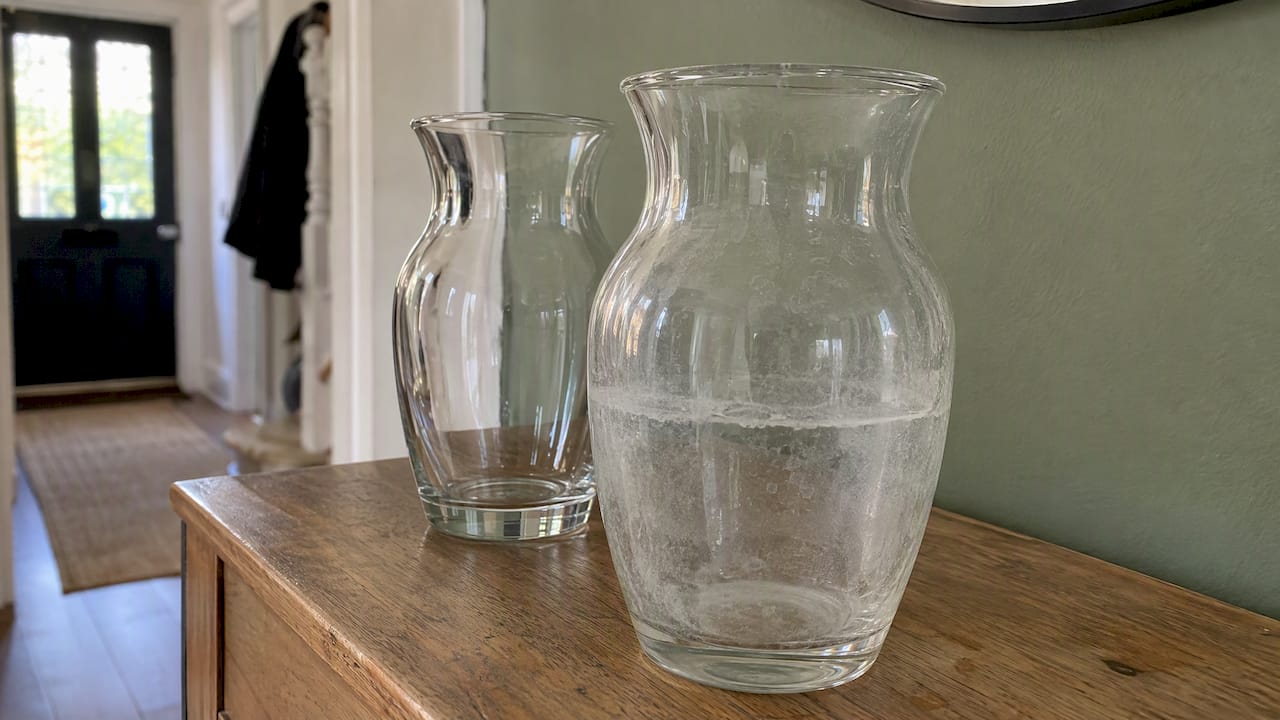
The quickest way to clean a glass vase is to soak it in warm soapy water and work the inside with a soft bottle brush. For a cloudy film from hard water, soak it overnight in white vinegar. For a narrow neck, shake it with uncooked rice and soda water. Below you will find each method step by step, what to avoid, and how to tell haze you can remove from damage you can’t.
TL;DR
- Warm soapy water and a soft-bristled bottle brush handle everyday grime and the slimy residue left by flower stems.
- Cloudiness from limescale usually shifts with an overnight white vinegar soak, followed by rice if marks remain.
- A narrow neck needs rice and soda water, shaken hard, rather than a sponge you can’t get inside.
- Haze caused by etching, often from repeated dishwasher washing, is physical damage and no cleaner will remove it.
- Rinse and dry the vase as soon as the flowers come out, and it will stay clear far longer.
Table of Contents
- Why a glass vase goes cloudy
- What you need before you start
- The everyday clean: warm soapy water
- Clearing cloudy limescale with vinegar
- Narrow necks: rice and soda water
- Bicarbonate of soda and vinegar
- Salt and vinegar paste for stubborn rings
- Denture tablets and dishwasher tablets
- Cleaning the outside
- Which method for which problem
- What not to use on glass vases
- Keeping vases clear between bunches
- Our perspective
- Styling your clean vases
- FAQ
- Sources
Why a glass vase goes cloudy
Two different things look the same from across the room: a deposit sitting on the glass, and damage to the glass itself. Knowing which one you have saves a lot of scrubbing.
The common cause in much of the UK is hard water. As water evaporates in the vase, it leaves minerals behind as a white ring or a milky film, usually around the waterline. That is a deposit, and acid dissolves it, which is why vinegar features in almost every method below.
The second cause is bacteria. Stems in water produce a slimy film, and the RHS advises always using a clean vase, washing a dirty one thoroughly with detergent and a bottle brush. A museum conservation fact sheet makes the same point from the other side: thoroughly cleaned vases matter because bacteria can kill flowers and leave them prone to pests. So a clean vase is not only about looks. It is part of keeping your flowers alive.
The third cause is etching. Persistent haze can come from dishwasher heat and detergents, which leave tiny scratches and pits that cleaning will not remove. If you have soaked, scrubbed and the glass is still dull, this is the likely answer.

What you need before you start
Most of it is already in the kitchen cupboard:
- White vinegar (distilled, if you have it)
- Bicarbonate of soda and table salt
- Uncooked rice and a bottle of soda water
- Washing-up liquid
- A soft-bristled bottle brush, plus an old toothbrush for rims and bases
- A microfibre cloth for drying and polishing
- Effervescent denture tablets or a dishwasher tablet, if you want the hands-off options
A simple kit list from one cleaning guide is vinegar, warm water, a microfibre cloth and a scrub sponge, bottle brush or old toothbrush, and that covers nearly everything here. Choose a soft brush. Anything harsh is how a clean vase becomes a scratched one.
The everyday clean: warm soapy water
Start here, because it is the gentlest method and often enough on its own.
- Fill the vase with warm water and a squirt of washing-up liquid.
- Leave it to soak for a while so the film softens.
- Work the inside with a soft-bristled brush, paying attention to the base where slime collects.
- Rinse until the water runs clear and no suds remain.
- Dry with a clean microfibre cloth, or stand it upside down on a rack.
Use warm rather than boiling water. Sudden temperature changes are bad for glass, and warm is all the detergent needs.
Clearing cloudy limescale with vinegar
This is the method for the milky ring that won’t wash off. The approach in one UK home-advice guide is to soak the vase overnight in distilled white vinegar. If marks remain in the morning, add a handful of rice and swill vigorously, then rinse with hot soapy water and dry with a clean cloth.
A few practical notes from using this at home:
- Fill the vase high enough to cover every cloudy patch, or the ring will simply sit above the vinegar.
- For a vase that is too wide or awkward to fill, soak a cloth in vinegar and press it against the marks.
- Rinse well afterwards. Vinegar left to dry becomes its own faint film.
If the haze is still there after a proper soak and a rice swill, stop and consider etching. More scrubbing will not help and can make things worse.
Narrow necks: rice and soda water
A tall bud vase or a bottle-shaped one defeats a brush. Rice does the job your hand can’t.
Add dry uncooked rice and soda water until the vase is about three-quarters full, cover the opening with your palm, shake vigorously, then empty and rinse. This comes from a test of five vase-cleaning methods, where the writer found rice dislodged stuck-on material from the sides and bottom better than the other methods, and the fizzing of the soda water seemed to help.

The rice acts as a gentle abrasive as it tumbles, reaching corners a sponge never would. Rinse until every grain is out. A handy trick for stubborn grains is to swirl in a little water and tip them out over a sieve in the sink.
Bicarbonate of soda and vinegar
Yes, the two can be used together in a vase, and the fizzing helps loosen grime. The method is to use warm water, about a tablespoon of baking soda and a splash of distilled white vinegar, cover the opening and swirl.
A UK cleaning guide suggests one or two tablespoons of bicarbonate of soda in warm water, then white distilled vinegar, with a brush if needed. Its safety tip is worth repeating: do not lean close to the vase while it fizzes, in case vinegar splashes into your eyes. Add the vinegar slowly, and keep your face back.
This is a good option for general grime. For heavy limescale, the long vinegar soak usually does more.
Salt and vinegar paste for stubborn rings
When a ring or mineral crust sits on one patch, a paste lets you target it without filling the whole vase.
- Mix one or two tablespoons of salt with vinegar to make a paste, apply it to scummy rings or mineral deposits, leave for 15 to 30 minutes, then scrub it off.
- A US cleaning guide uses a smaller batch, half a tablespoon of salt with enough vinegar to form a paste, left for about 10 to 15 minutes, rinsed, then dried and buffed with microfibre.
Use a soft cloth or a brush to spread the paste. Salt is coarse, so work gently and don’t grind it into the glass.
Denture tablets and dishwasher tablets
If you would rather not scrub, let chemistry do it. For interior rings or limescale, fill the vase with warm water and add one or two effervescent denture tablets, then use a bottle brush on what remains.
Another route is a dishwasher tablet used in the sink rather than the machine: fill the vase with hot water and a tablet, stir, leave overnight, then rinse thoroughly. The same source cautions that glass vases should not go in the dishwasher too regularly, or they may become cloudy. Hand-washing remains the best way to avoid etching.
Cleaning the outside
Fingerprints, dust and water spots show most on the outside of clear glass. Spray the outside with a solution of vinegar and warm water, let it air-dry, then polish. A dry microfibre cloth gives the best finish and leaves no lint.
Hold the vase by the base rather than the neck while you work. Wet glass is slippery, and a sink full of taps and hard edges is hard on it.
Which method for which problem
| Problem | Best method | Effort |
|---|---|---|
| Slimy film after flowers | Warm soapy water and a soft brush | Low |
| White ring at the waterline | Overnight white vinegar soak | Low |
| Narrow neck, stuck-on residue | Rice and soda water, shaken | Medium |
| General grime | Bicarbonate of soda and vinegar | Low |
| One stubborn mineral patch | Salt and vinegar paste | Medium |
| Limescale you’d rather not scrub | Denture tablet soak | Low |
| Dull haze that won’t shift | Probably etching, can’t be cleaned | None |
What not to use on glass vases
The most common mistake is being too aggressive. Guidance for glassware care says to avoid dishwashers, scrubbing sponges including wire wool, and sharp implements. Glass is hard, but it scratches, and a scratch is permanent.
A few more rules:
- Test first. Museum conservation advice is to test cleaners on an unobtrusive area, protect glass from hard surfaces such as sinks and taps with a soft cloth, and avoid over-cleaning.
- Treat special vases gently. For crystal, antique, gold-rimmed or painted vases, the same guidance is to use weaker vinegar, shorten soaking, avoid abrasive scrubbing and keep them out of the dishwasher.
- Know when to stop. For a valuable or inherited piece, the conservation advice is that if in doubt, consult a conservator rather than experimenting.
- Skip the bleach at home. Some guides add a drop to dish soap, but vinegar, rice and bicarbonate cover almost every case without it, and bleach should never meet vinegar.
Gilt rims and hand-painted decoration are the parts most likely to be lost to a long vinegar soak, so keep the liquid below them.
Keeping vases clear between bunches
Prevention is quicker than any of the methods above.
- Rinse straight away. Rinse the vase as soon as the flowers are removed, before slime and minerals have time to dry on.
- Change the water often. The RHS recommends changing the water and re-cutting stems every two to four days. Each change is a chance to give the vase a quick swill.
- Use flower food. Cut-flower food contains an antibacterial treatment that helps keep the water cleaner for longer.
- Dry completely before storing, and consider filtered or distilled water if you live in a very hard-water area.
- Clean before storage. A clean-whenever-you-refresh habit means the vase never gets a chance to build up deposits, and rinsing cleaning materials thoroughly protects the next bunch.
For more on the flowers themselves, these cut flower care tips cover how to keep a bunch fresh once the vase is spotless.
Our perspective
We sell home decor, so we see how vases live in real homes: on a hallway table, a kitchen windowsill, a dining table that gets cleared for dinner. The vases that look best are rarely the most expensive ones. They are the ones that are kept clear.
Our view is that glass should be treated as part of the decor, not an afterthought. A clean, bright vase makes even a few supermarket stems look deliberate. A cloudy one drags down a whole arrangement. That is why we favour gentle, cheap methods you can repeat, such as a rinse after every bunch and a vinegar soak when a ring appears, over occasional heroic scrubbing.
We also think a vase doesn’t always have to hold flowers. A clean glass vessel with decorative fillers looks good all year and needs far less upkeep than fresh stems, which is why we wrote our guide to vase filler ideas. And if a vase is cloudy beyond rescue, it is usually better to retire it than to keep attacking it.
— Cristiano
Styling your clean vases
Once your glass is sparkling, it deserves a good spot. We stock ornaments and decorative accessories designed to sit alongside vases on shelves, sideboards and mantelpieces, so a tidy display comes together in one order.
Browse our ornaments collection for pieces in wood, metal and glass finishes, or look around the full Homable range for rugs, storage and kitchen accessories for the rest of the room.

Free shipping applies on orders over £100.
FAQ
How do I make a cloudy vase clear again?
First work out whether it is a deposit or etching. For hard-water deposits, soak the vase overnight in distilled white vinegar, then add rice and swill if marks remain, and rinse with hot soapy water. If the haze survives that, it is probably etching, which cannot be removed by cleaning.
Can I put a glass vase in the dishwasher?
It is best not to. Regular dishwasher washing can leave glass cloudy, and the haze from etching is permanent. Hand-washing is the safer habit, and for crystal, antique, painted or gold-rimmed vases it is the only sensible one.
Can vinegar and bicarbonate of soda be used to clean a vase?
Yes. Add a tablespoon or two of bicarbonate of soda to warm water in the vase, then a splash of white vinegar, and swirl or brush. Keep your face back while it fizzes so nothing splashes into your eyes, and rinse well afterwards.
How do I clean a vase with a very narrow neck?
Put uncooked rice and soda water in until it is about three-quarters full, cover the opening and shake hard. Empty it, rinse well and check that no grains are left. The rice scrubs the walls where a brush can’t reach.
What should I never use on a glass vase?
Avoid wire wool, scouring sponges and sharp tools, which scratch glass for good. Don’t rely on the dishwasher either. Test any cleaner on a small area first, especially on decorated or antique pieces.
Sources
- Cut flowers: cutting and conditioning, RHS Advice
- Using Cut Flowers and Potted Plants in Museums, fact sheet
- How to clean a cloudy vase, Good Housekeeping UK
- How to Clean Glass Vases Inside & Out, Cleanipedia
- How to Clean Glass Vases with Salt and Vinegar, Merry Maids
- 3 Simple Ways To Clean A Cloudy Glass Vase, Southern Living
- I Tried 5 Methods to Clean Glass Vases, The Kitchn
- How To Clean Pyrex, Pyrex Collection
- Conservation, Hampshire Cultural Trust Online Collections
- How to Keep Cut Flowers Fresh: Flower Care Tips