Cart
0
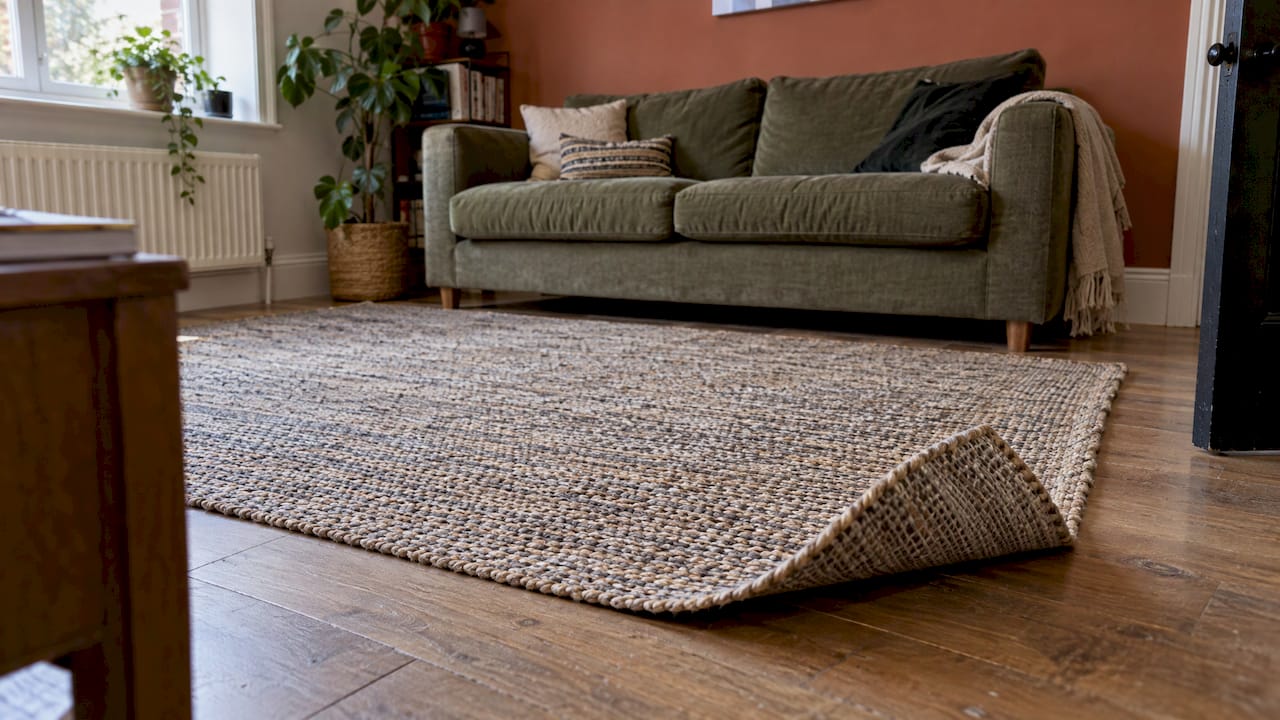
To stop a rug curling, flatten it against its own curl and then hold the edges down. Reverse-roll the rug for a day or two, or weight the corner flat, then add a grip pad or double-sided rug tape so the corner stays put. The fix lasts best when the rug suits the room: a rug that lies low from day one, such as a flatweave bamboo rug, has less to fight.
Below you will find the quick fixes in order of safety, what to do about dents left by furniture, the heat methods and where they go wrong, and the habits that keep corners flat in a British home.
TL;DR
- Start with dry methods: reverse-roll the rug (pile side out, opposite to the curl) for a day or two, or weigh the corner flat with books.
- Ice and steam work on some rugs, but they add moisture or heat, so use them on small areas and check the material first.
- Never put an iron straight on a rug: concentrated heat can scorch fibres or melt a synthetic backing.
- Keep corners down for good with a grip pad, underlay or double-sided rug tape, and give the rug time to settle after unrolling.
- Dents from furniture respond to ice or gentle steam, then a fluff of the fibres.
Table of Contents
- Why rugs curl in the first place
- First, let the rug settle
- Method 1: reverse-roll the rug
- Method 2: weigh the corner flat
- Method 3: the ice cube trick
- Method 4: gentle steam, never an iron on the rug
- Can you iron a rug flat?
- Sun and gravity: the low-effort option
- How to get furniture dents out of a rug
- Keep corners down for good
- Which fix for which rug?
- Prevent curling when you buy
- Our view: start with the right rug
- A flat-lying rug for your next room
- FAQ
- Sources
Why rugs curl in the first place
Most curling begins in the packaging. A rug that has been rolled tight for weeks, in a warehouse or a courier van, remembers that shape. When you unroll it, the edges try to return to the curve, which is why corners lift first: they have the least weight pressing on them.
A few other things make it worse:
- Thin or stiff backing. Light rugs have little weight to hold their own edges flat.
- Humidity and temperature swings. Fibres and backings relax and tighten with the room.
- Foot traffic. Corners get caught by feet, vacuum cleaners and doors, and each knock lifts them a little more.
- Uneven or very smooth floors. A rug on bare boards or tile slides, and a sliding rug bunches and lifts at the edge.
Knowing the cause helps you choose the fix. If the curl is a leftover from rolling, reverse-rolling and weight will usually do it. If the corner lifts again after every vacuum, the rug needs something underneath it to hold it.
First, let the rug settle
Before reaching for anything else, lay the rug out in its final position and leave it for a few days. Gravity does a lot of the work. One care guide on flattening rugs from Family Handyman, updated in September 2024, suggests reverse-rolling a rug and leaving it for a day or two, then letting it lie flat.
This costs nothing and cannot harm the rug. If you have just opened a parcel, do this before judging the rug. Many new rugs look worse on day one than on day five.
Method 1: reverse-roll the rug
This is the safest first move for almost any rug, because it uses no water and no heat.
- Lay the rug upside down on a clean, dry floor.
- Roll it up tightly in the opposite direction to the way it curls, so the pile ends up on the outside.
- Secure it loosely with string or ribbon, not tape that could leave residue.
- Leave it for a day or two, then unroll it and lay it flat.
Family Handyman describes the same approach: flip the rug and roll it opposite to how it rolled, then leave it a day or two. For a rug that has been curled by storage or delivery, this often cures the whole rug rather than a single corner.
Where it goes wrong: rolling too loosely does little, and rolling the same way as the curl makes it worse. If the corner springs back after a few days, the cause is probably more than packaging, so move on to a grip or tape.
Method 2: weigh the corner flat
For a stubborn corner, fold it under gently, flatten it and weigh it down. Family Handyman’s advice is to use wide, flat objects such as books rather than chair legs, because narrow feet leave indentations. Real Simple’s guide to stopping rugs curling at the corners adds that you can bend a stubborn corner flat, tuck it under the rug and leave it for 24 hours, taking care not to crease the fold.
A practical routine:
- Place a clean sheet of paper or cloth under the corner if the floor is delicate.
- Lay the corner flat, pile up.
- Stack two or three heavy books on the corner tip, spreading the weight.
- Leave for a couple of days, longer for thick backings.
It is slow, but it is also dry and low risk, so it is a good fit for wool, cotton, jute and synthetic rugs alike.
Method 3: the ice cube trick
The ice-cube method went viral after a well-known interior designer shared it, and Ideal Home covered it in October 2024. The idea is that a little moisture relaxes the fibres at the corner so they can be pressed flat.
Real Simple’s version goes like this: protect the floor with plastic, place ice cubes on the curled corner, cover with more plastic, put a heavy object on top and leave it for at least 48 hours, or 72 if you can. Alternatively, move a chair or sofa leg onto the ice-dampened corner.

Family Handyman recommends ice for small folds or corners rather than an entire edge. It suggests placing a few cubes on the crease, weighting the corner tip (not the ice), then blotting dry in the morning so the rug does not stay wet.
Use it with care:
- It suits rugs that absorb moisture, such as wool or cotton. Synthetic rugs do not absorb water, so they respond less well.
- Always dry the area thoroughly. A damp rug on a wooden floor can develop odours or mould.
- Treat it as a quick fix for a single corner, and follow it with a grip or tape if the corner is in a busy spot.
- Spot test first on a hidden corner if the rug is coloured, since water can affect some dyes.
Method 4: gentle steam, never an iron on the rug
Heat softens a curl, but the risk rises with it. Family Handyman cautions that synthetic nylon and polypropylene have a lower melting point than wool, so a setting that is fine for one rug can ruin another.
If you use steam, keep the steamer or steam iron held above the surface rather than pressing it onto the pile. Fantastic Services, in its guide to getting dents out of carpet, suggests holding a steam iron roughly 10 to 15 cm above the area, never directly on the rug, letting it dry overnight and ruffling the fibres the next morning. That advice is for cotton, sisal or wool. For silk rugs, it recommends leaving steam cleaning to a professional because of the high chance of damaging the colour.
For curling specifically, steam is a second-line option: try reverse-rolling and weight first, and use steam only on rugs you know are wool, cotton or similar. If the rug is hand-knotted, antique, silk or of uncertain fibre, speak to a professional rug cleaner before you apply moisture or heat.
Can you iron a rug flat?
It is tempting, but the safest answer is no. A household iron puts concentrated heat on a small area. On a synthetic rug that can melt the fibres or the backing, and on wool, heat and moisture together can pucker or shrink the pile. If you are determined to use heat, use a steamer held clear of the surface, as above, and test on a hidden spot.
The rug’s label is your best guide. If it names the fibre and gives care advice, follow it. If there is no label, stay with dry methods.
Sun and gravity: the low-effort option
For a rug that is wavy as well as curled, lay it on a clean, hard, dry surface such as a patio on a warm day or a laminate or vinyl floor indoors, pile down for a few hours. Keep it out of strong direct sun for long periods, because sunlight can fade dyes. Treat this as a gentle supplement to the methods above, not a replacement.
How to get furniture dents out of a rug
Dents are a different problem from curling, but they have similar fixes, and readers tend to search for both together.
- Move the furniture and shift it a few centimetres each time you rearrange, so the weight does not sit in the same spots.
- Add ice. Place ice cubes in the dents, protect the floor beneath, and leave them to melt, from a couple of hours to overnight, according to Fantastic Services. Blot the leftover moisture.
- Fluff the fibres. Family Handyman suggests using a stiff tool, such as a butter knife or spoon, to fluff and straighten the fibres once the ice has melted, then blotting dry. A small brush or your fingers also work.
- Or use steam from a distance, as in Method 4, on cotton, sisal or wool.
For the future, put felt or wide cups under furniture feet to spread the weight. Our guide to rugs on hardwood floors covers felt and rubber pads that protect both the floor and the rug.
Keep corners down for good
The fixes above flatten a rug. These keep it flat.
Grip pads and underlay
A non-slip pad under the rug stops it creeping and gives the backing something to hold on to. Ideal Home’s expert advice includes rug grippers, which are non-slip adhesive pads that prevent curling altogether, as well as underlay for durable results. Cut a pad slightly smaller than the rug so it does not peek out, and place a small gripper at each corner on rugs that lift in only one spot.

Our floor-first guide to non-slip rug solutions walks through matching the pad to the floor type.
Double-sided rug tape
For corners and edges that are a trip hazard, rug tape is the firmest option. Check that the tape suits your floor, because some adhesives can mark varnished boards or lift vinyl. Press the tape along the underside of the edges, then press the rug down and hold for a few seconds.
If you are placing a rug over carpet, there are extra considerations about movement and safety, which we cover in our guide to securing a rug on carpet.
Get the size and placement right
A rug that is too small for the room tends to have furniture on only one edge, so the other edges lift. Placing at least the front legs of sofas and chairs on the rug holds its edges down naturally. Mark the footprint with masking tape on the floor before buying: our living room rug size guide shows how.
Think about heat and humidity
If the rug lies over underfloor heating, the warmth can dry and stiffen some backings and fibres. Our piece on rugs and underfloor heating explains the tog rating to look for so the rug and heating work together.
Which fix for which rug?
| Rug type | Best first move | Use with caution |
|---|---|---|
| Wool or wool blend | Reverse-roll, then weight | Direct heat, heavy soaking |
| Cotton | Reverse-roll, weight, light steam from a distance | Over-wetting |
| Jute or sisal | Reverse-roll, weight | Water, which can mark natural fibres |
| Synthetic (nylon, polypropylene) | Reverse-roll, weight, grip or tape | Heat, as they melt more easily than wool; ice, which they do not absorb |
| Silk or antique | Dry weight only | Any water or steam; see a professional |
Prevent curling when you buy
It is far easier to avoid a rug that curls than to fix one. When you shop, think about:
- Weave. Flat, firmly woven constructions sit close to the floor, while thick or loosely backed rugs can lift at the edges.
- Size. A rug big enough for furniture to sit on its edges stays down better.
- Room use. Hallways and kitchens see feet and doors constantly, so the edges take more knocks. Bath mats are another matter; our comparison of a bath mat versus a rug helps you choose.
- Natural fibres. If you like the look of jute or sisal, our guide to where sisal or jute rugs work best shows the rooms they suit.
For children’s rooms, a curled corner is also a trip risk, so see our nursery rug safety checks.
Our view: start with the right rug
Most of the curling problems we hear about are down to a mismatch between rug and room, not a fault that needs a clever hack. A rug that suits the floor, is big enough for the furniture and has a grip underneath tends to stay flat without help.
That is why we put so much weight on design that is practical as well as pretty. Our natural bamboo rugs are listed as flatweave floor mats for living spaces and hallways, which is the kind of construction that suits everyday rooms. We pair that thinking with the rest of the home, from kitchen mats to storage baskets, so each room gets pieces chosen to work together.
If a corner does lift, the dry methods are the kindest place to start: reverse-roll, weight and wait. Then add a pad or tape, and enjoy the rug rather than minding it.
Cristiano
A flat-lying rug for your next room
If your current rug keeps curling and you are ready for a change, take a look at our bamboo rugs, including the natural bamboo flatweave rug made for living spaces. Delivery is free on orders over £100, so a rug and the matching kitchen mat or storage baskets can go in one basket.

You can browse the full range of home decor, from ornaments to curtains and wall shelves, on Homable.
FAQ
How do I uncurl a rug quickly?
Reverse-roll it: flip the rug and roll it tightly the opposite way to the curl, pile side out, then leave it for a day or two. If one corner stays stubborn, weigh it flat with books. Both methods are dry, so they carry little risk to the rug or floor.
Does the ice cube hack really work?
It can relax the fibres at a single curled corner, particularly on wool or cotton. Use only a few cubes, weight the corner, and blot the area dry so the rug does not stay damp. Synthetic rugs absorb little water, so reverse-rolling or a grip pad suits them better.
How do I make a thin rug lie flat?
Let it settle on a hard floor for a few days, reverse-roll it if the edges lift, and add a grip pad or underlay underneath. Putting the front legs of a sofa or chair on the rug also holds the edges down.
How do I remove dents from a rug?
Move the furniture, put ice cubes in the dents and let them melt, then blot and fluff the fibres with a brush or a spoon. On cotton, sisal or wool you can also hold steam a few centimetres above the dent, as described above. Leave silk rugs to a professional.
Can I iron a curling rug?
It is best not to. Direct heat can scorch fibres and melt synthetic backings. If you want to use heat, hold a steamer clear of the surface and test a hidden corner first.
Sources
- 7 Ways To Flatten a Rug, Family Handyman
- How to Stop Your Rugs From Curling Up at the Corners, Real Simple
- Kelly Hoppen’s hack to stop your rug curling using ice, Ideal Home
- How to Get Dents Out of Carpet, Fantastic Services Blog