
Cart
0
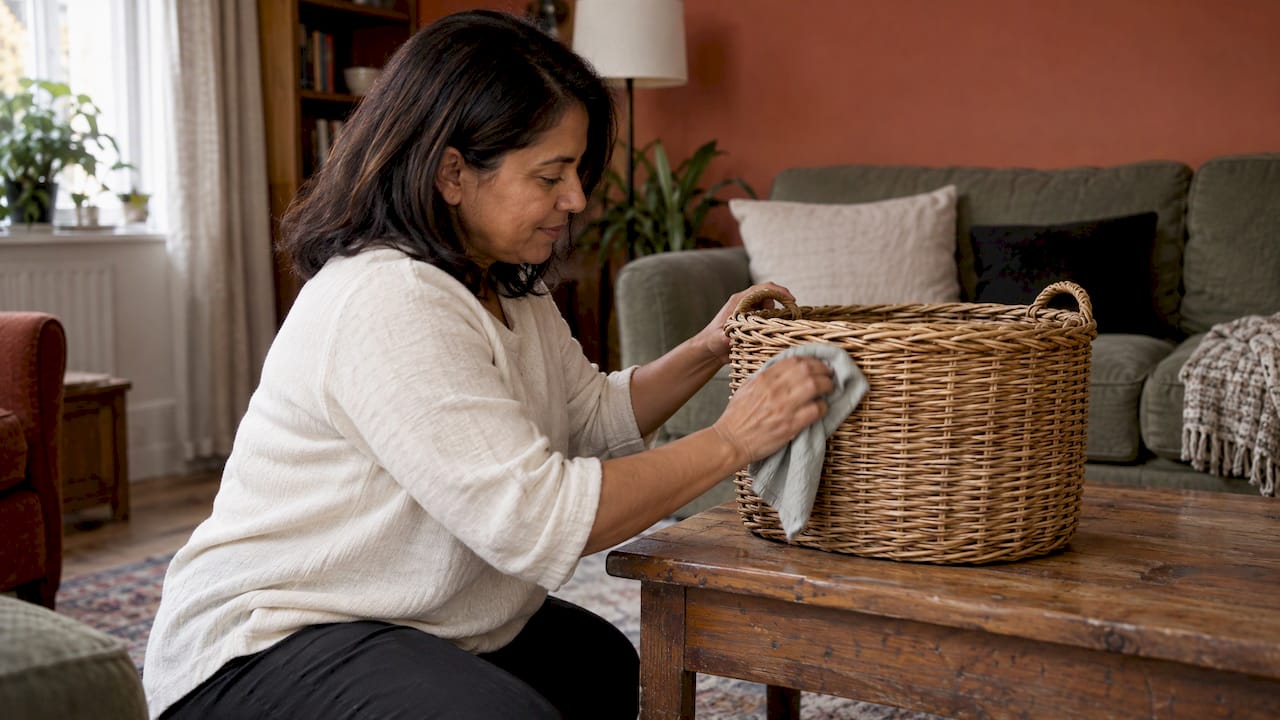
To clean a wicker basket, dust it first with a soft brush or a vacuum on a low setting, then wipe it with a well-wrung cloth and a few drops of washing-up liquid in warm water, and let it dry in the air. Water is the enemy of natural wicker: soaking loosens the weave and invites mould. So the method below is dry first, barely damp second, and never submerged. Our own storage baskets at Homable are meant to stay in view around the house, so a routine you can repeat in ten minutes is the one worth having.
TL;DR
- Dust first, every time: a soft brush, a microfibre cloth or a vacuum with a brush attachment removes most of what you can see.
- Wipe, don’t wash: one to two drops of washing-up liquid in warm water, a well-wrung cloth, then a second cloth to take off the residue.
- Never soak natural wicker, and keep bleach, tumble dryers, radiators and hairdryers away from it.
- For mildew, use one part white vinegar to four parts water on a cloth, then wipe with plain water and air dry.
- Dust decorative baskets regularly and give them a proper clean every few months; baskets that touch food need cleaning after every use.
Table of Contents
- What you need before you start
- Why wicker collects dust so easily
- Step-by-step: how to clean a wicker basket
- Can you wash a wicker basket in water?
- What to use, and what to keep away from wicker
- Removing mildew and musty smells
- Cleaning an old or second-hand wicker basket
- How often to clean wicker baskets
- Keeping baskets clean between cleans
- Choosing baskets that are easy to live with
- Perspective
- Ready for a fresh basket?
- FAQ
- Sources
What you need before you start
You do not need a cupboard of specialist products. Most of this is already in the house:
- A soft-bristled brush, a clean paintbrush or a soft toothbrush for the gaps in the weave
- A vacuum cleaner with a brush attachment, on low suction
- Two or three microfibre cloths
- A large bowl of warm water and washing-up liquid
- White vinegar and a spray bottle, only if there is mildew
- Old towels and a well-ventilated spot to dry the basket
The tools are suggested by In The Wash’s UK guide to wicker baskets, which recommends a microfibre cloth, a paintbrush or soft toothbrush for tough grime, and a vacuum with brush attachment for heavier dirt and dust.
Why wicker collects dust so easily
Wicker is woven, and every crossing of the weave is a tiny shelf. Dust settles in those small gaps between the fibres, which is why a basket can look grubby long before it looks stained. Martha Stewart’s guide quotes the president of a professional cleaning company saying that the woven texture and small spaces between the fibres make wicker collect dust, and that regular dusting helps prevent buildup.
That is useful because it tells you what the job really is. Most of the time, cleaning a wicker basket is dust control, not washing. If you keep up with the dust, you rarely have to deal with the harder problems of grease, stains and mildew.

Step-by-step: how to clean a wicker basket
1. Empty it and take it somewhere practical
Take everything out, including loose paper, lining fabric and anything that has slipped to the bottom. Work over a hard floor, a garden path or a spread-out sheet, because the dust you free will fall out of the weave. If the basket has a fabric liner, remove it and wash it according to its own care label.
2. Remove the loose dust
Start dry. Run the soft brush along the direction of the weave, then go over the whole basket with the vacuum brush attachment on low suction. A paintbrush or soft toothbrush gets into corners, handles and the underside of the rim. Do the inside as well as the outside; the base often holds more grit than you would expect.
This step alone is often enough for a basket that sits in a bedroom or living room. Wetting dusty wicker turns the dust into a film that sticks to the strands, so skipping the dry stage makes every later stage harder.
3. Make a very mild cleaning solution
Mix one to two drops of washing-up liquid into a large container of warm water. That is the dilution used in Merry Maids’ microfibre method, and it is deliberately weak. More soap does not clean better, it just leaves residue in the weave that attracts dust again.
4. Wipe, with a barely damp cloth
Dip a microfibre cloth in the solution and wring it out hard. The cloth should feel only slightly damp. If you can see moisture left on a strand after you wipe, the cloth is too wet. Work in sections, following the weave, and rinse and wring the cloth as it picks up dirt.
For stubborn grime, dab the cloth onto the mark and use the soft toothbrush with small, light strokes. Scrubbing hard can fray the surface of the strands, and frayed strands collect more dust in future.
5. Take the soap off
Go over the basket with a second cloth dampened with plain water and wrung out, then pat it with a dry cloth. Removing soap residue matters more on baskets that will hold clothes, towels or toys, since soapy fibres can feel slightly tacky.
6. Dry it properly
Drying is where most damage happens. Stand the basket in a well-ventilated room, ideally on a towel and turned so air reaches the inside and outside. Tru Earth’s guide to cleaning natural-fibre baskets recommends air drying in a well-ventilated area after a mild soap-and-water wipe.
Do not use a tumble dryer, radiator or hairdryer to hurry it along. In The Wash warns that these can seriously damage wicker. Heat dries natural fibres unevenly, and brittle strands crack and snap.
Leave the basket until it feels completely dry to the touch, including the base and the joins where strands meet, before you put anything back in it.
Can you wash a wicker basket in water?
In short, no, not natural wicker. The Spruce advises never submerging a natural wicker basket or letting it stay wet for an extended time. In The Wash gives the same warning against oversaturating or submerging baskets.
The reason is how the material behaves. Natural fibres swell when wet, the weave loosens, and water that gets trapped inside the strands dries slowly. Slow drying is what lets mildew take hold.
If you are unsure what your basket is made from, treat it as natural. A barely damp cloth is safe for almost every kind of woven basket, and it is the cautious default when the label is missing.
Natural or synthetic: how to tell
Many baskets sold as wicker are woven from other materials. Natural wicker can be willow, rattan, reed or cane, while some baskets are woven from synthetic resin. Others use grasses, water hyacinth, seagrass or bamboo. Rattan and willow feel slightly fibrous, and you can usually see the grain and small colour variations. Synthetic weave tends to look very uniform. A care label or product page is the best guide to what you have.

The cautious routine in this guide suits all of them, which is why it is a good habit to use on any basket you own.
What to use, and what to keep away from wicker
The safe list is short: a mild washing-up liquid, plain water and, for mildew, diluted white vinegar. The avoid list is longer.
| Product or method | Safe on natural wicker? | Notes |
|---|---|---|
| Dry brush or vacuum on low suction | Yes | The first step for every clean |
| Washing-up liquid, one to two drops in warm water | Yes | Use a well-wrung cloth, not a wet one |
| White vinegar, 1 part to 4 parts water | Yes, for mildew | Wipe, then go over with plain water |
| Chlorine bleach and harsh cleaners | No | Can dry out the natural plant fibres so they break |
| Submerging or soaking | No | Swells the fibres and traps moisture |
| Tumble dryer, radiator, hairdryer | No | Can seriously damage wicker |
What about Murphy’s oil soap?
Readers often ask whether wood soap works on wicker. Some thrifting guides mix a little of it into water for a gentle wipe. A drop of ordinary washing-up liquid does the same job with something you already own, and with less chance of leaving a film on the weave. Whichever you choose, the rule is the same: weak solution, wrung-out cloth, plain-water wipe afterwards.
Removing mildew and musty smells
Mildew shows up as grey, green or black spotting, often on the underside or in baskets stored in a damp utility room or bathroom. Martha Stewart’s guide recommends a spray bottle with one part white vinegar to four parts water. Apply it to a microfibre cloth rather than spraying the basket directly, wipe the affected areas, then wipe the surface with plain water and let it air dry.
A few practical points make this work better:
- Do it outdoors or by an open window on a dry day, so the basket dries quickly.
- Treat the spots only, rather than wetting the whole basket.
- Do not reach for bleach. As noted above, harsh chemicals dry out natural fibres and make them brittle.
- If the basket still smells musty once it is fully dry, repeat the vinegar wipe once and give it longer in fresh air.
If the mildew has worked right through the weave and the strands are soft or crumbling, cleaning will not restore the basket. Retire it and replace it rather than letting spores spread to whatever you store next.
Cleaning an old or second-hand wicker basket
Baskets picked up at car boot sales and charity shops often come with years of dust and a stale smell. The approach is the same, only slower. Tru Earth suggests avoiding soaking for natural-fibre baskets: brush away loose dirt and dust, apply a mild soap-and-water solution with a soft cloth, and air dry in a well-ventilated area.
Before you clean, inspect it. Look for broken or loose strands, stains, mould spots and odours. Minor loose ends can be tucked back into the weave once the basket is dry, but a basket that has gone brittle will only get worse when handled.
Two extra tips for old baskets:
- Vacuum more patiently than you think you need to. Old dust can sit deep in the weave.
- Air the basket outdoors in the shade for a day or two once it is clean. Fresh air removes lingering odours better than anything you can spray.
How often to clean wicker baskets
How often depends on what the basket does. The Spruce suggests decorative and dry storage baskets be dusted weekly and cleaned thoroughly as needed, while baskets used for food storage or food service should be cleaned after every use.
For a simple household rhythm, In The Wash recommends dusting at least once a month and deep cleaning every three months. A quarterly slot fits neatly with other seasonal jobs, and Martha Stewart’s guide also suggests adding wicker baskets to a quarterly cleaning routine because it is easier to clean them when they are cleaned more than once a year.
A sensible pattern looks like this:
| Type of basket | Dusting | Deeper clean |
|---|---|---|
| Decorative or on display | Weekly to monthly | Every three months |
| Laundry or blanket basket | Monthly | Every three months, plus when it gets marked |
| Kids’ toy basket | Monthly | Every three months, or after spills |
| Bread, fruit or serving basket | After every use | After every use, as above |
Keeping baskets clean between cleans
The less dirt a basket meets, the less often it needs work.
- Use liners. A fabric lining protects the inside of a blanket or toy basket from grime and spills, and it can go in the washing machine.
- Keep them dry. Avoid standing baskets on damp floors or in rooms with poor ventilation, and let anything wet dry before it goes in.
- Cover spares. In The Wash suggests dust bags for baskets not in use.
- Rotate. The same source recommends rotating baskets so each is exposed to different air and humidity around the house.
- Wipe up spills at once. Blot, do not rub, and let the spot air dry.
Choosing baskets that are easy to live with
If you are replacing a basket that has seen better days, think about where it will live and what it will hold. A basket by the bed for a throw has different needs from one in the hallway for shoes or in a child’s room for toys. We have more on matching baskets to rooms in our guide to basket storage ideas that cut clutter, and on choosing and styling a blanket basket.
For everyday use, a few practical things make cleaning easier: a tight, even weave without ragged ends, a smooth interior where dust cannot hide, and a size that does not tempt you to overfill and strain the strands.
Perspective
Most people come to us thinking a basket is a purchase and not a routine. In our experience of choosing storage for homes, the baskets that look best after a few years are the ones that get a quick dry dust now and then, not a heroic scrub once a year.
That is why we think about baskets as part of a room, not just a container. A woven basket brings texture, and texture needs ten minutes of care every few months. Put one where you will see it, and you will notice when it needs a brush.
We would rather you enjoy a basket for years than replace it because of a bad wash. Dust it, wipe it lightly, let it dry in the air, and it will keep earning its place in the room.
Cristiano
Ready for a fresh basket?
If your old basket is beyond saving, or you simply want a better fit for a room, we have storage baskets for the home, from laundry baskets to a round storage basket and a kids’ storage baskets collection for toys and bedroom tidying.

You can browse the full range of ornaments, rugs, blinds, kitchen items and storage on the Homable homepage. Free shipping applies on orders over £100.
FAQ
Can you wash a wicker basket?
Natural wicker should not be washed in the usual sense. Do not submerge it or leave it wet for long, because the fibres swell and the weave loosens. Dust it, wipe it with a barely damp cloth and let it air dry.
Can you use vinegar to clean wicker?
Yes, for mildew. Mix one part white vinegar with four parts water, apply it to a microfibre cloth, wipe the affected areas, then wipe with plain water and air dry. Do not spray the basket until it is soaked.
How do you clean a very dusty or old wicker basket?
Brush and vacuum it thoroughly on low suction before any moisture touches it. Then wipe with a well-wrung cloth and a very mild soap solution, and dry it in a ventilated room. Check for broken strands, stains and mould spots first.
How often should I clean wicker baskets?
For most homes, dust once a month and clean more thoroughly every three months. Decorative and dry storage baskets can be dusted weekly if you like. Any basket used for food needs cleaning after every use.
How do I dry a wicker basket after cleaning?
Leave it in a well-ventilated room on a towel, turning it so air reaches all sides. Avoid a tumble dryer, radiator or hairdryer, which can damage the fibres. Only refill the basket once it feels fully dry.
Sources
- How to Clean Wicker Baskets, Martha Stewart
- How to Clean Wicker Baskets in 3 Easy Steps, The Spruce
- How to Clean Wicker Baskets, In The Wash
- Cleaning thrift store baskets, Tru Earth
- How to Clean Wicker Baskets with a Microfiber Cloth, Merry Maids