Cart
0
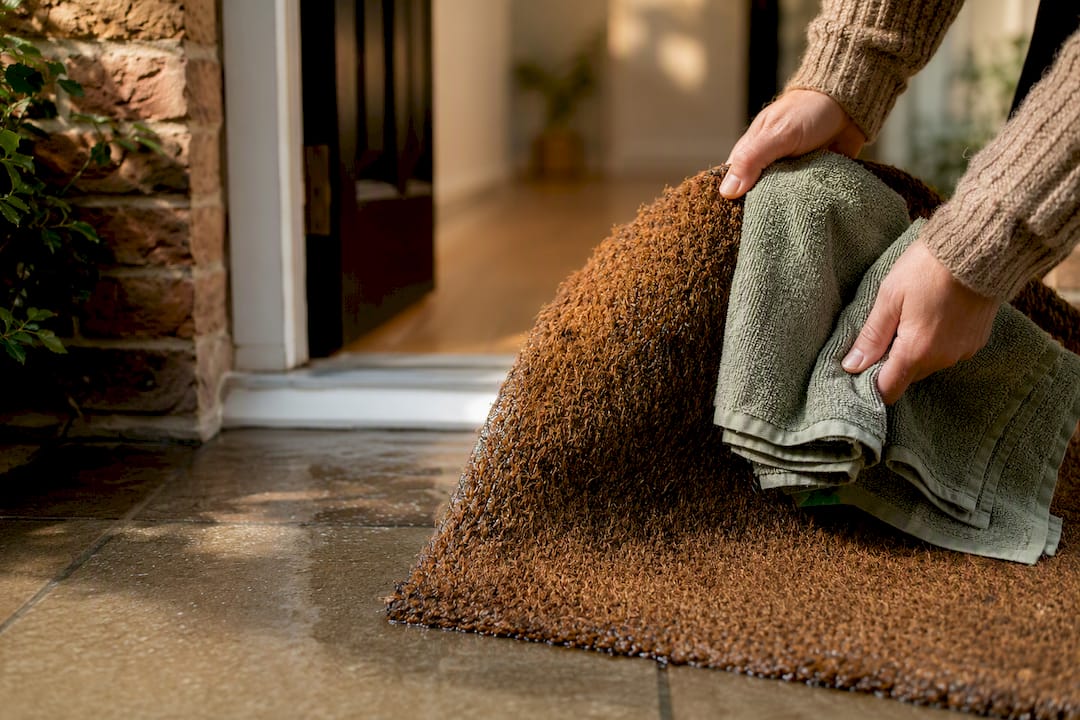
The safest way to clean a coir mat is to keep it dry: shake or beat out loose grit, vacuum with a brush attachment rather than a spinning beater bar, then treat any stains with a barely-damp cloth and mild detergent. Never soak the mat, run it through a washing machine, or steam-clean it. If it gets properly wet, dry it flat and in the shade as fast as you can, or hand it to a professional dry-cleaning service if it’s a large or expensive piece.
TL;DR:
- Shake and beat the coir mat outdoors weekly to remove tightly packed grit, and vacuum with a brush attachment to prevent fiber damage.
- Avoid soaking, machine washing, or steam cleaning, as prolonged wetness causes backing failure and fiber shrinkage.
- Treat stains with minimal water; dry mud should be brushed off when dry, and food or grease stains respond best to blotting and gentle cleaning.
- Act quickly to blot and dry the mat after soaking or water exposure, and always elevate it to drain moisture if it gets wet.
- Use physical barriers like rubber trays outside and additional indoor mats inside to extend the mat’s lifespan and reduce cleaning frequency.
Table of Contents
- Daily and weekly maintenance: shaking, beating and vacuuming safely
- How do you get stains out of a coir mat?
- What if my coir mat gets soaked?
- What’s the safest way to deep clean a coir mat, and what should you never do?
- How placement and rotation extend a mat’s life
- Choosing and pairing a coir mat with the right accessories
- What actually keeps a coir mat looking good
- Where Homable fits into your mat care routine
- Sources
- FAQ
Daily and weekly maintenance: shaking, beating and vacuuming safely
Coir doormats collect grit the way a magnet collects iron filings, mostly because that rough, springy fibre is designed to scrape shoes clean. That’s the whole point of the material. But it also means dirt works its way down between the fibres fast, and if you leave it there, it starts grinding away at the coir every time someone walks across it.
For a mat you can lift, the quickest fix is to take it outside, hold it by one edge, and give it a firm shake or two. Follow that with a few sharp beats against a wall, fence, or railing, the same way you’d knock dust out of a rug. Doing this outdoors matters. Beating a coir mat indoors just redistributes the same grit across your floor.
Vacuuming does the finer work that shaking can’t. Manufacturer guidance and industry care notes are consistent on the method: use a brush attachment or upholstery tool, and if your vacuum only has a rotating beater bar built in, set it to the highest setting so it barely makes contact with the pile. A spinning brush head running at full aggression can snag individual coir strands and pull them loose, leaving thin, balding patches that don’t grow back.
A weekly shake-and-vacuum routine is enough for most households. High-traffic entrances, especially ones near a gravel path or a muddy garden gate, benefit from doing it twice a week instead. Homes near main roads see more airborne grit settle into the fibres, so a slightly more frequent routine pays for itself in longer mat life.
Here’s the routine broken down:
- Take the mat outside and shake it vigorously by one edge.
- Beat it against a fence, railing, or wall a few times to dislodge trapped grit.
- Vacuum both sides using a brush attachment, working in the direction of the fibres.
- If your vacuum only has a beater bar, raise it to its highest position before running it over the mat.
- Return the mat to its spot once it’s fully dry and free of loose debris.
Pro Tip: Keep a stiff outdoor broom near the door specifically for mat duty. A quick sweep before the weekly deep shake stops grit building up into a stubborn, compacted layer that’s much harder to remove later.
How do you get stains out of a coir mat?
Coir stains fall into a handful of predictable categories, and each one responds better to a slightly different approach. The rule that applies across all of them: less water is always better, and rubbing almost always makes things worse by grinding the stain deeper into the fibre rather than lifting it out.
Mud is the easiest to deal with, counterintuitively, because coir actually prefers it dry. Wet mud smears into the weave and stains; dry mud crumbles out with a stiff brush. Wait until it’s fully dried, then brush it off outdoors and vacuum the residue. Trying to clean mud while it’s still wet almost always spreads it further into the fibres.
Food spills need the opposite response: speed. Blot immediately with a dry cloth or paper towel to lift as much as possible before it sets, then follow with a cloth barely dampened in a mild detergent solution, working from the outside of the stain inward.
For grease or oil, reach for something absorbent before you reach for anything wet. Sprinkle baking soda directly onto the mark and leave it for fifteen to twenty minutes so it can draw the oil up out of the fibre, then brush and vacuum it away. Only move to a damp detergent cloth if a faint mark remains.
Ink is trickier because most household solvents are too harsh for coir, and manufacturer care notes specifically warn against strong solvents and wet-shampooing natural fibre floor coverings. Dab, never rub, with a cloth dampened in a very mild detergent solution, and always test on an inconspicuous corner first to check the colour holds.
Pet accidents combine two problems: liquid and odour. Blot up as much moisture as you can immediately, then treat with a mild detergent solution, and finish with a light dusting of baking soda once the area is nearly dry to neutralise any lingering smell.
The general sequence for almost any stain looks like this:
- Deal with the mess while it’s fresh, blotting liquids straight away or waiting for solids like mud to dry completely.
- Choose the right first response: absorbent powder for grease, a barely-damp cloth for everything else.
- Test any cleaning solution on a small hidden area first, since some dyes react unpredictably to detergent.
- Work the treatment in gently with a soft brush, never scrubbing hard enough to fray the fibre.
- Blot away excess moisture with a dry towel, then leave the mat somewhere shaded and well-ventilated to air dry completely.
- Repeat once, lightly, if a faint mark remains, rather than pushing harder the first time round.
Pro Tip: Keep a small tin of baking soda by the door. It handles grease, food odour, and pet smells equally well, and it costs a fraction of a specialist stain remover.
What if my coir mat gets soaked?
Act within the first hour or two, because that’s the window where you can still stop water from settling permanently into the backing. Coir fibres are naturally hydrophilic, meaning they absorb moisture readily, and research into natural-fibre composites shows that prolonged dampness is exactly the condition fungal growth needs to take hold.

Lift the mat off the ground straight away rather than leaving it flat on wet concrete or tile, where moisture just sits underneath and has nowhere to go. If it has a PVC backing, prop it at an angle so trapped water can drain out rather than pool against that impermeable layer, since PVC-backed mats aren’t designed for prolonged outdoor soaking and the backing itself can trap moisture against the fibre. Blot both sides firmly with towels to pull out as much water as possible, then move the mat somewhere shaded with decent airflow. Direct sun can dry the surface fast while leaving the backing damp underneath, which sounds fine but actually locks moisture in.
Prevention beats triage every time. A rubber tray or a coarse scraper mat outside your main mat intercepts most of the rain and mud before it ever reaches the coir. Avoid siting a coir mat in a spot that stays permanently shaded and damp, like a north-facing porch that never sees direct sun, and check it periodically for soft, spongy patches or a musty smell, both early warning signs of trouble brewing underneath.
A few signals mean you’re past prevention and into damage territory:
- A persistent musty or sour odour that doesn’t fade after airing.
- Soft, spongy, or crumbling patches in the pile or backing.
- Visible mould spots, usually a dark grey, black, or greenish discolouration.
- Fibres that pull away in clumps rather than individual strands.
One dampness incident is rarely fatal to a coir mat, but repeated wetting and drying cycles are what break it down for good. That’s the pattern to watch for more than any single soaking.
What’s the safest way to deep clean a coir mat, and what should you never do?
A cautious surface wash is fine for coir; a full wet clean is not. The safe version works on a small section at a time: dampen a soft brush lightly in a diluted mild detergent solution, work it gently over one patch, then immediately blot with a dry towel before moving to the next section. The goal is contact with moisture measured in seconds, not minutes, and the mat should never feel properly wet when you’re finished, just faintly damp on the surface.
Some methods cause damage that can’t be reversed, and it’s worth knowing exactly why before you’re tempted to try a shortcut.
- Washing machines soak the fibres for an extended period and the backing almost never survives the drum’s agitation, warping, cracking, or delaminating entirely.
- Steam cleaners combine heat and moisture in a way that manufacturer guidance specifically flags as unsuitable, since it drives water deep into fibres that then struggle to dry out fully.
- Harsh solvents or bleach can strip natural colour from the coir and weaken the fibre structure at a chemical level, leaving it brittle.
- Prolonged soaking of any kind, even in plain water, causes the same shrinkage and backing failure as a machine wash, just more slowly.
For a large hallway runner or a mat that cost more than a quick replacement, dry-extraction cleaning is the professional route. Some manufacturer care sheets specifically list HOST dry-cleaning kits as an acceptable at-home option for stubborn stains, since they clean using an absorbent compound rather than liquid, leaving the fibre dry throughout.
How placement and rotation extend a mat’s life
Where you put a coir mat matters almost as much as how you clean it. A cheap outer scraper mat or a rubber boot tray positioned in front of your coir mat catches the worst of the grit and standing water before either ever reaches the fibre, which cuts down dramatically on how often you need to deep clean at all.
Flip or rotate the mat periodically if its design allows, so wear and fading spread evenly rather than concentrating on the exact spot where feet land most. Keep it out of direct, prolonged sunlight, since UV exposure bleaches the natural fibre colour and gradually weakens it, and avoid placing it somewhere that stays consistently humid, like an unventilated porch or a spot that never quite dries after rain.
A few concrete signs tell you it’s time to replace rather than repair:
- A musty smell that returns even after thorough airing.
- Visible thinning or bald patches where the pile has worn through.
- A backing that’s cracked, delaminating, or crumbling at the edges.
- Persistent discolouration that doesn’t lift with spot cleaning.
Pro Tip: Keep a coarse outer scraper mat right outside your main entrance year round, not just in winter. Most of the wear a coir mat suffers comes from grit, not water, and a scraper intercepts both.
Choosing and pairing a coir mat with the right accessories
Backing type decides where a coir mat can live. A PVC-backed mat traps moisture against the floor if it sits somewhere permanently damp, so it suits covered porches or indoor entrances better than an exposed outdoor step. A rubber-backed mat handles occasional outdoor dampness with slightly more resilience.
Thickness matters too. A thin coir mat scrapes shoes reasonably well but wears through faster under heavy daily traffic; a thicker weave costs a little more but holds its shape and scraping ability for considerably longer.
Pairing a coir mat with the right accessories cuts your cleaning workload substantially:
- An absorbent indoor mat positioned just inside the door catches residual moisture that the coir mat’s rough texture doesn’t fully absorb.
- A rubber tray mat placed outside collects standing water and grit before either reaches the coir fibres.
- Using two mats in sequence at busy entrances, an outer scraper and an inner coir mat, is one of the simplest changes that reduces cleaning frequency.
What actually keeps a coir mat looking good
Cleaning a coir mat properly comes down to one habit repeated consistently: keep it dry, and deal with dirt while it’s still loose rather than letting it grind in. Every method that fails, the machine wash, the steam clean, the long soak, fails for the same underlying reason. Water sits in the fibre for too long.
If there’s one change worth making this week, it’s putting a coarse scraper mat outside your coir mat and giving both a proper shake every weekend. It’s a five-minute habit that saves hours of stain treatment later.
— Cristiano
Where Homable fits into your mat care routine
Homable’s home accessories range exists to make exactly this kind of low-effort maintenance easier, not to sell you another chore. A rubber tray mat placed outside your coir mat intercepts the mud and rainwater that would otherwise soak straight into the fibres, and an absorbent indoor mat just inside the door mops up whatever gets past both.

If your current mat has already reached the cracked-backing or bald-patch stage described above, replacing it is usually cheaper than trying to nurse it back to life. Homable’s full range of doormats and household accessories is worth a browse before you commit to a specific style, and orders come with free shipping, with secure checkout throughout. Have a look at the current mat and tray options, and pick the combination that suits your entrance.
Sources
This guide draws on manufacturer care instructions and established industry cleaning advice rather than guesswork.
- Care & Cleaning guidance for natural fibre floor coverings (manufacturer PDF)
- Maintaining and cleaning coir mats | Rinos
- Easy Guide: How to Clean Coir Mats | Mats Nationwide
- Coir-based composite weathering and fungal attack (research paper)
Always check your own mat’s care label first, since backing and fibre blends vary between products.
FAQ
How do you refresh a coir doormat that looks tired?
Start with a thorough shake and beat outdoors to release compacted grit, then vacuum with a brush attachment worked in the direction of the fibres. Spot-treat any visible marks with a barely-damp cloth and mild detergent, then let it air dry fully before putting it back down.
What are the disadvantages of coir mats?
Coir sheds loose fibres for the first few weeks of use and can look worn faster than synthetic mats under very heavy, gritty traffic. It’s also more vulnerable to moisture damage than plastic or rubber mats, so it needs a drier location and more attentive care.
Are coir doormats washable?
Not in a washing machine. Coir mats tolerate light surface dampening for spot cleaning, but full washing or soaking causes shrinkage and backing failure that can’t be reversed. Dry methods, shaking, beating, and vacuuming, handle the vast majority of everyday dirt.
How do I remove water stains from a coir mat?
Blot the affected area with a dry towel first to draw out residual moisture, then leave the mat somewhere shaded and well-ventilated until it’s completely dry. If a faint tide mark remains once dry, a very lightly damp cloth with mild detergent worked gently over the mark usually lifts it.
Can I use a coir mat outdoors all year round?
It depends on the backing. A PVC-backed mat is better suited to covered or indoor entrances since it can trap moisture underneath, while a rubber-backed version handles occasional outdoor dampness with more resilience.