Cart
0
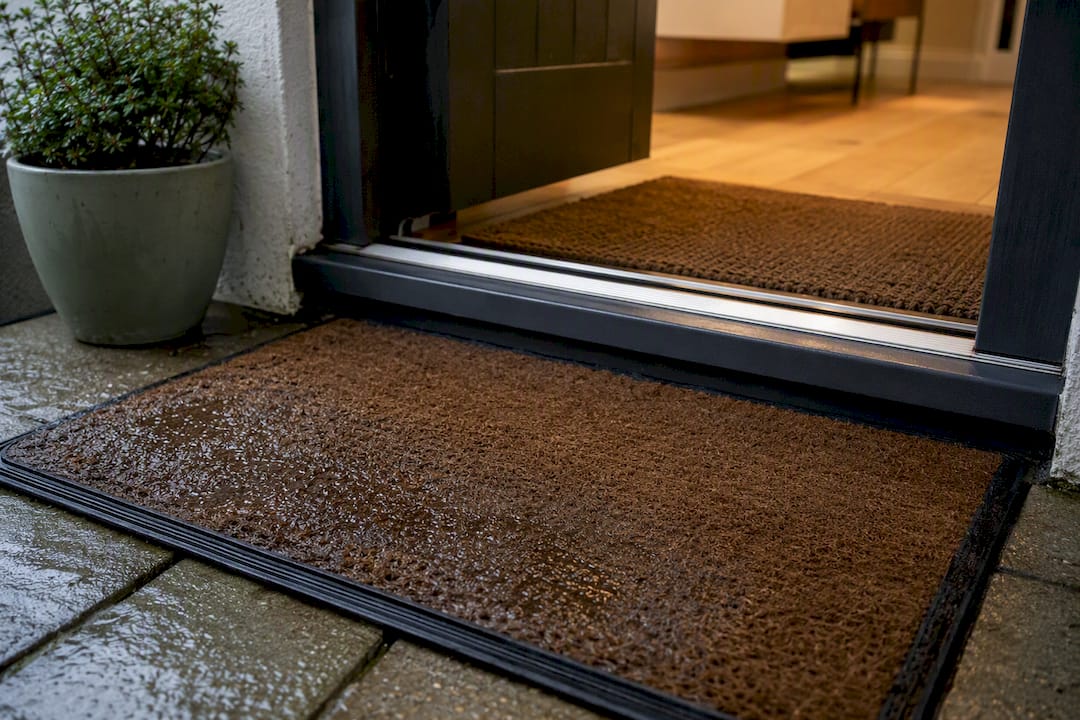
Most homes need two mats, not one: a tough scraper outside the door and an absorbent mat just inside it. The outdoor mat pulls off grit, mud and grime before it ever touches your floors, while the indoor mat catches the moisture that survives the trip. If you only have room or budget for one, put it inside, since industry advice consistently favours a two-mat system that handles dirt and damp as separate jobs.
TL;DR:
- Outdoor mats should be placed flush with the top step or landing, with about a finger’s width clearance from the door’s swing arc to prevent blocking.
- Rubber and recycled-rubber mats are best for exposed outdoor spots due to their durability in rain, snow, and grit, while coir is suitable only for sheltered areas.
- Indoor mats made of cotton or microfiber excel at absorbing water, helping prevent slip hazards and require regular cleaning, such as weekly vacuuming or washing.
- A doormat should cover at least 80% of the door’s width and have a depth of at least 450mm to ensure comfortable footing and effective dirt removal.
- Securing mats with non-slip backing or grippers is essential to prevent slipping, especially on slippery surfaces or with heavy wind, and heavier mats resist wind shifting better.
Table of Contents
- Doormat placement: outside, inside, or both?
- Which doormat material suits which spot?
- Doormat size guide: what dimensions actually work
- How to stop a doormat becoming a trip hazard
- Making your entrance look good without losing function
- Keeping mats clean: a maintenance routine that actually works
- Homable’s take on getting placement right
- Shop the right doormat for your entrance at Homable
- Sources
Doormat placement: outside, inside, or both?
The right answer depends on how exposed your entrance is. A covered porch that stays dry most of the year can rely heavily on an outdoor scraping mat, since it will spend its life removing loose grit rather than sitting in puddles. A front door with no overhang, or one that faces the weather side of the house, needs the indoor mat to do the heavier lifting, because rain will beat the outdoor mat before anyone’s foot does.
Positioning matters as much as choice of mat. An outdoor mat sitting too far from the threshold does nothing; one jammed right against the door can catch on the bottom edge or block it from opening fully. Aim for a small gap, roughly the width of a finger, between the mat’s edge and the door’s swing arc.
A few placement rules solve most of the common problems:
- Keep the outdoor mat flush with the top step or landing, never overhanging an edge where someone could catch a heel.
- Leave enough clearance for the door to swing its full arc without dragging or lifting the mat.
- In recessed entries or under a shared porch, use a slightly narrower mat than usual so it doesn’t spill into a neighbour’s path.
- On shared corridors or flats, check building rules before adding an outdoor mat. Some managing agents restrict what can sit in communal areas.
- On exposed steps, weight matters more than size. A light mat will slide or flip in wind long before it wears out.
Recessed doorways and porches with steps are the trickiest cases, mainly because there’s less flat ground to work with. If your step is narrow, a smaller, thinner mat that sits flush is safer than a plush one that adds height and becomes a stumbling point in low light.
Which doormat material suits which spot?
Material choice should follow exposure, not just looks. Coir is a genuinely good scraper for a covered outdoor spot. Its stiff bristles pull dirt from shoe treads effectively, but it holds moisture and breaks down quickly if it’s left permanently wet, so it’s a poor choice for an exposed step that catches every downpour.
Rubber and recycled-rubber mats handle exposure far better. They shrug off heavy rain, shed snow and grit, and tend to outlast most other materials in unsheltered entrances, which makes them the sensible pick for a north-facing door or a coastal home.
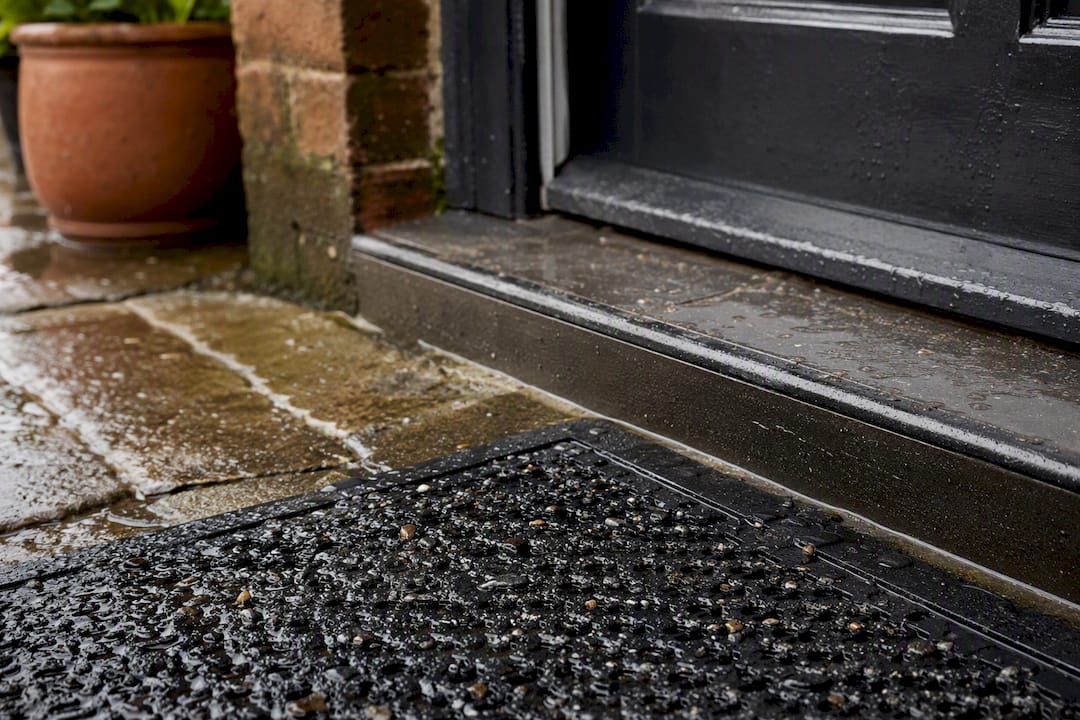
Washable synthetic covers, often polyester or recycled PET, sit somewhere in between. They’re forgiving in sheltered outdoor spots and excellent in hallways, and because they can be machine washed or hosed down, they suit households that want low fuss without the bulk of rubber.
Indoors, cotton, microfibre and other absorbent textiles do the job rubber can’t: soaking up water rather than just channelling it away. Homable’s own range of absorbent, non-slip mats is built around exactly this brief, giving busy hallways something that copes with wet shoes without turning into a slip risk.
- Coir: brush out debris weekly, let it dry fully between wet spells.
- Rubber: hose down or wipe clean; it needs almost no other care.
- Washable synthetics: machine wash on a cool cycle, air dry flat.
- Cotton/microfibre: shake out daily, wash weekly if the household is busy.
Pro Tip: If your porch faces north or stays damp for days after rain, skip coir entirely and put a washable synthetic mat outside instead. It won’t rot, and you can throw it in the machine when it starts looking tired.
Doormat size guide: what dimensions actually work
Sizing has a simple rule of thumb: your mat should cover at least 80% of the door’s width. For a standard door, choose a mat wide enough to cover most of the doorway, ensuring good coverage for foot traffic. Mats that are too narrow may appear like an afterthought and fail to cover the areas people typically walk through.
- Check width first. Measure the door, then buy a mat that meets or slightly exceeds 80% of that figure.
- Get the depth right. A mat needs enough depth, at least 450mm, for someone to plant a full foot before their next step lands on your flooring.
- Leave the door swing clear. Position the mat so its outer edge sits just short of where the door’s bottom corner travels.
- Size the layers separately if stacking. A base utility mat in a common size like 3x5 feet handles the doorway itself, while a decorative top mat can run smaller, roughly two thirds of the base mat’s footprint, since layering a robust base with a smaller decorative piece both looks intentional and protects the nicer mat from the worst of the wear.
How to stop a doormat becoming a trip hazard
A doormat that moves underfoot is more dangerous than no mat at all. Non-slip backing, or a rubber tray like this indoor and outdoor tray mat, stops sliding on tile, laminate or stone. If a mat lacks its own grip, grippers or double-sided tape underneath solve the problem cheaply.
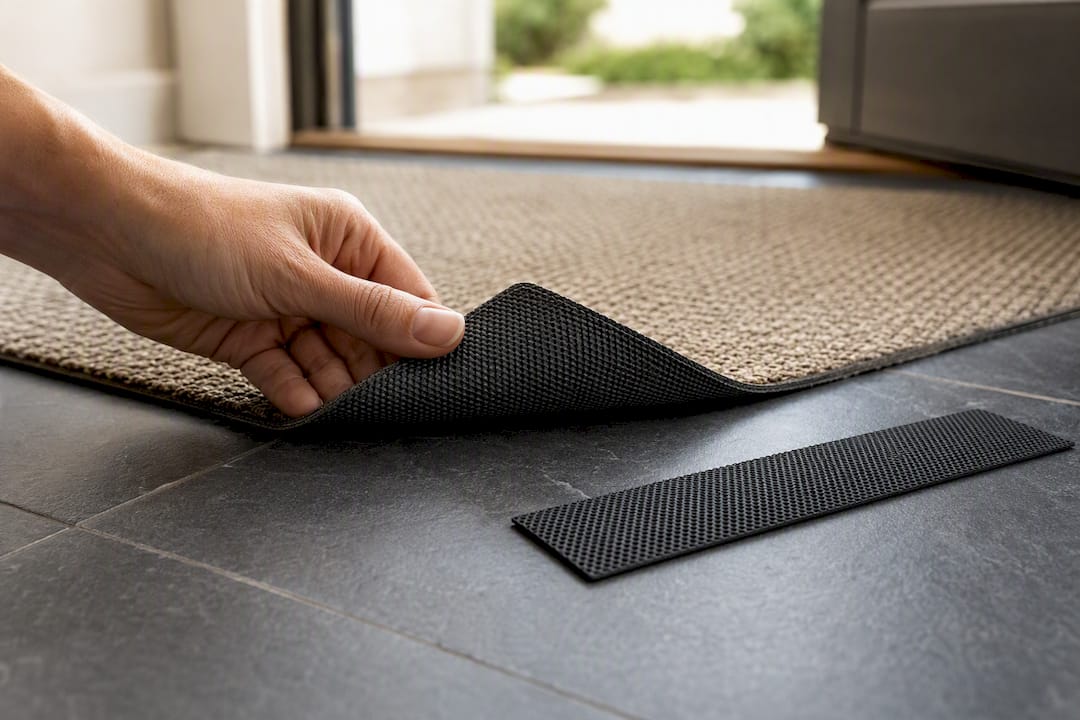
Curled corners are a quieter hazard. Where a door swings close to the floor, choose a flat, low-profile mat rather than a plush one that can catch the door or bunch up over time. On exposed or sloped approaches, weight helps more than grip alone. A heavier mat, or a heavy-duty rubber option, stays put in wind where a light one won’t.
Pro Tip: Before autumn winds pick up, press down on one corner of each mat with your foot and twist. If it shifts more than an inch, it needs grippers or replacing before the weather turns.
Making your entrance look good without losing function
Style and durability aren’t opposites here. A layered look, sturdy base mat underneath, smaller decorative mat on top, gives you both: the base does the scraping and absorbing while the top mat carries the personality. It also means the decorative mat wears more slowly, since it isn’t taking the brunt of every muddy boot.
Colour choices earn their keep too. Darker or patterned mats hide soil far longer in high-traffic spots, while warmer tones suit shaded or north-facing porches that can otherwise feel cold. Swapping just the top mat with the seasons, rather than the whole setup, keeps an entrance looking fresh without extra cost or waste. Homable’s entryway styling guide covers this layering approach in more depth if you want to plan a full seasonal rotation.
Keeping mats clean: a maintenance routine that actually works
A daily shake or quick brush keeps grit from working into fibres and cutting a mat’s lifespan short. Beyond that, care depends on material, and skipping it is usually why a mat fails early.
- Weekly: brush out coir, wipe down rubber, vacuum textile mats.
- Monthly: hose off outdoor rubber mats fully; Homable’s outdoor rug care advice applies just as well to mats, particularly on drying them flat rather than leaning them against a wall.
- Seasonally: machine wash synthetic covers, and check thresholds for gaps letting in draughts, something the door weatherproofing guidance from One Day Doors & Closets covers well if your entrance is exposed.
- Replace when: scraping performance drops, the mat stays damp for days after use, or it develops a persistent odour.
Winter calls for extra attention to rock salt, which grinds into fibres and speeds up wear; spring is the natural point for a full deep clean before the next wet season builds up again.
Homable’s take on getting placement right
Placement advice only helps if the product underneath it holds up. That’s why Homable’s range leans towards absorbent, non-slip and washable mats built for exactly the conditions covered here, wet hallways, exposed steps, high-traffic thresholds, rather than mats chosen purely on looks. The absorbent options built for busy homes reflect that priority directly.
If you’re starting from scratch, measure your door, note how exposed your entrance is, then match material to that exposure before colour or pattern. Everything else follows from there.
— Cristiano
Shop the right doormat for your entrance at Homable
Once you know your exposure and sizing, choosing the right mat gets simple. Homable’s range covers each scenario this guide has walked through: absorbent indoor mats for hallways that take the brunt of wet shoes, non-slip rubber trays for exposed steps and mudroom-style entries, and washable covers for sheltered porches that need an easy refresh.

Browse the full Homable doormat collection to find sizes and materials suited to your entrance, and get your entryway sorted before the next wet spell hits.
Sources
- Should your doormat go inside or outside? | Ideal Home
- Best front door mats to welcome guests (Real Simple)
- How to Choose and Place the Perfect Doormat for Curb Appeal | Homestery