Cart
0
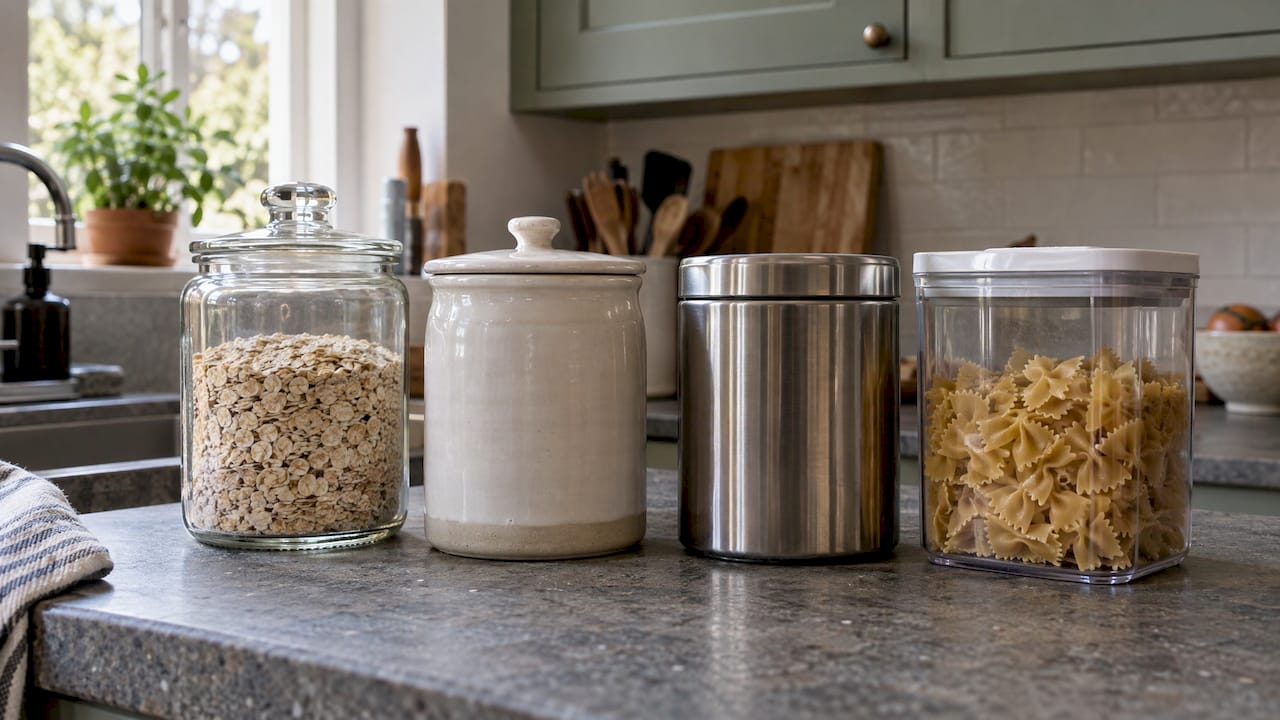
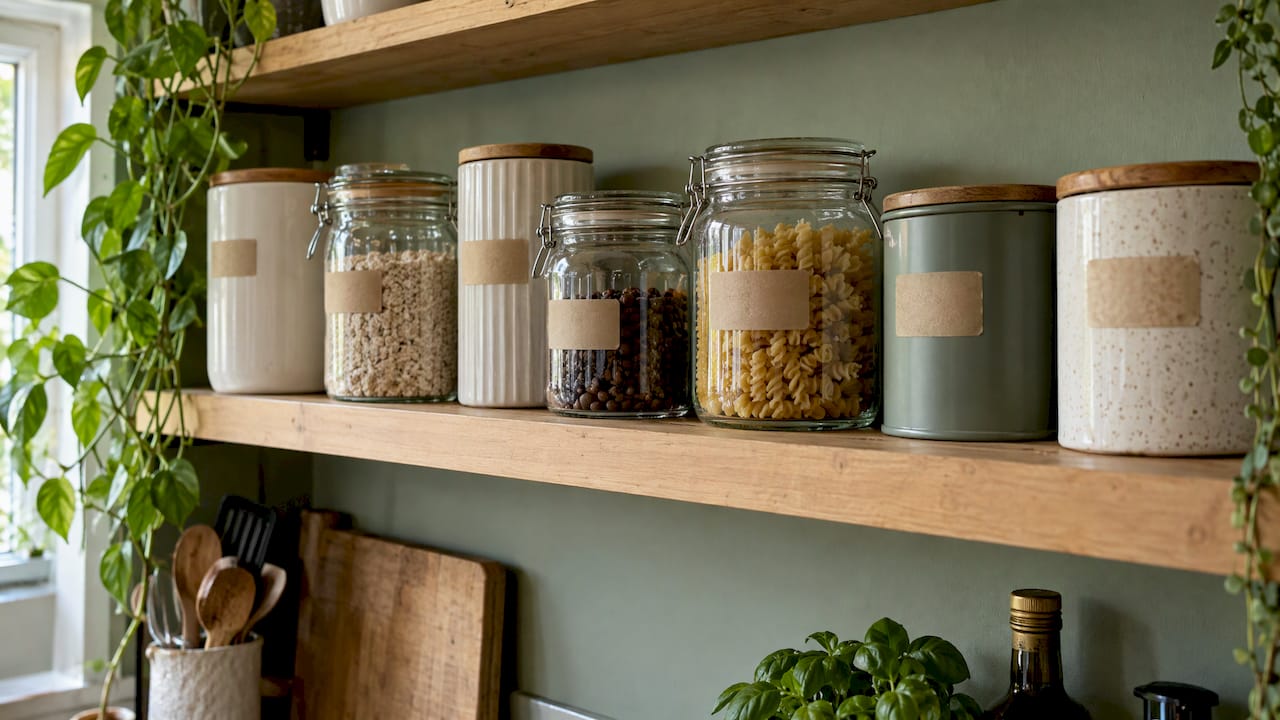
The best kitchen canister material depends on what you store and where the canister sits. Glass suits everyday ingredients you want to see, ceramic suits a countertop display of tea, coffee and sugar, stainless steel suits a busy family kitchen where things get knocked about, and plastic suits light, stackable cupboard storage. Whatever the body is made from, the lid and seal decide whether the canister is genuinely airtight, so judge both together.
TL;DR
- Glass: easy to clean, does not react with food and lets you see what is left. It is heavy and breakable.
- Ceramic: the most decorative option and good for countertops. It can chip, and it hides the contents.
- Stainless steel: tough and light on upkeep, but opaque, so you will want labels.
- Plastic: light, cheap and stackable. Check the care instructions and replace scratched or heat-damaged pieces.
- Airtight comes from the seal: look for a snug gasket, a flat clean rim and a lid that closes without force.
Table of Contents
- The four materials at a glance
- Glass canisters
- Ceramic canisters
- Stainless steel canisters
- Plastic canisters
- What makes a canister airtight
- Match the material to the food
- Is it safe for food? What to check in the UK
- Lids, extras and the bit people overlook
- Cleaning and caring for your canisters
- Which material for which kitchen?
- Perspective
- Browse kitchen storage at Homable
- FAQ
- Sources
The four materials at a glance
Most canisters sold in the UK are glass, ceramic, stainless steel or plastic, sometimes mixed, such as a glass jar with a metal or bamboo lid. This table shows how they compare on the points that matter day to day.
| Material | Visibility | Weight | Durability | Best for | Watch out for |
|---|---|---|---|---|---|
| Glass | Clear, you see levels at a glance | Heavy | Can break if dropped | Flour, rice, pasta, cereal, baking ingredients | Weight on high shelves |
| Ceramic | Opaque, needs a label | Heavy | Can chip or crack | Tea, coffee, sugar on display | Chipped glaze, lid fit |
| Stainless steel | Opaque | Medium | Very robust | Busy kitchens, families, daily-use staples | Dents, no view of contents |
| Plastic | Often clear | Light | Hard to break, but can scratch | Cupboard stacking, children’s snacks, big volumes | Scratches, heat, ageing |
The rest of this guide goes through each one, then covers the lid, food safety and care.
Glass canisters
Glass is the default choice for pantry staples because you can see what is inside. You know when the pasta is running low without opening anything, and a row of matching jars makes a shelf look organised.
Practically, glass is non-reactive, which means it will not absorb odours or flavours from spices, coffee or tea. Iowa State University Extension notes that glass, ceramic and stainless steel are non-reactive, non-toxic and easy to sanitise, with the trade-off that they can be heavy, breakable or costly.
Choose glass if:
- you cook from scratch and reach for flour, oats, lentils and rice often;
- you like to see stock levels;
- your shelves are at a sensible height, so a heavy jar is not a lifting problem.
Think twice if: the canister will sit in direct sunlight. Light can fade some ingredients, such as dried herbs and spices, so keep glass in a cupboard or away from the window.
If you pour often, a wide mouth makes scooping easier and cleaning simpler. A narrow neck looks elegant but is awkward for a measuring cup.

Ceramic canisters
Ceramic is where function meets décor. A glazed tea, coffee and sugar set looks right on a worktop in a way that few plastic containers do, and the thick body keeps light out. That makes ceramic a good partner for coffee and tea, which prefer darkness.
The same source puts ceramic in the same non-reactive group as glass, and the drawbacks are similar: weight and fragility. Ceramic can chip at the rim, and a chipped rim means the lid no longer sits flat, which weakens the seal. Run a finger around the rim now and then.
Because ceramic is opaque, label the front. A small tag or chalk-style label saves you from opening three identical jars to find the sugar.
Choose ceramic if:
- the canisters will live on show, so looks matter as much as capacity;
- you store tea, coffee, sugar or biscuits;
- you want a set that coordinates with the rest of your kitchen.
If you want the look, our ceramic tea, coffee and sugar jars are a straightforward way to start. Check the product page for the lid and sizing details before you order.
Stainless steel canisters
Stainless steel is the practical choice. It does not shatter, it does not chip, and it shrugs off the knocks of a busy household. It is also non-reactive and easy to sanitise, according to the Iowa State University guidance above.
Its main drawback is that you cannot see inside. Treat that as a small habit change: label the canister, or keep a consistent order so you know which is which.
Choose stainless steel if:
- the canisters will be handled by children or by several people;
- you want a modern, utilitarian look;
- you store items you use daily and do not need to monitor visually.
Steel can show fingerprints and, if the lid is thin, dent when dropped. Wipe with a soft cloth and avoid abrasive pads that scratch the surface.
Plastic canisters
Plastic wins on weight, price and stackability. Rigid, clear plastic canisters are convenient for cereal, pasta and snacks, especially in a tight cupboard where you want to stack in layers, and they will not smash on a tile floor.
The caution is age and wear. The Iowa State guidance says plastic is lightweight and inexpensive, but older, scratched or heated plastics raise concerns. In practice, follow the manufacturer’s care instructions, keep plastic away from the oven, hob and hot water cycles unless the label allows it, and retire containers that are cracked, cloudy or deeply scratched.
Choose plastic if:
- the canisters are for dry goods in a cupboard rather than on show;
- you need large volumes at low cost;
- weight or breakage is a concern, for example with children helping.
What makes a canister airtight
People searching for airtight canisters often focus on the jar. The seal matters more. Most airtight canisters rely on a flexible gasket, usually silicone or rubber, pressed between the lid and the rim. When it is compressed evenly, it keeps out moisture, air and pests.
A few clues tell you whether a canister is likely to seal well:
- A gasket that is soft and fits snugly. A stiff, cracked or stretched ring will not hold.
- A flat, smooth rim. Nicks or chips stop the lid sitting flush, which is why ceramic and glass rims are worth checking.
- A lid that clamps or screws down firmly without forcing. A lid that rattles is not sealing.
- Clean, dry surfaces. Crumbs of flour or sugar on the rim can stop a gasket closing properly.
A simple home test: fill the canister, close the lid, then tilt it gently over a bowl. If you hear or see anything escaping, or the lid lifts under light pressure, the seal is not doing its job.
If the lid is wood or bamboo with a silicone ring, the same rules apply. The ring does the sealing, the natural material is decoration and grip.
No canister rescues food that went in with a problem. If a bag of flour already has pantry pests or moisture, sealing it in only keeps the issue contained. Put in dry, fresh ingredients and the canister helps keep them that way.
Match the material to the food
Rather than one material for everything, many kitchens do well with a mix. Here is a practical way to think about it.
| What you store | Good material | Why |
|---|---|---|
| Flour, sugar, rice, pasta | Glass or stainless steel | Easy to clean, easy to refill, a firm seal keeps moisture out |
| Coffee beans and tea | Ceramic or stainless steel | Opaque bodies keep light away |
| Cereal, crackers, snacks | Plastic or glass | Wide opening, light, stackable |
| Biscuits, treats | Ceramic | Looks good on show, easy to reach |
| Herbs and spices | Small glass jars in a cupboard | Visible but out of the light |
| Baking ingredients | Glass | Quickly see what you are short of |
Two habits matter more than the material. Keep dry ingredients somewhere cool and dry, away from the cooker and kettle, and do not top up an old batch with new stock without wiping the canister clean first.
Is it safe for food? What to check in the UK
Any canister that touches food should be made for that purpose. Trading Standards guidance for England and Wales through Business Companion explains that buyers can look for the wine glass and fork symbol or a “for food contact” marking on food-contact items. It is a quick check to make on the base, the box or the product listing.
Ceramic has its own rule. The Ceramic Articles in Contact with Food (England) Regulations 2006 limit how much lead and cadmium can transfer from ceramic articles into food. Sold new through a reputable shop, a ceramic canister intended for food should meet that standard. Be cautious with unmarked, very old or decorative-only pieces: keep them for display, not for storing food.
A few other sensible checks:
- Choose canisters described as suitable for food storage, not just ornaments.
- Avoid using a decorative piece with a damaged glaze for food.
- Replace plastic canisters that are cracked, warped or cloudy.
- Keep the box or listing in case you need to confirm what the item is made from.
Lids, extras and the bit people overlook
The lid is often the weakest part. Glass jars may come with metal, plastic, bamboo or cork-style lids, and each behaves differently. Metal and plastic lids with a silicone ring tend to give the tightest seal. Natural lids look attractive but may be better for items you open often, such as sugar or tea bags, rather than for long-term flour storage.
Some other features are worth having:
- A wide mouth for scoops and hands.
- A flat top if you plan to stack canisters.
- A matching size range, so your tall and short jars look planned rather than random.
- A space for labels, which is essential for opaque materials.
If you are planning the worktop around your canisters, our guides to kitchen countertop decor and decorative storage solutions show how to group jars so they look deliberate and stay within reach.
If the canisters are part of a wider kitchen refresh, it helps to think about the surfaces around them too. A comparison of kitchen cabinet materials shows how durability and upkeep trade off in the same way as they do for canisters.
Cleaning and caring for your canisters
Good care keeps the seal working for years.
- Empty and wipe first. Tip out any loose crumbs or powder.
- Remove the gasket. Take out the silicone or rubber ring so you can clean the groove behind it.
- Wash in warm soapy water. Use a soft brush for corners and the rim.
- Dry completely. Leave the body, lid and gasket to air-dry before reassembling. Damp storage is how mould and stale smells start.
- Reseat the gasket evenly, so it sits flat with no twists.
- Check the rim and ring before refilling. Replace a gasket that has become brittle, stretched or persistently smelly.
Check the manufacturer’s instructions before using the dishwasher. Glass bodies are often dishwasher-safe, but gaskets, wooden lids and some plastics may not be. Ceramic with metallic glaze details may also prefer hand washing. Always follow the label for your particular canister.
Which material for which kitchen?
- Small kitchen, tight cupboards: clear plastic or square glass canisters that stack.
- Family kitchen: stainless steel or sturdy plastic for daily staples, glass for baking.
- Open shelving or display worktop: ceramic or glass with attractive lids, grouped in threes.
- Keen bakers: large-mouth glass for flour and sugar, labelled with the date you filled them.
- Tea and coffee lovers: ceramic or steel, kept away from the kettle and sunlight.
Perspective
We think the best canister is the one that gets used, and that usually means it looks good enough to stay on the worktop and works well enough that you stop thinking about it.
That is why we lean towards ceramic for the tea, coffee and sugar corner of a kitchen. It brings colour and texture to a worktop, it keeps light out, and it pairs with the warmer, tactile look many people are choosing for their kitchens now. For bulkier ingredients, a clear glass or sturdy practical option alongside it makes the whole set work harder.
Our approach to home accessories is design first, without losing sight of daily use. A canister should earn its space, so we would rather you pick two or three well-chosen pieces in a material you enjoy handling than fill a shelf with a mismatched set.
Cristiano
Browse kitchen storage at Homable
If you are ready to pull the worktop together, start with our Kitchen collection, where you will find kitchen accessories chosen for design, quality and affordability. The ceramic tea, coffee and sugar jars are a good place to begin if you want a coordinated look for the drinks corner.

Free shipping applies on orders over £100, which makes it easy to pick up canisters alongside other kitchen pieces in one order. You can see everything we offer on the Homable homepage.
FAQ
What is the best material for an airtight kitchen canister?
Glass and stainless steel are the most popular choices for everyday dry foods because they are easy to clean and do not react with food. The material matters less than the seal: look for a snug silicone or rubber gasket and a lid that closes firmly. Pick glass if you want to see the contents and steel if you want robustness.
Are ceramic canisters safe for food?
Ceramic made for food use and sold new in the UK must meet limits on the transfer of lead and cadmium under the Ceramic Articles in Contact with Food (England) Regulations 2006. Look for a food-contact marking, and avoid using chipped or purely decorative pieces to store food.
How can I tell if a canister is really airtight?
Check that the gasket is soft, intact and seated evenly, that the rim is clean and free of nicks, and that the lid closes snugly. Fill it, close it and tilt it over a bowl: any leak or loose lid means the seal needs attention or the gasket needs replacing.
Can I put canisters in the dishwasher?
It depends on the canister. Glass bodies often can go in, but gaskets, wooden or bamboo lids and some plastics are better washed by hand. Take out the gasket, wash it separately in warm soapy water, dry everything fully and follow the manufacturer’s instructions for your set.
Is plastic or glass better for storing flour and sugar?
Both work if the lid seals well. Glass is easy to sanitise, shows the level and does not scratch easily, while plastic is lighter and harder to break. If your plastic canisters are scratched, cloudy or have been heated, replace them rather than keep using them for food.
Sources
- Safe Food Storage Containers, Iowa State University Extension AnswerLine
- Food contact materials, Business Companion
- The Ceramic Articles in Contact with Food (England) Regulations 2006, legislation.gov.uk
- 6 Cabinet Materials for a Kitchen Remodel