Cart
0
TL;DR:
- Accessories are essential styling elements that define mood, proportion, and personal expression beyond decoration. In 2026, intentionality is key, with statement belts and bold jewelry playing central roles in outfit construction. Properly matching accessories to body zones and occasion enhances visual flow, ensuring a polished and deliberate look.
Accessories are the decisive layer in styling that transforms an outfit from assembled to intentional. The role of accessories in styling is not decorative afterthought. Accessories act as visual punctuation, managing contrast, refining proportions, and communicating mood without a single word being spoken. Whether you reach for a silk scarf, a structured leather bag, or a bold cuff bracelet, each choice shifts how your entire look is read by the room. Fashion-forward dressing in 2026 demands you treat accessories as central decisions, not finishing touches.
How do accessories influence outfit perception?
Accessories guide the eye and reinforce proportion through structure, colour, and texture, even when the clothing underneath stays exactly the same. A relaxed linen shirt reads entirely differently when paired with a wide statement belt versus a delicate gold chain. The belt signals intention and structure. The chain signals ease and softness. That shift happens without changing a single garment.
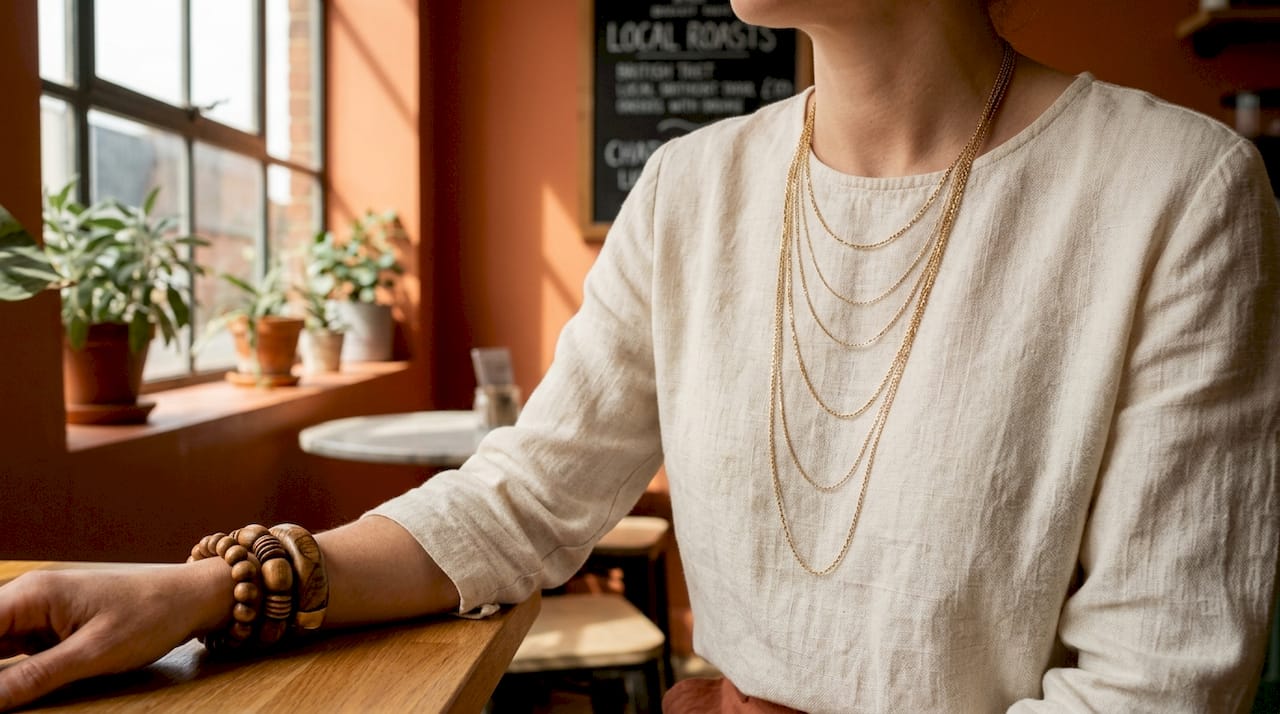
Colour plays an equally decisive role. A monochrome outfit gains tension and personality from a single contrasting accessory. Texture does the same work. Pairing smooth silk with woven rattan, or polished metal with rough linen, creates the kind of visual interest that makes an outfit memorable rather than merely correct.
Formality is also modulated through accessories. A structured leather bag with professional attire reads as polished and considered. Swap it for a canvas tote and the same blazer becomes weekend-ready. This is why accessories carry so much weight in styling: they are the fastest and most flexible tool for shifting tone.
- Structure: Belts, structured bags, and architectural jewellery add formality and definition
- Colour: Contrasting or tonal accessories shift mood and visual energy
- Texture: Mixed materials create depth and prevent an outfit from reading as flat
- Scale: Oversized pieces draw attention; delicate ones recede and support
Pro Tip: When mixing textures, limit yourself to two contrasting materials per look. Three or more competing textures create noise rather than interest. Pair one smooth element with one tactile one and let the contrast do the work.
What are the key 2026 accessory trends redefining styling?
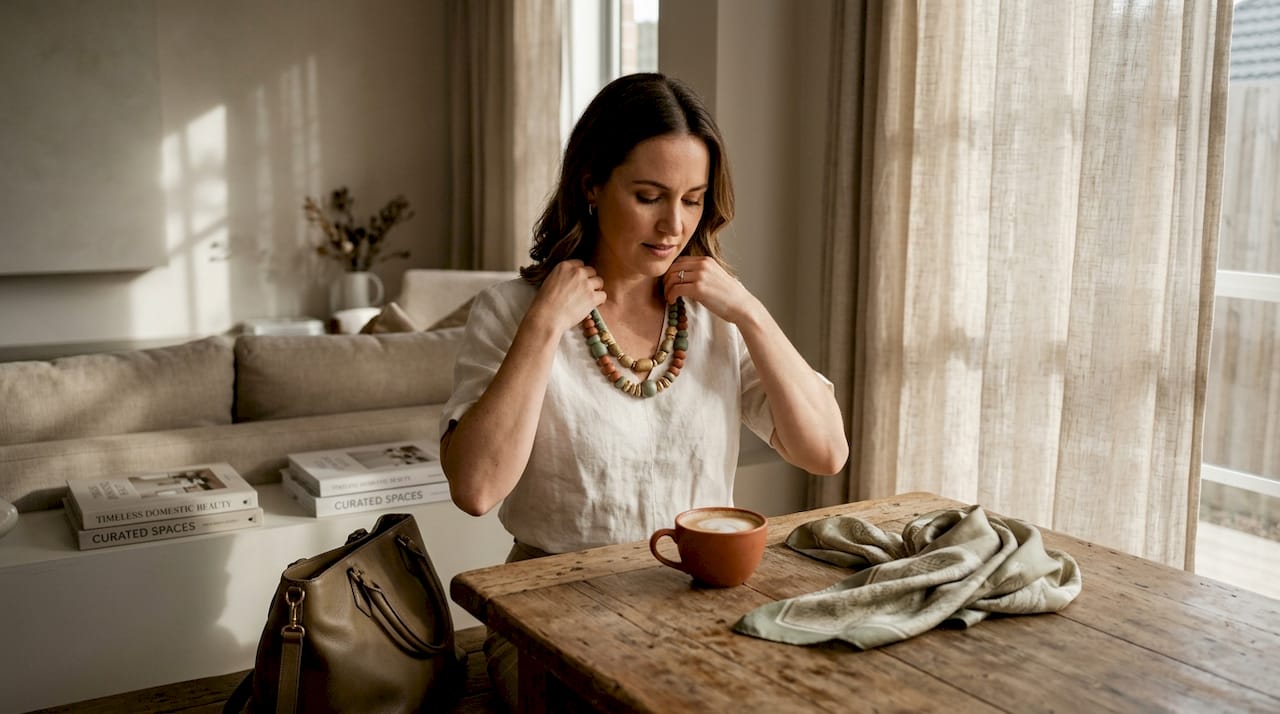
The most significant shift in 2026 is that accessories now do the heavy lifting in outfit construction. Personal stylist Jordan Stolch identifies statement belts and silk scarves as the standout transformative pieces of Summer 2026, capable of adding colour and personality to even the most pared-back wardrobe. This is not a trend about buying more. It is a trend about choosing more deliberately.
The coastal aesthetic has moved from niche to mainstream, bringing artisanal textures such as woven straw, shell detailing, and hand-painted ceramics into everyday accessory choices. Extroverted brooches have returned with force, worn on lapels, scarves, and even handbags. These pieces carry cultural weight and personal narrative in a way that fast-fashion accessories rarely achieve.
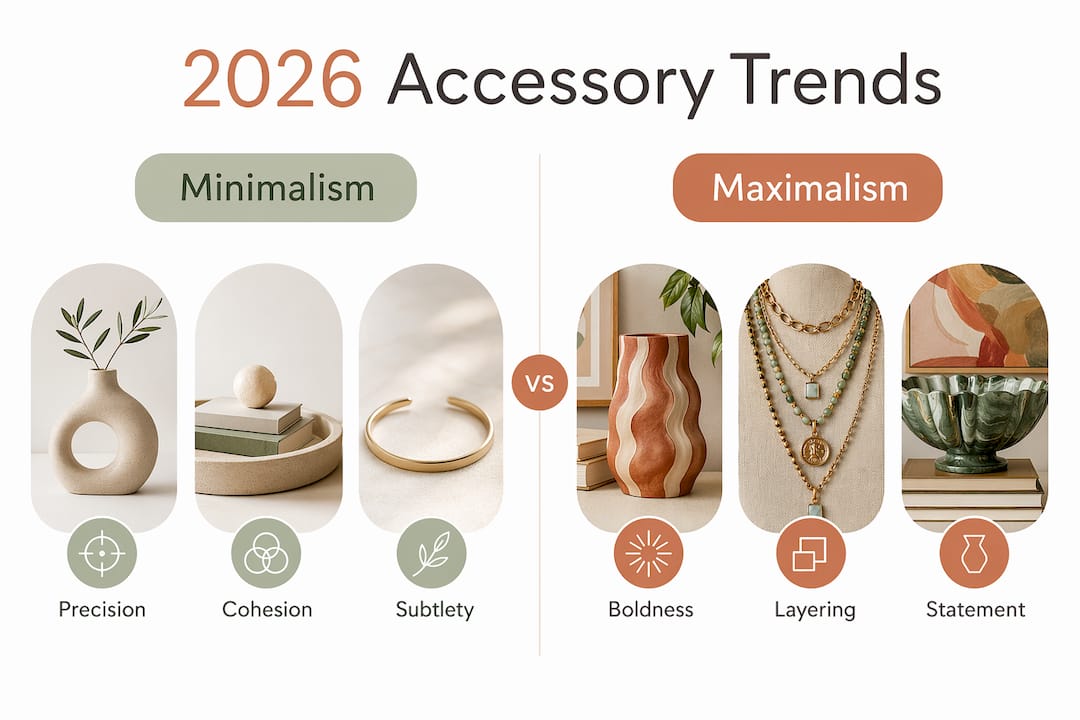
Jewellery in 2026 has moved decisively towards bold cuffs, chunky bracelets, and layered necklaces, with maximalism favoured over restraint for summer looks. This does not mean wearing everything at once. It means committing to one bold jewellery statement and building the rest of the look around it.
The broader cultural shift is clear. Accessories in 2026 function as individuality-driven style statements rather than add-ons selected after the outfit is already decided. The most stylish people are choosing the accessory first and dressing around it. That inversion is worth taking seriously.
How to use accessories to highlight body zones and focal points
The concept of body zones is one of the most practical frameworks in accessory styling. Every outfit has natural focal points: the face, the neckline, the waist, and the hands. Accessories placed at these zones either reinforce the outfit’s visual flow or compete against it. The goal is always reinforcement.
Here is a practical approach to working with body zones:
- Identify your intended focal point. Decide before you dress where you want the eye to travel first. A strong neckline calls for a statement necklace. A defined waist calls for a belt. Do not try to highlight everything simultaneously.
- Choose scale to match the zone. Delicate pieces at the neckline suit fine-boned frames and minimal outfits. Chunky pieces suit bolder clothing and stronger silhouettes. Scale mismatch is the most common reason accessories feel wrong on an outfit.
- Use colour to direct attention. A bright or contrasting accessory at the waist pulls the eye there. A neutral accessory at the wrist supports without competing. Colour placement is directional.
- Reinforce rather than compete. Styling zones work best when accessories support visual flow rather than pulling in different directions. If your neckline is already detailed, keep jewellery minimal. If your outfit is plain, the accessory can carry more weight.
- Edit before you leave. Stand back and identify which accessory is doing the most work. That is your focal piece. Everything else should support it quietly.
Hair accessories deserve specific attention here. Lightweight hair accessories suit fine hair to avoid drooping, while thicker hair supports heavier, more voluminous pieces. Artisan-made barrettes range from €15 to €45, while fast-fashion options sit between €3 and €8. The price difference often reflects weight and construction quality, both of which affect how the piece sits and holds through the day.
Pro Tip: If you have fine hair, choose resin or acetate barrettes over metal-heavy styles. They hold their position without weighing the hair down, and they photograph far better in natural light.
Minimal vs maximal accessory styling: which approach works best?
Both minimalism and maximalism are legitimate accessory strategies. The question is not which is better, but which serves the occasion, the outfit, and the message you want to send.
| Approach | Best for | Key principle | Example |
|---|---|---|---|
| Minimalism | Professional settings, formal occasions, capsule wardrobes | One or two cohesive pieces that complement without competing | A single gold chain with a tailored blazer and structured bag |
| Maximalism | Creative events, summer styling, personal expression | Bold, layered, contrasting pieces that become the outfit’s centrepiece | Stacked bracelets, a printed scarf, and statement earrings together |
Minimalism in accessory styling is not about wearing less for its own sake. It is about choosing pieces that are so precisely right that nothing else is needed. A single well-chosen watch, a leather belt in the exact right width, or a pair of earrings that frame the face without overwhelming it. Each piece earns its place.
Maximalism, done well, requires the same level of intention. The difference is that one accessory acts as the focal star while others play supporting roles. Wearing bold cuffs, layered necklaces, and a statement belt simultaneously works when the outfit itself is simple. A plain white dress or a monochrome co-ord gives maximalist accessories the clean backdrop they need to read as deliberate rather than chaotic.
The most common mistake in both approaches is inconsistency of formality. Matching accessory formality to the outfit is the single most reliable way to achieve a polished result. A crossbody bag with a cocktail dress, or a beaded clutch with jeans, creates a visual dissonance that no amount of styling skill can fully resolve. Formality alignment is not a rule to break until you understand exactly why it exists.
Key takeaways
Accessories are not optional additions to an outfit. They are the mechanism through which outfit tone, proportion, and individuality are communicated with precision.
| Point | Details |
|---|---|
| Accessories define outfit tone | Structure, colour, and texture choices shift formality and mood without changing any garment. |
| Body zones guide placement | Identify one focal point per outfit and direct accessories there to reinforce visual flow. |
| 2026 trends favour intentionality | Statement belts, bold jewellery, and artisanal textures are chosen first, not added last. |
| One focal piece per look | Choose one star accessory and let all others support it to avoid visual clutter. |
| Formality alignment is non-negotiable | Match accessory formality to the occasion and outfit to achieve a coherent, polished result. |
Why I stopped treating accessories as an afterthought
I spent years finishing an outfit and then grabbing whatever was closest. A watch here, a bag there, earrings chosen in thirty seconds. The outfits were fine. They were never memorable. The shift came when I started treating the accessory decision with the same seriousness as the clothing decision, sometimes more.
What I have found is that most people under-edit rather than over-accessorise. They add pieces without removing anything, and the result is visual noise rather than visual interest. The edit is the skill. Putting on three things and taking one away before you leave is a habit that changes everything about how a look reads.
The other lesson that took time to learn: accessories carry personal narrative in a way that clothing rarely does. A brooch inherited from a relative, a bracelet bought on a trip, a scarf in a colour you love. These pieces do not just complete an outfit. They communicate something about who you are that a well-cut blazer simply cannot. That is the real importance of accessories, not the trend cycle, but the personal vocabulary you build over time.
The practical advice I give most often is this: buy fewer accessories and choose them more carefully. One well-made belt will outlast and outperform ten cheap ones. One pair of earrings you genuinely love will be worn constantly. Quality and personal resonance beat quantity every time.
— Cristiano
Discover more styling inspiration at Homable
If this article has shifted how you think about accessories, the same principles apply directly to your living spaces. The way a well-chosen ornament anchors a shelf, or a textured rug defines a room, follows exactly the same logic as accessory styling in fashion.
Homable brings that same curatorial thinking to home accessories, with a carefully selected range of decorative pieces, storage solutions, and finishing details designed for modern interiors. Whether you are refreshing a single room or rethinking your whole space, the home styling trends for 2026 on the Homable blog are worth exploring. For a practical starting point, the tips for stylish home accessories guide applies the same edit-first thinking to interior styling. Browse the full collection at Homable and find the pieces that make your space feel finished.
FAQ
What is the role of accessories in styling?
Accessories complete and transform outfits by acting as visual punctuation that clarifies mood, adjusts proportion, and communicates personal style. They are not optional additions but decisive elements that determine how an outfit is read.
How do accessories enhance an outfit without overwhelming it?
Choose one focal accessory as the centrepiece and keep all other pieces subtle and supportive. Styling guides recommend simplifying accessory focus to one star piece to maintain clarity and avoid visual clutter.
What accessories are trending for summer 2026?
Statement belts, silk scarves, bold cuffs, chunky bracelets, layered necklaces, and artisan-made barrettes are the standout pieces for Summer 2026. Stylist Jordan Stolch identifies these as the accessories doing the most transformative work this season.
When should I choose minimal over maximal accessory styling?
Minimalism suits professional settings, formal occasions, and capsule wardrobes where cohesion and precision matter most. Maximalism works best for creative events, summer looks, and occasions where personal expression takes priority over convention.
Does accessory formality really matter that much?
Formality alignment between accessories and outfit is one of the most reliable indicators of a polished look. A structured leather bag with professional attire and a clutch for evening wear both signal that the styling was considered rather than assembled at random.