Cart
0
TL;DR:
- Accessories significantly influence mood, stress levels, and home value beyond mere decoration. Thoughtful choices like plants, textiles, and lighting create a personalized, calming, and functional environment. Small, ongoing updates foster a home that feels alive, adaptable, and genuinely loved.
Most people buy a sofa, hang a few pictures, and consider the job done. Yet the accessories you choose, from the throw on your armchair to the plant on your windowsill, do far more than fill empty corners. They shape how you feel when you walk through the door, influence your stress levels after a long day, and can even affect how much your home sells for. This guide unpacks the real reasons accessorising matters, explores different styling approaches, and gives you a clear, practical route to transforming any living space into somewhere that genuinely works for you.
Table of Contents
- The real impact of accessorising: Beyond aesthetics
- Top reasons to accessorise your living spaces
- Minimalism, maximalism, and the balance in accessorising
- How to accessorise with purpose: Steps for any living space
- What most guides miss: The underestimated power of small changes
- Start your living space transformation with Homable
- Frequently asked questions
Key Takeaways
| Point | Details |
|---|---|
| Accessories boost wellbeing | Items like plants and natural materials can reduce stress and make rooms more pleasant. |
| Increase home value | Accessorised spaces often sell for higher prices and attract buyers faster. |
| Express personal style | Accessories are the easiest way to add individual taste and character to your home. |
| Adapt to trends easily | Changing accessories lets you refresh your style without major investment. |
| Balance function and style | Well-chosen pieces can enhance both the look and practical use of a living area. |
The real impact of accessorising: Beyond aesthetics
The word “accessories” tends to conjure images of decorative knick-knacks that gather dust. That assumption undersells them entirely. The right accessories create an environment that actively supports your mood, your concentration, and your sense of calm.
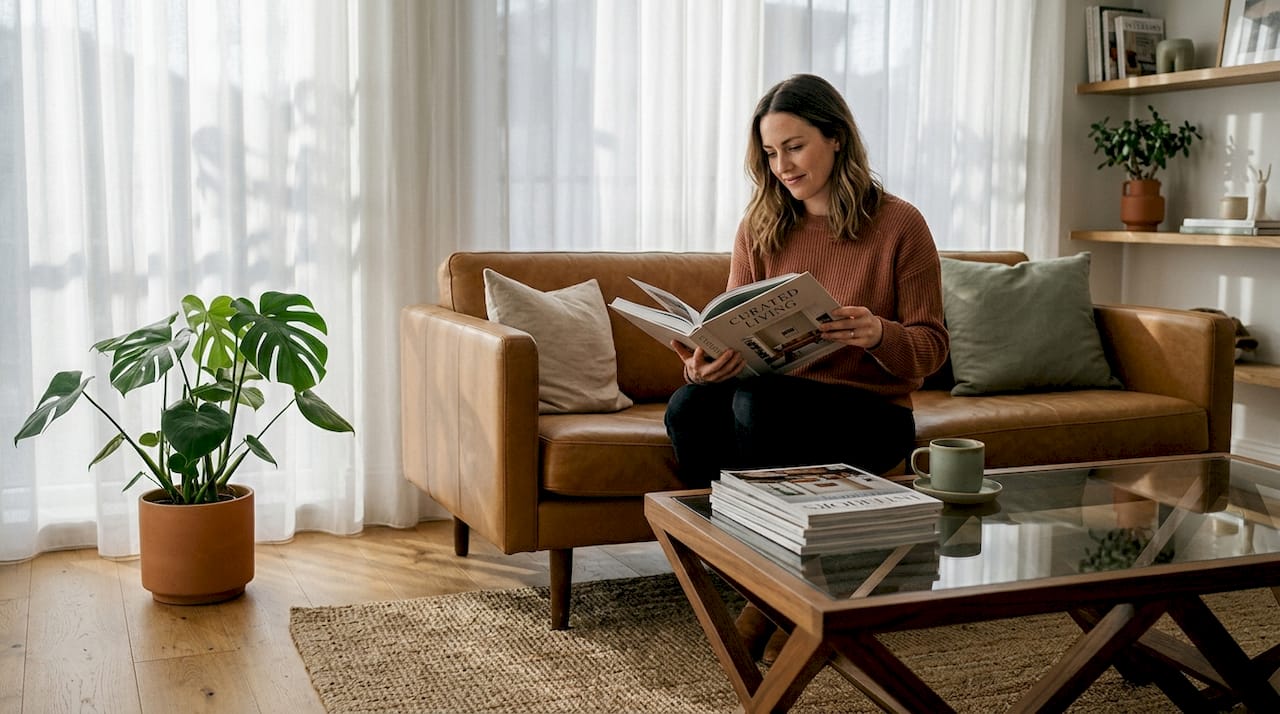
Research confirms this is not simply a matter of personal preference. Biophilic accessories such as plants, natural textiles, and wooden objects improve perceived restorativeness, lift positive affect, and measurably reduce stress. In practical terms, adding a few plants and a woven throw to your living room is not just aesthetically pleasing, it is genuinely good for your mental health.
The financial argument is equally compelling. Staged homes with decor sell for roughly 10% more and move faster than bare, unfurnished properties. Buyers respond emotionally to spaces that feel considered and liveable. Accessories are a core part of that story.
Here is a snapshot of the key benefits that come from thoughtful accessorising:
- Mood regulation: Warm lighting and soft textiles create a sense of safety and relaxation.
- Stress reduction: Natural materials and greenery lower cortisol and encourage calm.
- Identity expression: Accessories communicate who you are without a single word.
- Practical improvement: Storage accessories, mirrors, and rugs all contribute to how a room functions.
- Financial uplift: Well-accessorised rooms attract higher offers and faster sales.
“A home that feels considered is a home that feels cared for. Buyers, guests, and the people who live there all respond to that sense of intention.”
Understanding these effects is the foundation of boosting value and wellbeing through considered interior choices. It shifts accessorising from a cosmetic exercise into something with real, lasting returns.
Pro Tip: Rotate small accessories seasonally. Swapping out cushion covers, candles, and botanical arrangements every few months keeps your living space feeling fresh without the cost or effort of a full redesign.
Top reasons to accessorise your living spaces
Now that you see the measurable impact, let us explore the top reasons for accessorising and how these relate to real-world home benefits.
There is a reason interior designers spend more time selecting accessories than almost any other element of a scheme. These pieces work on multiple levels simultaneously, and the cumulative effect is far greater than any single item suggests.
1. Personal expression and identity
Accessories are the easiest, most affordable way to express who you are in a space. Your choice of artwork, ceramics, or books says something specific about your personality and taste. Unlike structural changes, accessories can evolve as you do. Personalising your space builds a genuine sense of ownership and belonging that makes coming home feel like coming home.
2. Acoustic and visual comfort
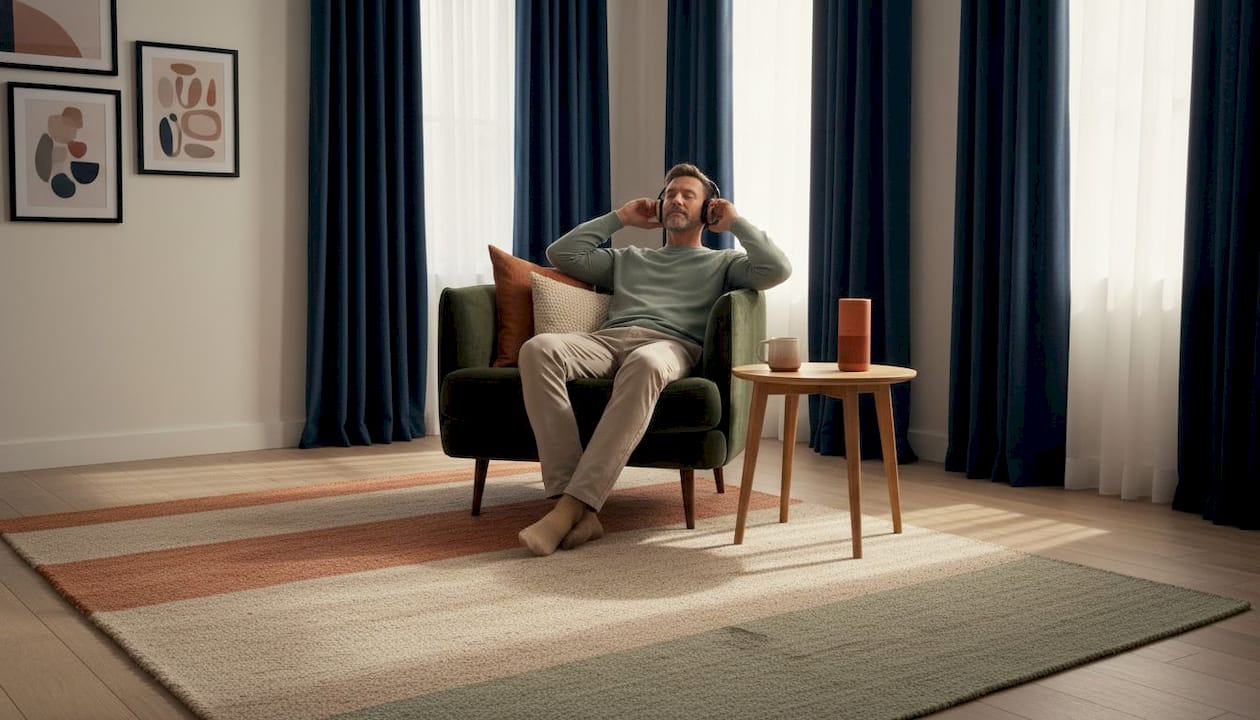
Soft furnishings such as rugs, curtains, and cushions absorb sound and reduce echo in hard-floored rooms. This is especially relevant in open-plan living areas where noise can build and feel exhausting. The visual interest created by layering textures also reduces the sterile, flat appearance that unfurnished rooms often have. A room with multiple textures feels warmer and more inviting, even at the same temperature.
3. Mental health and stress relief
The evidence for biophilic design is growing steadily. Plants and natural materials improve restorativeness and reduce stress in both domestic and workplace environments. Even indirect references to nature, such as botanical prints, linen fabrics, or wooden bowls, can trigger a calming response. This is not abstract theory; it is something you can put to work in your own home this week.
4. Improved layout and functionality
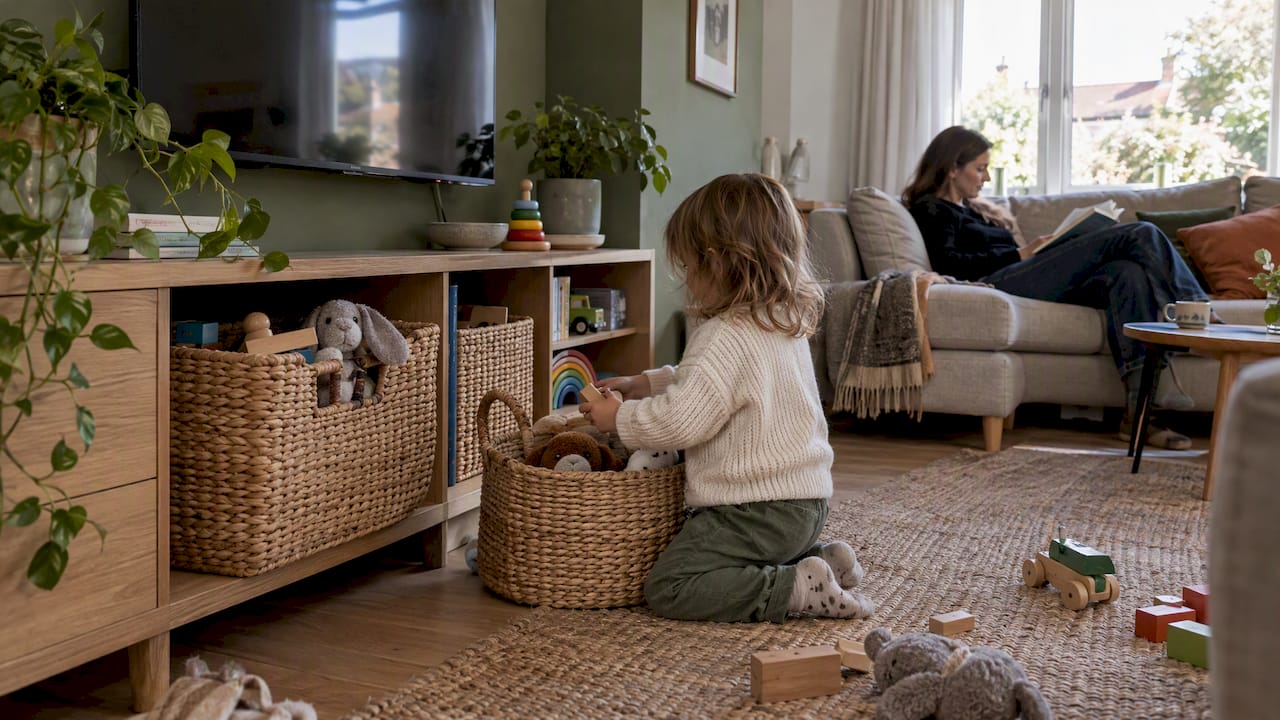
A well-placed side table, a storage ottoman, or a console unit with baskets all solve real daily problems while contributing to the room’s overall aesthetic. Accessories that earn their place functionally are among the most satisfying investments you can make. They remove clutter, define zones in open-plan spaces, and improve the way a room flows.
5. Financial return on investment
The staging effect is real. Thoughtful accessorising signals that a property has been well maintained and genuinely lived in. For sellers, this translates directly into buyer confidence and higher offers. For renters, it increases the perceived value of a property. You can find inspiration for room-specific décor for wellbeing that covers both aesthetics and practical impact across different spaces in your home.
Here is a useful summary of what each benefit means for everyday life:
- Personal expression creates emotional connection to your home.
- Acoustic comfort reduces fatigue and sensory overload.
- Stress relief supports better sleep, focus, and relaxation.
- Improved functionality reduces daily friction and clutter.
- Financial return rewards thoughtful investment when you sell or let.
Explore tips for stylish accessories if you want specific, practical starting points for each room.
Minimalism, maximalism, and the balance in accessorising
You know the why, but how you accessorise depends entirely on your style, and that brings us to the core design philosophies worth understanding.
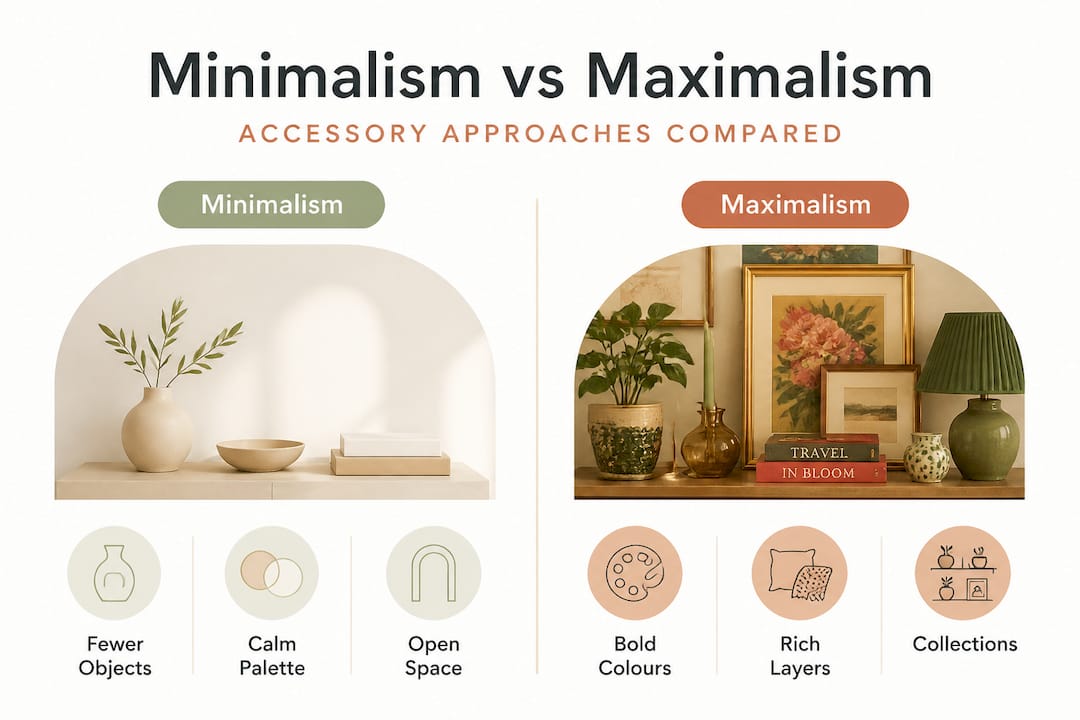
Two approaches dominate contemporary home styling: minimalism and maximalism. Neither is universally correct, and most homes benefit from a thoughtful blend of both. Understanding what each involves helps you make decisions that genuinely reflect your personality and support how you want to live.
Maximalism leans into abundance. Bold colours, layered patterns, collections of objects, and rich textiles create spaces that are energising and deeply personal. Done well, maximalism vs minimalism each serve different lifestyle needs, and maximalism particularly suits creative personalities who draw energy from visual stimulation. The risk is overwhelm: too many competing elements without a unifying principle can make a room feel chaotic rather than curated.
Minimalism takes the opposite approach. Fewer objects, deliberate negative space, and a restrained colour palette create a sense of calm that many people find deeply restorative. Minimalist principles work particularly well in smaller rooms where clutter quickly becomes claustrophobic. The risk here is sterility: a room with too little can feel cold and uninviting, more like a showroom than a home.
The hybrid approach is where most people land naturally. You choose a few bold statement pieces, keep the background calm, and allow the accessories to tell the story without screaming for attention. This balance tends to feel the most liveable over time.
| Style | Core traits | Best rooms | Common risk |
|---|---|---|---|
| Maximalism | Bold, layered, expressive | Living room, studio, study | Overwhelm and visual noise |
| Minimalism | Restrained, spacious, calm | Bedroom, bathroom, hallway | Feeling cold or impersonal |
| Hybrid | Balanced, selective, personal | Any room | Inconsistency if not edited |
Refer to the step-by-step styling guide for a practical method of applying any of these approaches in your own home. If you are drawn to a cleaner aesthetic, the choosing minimalist design article explains how to achieve it without sacrificing warmth.
Pro Tip: When grouping accessories on a shelf or side table, always use odd numbers. Three or five items of varying heights and textures create a naturally pleasing visual arrangement that the eye reads as balanced rather than symmetrical and rigid.
How to accessorise with purpose: Steps for any living space
With a sense of the different styles, let us discuss how to thoughtfully accessorise any living area for maximum effect.
There is a significant difference between decorating instinctively and decorating with intention. The first tends to result in rooms that look assembled rather than designed. The second produces spaces that feel genuinely coherent, even if the process behind them was relatively straightforward.
Follow these steps to accessorise any room with real purpose:
- Define what the room needs to do. Is it for relaxation, socialising, focused work, or a mixture? Your accessories should support that function. A reading nook benefits from warm task lighting and comfortable textures; a social living room needs conversation pieces and flexible seating accessories.
- Choose a colour palette and commit to it. Pick two or three colours that recur across your accessories. This does not mean matching everything; it means creating a visual thread that ties the room together.
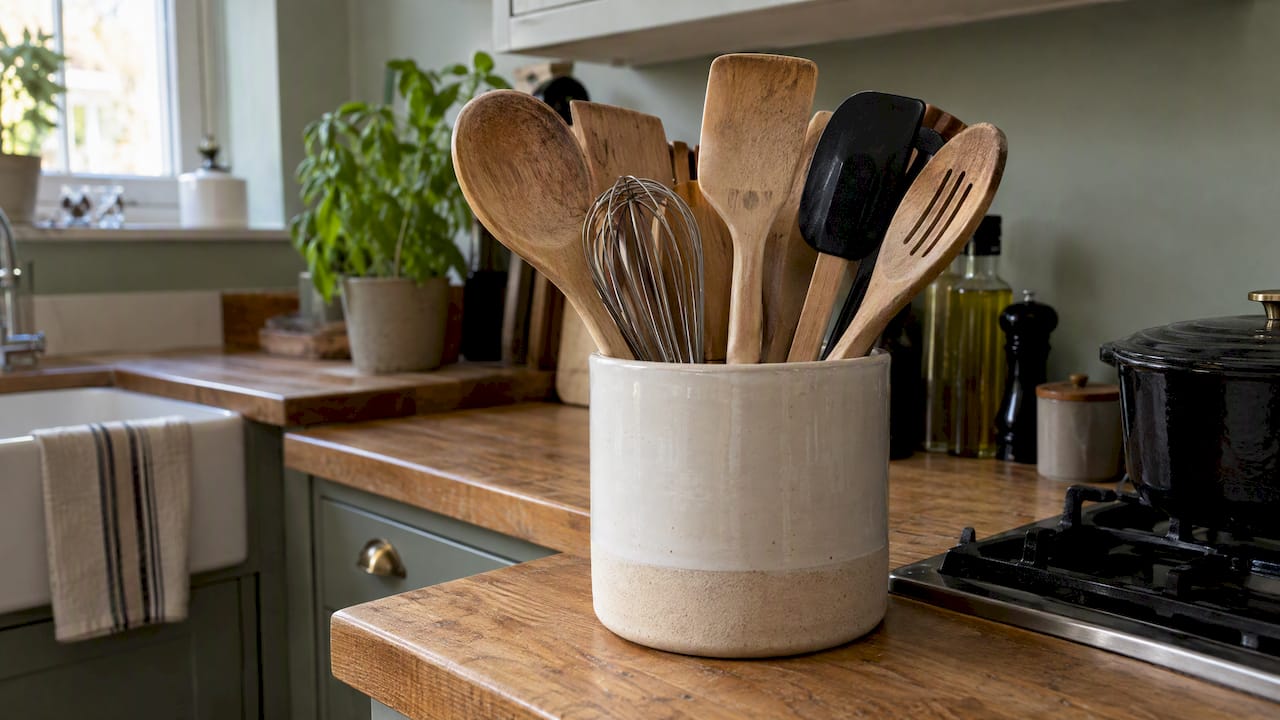
- Layer textures deliberately. Combine smooth ceramics with rough linen, polished metal with soft wool. Contrast creates depth. Rooms with a single texture throughout feel flat, regardless of how expensive the individual pieces are.
- Set your lighting. Ambient, task, and accent lighting each serve different purposes. Accessories like table lamps, candles, and fairy lights all contribute to the lighting mood. This is one of the most transformative changes you can make.
- Evaluate and edit. Step back after arranging your accessories and remove anything that does not add to the story. The discipline of editing is what separates a considered room from a cluttered one.
Here is a practical reference table to help you prioritise your choices:
| Accessory | Primary benefit | Ease of change | Best room |
|---|---|---|---|
| Cushions | Colour, texture, comfort | Very easy | Living room, bedroom |
| Plants | Stress reduction, biophilic warmth | Easy | Any room |
| Rugs | Acoustic comfort, zone definition | Moderate | Living room, hallway |
| Table lamps | Mood lighting, focal interest | Easy | Bedroom, living room |
| Artwork | Personal expression, colour accent | Moderate | Any room |
| Storage baskets | Functionality, texture | Easy | Living room, kitchen |
| Mirrors | Space, light amplification | Moderate | Hallway, bathroom |
The economic argument reinforces this approach. Homes staged thoughtfully with furniture and decor sell for around 10% more, which means every considered accessory decision has a potential return beyond the enjoyment it brings daily. Explore the decorating workflow guide and small space accessorising for room-specific strategies, or follow the modern styling steps approach for a structured process from start to finish.
Pro Tip: Before committing to a full accessory arrangement, try a small vignette first. Place three or four items together on a tray or corner shelf. If the grouping feels right in terms of scale, colour, and texture, expand from there. Starting small removes the risk and builds your confidence.
What most guides miss: The underestimated power of small changes
Most guides focus on the big picture: the sofa placement, the wall colour, the hero piece of artwork. And while those decisions matter, they overlook where the most consistent, sustainable joy in a home actually comes from.
It rarely comes from the expensive purchase you agonised over for weeks. It comes from the bunch of flowers you picked up on a Saturday morning, the cushions you swapped when you were tired of looking at the same ones, or the lamp you moved from the bedroom to the hallway and suddenly everything looked different.
Small changes do something that large overhauls cannot: they keep your home in a state of quiet evolution. Your tastes shift, your life changes, the seasons move through the year, and your home can shift alongside them without requiring a budget or a builder.
People who are genuinely happy in their homes tend to be people who interact with their accessories often. They move things, swap things, try things out. They are not precious about their interiors. That sense of play is what keeps a space feeling alive rather than fixed and static.
The real insight is that accessorising is not something you do once. It is an ongoing relationship with your space. Small upgrades with big impact consistently outperform the occasional grand gesture when it comes to sustained daily satisfaction. A new throw at the start of autumn, a different vase on the mantelpiece, a candle in a new scent. These are not trivial choices. They are the texture of life at home.
Major redesigns bring excitement. But the smaller, quieter tweaks are what make a home feel genuinely loved.
Start your living space transformation with Homable
Ready to put these ideas into action? The principles in this guide are only as powerful as the products you find to bring them to life, and that is exactly where Homable comes in.
At Homable, you will find a carefully curated range of home accessories and décor designed for modern living. From tactile cushions and elegant ornaments to rugs, lighting, and storage solutions, every product is chosen with both style and practicality in mind. Free shipping on orders over £100 makes it easy to refresh a whole room in one go. Whether you are starting from scratch or making those small seasonal swaps that keep your home feeling current, you will find everything you need in one place. For inspiration on where to begin, the modern styling steps guide walks you through the process from first idea to finished room.
Frequently asked questions
What are some simple accessories to start with for quick impact?
Cushions, rugs, plants, and lighting swaps instantly change a room’s look and mood without requiring significant investment or effort.
Do accessories really make a difference to wellbeing?
Yes. Plants and natural textures are supported by empirical research to reduce stress and improve positive feelings in domestic environments.
Is accessorising expensive?
Not necessarily. Many of the most effective changes, such as rearranging existing items, adding plants, or swapping cushion covers, cost very little and deliver a noticeable result.
Can accessorising help sell my home?
Absolutely. Staged homes with accessories sell for up to 10% more and tend to attract buyers more quickly than bare or sparsely furnished properties.
How often should I change accessories?
Refreshing accessories seasonally or whenever your tastes shift is a good habit. It keeps your living space feeling vibrant and prevents the sense that your home has become fixed or stale.