Cart
0
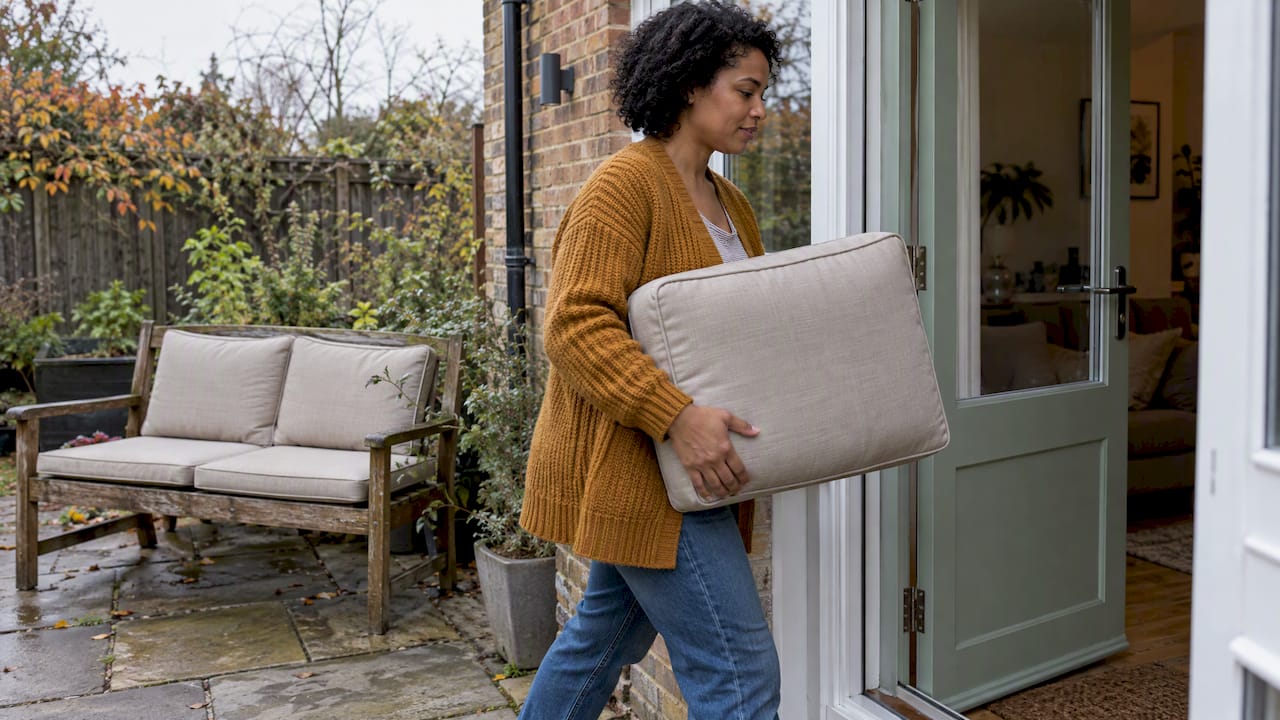
The best patio cushion storage is a dry, ventilated spot where cushions go in clean and completely dry. That could be a lidded box, a breathable bag, a shed shelf or a spare cupboard. The container matters less than the preparation and the place. A pricey waterproof box with a damp cushion inside will still end up smelling of mildew by March.
Below you will find what to do before cushions go away, how to choose between the main storage types, ideas for small and large gardens, and what to check when you buy a box. The advice comes from the people who look after gardens and make outdoor fabrics, plus the way British weather behaves.
TL;DR
- Clean cushions and dry them completely before storing. Moisture sealed in a box or bag is what causes musty smells and mould.
- Store them somewhere dry and ventilated. Shed, garage, utility room or a good lidded box all work if air can move and water cannot get in.
- “Water-resistant” is not “waterproof”. Fabric covers may shed rain while the inner pads still soak it up, so do not leave cushions out in a wet autumn.
- Pick storage by cushion count and space: a bench box for a few, a deck box or shed shelving for a full sofa set.
- Do the job at the end of summer on a dry day, not after the first frost.
Table of Contents
- When to put cushions away
- Prepare cushions before they go into storage
- Why “water-resistant” is not enough
- Choosing where to store them
- What to check when buying a waterproof storage box
- Patio cushion storage ideas for different gardens
- Keeping cushions free of damp and mould in storage
- Do not forget the rest of the patio
- Our perspective
- Finishing touches for the patio
- FAQ
- Sources
When to put cushions away
In most of the UK the sensible window is early to mid autumn. The RHS recommends carrying out garden furniture maintenance and storage at the end of summer, in dry weather. That timing helps cushions as well as frames. You are working with dry fabric, not cushions that have sat through a fortnight of drizzle.
If you are reading this at the end of October and the cushions are still outside, do not panic. Pick the next dry, breezy day, bring them in and follow the steps below. Cushions that have been rained on need extra drying time before they go anywhere near a box.
A simple rule: if the forecast for the next week is mostly wet, store them. If you want to use the patio on a mild afternoon, bring them out for the day and take them back in at dusk. Evening dew soaks into foam over a few nights more than people expect.

Prepare cushions before they go into storage
This is where most storage failures begin. Textile specialists are consistent about it: outdoor fabrics differ, so follow the manufacturer’s care label first. The same guidance suggests blotting spills promptly, using mild detergent and warm water for an annual deeper clean where appropriate, and making sure fabrics are completely dry before storing them in a dry, ventilated area.
Turning that into a routine:
- Brush off debris. Leaves, pollen, crumbs and cobwebs all hold moisture and feed mould. A soft brush or a good shake does it.
- Check the label. Some covers unzip and wash, others are sponge-clean only. If there is no label, treat the cushion as sponge-clean.
- Spot-clean or wash. Mild detergent, warm water and a soft brush. Rinse until no soap is left, because residue attracts dirt.
- Dry fully. Stand cushions on their edges somewhere airy, turn them, and give them longer than seems necessary. Press the middle of the pad: if it feels cool or heavy, it is still damp.
- Store flat or on edge, not crushed. Heavy items piled on top flatten the filling.
The drying step is the one people rush. A cover can feel dry to the touch while the foam core holds water. If you can, leave cushions indoors in a warm, airy room for a day or two before they go into the shed.
Why “water-resistant” is not enough
Outdoor cushions are usually sold as water-resistant, showerproof or weatherproof. Those words describe the cover, and not always the whole cushion. Textile makers point out that fabric covers may be moisture resistant while the inner pads may not be, so it pays to check and proceed carefully.
In practice, that means a cushion can look fine after a downpour and still be wet inside. Stitched seams, zips and open bases are where water gets in, and a pad that has taken on water dries slowly in a British October. If you cannot confirm the inner is moisture resistant, assume it is not, and give the cushion the same care you would give an indoor one.
Choosing where to store them
Storage falls into four broad types. Each suits a different garden and a different number of cushions.
| Storage type | Best for | Watch out for |
|---|---|---|
| Lidded outdoor box or bench with storage | A few seat pads, patio sets with a compact footprint | Condensation if cushions go in damp; check for vents or a liner |
| Large deck box or cushion chest | Full sofa sets, plus throws and parasol covers | Size: measure the biggest cushion, not the average one |
| Breathable storage bags or covers | Cushions kept in a shed, garage or loft | Not a rain shield on their own if left outside |
| Indoor space: cupboard, utility room, under-stairs, spare room | Anyone short of outdoor storage; best for delicate or light-coloured fabrics | Space, and the need to carry cushions in and out |
The RHS notes that plastic furniture is best kept in a garage or garden shed if you have the space, and that hardwood can stay out if covered space is limited, ideally with its feet off wet ground to reduce rot. That is advice for the frames, but it shows the logic to follow: use the driest covered space you have for the most vulnerable items. Frames can often cope outside. Cushions cannot.
The shed or garage
A shed or garage is the classic answer. Put cushions on a shelf or a rack rather than on the floor, where cold and damp collect. Keep them away from walls that sweat in winter, and avoid piling them under tools or bags of compost. If the shed is prone to condensation, put cushions in breathable bags instead of sealing them in plastic, and open the door on dry days to let air through.

A lidded box on the patio
Outdoor boxes are convenient because cushions are next to the furniture, which makes it far more likely they are put away on a showery evening. Look for a lid that overhangs, a raised base so the box does not sit in standing water, and some way for air to escape. Stand the box on feet or paving slabs rather than directly on soil or moss.
Indoors
For cream, white or pale cushions, or anything with a pad that you suspect is not weather-resistant, indoor storage is the safest option. A spare-room wardrobe, the top of a utility-room shelf or a storage ottoman will do. It is also where rugs and throws can sit alongside, which brings us to the next point.
What to check when buying a waterproof storage box
Many of the pages that rank for this topic are product listings, and the specs they list are worth reading closely. Here is a short checklist for any box, bench or bag you are considering.
- Interior size, not just exterior. Measure your largest cushion, add a few centimetres, and compare against the internal dimensions. Thick back cushions are the ones that do not fit.
- Lid design. A lid that sits proud of the box and overlaps the edge sheds rain better than a flat lid that sits flush.
- Material. Resin and polypropylene boxes are light and easy to wipe clean. Rattan-effect boxes with liners look better beside a patio set. Wooden boxes need regular treatment. Whatever the material, check that it is described as UV-resistant, since sun makes some plastics brittle.
- An internal liner. Some rattan-style boxes include a liner that helps keep cushions clean and protected.
- Ventilation. A completely sealed box traps moisture. A small vent or gap lets air move.
- Raised base. Keeps water from pooling under the box.
- Lockable or weighted lid. Useful in windy gardens, and for keeping animals out.
- Your own capacity. Add any throws, parasol covers and kids’ toys you plan to store too.
Treat “waterproof” claims as a statement about the box shell, then check the lid, seams and drainage. A box can be made of waterproof plastic and still let water in through a poorly fitted lid.
Patio cushion storage ideas for different gardens
The right answer depends on how much space and how many cushions you have. Here are layouts that work in typical British gardens.
Small patio or balcony
Choose furniture that doubles as storage. A bench with a lift-up seat holds four to six seat pads. Failing that, a slim lidded box against a wall takes up little floor and can serve as an extra seat or a plant stand. If space is very tight, bring cushions indoors and keep only a couple of waterproof pads outside. Our guide to small UK patio decor ideas covers budget ways to make a compact space work harder.
Medium garden with a dining set
Seat pads for six chairs take up more room than you think. A deck box beside the table, or a shed shelf with a set of breathable bags labelled by chair, keeps things tidy. Store the pads you use every week in the box, and the spare or seasonal ones indoors.
Large garden or full lounge set
Big back cushions and deep seats need a large chest, a dedicated shed corner or fitted covers. A tall rack in the shed lets cushions stand upright with air around them. If the shed is crowded, rotate: summer cushions in the shed, winter throws in the box.
Renters and anyone without a shed
A lidded box in the sheltered corner of the patio plus a cupboard indoors is a workable combination. Choose a box you can take with you when you move. Use the cupboard for the cushions that matter most.
Using baskets indoors
If cushions come indoors for winter, large lidded or open baskets keep them tidy in a hallway or utility room and look better than stacked bin bags. Our basket storage ideas show how to use them without adding clutter. Keep them away from radiators, which can warp and fade some fabrics.
Keeping cushions free of damp and mould in storage
Once cushions are in, the job is not quite done. A few habits make the difference between cushions that come out fresh in spring and ones that need a deep clean.
- Check once a month. Open the box on a dry day, sniff, press a cushion in the middle and leave the lid open for an hour.
- Keep air moving. If the storage is a shed, prop the door open on a dry day.
- Keep cushions off the floor. Shelves, pallets or a raised base keep them away from cold, damp ground.
- Add moisture absorbers if you like. Some people tuck a moisture-absorbing sachet into boxes. They cannot rescue a damp cushion, but they can help with the odd bit of humidity.
- Do not seal wet cushions in plastic. Plastic sheeting keeps rain out but traps whatever moisture is already in the pad.
If you do find mildew in spring, act promptly. Follow the care label, brush the spots off outdoors, and clean with a mild detergent and warm water. Dry the cushion thoroughly in a breezy spot before it goes back on the furniture. If the filling itself smells of mould, replacement pads are often cheaper than another round of cleaning.
Do not forget the rest of the patio
Cushions are only one part of the winter put-away. Rugs, mats and ornaments also suffer from damp and frost. Our guide to outdoor rug care explains how to clean and protect yours, and the same dry-first logic applies to every textile on the patio. If you are redoing the whole space for next year, our outdoor space styling tips are a good place to start, and our autumn home decor ideas show how to bring a bit of the garden’s colour indoors while the cushions rest.
Our perspective
We spend our days looking at how people style their homes and gardens, and the same pattern shows up with outdoor soft furnishings. People buy lovely things for the patio, enjoy them for a summer, and then lose them to a damp shed. The fix is rarely a more expensive product. It is a habit: bring things in before the weather turns, dry them properly and give them room to breathe.
We also think storage should look as good as the rest of the space. A box that is an eyesore ends up hidden behind the bins, and then it is too far from the furniture to be used. Put it where it is easy to reach, make it part of the design and the cushions will go back in every time.
Finally, we would rather you buy fewer cushions you look after than a heap you replace. If you are choosing new ones, look for a care label that tells you what the cover and the pad can take, and plan the storage at the same time as the seating.
— Cristiano
Finishing touches for the patio
Once the cushions are put away and the furniture is tidy, a few well-chosen pieces keep the patio looking good through winter. Our Garden and Patio collection brings together decor for outdoor spaces, and you can browse the rest of our range on the Homable homepage, including ornaments, rugs and storage for other rooms. Orders over £100 ship free.
FAQ
How do I store outdoor cushions for winter?
Clean them according to the care label, then dry them completely, ideally for a day or more in an airy place. Store them in a dry, ventilated spot such as a shed shelf, utility room or a lidded box with some airflow. Check them now and then through the winter.
Are outdoor cushions waterproof?
Not always. Many are water-resistant, which means the cover sheds light rain, but the inner pad may not be moisture resistant. In heavy or prolonged rain, bring them in or put them in a box.
Can I leave patio cushions outside in winter?
It is best not to. Even weather-resistant fabrics suffer from long spells of damp, frost and low light, and the pads inside can stay wet for weeks. If you must leave them out, use fitted covers over the whole set and check regularly.
What size storage box do I need?
Measure your largest cushion, including the thick back pads, and choose a box whose internal dimensions allow a few centimetres to spare. Add space for throws or parasol covers if you plan to store them together. If you are between sizes, go larger so cushions are not squashed.
Is it better to store cushions in a box or a bag?
A box protects against rain and pests and is convenient on the patio. A breathable bag suits a shed or loft where the space is already sheltered. Either way, cushions must be dry going in.
Sources
- Furniture: Maintaining Garden Seats and Tables | RHS Advice
- How to care for outdoor textiles | James Dunlop Textiles