Cart
0
TL;DR:
- Minimalism involves intentionally reducing possessions to improve mental clarity, savings, and life purpose. It lowers stress, decision fatigue, and maintenance time by creating simple, functional environments. Practicing gradual decluttering aligns possessions with personal values for sustainable, meaningful living.
Minimalism is the deliberate practice of reducing possessions and distractions to gain mental clarity, financial freedom, and a more purposeful life. The advantages of minimalism extend well beyond a tidy home. Research shows the average household contains around 300,000 items, and that sheer volume of stuff quietly drains your attention, your time, and your money. Owning less is not about deprivation. It is about choosing what genuinely earns its place in your life.
1. Advantages of minimalism for mental clarity
A cluttered space creates a cluttered mind. Visual noise competes for your attention constantly, and materialism links directly to anxiety and lower life satisfaction. Minimalism removes that noise, freeing mental space for focus, creativity, and calm.
One of the most underappreciated effects is the reduction in decision fatigue. Fewer possessions mean fewer daily choices, and that reduction produces measurable improvements in focus and mental stamina. Barack Obama famously wore only grey or navy suits to eliminate trivial decisions and protect his cognitive energy for what mattered. The same principle applies to your wardrobe, your kitchen, and your living room.
Simplified environments also support better sleep. Bedrooms free of clutter signal safety and rest to the brain. The result is not just a tidier room. It is a genuinely more restful night.
Pro Tip: Start with one drawer or one shelf. Completing a small declutter gives you a quick win and builds momentum without the burnout that comes from tackling an entire home at once.
2. How minimalism reduces stress and decision fatigue
Stress rises when your environment demands constant management. Every object you own carries a micro-obligation: clean it, store it, repair it, or feel guilty about not using it. Minimalism decreases decision fatigue by reducing the number of choices you face each day, and that directly lowers background stress levels.
The psychological term for this is “ego depletion.” Each small decision depletes a finite pool of mental energy. A minimalist home front-loads fewer decisions, leaving more energy for meaningful work and relationships. Researchers studying cognitive load consistently find that simplified environments improve concentration and reduce anxiety.
Decluttering your schedule works the same way. Saying no to commitments that do not align with your values is minimalism applied to time. The result is a life that feels less frantic and more intentional.
3. Financial benefits of living with less
Minimalism acts as one of the most effective tools for improving personal finances. Intentional consumption replaces impulsive buying, which reduces unnecessary expenditure and accelerates debt repayment. When you stop buying things out of habit or social pressure, your spending drops without any sense of sacrifice.

Minimalists consistently report increased savings, less consumer debt, and greater financial flexibility compared to high-consumption peers. The mechanism is straightforward. When you define what you genuinely need, every purchase becomes a conscious choice rather than a reflex.
A practical technique is the 30-day rule: when you want to buy something non-essential, wait 30 days before purchasing. Most impulse desires fade within a week. The money stays in your account, and you feel no loss.
Pro Tip: List your top three personal values, then audit your last month of spending against them. Misaligned purchases become obvious immediately, and cutting them feels purposeful rather than restrictive.
4. Time saved through simpler home upkeep
A minimalist home requires dramatically less maintenance. Minimalism frees hours previously spent cleaning, organising, and managing possessions. Those hours do not disappear. They become available for exercise, hobbies, relationships, and rest.
Simpler homes need less upkeep, and that compounds over time. A home with fewer surfaces covered in objects takes minutes to clean rather than hours. A wardrobe with 30 well-chosen items is faster to navigate than one with 200 rarely worn pieces.
| Area of home life | High-possession upkeep | Low-possession upkeep |
|---|---|---|
| Weekly cleaning | 4–6 hours | 1–2 hours |
| Organising and sorting | 2–3 hours | Under 30 minutes |
| Locating misplaced items | Frequent and frustrating | Rare |
| Seasonal decluttering | Major project | Minor refresh |
The time savings are not trivial. Reclaiming even two hours per week adds up to over 100 hours per year. That is time you can spend on home organisation strategies that genuinely improve daily life, rather than simply managing excess.
Pro Tip: Apply the “one-in, one-out” rule to every room. When something new enters your home, something old leaves. This single habit prevents accumulation from creeping back.
5. Minimalism and improved focus on what matters
Owning less shifts your attention from things to people and experiences. Minimalism replaces the endless race of comparison by prioritising contentment over consumerism, which changes how you define success. That shift is not cosmetic. It restructures daily priorities.
The benefits show up in relationships. When you are not spending weekends shopping, maintaining possessions, or working extra hours to fund a high-consumption lifestyle, you have more time and energy for the people you care about. Research consistently links experience-based living to higher wellbeing than material accumulation.
Creating meaningful experiences replaces material accumulation, and that shift fosters stronger relationships and personal growth. A weekend away with family delivers lasting satisfaction. A new gadget delivers a brief spike of pleasure that fades within days.
Minimalism also supports personal development. With fewer distractions competing for your attention, you can commit to learning a skill, building a habit, or pursuing a goal with genuine consistency.
6. Minimalism’s role in sustainability
Minimalism supports environmental sustainability by reducing total consumption and waste. Buying less means producing less demand for manufacturing, packaging, and transport. The carbon footprint of a minimalist household is measurably lower than that of a high-consumption one.
Minimalism supports sustainability by reducing consumption and waste, though it is less effective when it simply exchanges one style of buying for another. Buying ten expensive “minimalist” items to replace twenty cheap ones misses the point entirely. The goal is to consume less overall, not to rebrand consumption as curated.
Choosing quality over quantity is the practical expression of this principle. One well-made rug that lasts fifteen years produces less waste than three cheap ones replaced every five years. The financial and environmental logic aligns perfectly.
7. How to approach minimalism for lasting results
Sustainable minimalism starts with defining your personal “enough.” There is no universal standard for how many possessions are correct. Defining personal ownership thresholds prevents feelings of deprivation and supports a flexible, long-term practice.
A gradual approach works better than a single dramatic purge. Starting with small-scale decluttering tasks is more sustainable than blitz cleaning, which often leads to burnout and relapse. Tackle one category at a time: books, then clothes, then kitchen equipment.
Emotional attachment is the biggest barrier most people face. Successful minimalism requires reimagining priorities beyond aesthetics. An item that carries genuine sentimental value earns its place. An item you keep out of guilt or vague “someday” thinking does not.
A practical framework for getting started:
- Write down three areas of your life where clutter causes the most friction.
- Choose one area and spend 20 minutes removing anything you have not used in six months.
- Donate or sell removed items within 48 hours to prevent second-guessing.
- Repeat weekly, expanding to new areas as the habit builds.
- Reassess your “enough” threshold every six months as your priorities evolve.
Aligning minimalism with your values, rather than following someone else’s rules, is what makes it stick. For practical ideas on creating a calm, functional space, minimalist design principles offer a useful starting point. Minimalism is also a natural fit for households thinking about safer, budget-friendly home adjustments, where fewer obstacles and simpler layouts make a real difference.
Key takeaways
The core advantage of minimalism is that owning and managing less frees mental energy, reduces spending, and creates time for what genuinely matters.
| Point | Details |
|---|---|
| Mental clarity improves | Fewer possessions reduce decision fatigue and lower background stress levels daily. |
| Financial savings compound | Intentional spending replaces impulse buying, building savings and reducing consumer debt. |
| Time is reclaimed | Simpler homes need less cleaning and maintenance, freeing over 100 hours per year. |
| Relationships deepen | Less time managing things means more energy for people, experiences, and personal growth. |
| Gradual change lasts | Small, consistent decluttering steps prevent burnout and build sustainable minimalist habits. |
What I have learned from living with less
I came to minimalism reluctantly. My flat was full of things I had bought with good intentions and barely used. The first time I cleared out a room properly, the relief was physical. It felt like putting down a bag I had been carrying for years without noticing.
The financial change surprised me most. I did not budget differently or earn more. I simply stopped buying things I did not need, and the savings appeared almost immediately. That money went towards experiences that I still think about, rather than objects I cannot remember purchasing.
The mental shift took longer. Choosing contentment over comparison is not a one-time decision. It is a daily practice. Some days are easier than others. But the baseline level of calm in a simpler home is genuinely different from the low-grade noise of a cluttered one.
My honest view is that minimalism is not a personality type or an aesthetic. It is a tool. You use it to the degree that it serves your life, and you adjust it as your circumstances change. The goal is not a perfectly spare flat. The goal is a life with enough room in it to breathe.
— Cristiano
Calm, functional homes start with the right pieces
A minimalist home does not mean an empty one. It means every item earns its place through function, quality, or genuine beauty.
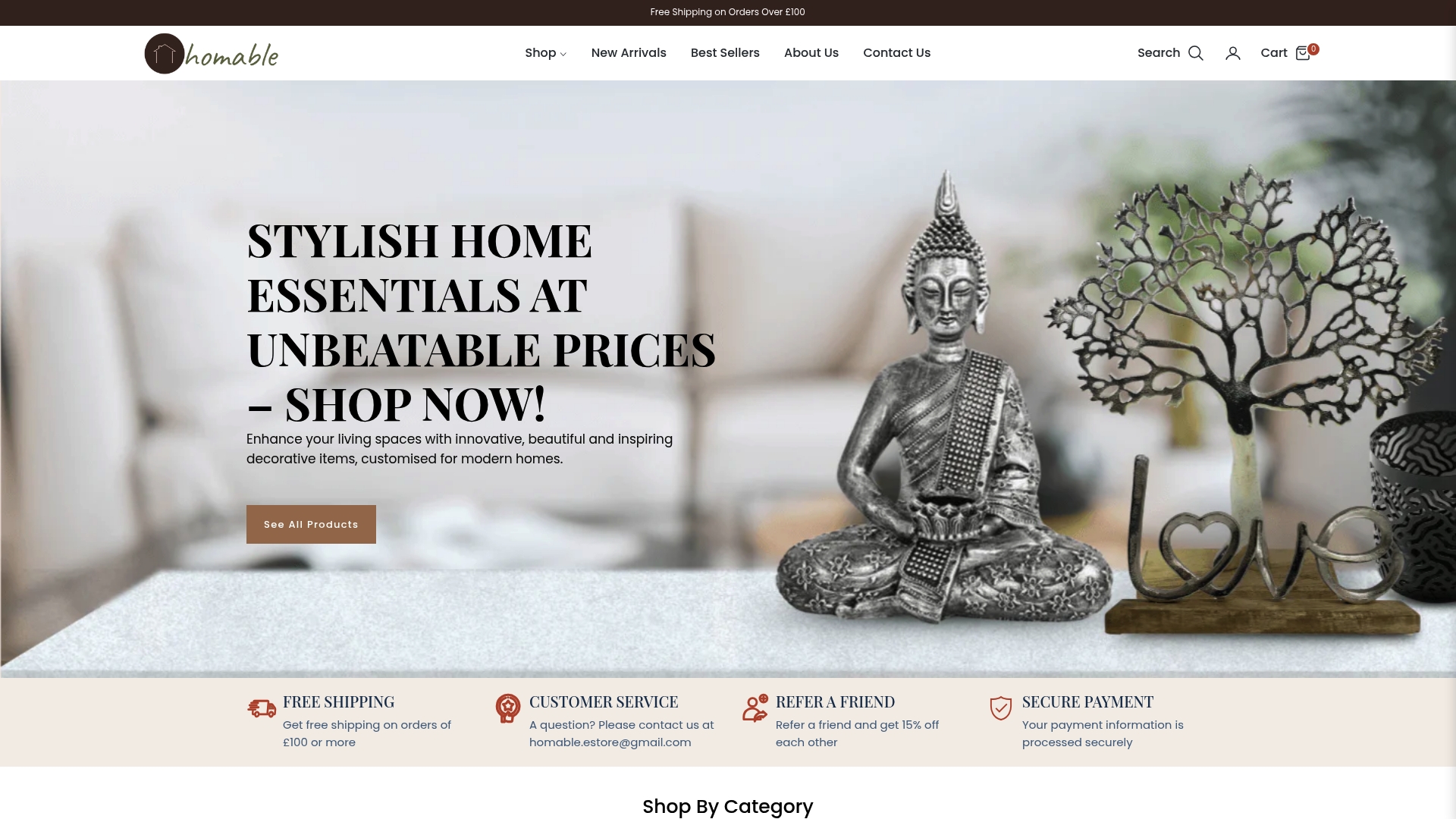
Homable curates home accessories, storage solutions, and décor designed for modern living spaces where simplicity and style work together. Whether you are starting a full declutter or simply replacing worn-out pieces with better ones, the Homable home accessories collection offers practical, well-designed options that complement a minimalist approach. Free shipping applies on orders over £100, making it straightforward to refresh your space without overspending. For more ideas on creating a calm and organised home, the Homable design guide is a practical next step.
FAQ
What are the main advantages of minimalism?
Minimalism reduces mental clutter, lowers stress, cuts unnecessary spending, and frees time previously spent managing possessions. Research links fewer possessions to higher wellbeing and greater life satisfaction.
Does minimalism actually save money?
Minimalism replaces impulse buying with intentional spending, which reduces overall expenditure and accelerates debt repayment. Minimalists consistently report increased savings and greater financial flexibility.
How do I start a minimalist lifestyle without feeling deprived?
Define your personal “enough” before removing anything. Gradual decluttering, one category at a time, prevents burnout and allows you to set thresholds that feel comfortable rather than restrictive.
Is minimalism good for mental health?
Fewer possessions reduce decision fatigue and visual noise, both of which lower anxiety and improve focus. Simplified environments also support better sleep and a calmer daily routine.
What is the “one-in, one-out” rule in minimalism?
The one-in, one-out rule means that whenever a new item enters your home, an existing item leaves. This habit prevents gradual accumulation and keeps intentional consumption as the default.