Cart
0
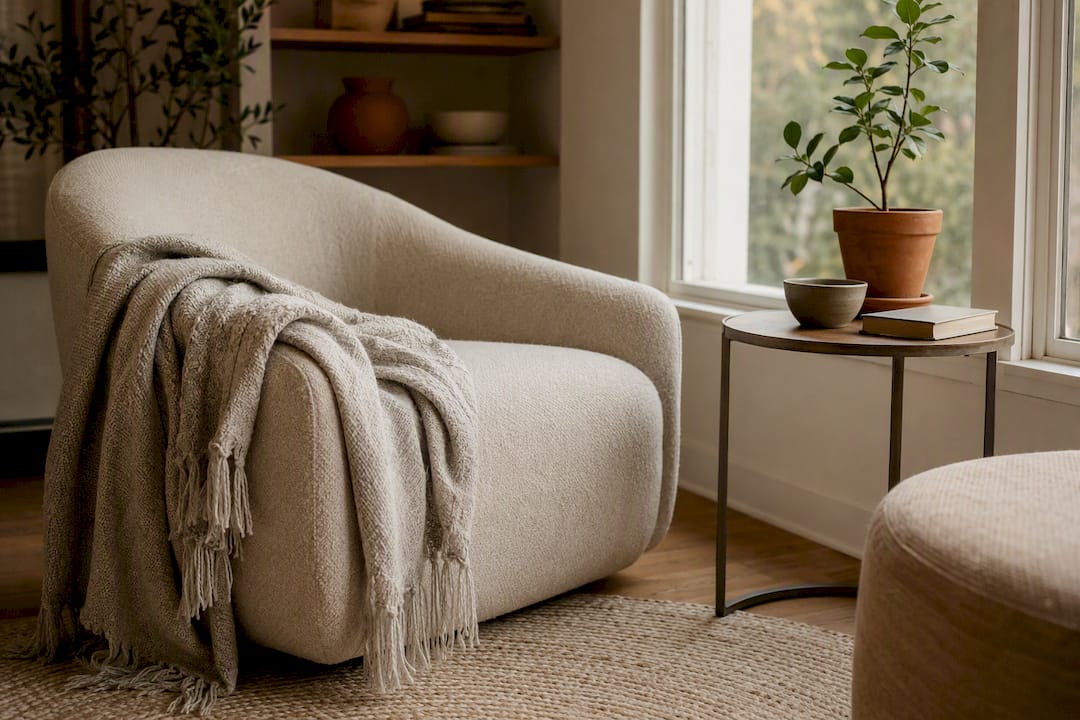
Contemporary design methods are the current interior styling techniques built on warm neutral palettes, curved silhouettes, negative space and a disciplined mix of natural materials, rather than the cooler, more minimal look “modern” usually implies. It differs from modernism’s strict geometry by softening lines and layering warmth back in, a shift Architectural Digest and Genroom’s 2026 guide both track closely.
Here’s the weekend version: swap your palette to a warm neutral base, bring in one curved focal piece, layer at least two natural textures, and add a sculptural plant. Most of it is buyable in an afternoon at Homable.
- Repaint or reaccessorise in mushroom, oat or putty
- Add one curved chair, mirror or coffee table
- Layer linen, jute or wool textiles
- Introduce one large-leaf or sculptural plant
A full living room refresh sourced smartly typically lands around £2,000 to £3,500, though a partial refresh with curated accessories alone can cost a fraction of that.
Pro Tip: Before buying anything large, trial the whole palette with textiles first. A rug and two cushions tell you more about how a colour will actually feel than any paint swatch.
Key Takeaways
Contemporary design in 2026 works because it replaces cool, minimal formality with warm neutrals, curved forms and a disciplined material palette that still feels current and lived-in.
| Point | Details |
|---|---|
| Palette rule | Base the room in warm neutrals like mushroom or oat, then add one accent using the 60-30-10 split. |
| Material discipline | Limit a room to three or four materials, one wood, one stone, one textile, one metal, to avoid clutter. |
| Furniture shape | Choose curved, low-profile pieces and leave genuine negative space rather than pushing everything to the walls. |
| Lighting layers | Combine ambient, task and accent lighting with warm 2700K bulbs to keep materials looking true. |
| Sourcing | Homable offers natural-fibre rugs and curtains suited to the warm-neutral, textured look at accessible price points. |
Table of Contents
- The 2026 colour method: warm neutrals plus one accent
- Furniture shapes and layout: curves, proportion and negative space
- Why the rule of three keeps materials from feeling cluttered
- Getting layered lighting right in a contemporary room
- How to curate accessories, art and plants without cluttering
- Quick room-by-room plans you can shop this weekend
- What to buy and where, by budget band
- The five mistakes that make a room look instantly dated
- Your weekend action plan, step by step
- Mixing contemporary design into a transitional space
- Frequently asked questions
- Sources
The 2026 colour method: warm neutrals plus one accent
The palette that reads contemporary in 2026 has moved decisively away from the cool greys of the 2010s. Elle Decoration tracks the shift towards creamy ivory, beige and warm greige, with accents of terracotta, sage or ochre replacing the old chrome-and-grey formula. Genroom’s research backs this up, describing the current look as soft neutrals warmed by terracotta and ochre, built around curved silhouettes and biophilic touches.
The easiest way to apply this without repainting five rooms is the 60-30-10 rule. Sixty percent of the room stays in your warm neutral base (walls, large upholstery, flooring). Thirty percent goes to a secondary tone, often a deeper wood or stone shade. The remaining ten percent is your accent colour, whether that’s terracotta cushions, an ochre throw or a single sage armchair.
You can test this in one afternoon without touching a paintbrush:
- Swap current cushions for two in your chosen accent
- Add a throw in a complementary neutral
- Change one lamp or vase to break up any leftover cool tones
- Step back and live with it for a day before committing further
Pro Tip: Avoid pure white and cool grey walls if you want the room to photograph and feel warm. Even a whisper of pink or yellow undertone in your “white” paint changes everything.
Furniture shapes and layout: curves, proportion and negative space
Contemporary furniture reads differently to modern furniture because the lines have softened. Curved sofas, rounded coffee tables, handleless cabinetry and single sculptural anchor pieces have replaced the boxy, hard-edged silhouettes that dominated the last decade. Genroom’s 2026 analysis notes this explicitly: curved forms over angular ones, restrained material choices, and a preference for pieces that feel considered rather than filled in.
Layout matters as much as the furniture itself. Architectural Digest makes the point that contemporary design curates pieces to highlight a room’s architecture rather than crowding every wall. Negative space isn’t wasted space. It’s a compositional tool that lets each piece breathe and gives the eye somewhere to rest.
A quick placement checklist:
- Pull at least one seating piece away from the wall if the room allows it
- Leave visible floor between furniture groupings rather than pushing everything flush
- Scale furniture to the room: a coffee table roughly two thirds the length of the sofa in front of it tends to look right
- Remove anything doubling up on function before adding anything new
Pro Tip: If a room feels cluttered no matter what you rearrange, the problem is usually too many small pieces rather than not enough big ones. Consolidate three small side tables into one substantial one.
Why the rule of three keeps materials from feeling cluttered
Designers working in the organic luxe space, a close cousin of contemporary styling, follow a simple discipline: limit a room to three or four core materials. One wood, one stone or stone-effect surface, one textile, one metal. Anything beyond that starts to compete rather than complement, and the room stops feeling curated.
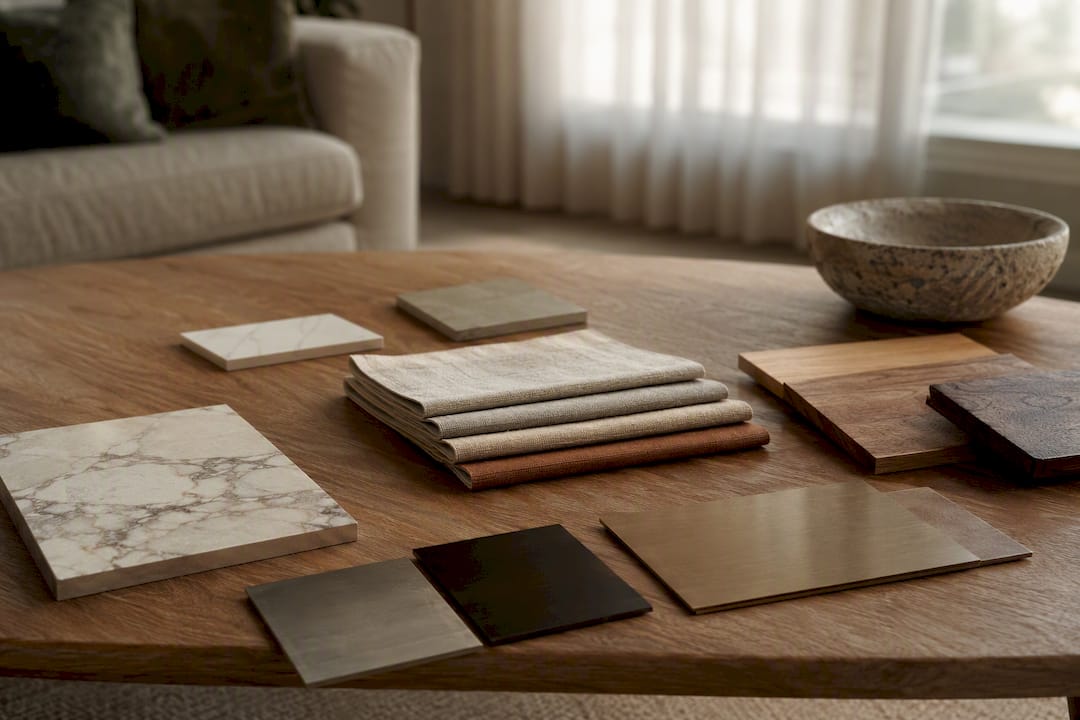
The organic luxe trend for 2026 leans specifically towards travertine, oak, bouclé and warm brass over the chrome and glass combinations that dominated modern interiors a decade ago. Decorilla’s styling guide makes a related point: texture replaces ornament in contemporary rooms, so carved wood paired with woven natural fibres does more visual work than a shelf of trinkets ever could.
Reliable pairings to work from: travertine surface, oak furniture leg, linen upholstery. Or jute rug, wool throw, raw ceramic vase. Choose real materials where budget allows. They age better and the tactile difference is genuinely noticeable underfoot and to the touch.
- One wood tone (oak, walnut or ash)
- One stone or stone-effect surface
- One textile family (linen, wool, bouclé)
- One metal finish, used consistently across the room
Pro Tip: Wipe natural stone and oiled wood with a dry cloth rather than harsh chemical cleaners. Both develop a better patina when left to age naturally.
Getting layered lighting right in a contemporary room
Flat overhead light is one of the fastest ways to make a contemporary room feel dated, no matter how good the furniture is. You need three distinct layers: ambient light for general illumination, task light for reading or cooking, and accent light to pick out texture and art.
Fixture choice matters here too. Ribbed glass pendants, sculptural floor lamps and wall sconces in brushed brass or matte black all read as current, a look Decorilla’s guide ties directly to material fidelity and true colour rendition, which depends heavily on bulb choice. Aim for warm bulbs around 2700K, and choose high-CRI bulbs wherever a rug, stone surface or piece of art needs its actual colour to show properly under artificial light.
- Add one floor or table lamp per seating zone
- Fit at least one dimmer for the main ambient source
- Position accent lighting to hit a textured surface, not a blank wall
- Swap any remaining cool-white bulbs for warm 2700K equivalents
How to curate accessories, art and plants without cluttering
The instinct with accessories is usually to add more. Contemporary styling works the opposite way: every object on display should earn its place, a principle Masterclass’s guide on contemporary interior design ties directly to decluttering and using fewer, more considered pieces.
A workable rule: one sculptural plant, one large art piece or a pair of medium ones, and a genuinely edited surface everywhere else. Resist filling every shelf.
For shopping, think in categories rather than individual items: a throw, a cushion set, a ceramic vase, a tray for coffee table styling, and one statement lamp. Scale each to the room. A large sofa needs a large-scale throw and at least two cushions per seat, not one lonely cushion lost in the corner.
- Choose one sculptural plant with architectural leaves (fiddle leaf fig, snake plant, olive tree)
- Size art to the wall, roughly two thirds the width of the furniture beneath it
- Style tabletop vignettes in threes: one tall object, one low object, one textural object
- Edit remaining surfaces down to nearly nothing
Pro Tip: If you’re unsure whether an object belongs, take it away for a week. If you don’t miss it, it wasn’t earning its place.
Quick room-by-room plans you can shop this weekend
1. Living room. Anchor the space with one curved sofa or a statement coffee table, then layer a natural-fibre rug underneath, one large art piece, and a single sculptural plant in the corner. Budget roughly £300 to £900 if you’re refreshing accessories only.
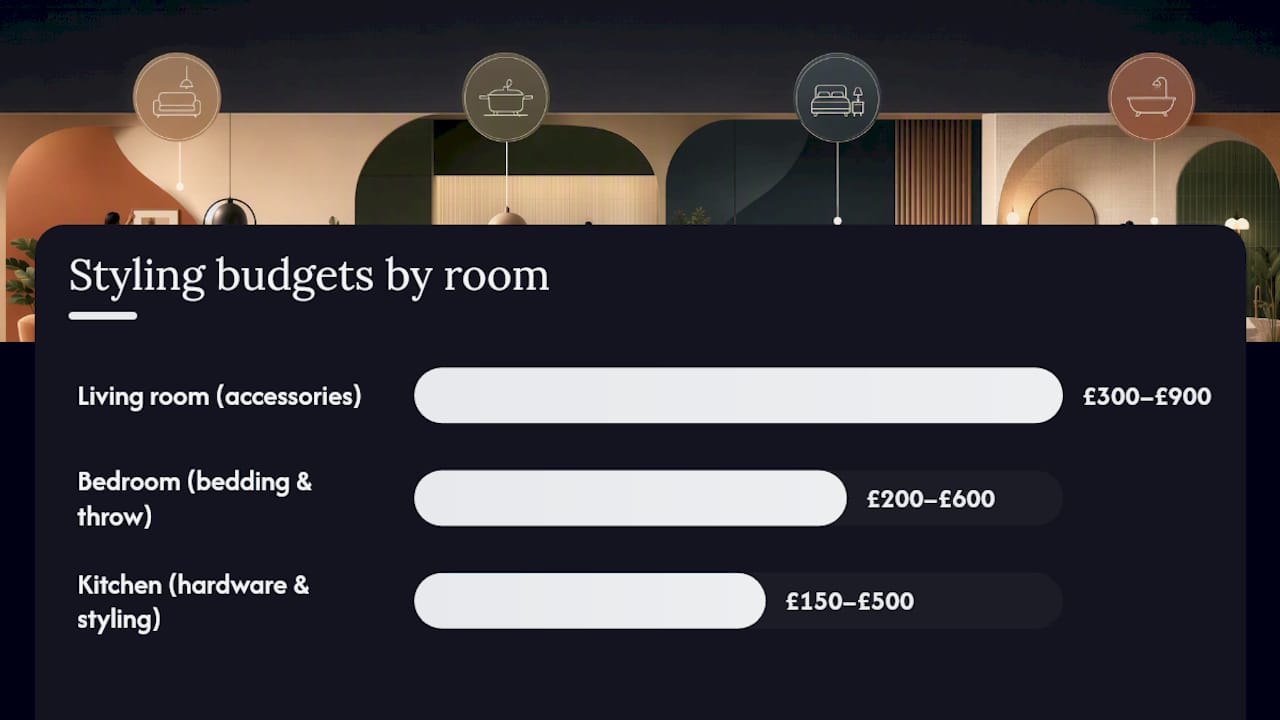
2. Kitchen. Bring in warm wood or fluted oak accents on cabinet fronts or open shelving, swap chrome hardware for matte black or brushed brass, and style open shelves with exactly three objects, not ten. Budget £150 to £500 for hardware and styling pieces.
3. Bedroom. A curved headboard changes the whole feel of a room, paired with linen bedding in warm neutral tones. Keep surfaces mostly clear and let the bedding and one textured throw carry the texture. Budget £200 to £600.
4. Small apartments. Negative space matters more here, not less. Choose multi-purpose furniture, keep the palette consistent across rooms so sightlines feel continuous, and resist the urge to fill every corner.
- Measure before buying anything large
- Layer textures before adding colour
- Add one plant per zone, not one per surface
- Keep hardware finishes consistent throughout
Pro Tip: In a small space, one confident large item almost always beats three small ones. It reads as intentional rather than cramped.
What to buy and where, by budget band
Turning all of this into an actual shopping list keeps costs under control. Work through categories in this order of priority if funds are limited: textiles and rugs first (biggest visual impact per pound), then lighting, then plants, then small furniture.
- Soft furnishings (cushions, throws): £15 to £80 per item
- Rugs: £40 to £250 depending on size and material
- Lighting: £30 to £200 per fixture
- Plants and planters: £10 to £60
- Small furniture (side tables, accent chairs): £80 to £400
Homable stocks a range that fits this exact palette shift, from natural-fibre pieces like the rectangular bamboo rug set to woollen options such as the Baluchi Cannon Pink rug, both useful for the layered-texture approach covered earlier. Natural and recycled-fibre textiles also tend to wear better and age more gracefully than synthetic alternatives, which matters if you’re buying with longevity in mind rather than a quick refresh.
A genroom estimate puts a full smart-sourced living room refresh at £2,000 to £3,500, though accessory-only refreshes using the categories above can cost considerably less.
The five mistakes that make a room look instantly dated
All-grey colour schemes, chrome finishes, more than four materials fighting for attention, flat overhead lighting and cluttered surfaces are the fastest ways to date a room right now.
Fixes are quick: swap chrome for brushed brass or matte black, add a rug and throw for texture, replace one overhead fixture with a sculptural pendant, and clear a third of your surface clutter.
Pro Tip: Do the surface declutter first. It’s free, takes twenty minutes, and often makes the room look better before you’ve spent a penny.
Your weekend action plan, step by step
- Measure and photograph the room (15 minutes) so you know what proportions you’re working with.
- Declutter surfaces (30 minutes), removing anything that doesn’t earn its place.
- Swap textiles (1 hour): cushions, throw, rug if budget allows.
- Choose one focal furniture piece (variable), whether that’s a chair, table or headboard.
- Layer lighting (30 minutes) by adding or repositioning one lamp per zone.
- Style and photograph the result to check scale and balance before buying more.
Copy this template for your shopping list: item, size and finish, priority (must have or nice to have), estimated cost, buy from.
- If a piece looks too small or large once it’s home, most retailers including Homable allow returns, so check the policy before committing to bigger furniture
- Always verify measurements against your actual doorway and room dimensions, not just the listing
Mixing contemporary design into a transitional space
Not every home wants a full contemporary reset, and you don’t need one. Transitional spaces blend contemporary’s clean lines and warm neutrals with the softer, more traditional pieces many homeowners already own, an inherited armchair, a classic wooden dining table, family artwork.
The trick is restraint rather than replacement. Keep your existing traditional furniture but reupholster or slipcover it in a warm neutral to match the current palette. A carved wooden table can sit comfortably in a contemporary room if the chairs around it are streamlined and the walls are kept simple. The goal is one dominant language, contemporary in this case, with a handful of traditional pieces treated as intentional contrast rather than leftovers from a different decorating era.
Lighting and hardware are the easiest unifying threads. Swap dated brass or chrome fittings on older furniture for the same brushed brass or matte black finish running through your new contemporary pieces, and the whole room starts reading as one considered scheme rather than two competing styles. Rugs do similar work: a natural-fibre rug in a warm neutral tone will sit happily under both a mid-century sideboard and a curved contemporary sofa.
Smart home devices fit into transitional and fully contemporary rooms alike without disrupting the look, provided you choose finishes that match your hardware. A smart thermostat in matte black or a speaker housed in a fabric or wood finish disappears into a considered scheme far more successfully than a stark white plastic unit ever will.
Editor’s short perspective on why contemporary methods suit most homes
Balance one sculptural piece with genuine everyday comfort, and contemporary design works in almost any home, family or minimalist.
Soft call-to-action: shopping the look at Homable
Homable exists for exactly this stage: once you know the palette and the material rule, you need real pieces that fit, without touring five different retailers.
The range leans into warm neutrals and natural fibres rather than the cooler, mass-market look you’ll find elsewhere, which means less filtering through irrelevant stock to find something that actually matches your new palette. Rugs and window textiles are the two categories worth starting with, since they carry the most visual weight for the least effort. The bamboo curtain range suits the natural-material approach covered earlier, and pieces like the Baluchi Cannon Pink rug work well as the accent layer in a warm-neutral room.
Before ordering anything larger than a cushion, double-check your measurements against the product listing and confirm the returns policy, particularly for rugs and curtains where scale is easy to misjudge from a photo alone. Browse the current curtain and rug collections and start with one room rather than the whole house.
Frequently asked questions
What are contemporary design methods, in simple terms? They’re the current techniques for styling a home: warm neutral colour bases, curved furniture, layered natural textures and disciplined use of negative space, rather than the colder minimalism often labelled “modern.”
Is contemporary design the same as modern design? No. Modern design refers to a specific historical style rooted in early twentieth century geometry and function. Contemporary design changes with the decade and currently favours warmth, curves and biophilic touches over strict minimalism.
How much does it cost to make a room look contemporary? A full accessory-led refresh for a living room typically falls between £2,000 and £3,500 when sourced smartly, though updating textiles, lighting and a few key pieces alone can cost considerably less.
What colours are contemporary in 2026? Warm neutrals such as mushroom, oat and putty, paired with one earthy accent like terracotta, ochre or sage, and occasional inky punctuation in charcoal or matte black.
How do I avoid making my contemporary room look cluttered? Follow the rule of three or four materials, edit accessories so each one earns its place, and leave visible negative space between furniture rather than filling every gap.
Sources
- Contemporary Interior Design: Everything You Need to Know | Architectural Digest
- Contemporary Interior Design: 2026 Guide with Real Examples
- Organic modern & organic luxe: 2026 design guide
- Contemporary interior design guide | Masterclass
- Contemporary interior design: style ideas, elements & inspo | Decorilla