Cart
0
TL;DR:
- Personalised home gifts evoke stronger emotional connections by creating a sense of vicarious pride, making the giver appear thoughtful. They enhance memory, relational warmth, and display likelihood, especially in trusting relationships, surpassing generic presents. As personalization becomes the new standard, calibrating choices based on relationship dynamics ensures meaningful, memorable gifting experiences.
There is a quiet assumption in gifting that a safe, neutral choice is always better than a bold, personal one. Pick something from a wishlist, go with a well-known brand, or buy the same scented candle you bought last year. But research now suggests that playing it safe often costs you the one thing a gift is meant to create: a genuine moment of connection. Personalised home gifts do something that a generic present simply cannot. They tell the recipient you thought specifically about them, and that signal matters far more than most of us realise.
Table of Contents
- The psychological effect of personalising home gifts
- Personalisation as the new gifting standard
- Market trends: why personalised home decor gifts are on the rise
- Building stronger relationships through thoughtful gift choices
- Why common gifting advice misses the impact of personalisation
- Find your next personalised home gift
- Frequently asked questions
Key Takeaways
| Point | Details |
|---|---|
| Personalisation increases appreciation | Recipients value gifts more when they are tailored to their tastes or identity. |
| Market trends support custom gifting | The personalised home decor market is growing due to consumer demand for uniqueness. |
| Relationship context is key | Personalised gifts work best for trusted relationships and should be thoughtfully calibrated. |
| Customisation strengthens connections | A well-chosen personalised home gift helps deepen the bond between gifter and recipient. |
The psychological effect of personalising home gifts
Understanding why personalised gifts land differently starts with a surprisingly specific emotional mechanism. When someone receives a gift they know was customised for them, they experience something researchers describe as “vicarious pride.” This is the warm feeling of recognising that another person invested real thought and effort into choosing something just for you. It is not the same as liking a gift because it is expensive or beautiful. It is deeper because it is relational.
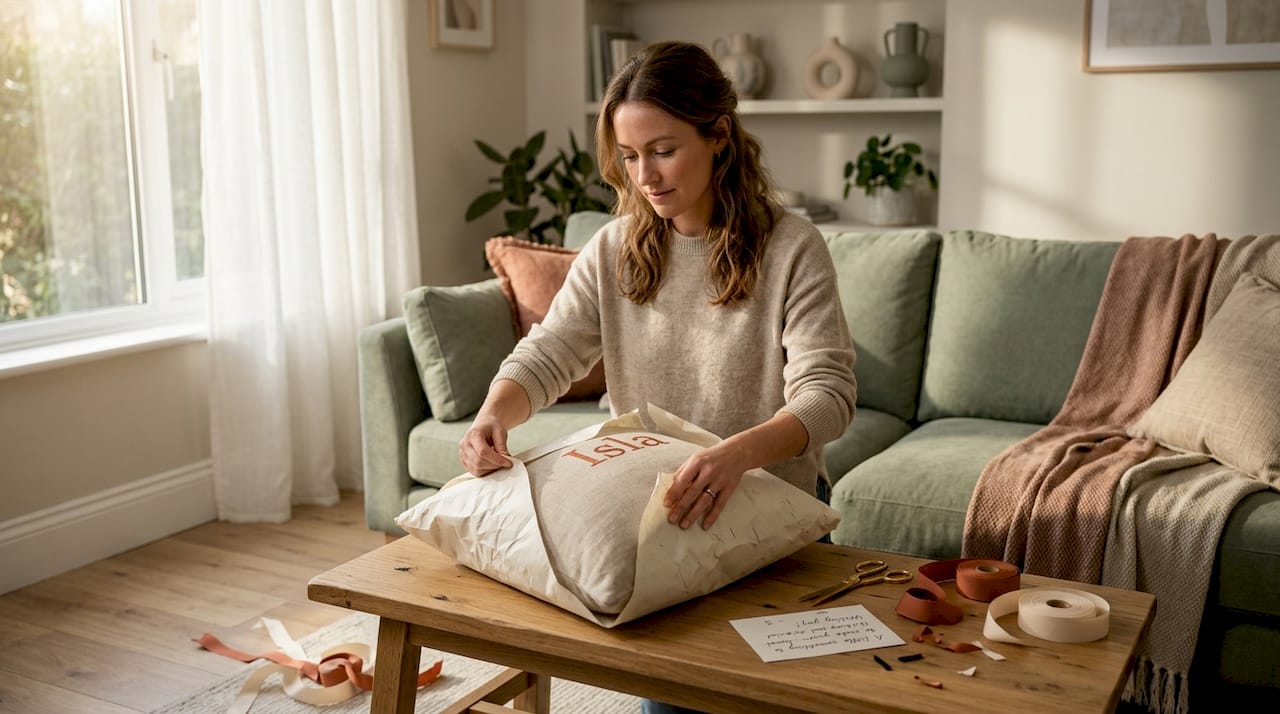
A 4-study paper confirms that receiving a customised gift leads recipients to appreciate it more, with the effect being mediated by vicarious pride. This is not a minor difference in how gifts are received. It fundamentally shifts the emotional register of the exchange, moving it from transaction to connection. A personalised cushion with a family surname, or a wall print featuring a shared memory, carries that extra emotional charge every time the recipient sees it in their home.
However, the same research introduces an important caveat. When the relationship between giver and recipient is characterised by anxiety, the vicarious pride effect is reduced. This means that personalisation is not a one-size-fits-all solution. Understanding the dynamics of your specific relationship is just as important as choosing the right product. The deeper and more trusting the relationship, the stronger the emotional payoff of a personalised home gift.
“The gift itself becomes secondary to the signal it sends. When someone sees their name on a piece of wall art or a set of personalised linen, what they are really seeing is evidence that someone chose them.”
Key emotional benefits of personalised home gifts include:
- Stronger memory formation: Unique items are remembered longer than generic alternatives
- Increased perceived effort: Recipients attribute more care and thought to customised items
- Deeper relational warmth: The gift acts as an ongoing reminder of the relationship
- Higher display likelihood: People are more likely to place personalised decor prominently in their home
Pro Tip: When personalising home gifts for acquaintances or newer friendships, keep the personalisation subtle. A monogram or a colour preference is enough to signal thoughtfulness without overstepping.
Personalisation as the new gifting standard
Understanding the emotional impact sets the stage for recognising how personalisation is swiftly becoming the go-to choice in modern gifting. What was once considered a luxury or novelty is now a baseline expectation for many consumers. If you are still choosing gifts the same way you did a decade ago, you may already be behind the curve.
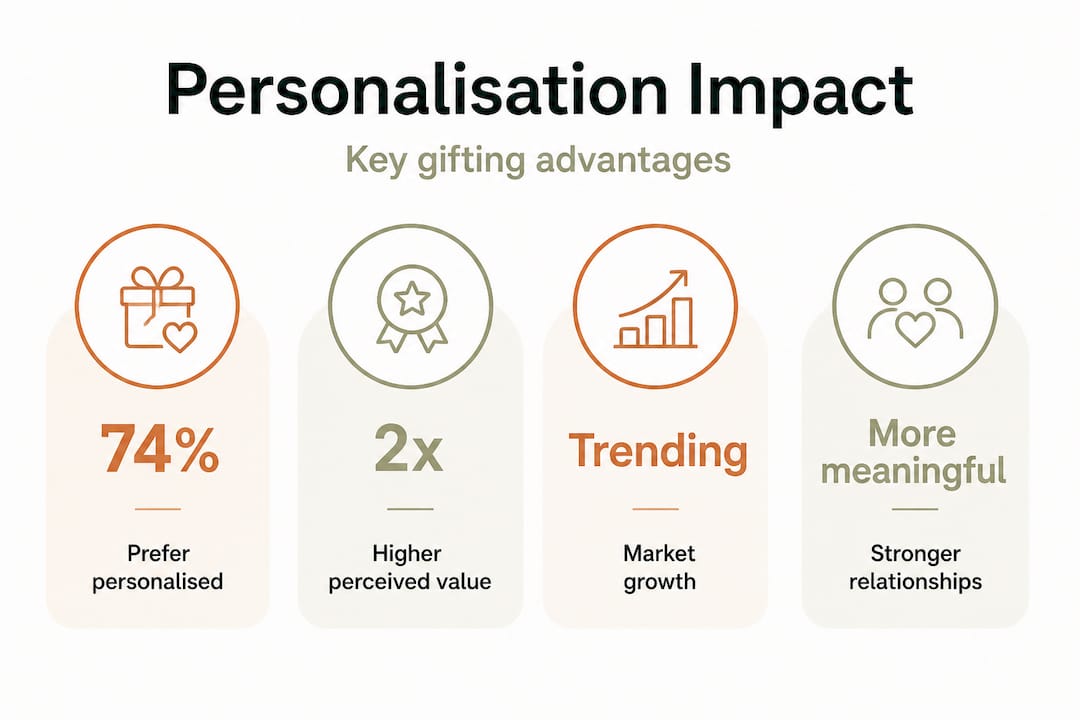
Research summarised by HBR highlights that Deloitte found nearly three-quarters of consumers are more likely to buy from brands that personalise, while McKinsey research shows that companies excelling at personalisation generate up to 40% more revenue than their peers. These are business statistics, yes, but they reflect a wider cultural shift: people now expect to be seen as individuals, not as one of many.
This expectation has crossed from retail into gifting culture. When you choose something generic, there is an increasing risk that it reads as low effort, even if it was expensive. Personalisation signals investment in the relationship rather than investment in a price tag alone.
| Stat | Source | Finding |
|---|---|---|
| ~74% of consumers prefer personalised brands | Deloitte via HBR | More likely to purchase |
| Up to 40% more revenue | McKinsey via HBR | For personalisation leaders |
| Gift appreciation increase | 4-study academic paper | Driven by vicarious pride |
Practical examples make this concrete. A custom name cushion in a recipient’s favourite colour does double duty: it works as attractive home decor and as a permanent reminder of a thoughtful gesture. A photo block featuring a shared memory transforms a blank shelf into a conversation piece. Both are affordable, widely available, and deeply meaningful in a way that a high-street candle set simply is not.
The power of style in gifting matters here too. Personalisation is most effective when it also aligns with the recipient’s aesthetic preferences. A beautifully designed personalised item beats a clunky personalised item every time, and that is where thoughtful curation becomes essential. Browsing stylish home accessories for gifting with personalisation in mind gives you a meaningful advantage.
Market trends: why personalised home decor gifts are on the rise
With personalisation established as a norm, it is important to see how market forces reinforce the case for choosing more unique gifts. The numbers here are hard to ignore.
According to research from HTF Market Intelligence, the global personalised home decor market is projected to grow at a notable compound annual growth rate, driven by two converging forces: the growing desire for self-expression and uniqueness in living spaces, and the increasing availability of digital customisation tools that make personalisation easier and more affordable than ever before.

This is not a passing trend. It reflects a fundamental change in how people relate to their homes and to the objects within them. Homes have become more personal, more curated, and more expressive of individual identity, particularly since more people began spending significant time at home. Gifts that align with this shift feel contemporary. Gifts that ignore it can feel dated.
| Feature | Personalised home gift | Generic home gift |
|---|---|---|
| Emotional impact | High | Low to moderate |
| Memorability | Very high | Moderate |
| Display likelihood | High | Variable |
| Cost premium | Slight to moderate | None |
| Trendiness | Very current | Declining |
| Uniqueness | Entirely unique | Often widely available |
Trends to watch in the personalised home decor gifting space include:
- Name and initial embroidery on textiles such as towels, linen, and cushion covers
- Custom coordinates or location-based prints for couples, families, or milestone moments
- Personalised storage solutions such as labelled baskets and engraved boxes
- Photo-based wall art including canvas prints, framed collages, and printed tiles
- Bespoke colour matching where gifts are chosen to fit a specific room palette
Keeping up with trends in home styling helps you ensure that personalised gifts feel fresh rather than formulaic. The best sellers in stylish home decor often reflect exactly where consumer tastes are heading, making them a reliable guide for inspired gift choices.
Building stronger relationships through thoughtful gift choices
Having considered the why and how of personalisation trends, let us explore what this means for personal relationships and how you can apply these ideas practically. A personalised home gift is not just a product. It is an act of attention.
Research from Qualtrics frames personalisation as a mechanism that makes people feel valued and understood, linking this directly to better satisfaction and stronger long-term loyalty. Translated into gift-giving: when your brother or best friend unwraps something made specifically for them, they do not just feel pleased. They feel seen. That feeling is the foundation of a stronger relationship.
Here is how to calibrate your approach for different relationship types:
- Close family members: Go bold. A personalised print of a family home, a cushion set with individual names, or a keepsake box engraved with a family motto all signal deep affection and long-term connection.
- Close friends: Match the personalisation to a shared memory or inside joke. A print referencing a city you both visited, or a textile in their well-known favourite colour combination, shows you were paying attention.
- Colleagues or professional connections: Keep it tasteful and subtle. A monogrammed notebook, a personalised pen holder, or a small plant pot with their initials maintains warmth without overstepping professional boundaries.
- New acquaintances or distant relatives: Choose personalisation that is more aspirational than intimate. A set of initials or a colour-matched item tied to their known aesthetic feels thoughtful without being too familiar.
- Recipients going through life transitions: New home, new baby, engagement or retirement are all moments when personalised home gifts carry exceptional meaning. These milestones invite more expressive personalisation without risk.
It is also worth revisiting the research caveat about relationship anxiety. Where a relationship is tense, uncertain, or in early stages, very personal gifts can sometimes feel pressuring rather than warm. In those situations, a decorating workflow for gift buyers can help you structure choices so that the gift feels generous without being overwhelming.
Pro Tip: For formal relationships, a single discreet personalisation, such as an initial on a clean-design ceramic vase, respects boundaries while still signalling care. Reserve multi-element personalisation for relationships where you know the recipient well. Understanding when to prioritise design in home gifts over personalisation depth is itself a form of thoughtfulness.
Why common gifting advice misses the impact of personalisation
Most gifting guides will tell you to think about the recipient’s interests, set a budget, and wrap things nicely. That advice is not wrong. It is just incomplete in a way that leaves a significant amount of emotional value on the table.
Here is what those guides rarely say. The psychological research on personalised gifting is remarkably clear and remarkably recent. The concept of vicarious pride as a mechanism for gift appreciation adds a layer of nuance that most off-the-shelf advice ignores entirely. You are not just picking a nice object. You are engineering an emotional moment, and the signal of personalisation is one of the most powerful tools available to you.
What most people also miss is the edge case: relationship anxiety reduces the effect. This is not a reason to avoid personalisation. It is a reason to be thoughtful about how you personalise rather than whether you do. A highly personal gift to someone with whom you have a complicated or anxious relationship dynamic can feel intrusive rather than warm. The same research that confirms the power of vicarious pride also flags that this effect is moderated by the relational context.
The real skill in personalised gifting is calibration. It is knowing when a name on a cushion is exactly right and when a single tasteful monogram is the smarter choice. Most advice collapses this nuance into “personalised gifts are thoughtful,” full stop. But the reality is more textured, and understanding it makes you a genuinely better gift buyer.
We think the best approach to personalising home gifts combines emotional intelligence with design sensitivity. The gift should feel like it was made for that person in their specific home, not just a generic item with their name stamped on it. That distinction is what separates a memorable gift from a forgettable one.
Find your next personalised home gift
Knowing the emotional and relational case for personalisation puts you in a genuinely strong position as a gift buyer. The next step is finding pieces that are both beautifully designed and easily customised, because a personalised item still needs to look good in someone’s home.
At Homable, we curate home decor with exactly this in mind. Whether you are looking for a unique housewarming gift, a milestone present for a close friend, or a finishing touch for a loved one’s living space, our collections bring together design quality and personalisation potential. Browse our curated selections to find items that tell a story, earn their place in any home, and create the kind of lasting impressions that generic gifts simply cannot match. Free shipping is available on orders over £100.
Frequently asked questions
What types of home gifts can be personalised?
Popular options include cushions, wall art, storage baskets, and photo decor, all easily customised and widely available across a range of budgets.
Do personalised gifts cost significantly more than standard ones?
Personalised gifts can carry a slight premium, but given that personalisation drives purchase likelihood and perceived value significantly, most recipients find the sentimental return far outweighs the small extra cost.
Is personalising home gifts appropriate for all relationships?
Personalisation works best in close, trusted relationships. For more formal or anxious relational dynamics, research confirms that vicarious pride is reduced, so a subtler, less personal approach is the wiser choice.
How does customisation affect the perceived value of a gift?
Studies show that recipients appreciate gifts more when they sense the giver invested genuine effort to customise the item, a psychological effect linked to vicarious pride.