Cart
0
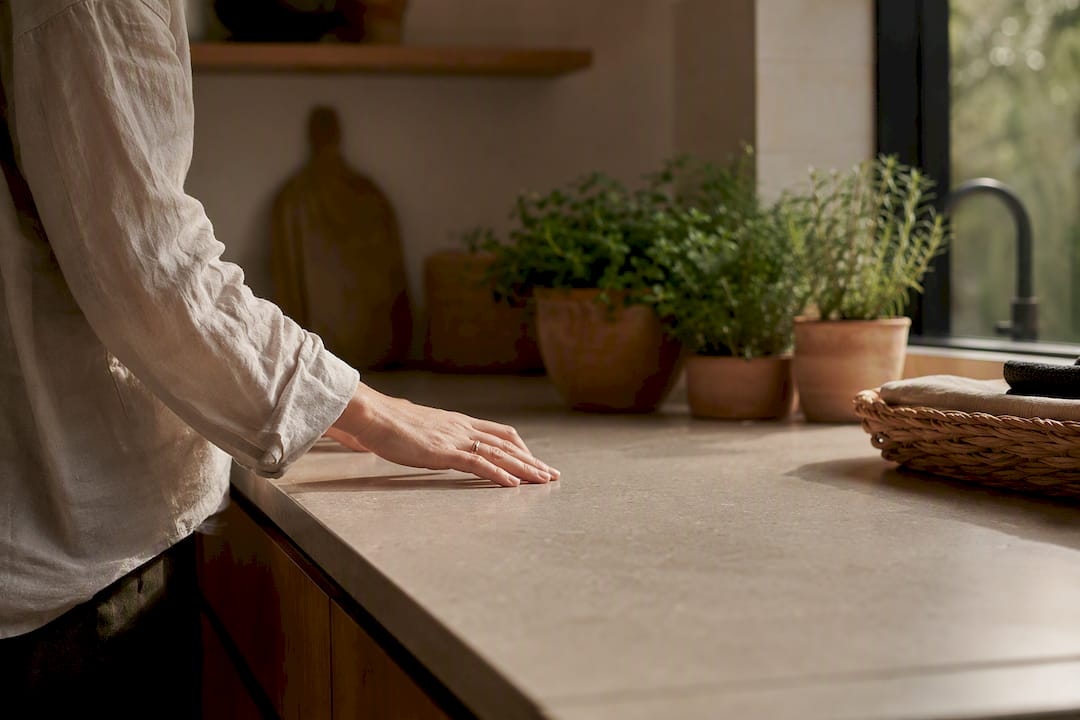
Kitchens in 2026 are shifting away from cold, clinical minimalism towards something warmer and more tactile: earthy neutrals, visible wood grain, and richer accent colours replace the stark white-and-grey schemes that dominated the last decade. The NKBA, Houzz survey data and design press from Forbes to Architectural Digest all point the same direction. Cristiano, Homable’s design editor, has pulled the headline shifts together here.
The trends worth knowing:
- Warm neutrals such as mushroom, taupe, and clay form the dominant base colour
- Muted greens and deeper blues as the accent of choice
- Natural stone and full-height stone backsplashes
- Visible wood grain returning to cabinetry
- Two-tone cabinet runs and hutch-style pantries
- Furniture-like islands with integrated seating
- Quieter, safety-focused appliances with panel-ready fronts
- Curved fixtures and layered, sculptural lighting
Key Takeaways
The defining shift for 2026 kitchens is a move toward warm earthy neutrals, visible wood grain and tactile natural materials, replacing the cool, flat minimalism of previous years.
| Point | Details |
|---|---|
| Base colour | Anchor the scheme in warm neutrals like mushroom or taupe, with green or blue as the accent. |
| Material investment | Spend on natural stone worktops and wood-grain cabinetry where daily wear shows fastest. |
| Storage first | Fit pull-outs, drawer organisers and pantry walls before spending on cosmetic upgrades. |
| Stage the update | Start with hardware and accessories, then move to paint and lighting, then structural changes. |
| Shop small first | Homable’s curated candle holders and ornaments let you test warm accents before a full renovation. |
Table of Contents
- Kitchen decor trends 2026: how to choose warm, grounded colour schemes
- Materials and surfaces: stone, wood grain and statement worktops
- Cabinetry and storage: two-tone runs, smarter storage and hutch pantries
- Islands and layout: furniture-like islands and multifunctional zones
- Appliances and technology: safety, quiet performance and design-forward appliances
- Finishes, hardware and lighting: warm metals, curves and sculptural fixtures
- Styling, accessories and camera-ready details
- How to adopt 2026 trends in stages
- Why trust this guide: Homable’s expertise and Cristiano’s perspective
- Emerging sustainability and eco-friendly kitchen decor trends
- Wellness-focused design: air quality and natural light in 2026 kitchens
- Flooring trends to complement the 2026 kitchen look
- Cristiano’s verdict on trend versus longevity
- Bring the 2026 look home with curated accessories
- Sources
Kitchen decor trends 2026: how to choose warm, grounded colour schemes
Warm neutrals now sit at the centre of the 2026 palette. Mushroom, taupe and warm off-white have replaced the flat greige and stark white that ruled kitchen colour for years, and designer surveys rank these tones as the most-cited base choice. Muted green leads the accent race, with deeper blues close behind. Both read as grounded rather than trendy, which is why designers are reaching for them instead of the cooler grey-blues that felt fashionable a few years ago.
Where you place the colour matters more than which colour you pick. A few rules keep the scheme from feeling accidental:
- Put colour on lower cabinets and islands, where it grounds the room
- Keep uppers and ceilings lighter to stop the space feeling boxed in
- Use backsplashes, bar stools or open shelving for accents you can swap later
- Stick to one dominant neutral and one accent, not three competing hues
Pro Tip: Buy a sample pot before committing to a full colour. Paint two A2-sized boards, prop one against a north-facing wall and one against a south-facing one, then check both morning and evening. Kitchen light shifts more than any other room in the house.
For a wider view of where UK interiors are heading this year, Homable’s 2026 interior design trends analysis covers how these palettes show up beyond the kitchen.
Materials and surfaces: stone, wood grain and statement worktops
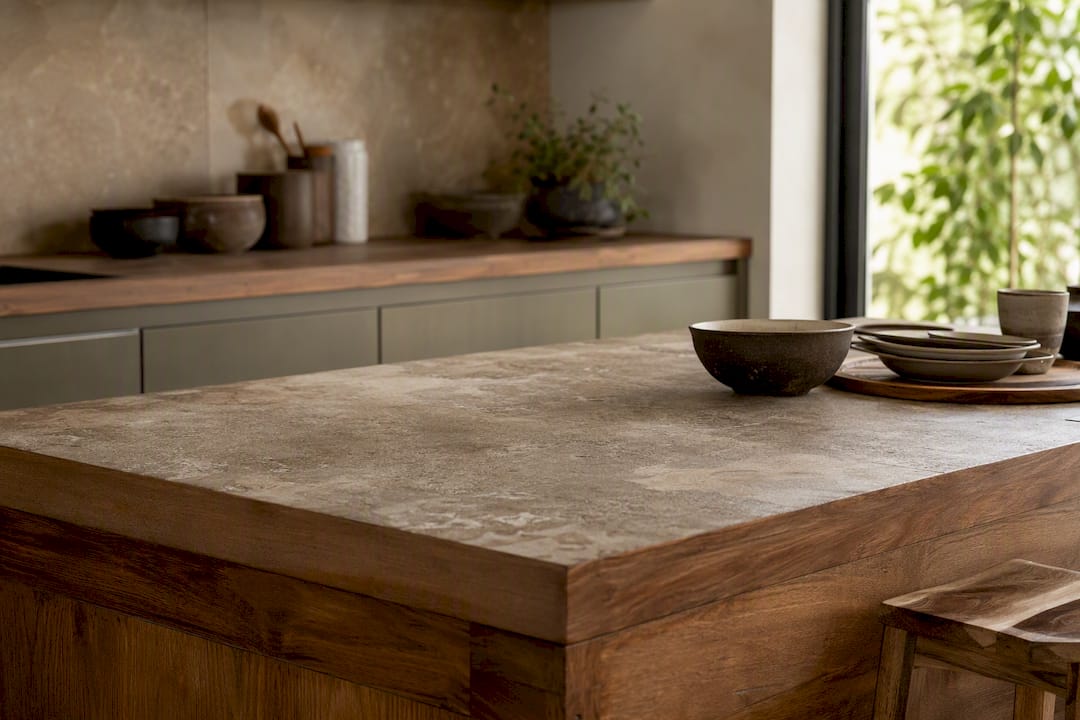
Natural stone, particularly quartzite, remains the material homeowners splurge on, and Architectural Digest notes full-height stone backsplashes running the slab straight up the wall rather than stopping at a standard 100mm upstand. It reads as one continuous, expensive gesture rather than a countertop with a matching strip behind it.
Wood grain is the other big material story. White oak and walnut are replacing flat painted slab doors, and design coverage confirms cabinetry is moving toward visible grain rather than uniform colour.
- Splurge on stone for worktops and islands, where daily wear shows fastest
- Use timber on cabinet fronts or open shelves, where a laminate alternative looks convincing
- Mix painted lowers with a wood-grain island for contrast without overcommitting
- Seal natural stone annually; it is durable but not maintenance-free
Cabinetry and storage: two-tone runs, smarter storage and hutch pantries
Two-tone cabinetry, usually a painted lower run against a timber or contrasting upper, has overtaken all-one-colour kitchens as the preferred look, and slab or flat-panel doors remain the dominant door style. Storage is where the real functional gains sit: BHG’s designer roundup names hutch-style cabinets, floor-to-ceiling pantries and pocket-door units as 2026 fixtures, not passing fads.
- Hutch cabinets with open display and closed storage combined
- Floor-to-ceiling pantry walls that hide small appliances
- Pocket doors that disappear rather than swing into a walkway
- Drawer organisers and pull-out bins fitted inside existing carcasses
Prioritise the storage mechanics first. Pull-outs and drawer organisers deliver more day-to-day value than a cosmetic refresh, because they fix how the kitchen actually functions rather than just how it looks. Homable’s guide to creative storage designs has practical options that fit inside existing cabinetry.
Islands and layout: furniture-like islands and multifunctional zones
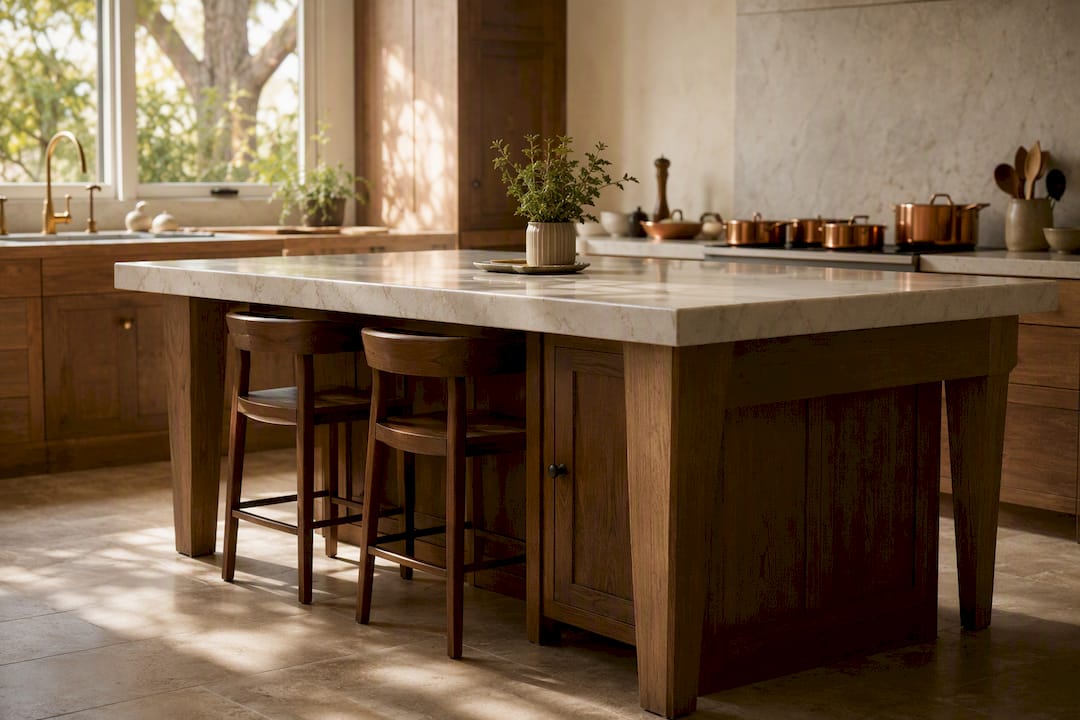
Islands are being styled as freestanding furniture rather than built-in blocks. Think Parsons-style legs, butcher-block edge detailing and a finish that differs from the rest of the run, and Veranda’s coverage confirms designers are treating the island as a statement piece in its own right, with integrated seating replacing separate breakfast tables.
Function still drives the layout. Decide early whether the island carries the hob, the sink or purely prep space, and plan sockets and pendant lighting around that choice before cabinetry gets ordered. As a rough guide, keep 1,050mm minimum clearance on every walking side, more if seating juts out.
Appliances and technology: safety, quiet performance and design-forward appliances
Appliance choices in 2026 lean towards quiet, monitored performance rather than flashy screens. Leak and gas detection, dishwashers rated for low decibel operation, multi-zone fridges and remote alert apps are becoming standard asks rather than upgrades. Homeowner survey data shows a clear shift toward practical, long-term features over decorative ones.
Panel-ready integration, where the fridge and dishwasher front match the cabinetry, continues to grow, alongside a smaller but visible trend for colourful undercounter appliances as a deliberate accent.
- Under-sink leak detectors as a low-cost retrofit for older kitchens
- Water filter taps instead of full appliance replacement
- Smart plugs on existing appliances for basic remote monitoring
- Panel-ready fronts only where you’re already replacing the unit
Finishes, hardware and lighting: warm metals, curves and sculptural fixtures
Aged brass and brushed bronze have taken over from chrome and matte black on taps, handles and pendant fittings. Curved cabinet edges and rounded island corners are softening the boxy layouts that defined the last decade.
- Warm metal hardware on cabinet pulls and tap fittings
- Curved island corners instead of hard 90-degree edges
- Layered lighting: task lights under cabinets, a statement pendant over the island, ambient wall lights
- Sculptural single-fitting pendants as a room’s focal point
Styling, accessories and camera-ready details
“Joydrenching” is Forbes’ term for layering mood-boosting accessories and eclectic tile patterns onto an otherwise neutral kitchen, and it is the fastest, cheapest way to make a plain scheme feel personal.
- Style open shelves with three to five objects, not a straight row
- Pick one statement tile pattern for a small splashback zone rather than the whole wall
- Coordinate tabletop items (jugs, bowls, candle holders) in one warm tone family
- Swap seasonal accents without touching cabinetry or worktops
Pro Tip: Photograph your shelf styling on your phone before deciding it’s finished. A cluttered arrangement often reads fine in person but chaotic on camera, and that’s the test most “camera-ready” kitchens are actually passing.
How to adopt 2026 trends in stages
You don’t need a full renovation to get the look.
- Quick refresh: swap hardware, add a warm accent through accessories, restyle open shelving
- Medium upgrade: repaint lower cabinets in a warm neutral, add a wood-grain island top, fit new lighting
- Full renovation: replace worktops in natural stone, rebuild storage with hutch or pantry units, reconfigure the island
Spend on worktops, hardware and lighting first; they carry the visual weight. Experiment with paint and accessories, since both are cheap to change again.
Pro Tip: Order physical samples of paint, stone and timber before buying anything. Screen colours and in-hand swatches under kitchen lighting can look surprisingly different.
Why trust this guide: Homable’s expertise and Cristiano’s perspective
Cristiano, Homable’s design editor, tracks trend reporting from the design press and translates it into practical, shoppable steps for UK homes. Homable curates its accessory range around genuine customer reviews and current design direction, not passing fads. For deeper context, see Homable’s design trends analysis for modern UK homes.
Emerging sustainability and eco-friendly kitchen decor trends
Sustainability is showing up less as a labelled “eco” aesthetic and more as material choice baked into the mainstream look. The renewed appetite for solid timber and wood-grain cabinetry, rather than laminate or high-gloss synthetic finishes, tends to favour materials with a longer lifespan and repairable surfaces over disposable ones.
Reclaimed and FSC-certified timber is increasingly specified for cabinetry fronts and open shelving, partly because it suits the visible-grain look designers already want, and partly because it answers growing homeowner demand for traceable materials. Natural stone, while resource-intensive to quarry, tends to outlast synthetic worktops by decades, which makes it arguably the more sustainable long-term choice even where the upfront footprint is higher.
Smaller, low-cost swaps matter too. Swapping single-use plastic storage for glass jars and woven baskets, choosing energy-rated appliances with genuinely quieter and more efficient motors, and fitting LED strip lighting throughout all reduce a kitchen’s ongoing running cost, not just its visual footprint. Composting stations built into pull-out bins are appearing more frequently in storage plans, reflecting a shift toward kitchens designed around waste separation from the outset rather than as an afterthought.
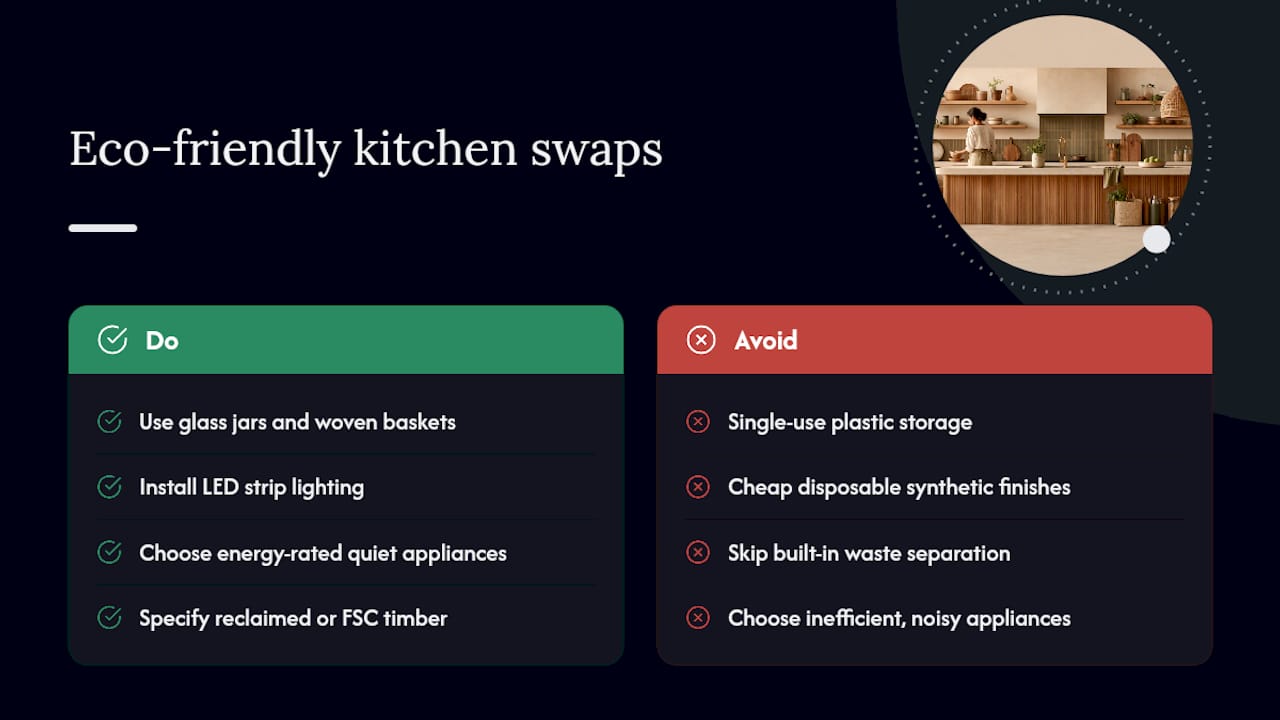
None of this requires a full renovation. A kitchen built around durable materials, repairable finishes and efficient appliances will generally age better and cost less to run than one chasing the cheapest version of the same trend.
Wellness-focused design: air quality and natural light in 2026 kitchens
Kitchens generate more airborne moisture, grease and cooking particulates than any other room, and 2026’s design brief increasingly treats air quality as a styling consideration rather than a purely mechanical one. Extractor hoods are being specified for genuine capacity rather than looks, and homeowners are pairing them with quieter, better-filtered units so they actually get used rather than switched off for the noise.
Natural light is being prioritised through layout, not just window size. Islands are being positioned to avoid blocking light paths from windows to the rest of the room, and reflective materials such as polished stone and glass-fronted cabinets are being used deliberately to bounce daylight further into windowless corners.
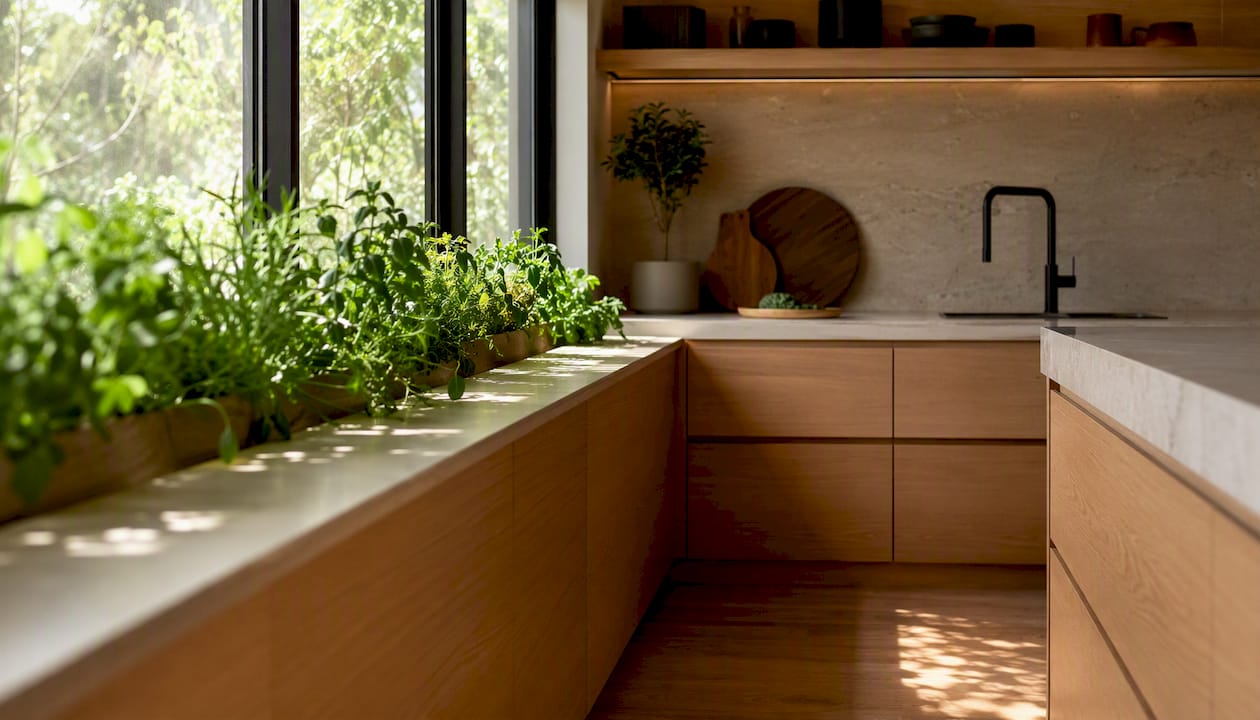
Indoor plants have moved from the windowsill to a genuine layout consideration, with dedicated shelf or counter space carved out for herbs and trailing greenery. It’s a small change, but it does double duty: fresh herbs within reach of the hob, and a living element that softens an otherwise hard-surfaced room.
Warmer, tactile materials play into this too. A kitchen finished in cold stone and gloss cabinetry can feel clinical regardless of air quality; the same room in warm timber, soft matte paint and layered lighting reads calmer even before you change a single mechanical system. Wellness in the 2026 kitchen is as much about how a room feels to stand in as what it measures.
Flooring trends to complement the 2026 kitchen look
Flooring is following the same warm, tactile direction as the rest of the kitchen. Large-format porcelain tiles that mimic natural stone or limestone remain popular for their durability, but the 2026 shift favours warmer, honed finishes over the cool, high-gloss versions that dominated a few years ago.
Engineered wood flooring is gaining ground in kitchens for the first time in years, largely because modern engineered constructions handle moisture and temperature changes far better than solid timber, while still delivering the visible grain that pairs naturally with wood-grain cabinetry. Herringbone and chevron laying patterns are appearing more frequently, adding texture underfoot that echoes the two-tone cabinetry trend above.
Terracotta and clay-toned tiles are having a genuine moment, tying directly into the warm neutral palette driving cabinet colour choices. Where a full floor replacement isn’t practical, a runner rug in a matching warm tone across the main walkway achieves a similar visual effect at a fraction of the cost and effort.
Underfloor heating specified beneath stone or porcelain tiles continues to grow in popularity, addressing the one genuine drawback of cold, hard flooring in a room where people often stand barefoot. Whatever the finish, durability and slip resistance still matter more in a kitchen than anywhere else in the house. A floor that looks warm but scratches or stains within a year undermines every other decision made in the room.
Cristiano’s verdict on trend versus longevity
Choose tactile materials that age well, timber, stone, warm metal, and keep colour in the swappable layer: paint, textiles, accessories. That’s how a 2026 kitchen still looks right in 2030.
Bring the 2026 look home with curated accessories
You don’t need to replace a single cabinet to bring the warmer, richer 2026 look into your kitchen. Homable’s curated accessories let you test the palette and texture shifts driving this year’s trend reports through candle holders, ornaments and small styling pieces, before you commit to anything structural.
The decorative silver flower candle holder is a straightforward example: a warm-toned accent piece that sits comfortably on open shelving or a kitchen island, exactly the kind of layered styling detail driving the “joydrenching” trend. Browse Homable’s wider collection of ornaments and accessories to find pieces that suit your own warm neutral base and start layering in accents this week.
Sources
- 5 Kitchen Trends To Watch In 2026: From Joydrenching To Camera-Ready
- 8 Kitchen Trends Designers Say Will Define 2026
- Designing a Kitchen in 2026: Six Trends to Watch
- Kitchen Cabinet Color Trends 2026 — Designer Rankings
- The Seven Kitchen Trends for 2026 That Interior Designers are Obsessing Over | Architectural Digest