Cart
0
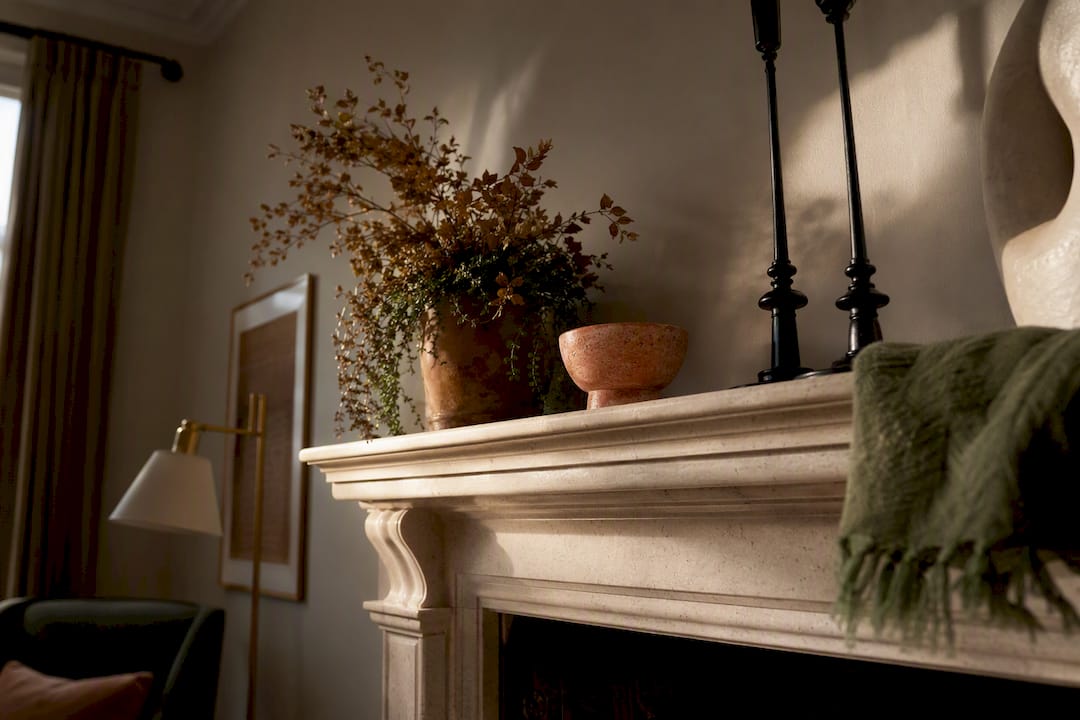
A styled mantel comes down to three things: one strong anchor piece, height variation on either side, and the discipline to stop before it gets cluttered. Symmetry still works, but 2026’s dominant look leans asymmetric and slightly imperfect. Below you’ll find twelve quick ideas to copy, the proportion rules that make them work, and the mistakes that quietly ruin most mantels.
TL;DR:
- Choose one strong anchor piece, like a mirror or artwork, that covers around two-thirds of the mantel’s width for optimal visual impact.
- Use taller objects at one or both ends to add weight, balancing with small fillers in odd-numbered groups to create natural rhythm.
- Limit supporting objects to no more than five to nine items and avoid overcrowding or using the mantel as storage space.
- Keep materials simple by mixing two or three finishes, and swap seasonal decor items in minutes by replacing fillers while keeping the anchor fixed.
- Use layered lighting, such as candles or lamps, and avoid clutter or mismatched scales to maintain a tidy, stylish appearance.
Table of Contents
- Mantel decor ideas you can copy this weekend
- The three-layer formula for arranging your mantel
- Common mantel styling mistakes and quick fixes
- Choosing materials, textures and proportions
- Seasonal mantel ideas that take minutes to update
- Lighting the mantel for evening atmosphere
- Why trust this advice
- A mantel is never really finished
- Start styling with the right pieces
- Sources
- FAQ
Mantel decor ideas you can copy this weekend
You don’t need a design degree to make a mantel look considered. You need a strong lead piece and a handful of supporting objects that vary in height and texture. Here are twelve starting points, from minimal to maximalist, that work across most mantel widths.
- Oversized leaning mirror. Lean rather than hang for instant asymmetry and depth.
- Gallery lean of three frames. Overlap slightly for a collected, lived-in feel.
- A single branch in a tall vase. Foraged or faux, this adds height without bulk.
- Stacked coffee-table books with an object on top. Something you already own becomes a filler layer.
- Coastal display. Driftwood, a glass float, and one linen-toned vase for a relaxed palette.
- Mixed candlestick trio. Vary the heights; brass, glass, and ceramic together read as curated, not match.
- A wreath, hung or leaning. Works year round when swapped for seasonal foliage.
- Trailing plant on one end. A pothos or ivy softens hard mantel edges nicely.
- A collected object cluster. Pottery, small sculptures, or travel finds grouped in odd numbers.
- Statement clock as anchor. Especially useful on a mantel too narrow for a large mirror.
- Botanical print leaning behind a low vase. Layers depth without needing wall fixings.
- Family photographs in mismatched frames. Instantly personal, and most homeowners already have the frames.
Pick one anchor, then add no more than two supporting layers. That restraint is what separates a styled mantel from a shelf that’s simply full.
The three-layer formula for arranging your mantel
Every well-styled mantel follows the same underlying structure, whatever the style. Designers call it the anchor, weight, and filler system: a large focal piece, taller objects for weight, and small items that fill gaps and add texture.
Start with the anchor. A mirror or artwork should sit at roughly two thirds of the mantel’s width, with 4 to 6 inches of clearance between its base and the mantel surface. Too small, and it looks lost. Too large, and it swallows everything around it.
Next comes weight: taller candlesticks, a vase, or a plant placed at one or both ends. Then filler, small vases, books, or trinkets that soften the transition between anchor and weight. Working in odd numbers (three or five objects) tends to look more natural than pairs, and aiming for five to nine objects total across high, medium, and low heights gives the arrangement rhythm.
- Symmetrical formal: matching lamps or candlesticks either end, centred mirror, one low object dead centre.
- Off-centre asymmetry: anchor shifted to one side carrying 60 to 70% of the visual weight, balanced by a single taller object alone on the other end.
Pro Tip: Build the arrangement symmetrical first to find balance, then shift one or two pieces off-centre. That’s how most professional “effortless” mantels are actually built.
Common mantel styling mistakes and quick fixes
Most mantel problems come down to a handful of repeat offenders, and each has a fast fix.
- Using it as storage. Post, keys, and remotes creep on. Fix: remove anything without a decorative purpose.
- Overcrowding. More than nine objects usually reads as cluttered. Fix: remove a third of what’s there.
- Wrong scale. A tiny frame on a wide mantel looks stranded. Fix: re-anchor with something closer to two-thirds width.
- Ignoring reflection. A mirror facing a cluttered bookshelf doubles the mess. Fix: swap it for art, or reposition furniture.
- Mismatched materials. Five different finishes fighting each other. Fix: unify around two or three materials maximum.
Run a quick seat-test: sit where you normally would in the room and look at the mantel from there. Anything that looks stray or fights the focal point gets removed or moved.
Choosing materials, textures and proportions
A stone or marble mantel already reads as a strong visual statement, so keep decor minimal, one or two objects plus greenery is often enough. Timber or painted mantels have more visual quiet, which means they can carry a fuller three-layer arrangement without feeling busy.
- Mix metallics, glass, and ceramics in twos or threes rather than one of everything.
- On narrow mantels, lean art instead of hanging it, and choose fewer, taller objects rather than a wide spread.
- On wide mantels, split into two loose groupings with visible negative space between them, roughly a third of the surface left clear so nothing competes for attention.
- If your living room already has strong architectural detail, take cues from it. This guide to choosing door and finish styles is a useful reference for keeping mantel finishes consistent with the rest of the room.
Homeowners styling a compact fireplace wall will find more scale-specific advice in Homable’s tips for decorating small spaces.
Seasonal mantel ideas that take minutes to update
Keep your main anchor fixed year-round and swap only the smaller filler pieces. That single habit makes seasonal refreshes fast and cheap.
- Spring: swap heavier objects for a jug of fresh or faux blossom.
- Summer: add shells, driftwood, or a linen runner for a coastal lift.
- Autumn: dried grasses, pampas stems, or a bowl of pinecones.
- Winter: evergreen sprigs and berries alongside your existing candlesticks.
Natural, foraged elements cost little and add genuine seasonal texture, and charity shop finds work just as well as new pieces for filler layers.
Lighting the mantel for evening atmosphere
Daylight styling and evening styling aren’t the same job. Layered light, taper candles, a sconce, or a lamp nearby, changes how the whole arrangement reads once the sun goes down. A cluster of mixed-height candlesticks doubles as decor by day and mood lighting by night, and flameless LED candles give the same flicker without the risk. A mirror behind the display bounces the glow further into the room.
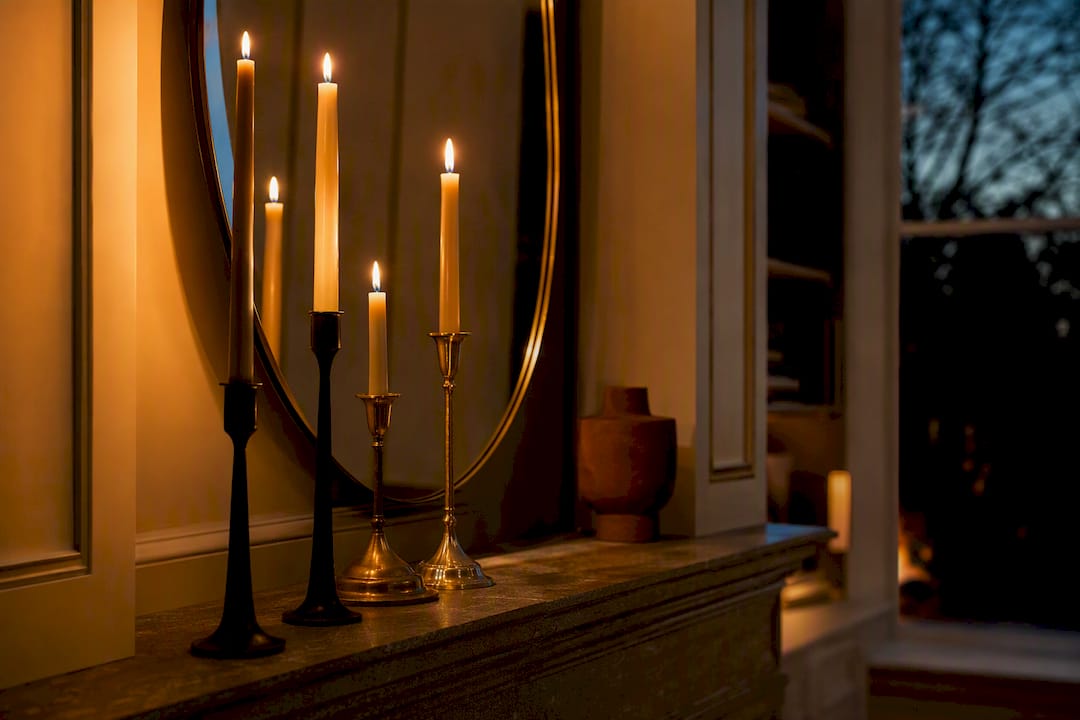
Pro Tip: Keep any open flame well clear of trailing greenery, ribbon, or fabric runners; a battery candle solves this instantly on a busy mantel.
Why trust this advice
This guide follows the same three-layer system used across professional styling resources, paired with the 2026 shift toward deliberate asymmetry over strict symmetry. Homable’s own step-by-step mantel styling guide walks through the same formula with visual examples, and the modern living room accents piece covers choosing focal pieces that work beyond just the mantel. Written by Cristiano for the Homable blog, this article draws on established design frameworks rather than a single fixed template.
A mantel is never really finished
Treat your mantel as a vignette you revisit, not a project you complete once. The best ones I’ve seen change every few months, a swapped vase here, a removed object there, and they’re rarely the result of one perfect afternoon. Give yourself permission to edit ruthlessly and often; a mantel rewards small, low-effort experiments far more than it rewards getting it exactly right the first time.
— Cristiano
Start styling with the right pieces
If your mantel needs a stronger anchor for candlelight, the Decorative Silver Flower Candle Holder does double duty as both a weight piece and an evening light source, exactly the kind of multi-purpose object the three-layer formula rewards.

It works as a single statement piece on a narrow mantel or as part of a mixed-height cluster on a wider one, without needing a second trip to find matching candlesticks. A home decor range is available, built around pieces like this: ready to shop directly rather than sourced piecemeal from several shops. Browse collections to pick an anchor piece today.
Sources
- How to Decorate a Mantel — Tidbits & Twine
- How to Decorate a Mantel in 5 Easy Steps, According to Design Pros — Vogue
FAQ
What looks nice on a mantelpiece?
A single strong anchor (mirror, art, or wreath), one or two taller weight pieces, and small filler items like books or candlesticks in odd-numbered groupings.
How should I style a mantel in 2026?
Lean toward deliberate asymmetry: an off-centre anchor carrying most of the visual weight, balanced by one lighter piece on the other side, rather than perfectly matched pairs.
How should I decorate my mantle?
Follow the anchor, weight, and filler formula, size your anchor to roughly two-thirds of the mantel’s width, and leave about a third of the surface empty so each object stands out.
What are common mantel design mistakes?
Using the mantel as storage, overcrowding it with too many small objects, and choosing a mirror or artwork that’s the wrong scale for the mantel’s width are the most frequent issues.