Cart
0
TL;DR:
- Sustainable home decor involves considering the full life cycle of items, from responsible sourcing to end-of-life disposal. It emphasizes repairing, reusing, and choosing certified, durable materials rather than relying on vague green claims or trendy fast furniture. True sustainability requires a mindset of buying less, caring for what we already own, and building a personalized, long-lasting home.
Sustainable home decor has a reputation problem. Many people assume it means expensive linen cushions in various shades of beige, or spending hours hunting charity shops for something that vaguely works. The truth is rather different. Sustainable home decor is an approach that applies sustainability across the full life cycle of decor items and the space they inhabit, which means it touches everything from how a rug is woven to how long a lamp lasts before you replace it. This guide will show you what that really means, how to spot genuine products, and how to decorate beautifully without overspending or being misled.
Table of Contents
- What makes home decor sustainable?
- How to identify sustainable decor: certifications, materials and questions
- The reality of green claims: navigating greenwashing in the UK decor market
- Practical ways to decorate sustainably and stylishly on a budget
- Why true sustainable decor is a mindset, not just a shopping choice
- Discover more sustainable home inspiration
- Frequently asked questions
Key Takeaways
| Point | Details |
|---|---|
| Whole-life mindset | Sustainable home decor means considering sourcing, use, and end-of-life for every item, not just whether materials are natural. |
| Certifications matter | Look for trusted certifications and clear claims to avoid greenwashing when shopping for decor. |
| Style and savings align | Upcycling, mixing second-hand, and choosing long-lasting designs can be stylish, sustainable, and budget-friendly. |
| Vague claims warning | Many green claims in the UK are unproven or misleading, so learn how to spot reliable information. |
What makes home decor sustainable?
It would be easy to assume that buying a jute basket or a beeswax candle automatically makes your home decor sustainable. In reality, the picture is more layered than that.
Sustainable home decor covers responsible sourcing, low-impact manufacturing, healthy indoor air, ease of care and repair, and end-of-life options. Each of those elements matters. A cushion made from organic cotton is a good start, but if it was dyed with harsh chemicals, shipped halfway around the world in non-recyclable packaging, and is likely to fall apart within a year, it misses the point.
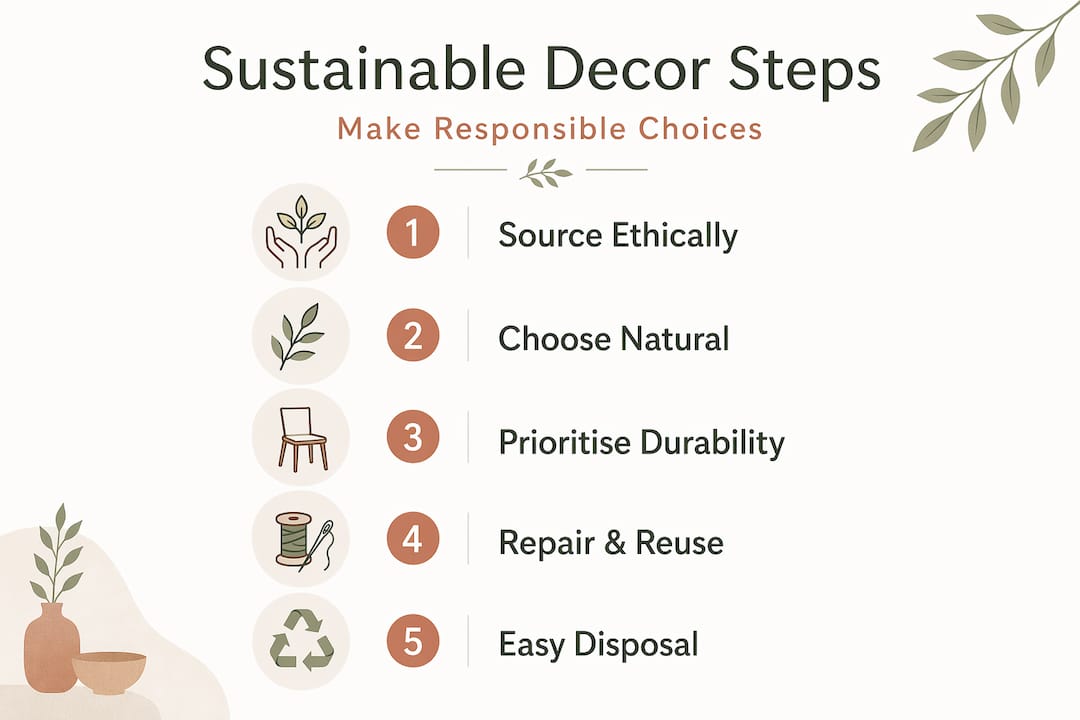
UK guidance emphasises using existing materials where possible and choosing natural, long-lasting options. That means before you buy anything new, the most sustainable action is usually to look at what you already own. A tired wooden side table repainted in a bold colour, or a set of curtains re-hung in a different room, can transform a space without any new purchase at all.
Here are the core principles that genuinely underpin sustainable home decor:
- Responsible sourcing: Where do the raw materials come from, and are workers paid fairly?
- Low-impact manufacturing: Is production energy-efficient, and does it avoid harmful chemicals?
- Healthy indoor air quality: Do materials off-gas volatile organic compounds (VOCs) that harm your health at home?
- Durability and repairability: Can you fix it when it breaks, or is it designed to be thrown away?
- End-of-life options: Can the product be composted, recycled, or donated when you’re done with it?
Take cork as an example. Cork is harvested by stripping bark from living trees, which then regenerate over roughly nine years. The process sequesters carbon, requires no pesticides, and produces a material that is naturally antimicrobial, biodegradable, and incredibly versatile as a decor material. That is what a high-sustainability material looks like in practice.
| Material | Key sustainability benefit | Potential concern |
|---|---|---|
| Cork | Renewable, carbon-sequestering | Limited colour options without dyeing |
| Reclaimed wood | Reduces deforestation | May need checking for lead paint |
| Organic cotton | Low pesticide use | Still water-intensive to grow |
| Recycled glass | Reduces landfill | Energy-intensive to process |
| Bamboo | Fast-growing, renewable | Often processed with chemicals |
“The most responsible starting point is always to ask whether you need something new at all. Using what you already have, repairing it, and rethinking its purpose within a space is the highest form of sustainable decorating.” Interior designer, House & Garden
Understanding why sustainable homeware matters goes far beyond the individual product. It is about the cumulative impact of millions of households making slightly better choices, adding up to significant change over time.
How to identify sustainable decor: certifications, materials and questions
Once you understand what makes decor sustainable, knowing how to identify these products in shops or online is the next step. This is where certifications become genuinely useful, rather than just a box-ticking exercise.
UK editorial guidance highlights certifications like GOTS, Oeko-Tex, Bluesign, RWS, OCS, and FSC for textiles and decor. Each of these tells you something specific:
| Certification | What it covers | Why it matters |
|---|---|---|
| GOTS (Global Organic Textile Standard) | Organic fibre processing and social criteria | Covers the entire supply chain, not just raw material |
| Oeko-Tex Standard 100 | Harmful substance testing in finished products | Protects indoor air quality and skin contact safety |
| Bluesign | Chemical, resource, and consumer safety in textiles | Focused on responsible manufacturing |
| RWS (Responsible Wool Standard) | Animal welfare and land management | Prevents land degradation in wool production |
| OCS (Organic Content Standard) | Percentage of organic material in a product | Verifies organic claims independently |
| FSC (Forest Stewardship Council) | Responsibly managed forests for wood and paper | Prevents illegal logging and habitat destruction |
Spotting genuine claims requires some critical thinking. To avoid greenwashing, consumers should seek specifics and third-party proof rather than relying on a brand’s self-description. Vague words like “eco-friendly,” “natural,” or “green” without any supporting evidence should prompt you to look closer.
Here are the key questions to ask before buying any decor item:
- What is the primary material, and where does it come from?
- Has it been independently certified by a recognised third party?
- What chemicals or dyes were used in processing, and are they disclosed?
- What is the expected lifespan, and can it be repaired?
- What happens to this product at the end of its life?
- Does the brand publish any supply chain transparency or environmental reports?
Pro Tip: Don’t assume “natural” always means sustainable. Wool can be highly sustainable or deeply problematic depending on how and where it was farmed. Bamboo is often marketed as an eco wonder material, but many bamboo products are heavily processed with chemicals that undermine the environmental benefit. Always look for the specific certification rather than accepting the claim at face value.
Exploring a structured sustainable decor workflow can help you build these questions into a consistent habit rather than an occasional afterthought.
The reality of green claims: navigating greenwashing in the UK decor market
With so many claims in the market, it is easy to feel lost, so what should you believe and what should you question?
Greenwashing is the practice of presenting a product or brand as more environmentally friendly than it genuinely is. It is widespread across consumer goods, and the home decor sector is not exempt. The motivation is straightforward: sustainability sells. When brands know that consumers are increasingly making choices based on environmental values, the temptation to dress up ordinary products in green language is significant.
The data is striking. Nearly two-thirds of products in a Which? study failed two or more of the UK Competition and Markets Authority’s Green Claims Code checks, and over half of green claims examined across the EU were found to be vague or misleading. That is not a fringe problem. It is the norm.
Common warning signs of greenwashing in home decor:
- Vague language with no specifics: “eco-conscious collection,” “sustainably inspired,” “nature-friendly”
- No mention of certifications or third-party verification
- Sustainability claims on only one aspect of the product (e.g., packaging) while ignoring manufacturing
- Imagery of forests, water, or wildlife with no substantive environmental claim attached
- Claims of being “carbon neutral” or “net zero” without any methodology explained
- Overuse of green and earth tones in branding to imply environmental credentials
The UK’s Green Claims Code, published by the CMA, sets out clear expectations: claims must be truthful, clear, and backed by robust evidence. If a brand cannot point you to a specific report, certification, or independently verifiable data to support its claims, those claims are not worth much.
“Sustainability claims that cannot be evidenced or that apply only to a small part of a product’s lifecycle are misleading by design, whether or not a brand intends them to be.”
The best approach is healthy scepticism combined with practical research. When you are browsing for items to refresh your interiors, treat any environmental claim as a starting point for investigation rather than a settled fact. Brands that genuinely invest in sustainability are usually eager to share the details. Those that are vague have good reason to be.
Practical ways to decorate sustainably and stylishly on a budget
Knowing how to spot sustainable products is powerful, but sustainability and style are most effective when put into creative, practical action at home. The reassuring news is that some of the most stylish sustainable choices are also the most affordable.
Salvage and longevity strategies can meet both budget and sustainability goals simultaneously. You do not need to replace everything to create a fresh, considered interior. Here is how to approach it room by room:
-
Start with what you have. Before anything else, move pieces between rooms, rearrange furniture, and see what a change of context does. A bookshelf from the bedroom might become a striking feature in a hallway.
-
Repair and restore. A scratched wooden frame, a wobbly chair leg, or a faded lampshade can often be fixed for a few pounds and a spare hour. Furniture wax, wood filler, and fabric dye are all inexpensive and highly effective.
-
Shop second-hand strategically. Charity shops, online marketplaces, and salvage yards are full of genuine quality pieces at low prices. Focus on solid wood furniture, ceramic accessories, and vintage textiles, all of which tend to outlast modern flat-pack alternatives considerably.
-
Invest in one statement piece per room. Rather than filling a space with many inexpensive items, buy one well-made, certified-sustainable piece and build the room around it. A quality rug, a handmade ceramic vase, or a solid oak console table creates more impact and lasts far longer.
-
Use plants as decor. Indoor plants improve air quality, cost very little, and can be propagated indefinitely. A trailing pothos or a bold monstera does more for a room’s character than almost any bought accessory.
-
Choose timeless over trendy. Trend-driven pieces have a short lifespan because they look dated quickly and end up discarded. Neutral, classic forms in quality materials stay relevant across many years.
Pro Tip: When shopping for rugs, curtains, or upholstery, focus on durability first. A cheap synthetic rug needs replacing in two to three years, while a quality wool or jute alternative can last a decade or more. The initial cost may be higher, but the cost per year is often lower, and you avoid the environmental impact of repeated replacement.
For more ideas on combining style with responsibility, explore these affordable decor ideas and a practical decorating checklist that walks you through the process systematically.
Why true sustainable decor is a mindset, not just a shopping choice
Here is the contrarian view that most sustainability content skirts around: the problem with the “sustainable shopping” framing is that it still positions consuming as the default activity, just with better choices attached.
The most genuinely sustainable thing you can do in your home is to buy less. Not “buy better,” though that matters too. Buy less. The product that was never manufactured, never shipped, and never disposed of has zero environmental footprint. That is not a call to live in an empty room. It is a call to pause before every purchase and ask whether it is truly necessary.
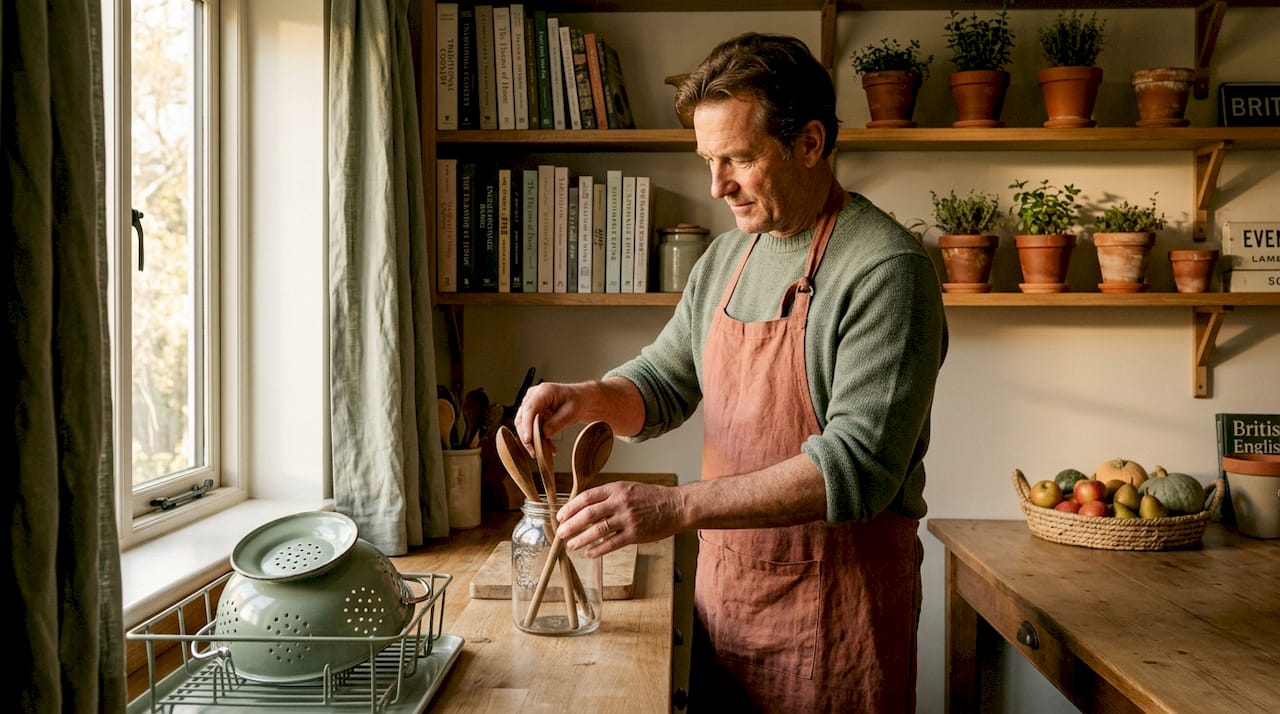
Real sustainability in the home comes from rethinking the habit of constant refreshing. The interior design industry, and much of the content around it, profits from the idea that your home needs regular updating to feel current and cared for. It does not. A well-chosen, well-maintained home looks better at ten years than a trend-chasing one does at two.
Sustainable methodology should cover the entire lifecycle of a product, not just material claims. That framing is important because it shifts the conversation from “what should I buy?” to “how should I live?” It asks you to think about care, repair, and eventual replacement all at the point of purchase, not after the fact.
We think the most underrated sustainable decor strategy is simply falling in love with what you already own. Styling what you have, caring for it properly, and resisting the pull of the new creates a home that feels genuinely personal rather than assembled from a trend catalogue. That is both more sustainable and, frankly, more interesting.
If you want to build this approach into a consistent practice, working through an eco-friendly style workflow can help structure those decisions so they become second nature rather than an effort.
Discover more sustainable home inspiration
Putting these principles into action is easier when you have the right products and resources to hand. At Homable, we curate collections with quality, longevity, and style firmly in mind, because we believe that decorating responsibly should never mean compromising on how your home looks and feels.
Whether you are starting from scratch or adding considered pieces to a space you love, Homable sustainable decor offers a broad range of accessories, textiles, and storage solutions that balance modern aesthetics with durability. Looking for ways to keep your space both beautiful and organised? Our guide to decorative storage solutions is a great place to explore practical ideas that serve double duty. We also offer free shipping on orders over £100, making it easier to invest in the pieces that will genuinely last.
Frequently asked questions
How can I tell if a decor brand is truly sustainable?
Check for clear, evidenced claims, third-party certifications, and specific information about sourcing and manufacturing on the product or brand’s site. Consumers should seek clear evidence and relevant certifications rather than accepting vague environmental language at face value.
Are second-hand or upcycled items considered sustainable decor?
Yes, second-hand and upcycled pieces are among the most sustainable choices available because they extend product lifespan and reduce the demand for new manufacturing. Salvage and longevity strategies can meet both budget and sustainability goals at the same time.
Which certifications matter most for sustainable home textiles in the UK?
Look for GOTS, Oeko-Tex, Bluesign, RWS, OCS, and FSC to guarantee genuine sustainability across different aspects of textile production. UK guidance specifically points shoppers to these certifications as the most reliable markers available.
Does sustainable home decor cost more than standard options?
Not necessarily. Using what you already have, upcycling, and choosing durable pieces often saves money in the long run compared with frequent replacements. Affordability and style can genuinely go hand in hand when you focus on longevity rather than low upfront cost alone.