Cart
0
TL;DR:
- Accessories in home design are vital as they shape a space’s mood, function, and visual depth. Properly balancing functional and decorative accessories, with attention to scale and grouping, creates harmonious and inviting rooms. Overshopping and ignoring the room’s existing palette often lead to clutter and visual discord.
Accessories are the essential finishing layer in home design, transforming a room from merely furnished to genuinely lived in. Interior designers refer to this layer as “decorative styling” or “accessorising,” and it covers everything from cushions and rugs to artwork, lighting, and sculptural objects. These non-structural items shape mood and add visual depth that furniture and architecture alone cannot provide. The role of accessories in home design is not cosmetic. It is structural to how a space feels, functions, and tells its story.
What are the main types of home accessories and their distinct roles?
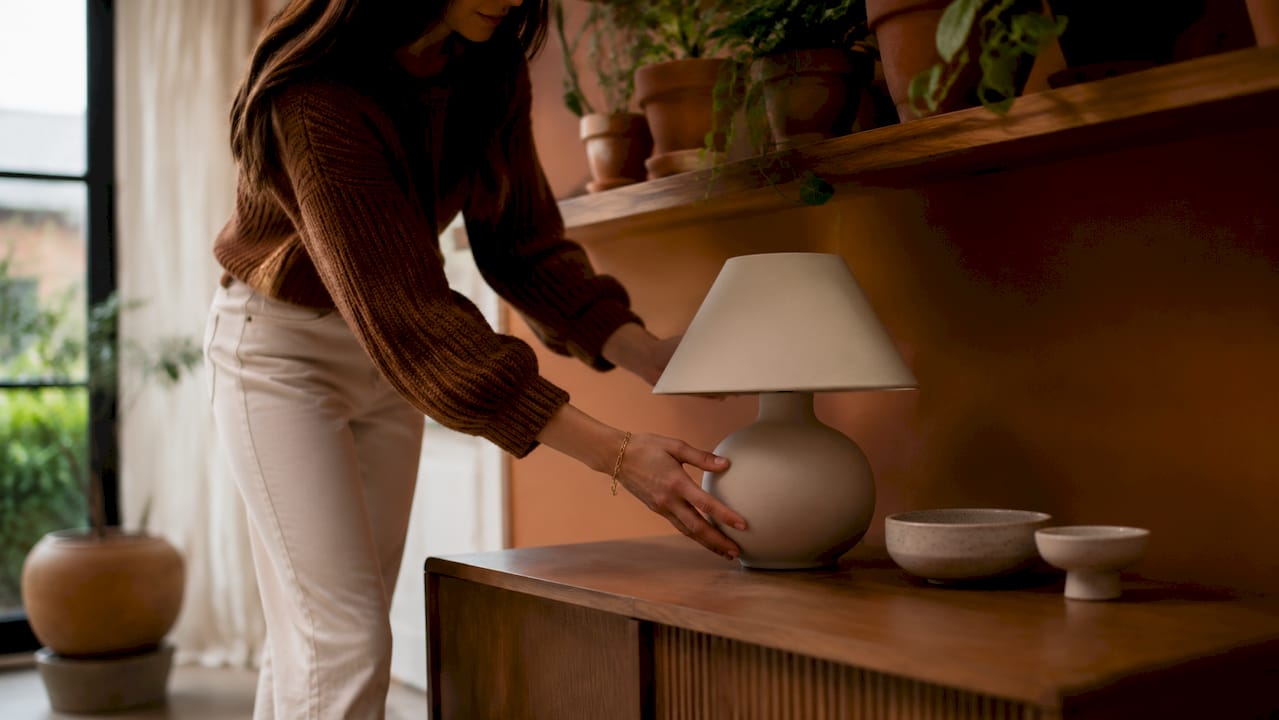
Accessories in interior design fall into two clear categories: functional and decorative. Understanding the difference is the first step to choosing well.
Functional accessories solve practical problems while contributing to the overall look of a space. Trays, storage baskets, organisers, and lighting all belong here. Successful interior design balances these practical items with purely aesthetic ones, and professionals prioritise functional accessories in high-traffic areas like kitchens, hallways, and home offices. A well-chosen storage basket does two jobs at once: it contains clutter and adds texture.
Decorative accessories carry the aesthetic narrative. These include:
- Artwork and framed prints that anchor a wall and set the room’s tone
- Sculptural objects and ornaments that add three-dimensional interest
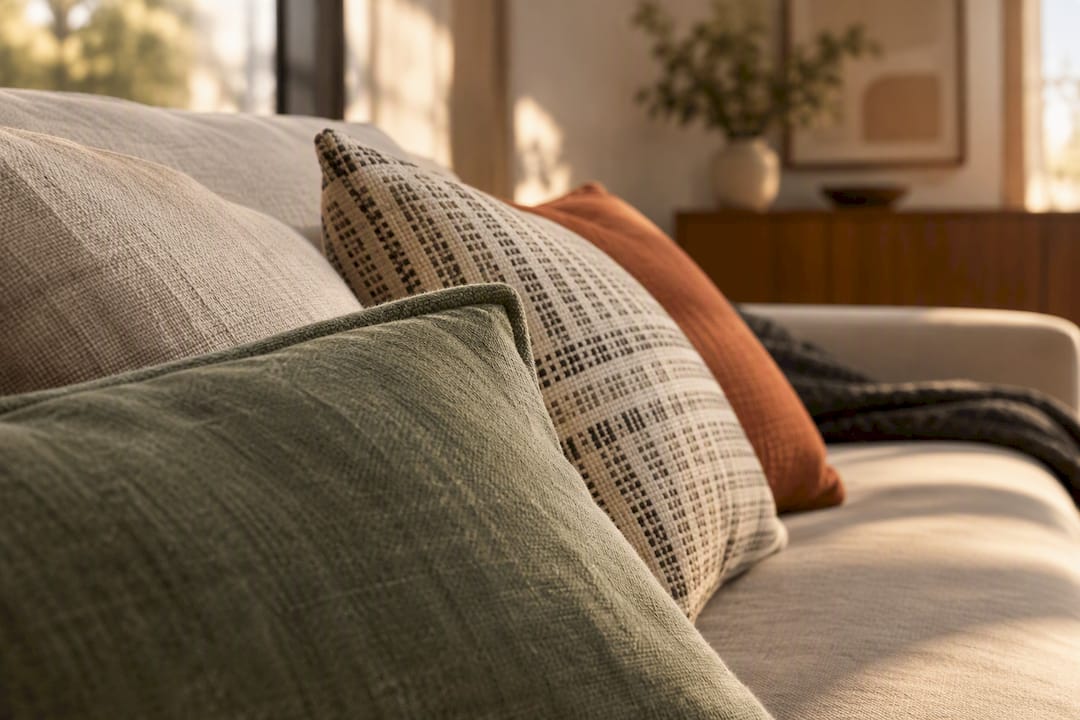
- Cushions and throws that introduce colour, pattern, and softness
- Rugs that define zones and ground furniture groupings
- Candles and vases that bring organic shapes and seasonal change
The most effective rooms use both types in deliberate proportion. Professionals apply a simple rule: one in, one out. When a new decorative piece arrives, something else leaves. This prevents the slow accumulation of clutter that undermines even the most considered scheme.
Pro Tip: In high-traffic rooms, start with functional accessories first. Once storage and lighting are resolved, layer decorative pieces on top. This order prevents you from buying beautiful objects that have nowhere logical to live.
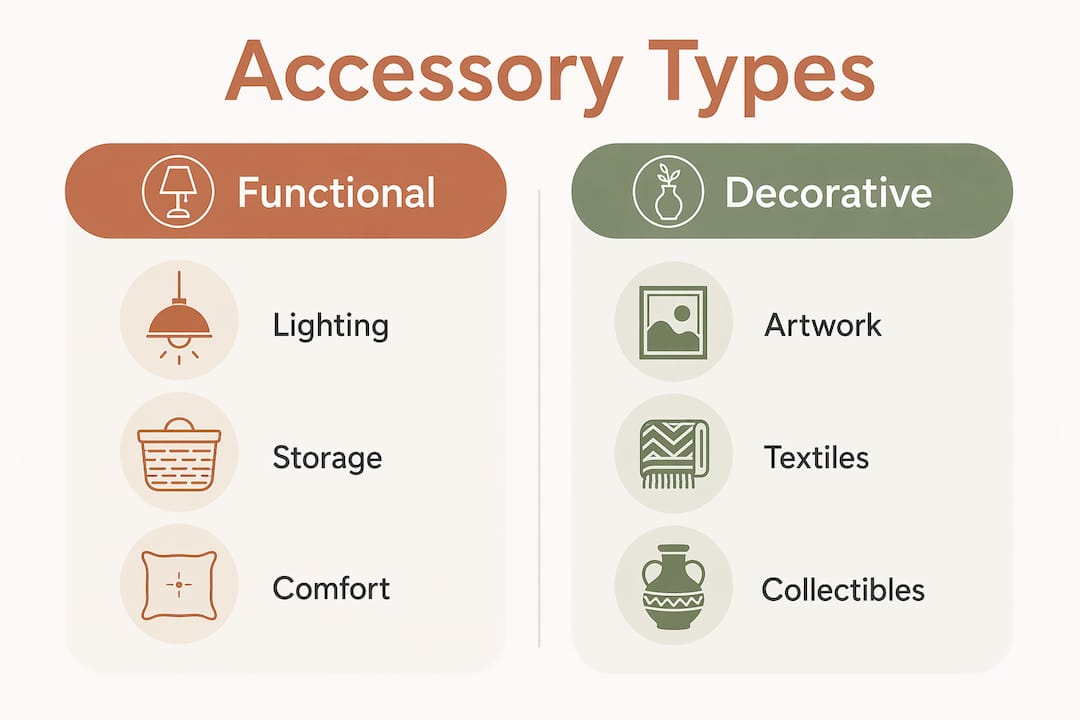
Knowing how to choose home accessories begins with identifying which category a room actually needs more of. Most homes are short on functional accessories and overloaded with decorative ones that were chosen without a plan.
How do scale, proportion, and grouping affect accessory selection?
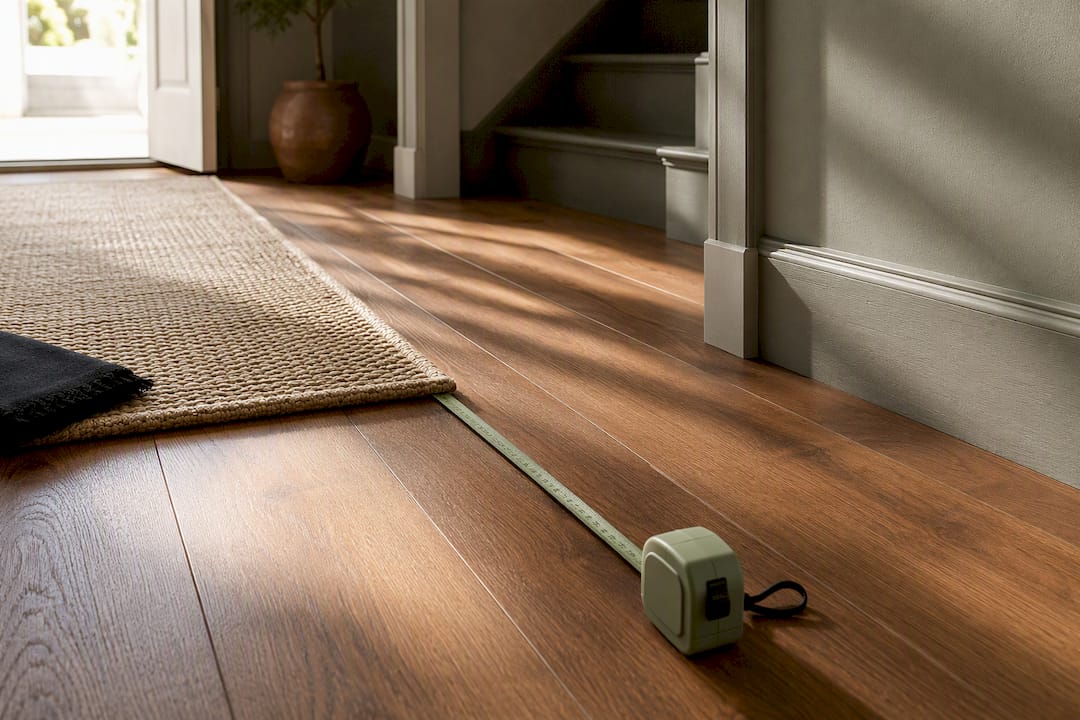
Scale is the single most common reason accessories fail. A small vase on a large console table looks lost. An oversized mirror in a narrow hallway feels oppressive. Getting scale right requires measuring, not guessing.
For wall art, large walls need artwork that spans 60–70% of the wall’s width. Anything smaller reads as an afterthought. On surfaces like sideboards and coffee tables, the principle is one dominant piece supported by two or three smaller accents, with deliberate negative space left around them. That empty space is not wasted. It gives the eye somewhere to rest and makes each object more visible.
The table below shows how scale choices shift across different room zones:
| Room zone | Dominant piece | Supporting accents | Negative space |
|---|---|---|---|
| Living room coffee table | Large tray or sculptural bowl | Two to three smaller objects | At least one third of surface clear |
| Bedroom bedside table | Lamp or stack of books | One small ornament or plant | Keep surface uncluttered |
| Hallway console table | Mirror or tall vase | Two flanking objects | Space between objects |
| Dining sideboard | Artwork or large vessel | Candles or smaller ceramics | Clear ends of surface |
Grouping objects in odd numbers like 3, 5, or 7 creates more visually stimulating arrangements than even-numbered pairs. This works because odd groupings create a natural focal point. The eye moves between objects rather than settling symmetrically and stopping. Varying the heights and depths of objects within a group reinforces this movement and adds depth to what would otherwise be a flat display.
Pro Tip: When grouping objects on a shelf or table, place the tallest item at the back and slightly off-centre. Bring shorter pieces forward and to the side. This creates a diagonal line that guides the eye naturally across the arrangement.
What are common misconceptions and styling mistakes with home accessories?
The most damaging misconception is that accessories are fillers, chosen after the “real” design decisions are made. Accessories are actually the connective tissue of a room, guiding the eye, creating rhythm, and building a deliberate visual narrative. Treating them as an afterthought produces spaces that feel incomplete regardless of how expensive the furniture is.
These are the most common mistakes homeowners make:
- Choosing accessories in isolation. Buying a beautiful object in a shop without considering the room’s existing colour palette, scale, and mood almost always leads to mismatched results. Integrated selection based on the room’s tone is what produces harmony.
- Over-accessorising. More is rarely more. Crowded surfaces create visual noise that makes a room feel smaller and more stressful. Restraint is a design skill, not a compromise.
- Ignoring scale. Placing small accessories on large surfaces, or large pieces in tight spaces, breaks the visual logic of a room immediately.
- Mismatching the mood. Industrial metal objects in a soft, romantic bedroom create friction. Every accessory should reinforce the room’s established atmosphere, not contradict it.
- Accumulating without editing. Accessories collected gradually over time without a plan produce what designers call a “collected by accident” look. It reads as clutter, not character.
Avoiding these common home styling mistakes requires one habit above all others: assess the room before you shop. Walk into the space, identify its dominant colours and mood, and only then look for pieces that support what is already there.
How can you apply accessory styling tips to create inviting spaces?
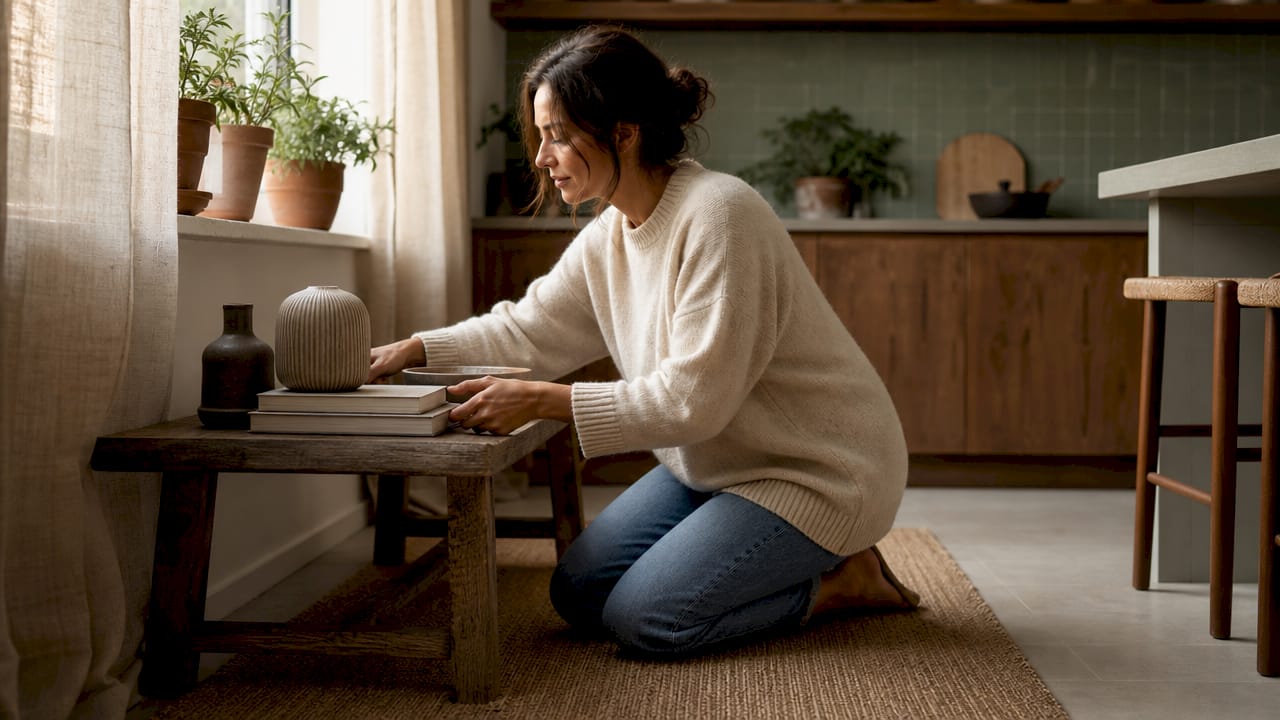
Practical styling begins with one surface, not the whole room. Start on a focal surface like a coffee table or console table, get that right, and then expand outward. This prevents the overwhelm that comes from trying to style everything at once and produces more considered results.
Follow these steps to build a cohesive accessory scheme:
- Identify one statement piece per zone. Every surface or shelf grouping needs a dominant object that anchors the arrangement. This could be a tall lamp, a large ceramic vase, or a framed print. Everything else supports it.
- Add natural materials for warmth. Linen, wood, stone, and ceramic all introduce organic texture that makes a space feel genuinely inhabited. A room styled entirely in synthetic materials tends to feel cold regardless of its colour palette.
- Include personal items with meaning. Travel souvenirs, inherited objects, and handmade pieces give a home its specific character. These are the accessories that make a space feel like yours rather than a showroom.
- Layer your lighting. Layered lighting using ambient, task, and accent sources is one of the most powerful functional accessory approaches available. A table lamp, a floor lamp, and a candle in the same room create depth and atmosphere that overhead lighting alone cannot achieve. Lighting is the jewellery of the room.
- Edit ruthlessly. Once a surface is styled, remove one item. Then assess whether the arrangement looks better. High-end looks rely on fewer, larger quality pieces supported by ample negative space, not on maximum coverage.
- Use trays to contain groupings. Placing a collection of small objects on a tray instantly organises them into a single visual unit. This technique works on coffee tables, bathroom shelves, and kitchen counters equally well.
Pro Tip: Vary the texture of objects within a grouping even when keeping a tight colour palette. A matte ceramic next to a glossy glass vase next to a woven basket creates visual interest without introducing colour conflict.
Exploring decorative storage solutions is one of the most practical ways to merge function and style, particularly in rooms where clutter is a persistent challenge. Storage that looks good does double duty, and that is exactly what considered accessory selection achieves.
For those working on a modern scheme, accessories for modern interiors tend to favour clean lines, natural materials, and restrained colour palettes. The principles of scale and grouping apply equally, but the editing process is even more critical because modern design has less tolerance for visual noise.
Wall treatments also play a supporting role. Resources like WallsNeedLove offer practical guidance on how decorative wall choices interact with accessory styling, which is particularly useful when planning a room from scratch.
Key takeaways
Accessories are not finishing touches added after design decisions are made. They are integral to how a room feels, functions, and communicates its character.
| Point | Details |
|---|---|
| Accessories define room character | Decorative and functional accessories together shape mood, rhythm, and visual depth. |
| Scale determines success | Artwork should span 60–70% of wall width; surface pieces need one dominant item plus accents. |
| Odd-number groupings work best | Groups of 3, 5, or 7 objects with varied heights create natural visual movement. |
| Edit before you add | Removing one item from a styled surface often improves the arrangement immediately. |
| Layered lighting is a functional accessory | Ambient, task, and accent lighting together sculpt atmosphere more effectively than any single source. |
Why accessories are the part of home design most people get wrong
Most homeowners treat accessories as the last thing to think about and the first thing to buy. That contradiction is where most styling problems begin. I have seen beautifully furnished rooms that feel completely flat because the accessories were chosen quickly, without reference to the room’s palette or scale. And I have seen modest rooms with inexpensive furniture that feel genuinely special because every object on every surface was chosen with intention.
The insight that changed how I think about this is simple: accessories are not decoration. They are visual storytelling. Every object you place in a room either reinforces the story you are telling or contradicts it. A room full of contradictions feels unsettled, even if you cannot immediately identify why.
The other thing most people underestimate is the power of restraint. Removing objects is as much a design act as adding them. The rooms that feel most considered are almost always the ones where someone had the confidence to leave surfaces partially empty. Negative space is not absence. It is part of the composition.
If you take one thing from this: assess your room’s mood and palette before you buy anything. Then choose accessories that support what is already there, not what you wish were there.
— Cristiano
How Homable can help you style your home with confidence
Choosing the right accessories becomes much easier when you have a clear starting point. Homable brings together a curated range of decorative and functional home accessories, from ornaments and rugs to storage solutions and curtains, all selected with modern British homes in mind.
Whether you are styling a living room from scratch or editing a space that has accumulated too much over time, Homable’s home accessories collection gives you quality pieces at accessible prices. Free shipping on orders over £100 makes it practical to refresh a whole room in one go. Browse the full range at Homable and find pieces that work with your existing scheme rather than against it.
FAQ
What is the role of accessories in home design?
Accessories are the final styling layer that adds texture, character, and visual rhythm to a space. They connect furniture and architecture into a cohesive whole and directly influence how a room feels to live in.
How do I choose home accessories without making mistakes?
Assess the room’s existing colour palette, scale, and mood before buying anything. Choose accessories that reinforce the room’s established atmosphere rather than introducing conflicting styles or mismatched proportions.
What is the best way to group decorative accessories?
Group objects in odd numbers (3, 5, or 7) and vary their heights and depths. Place the tallest item at the back and slightly off-centre, with shorter pieces brought forward to create natural visual movement.
How many accessories are too many?
There is no fixed number, but the principle is restraint. If removing one item from a surface improves the arrangement, the surface was over-styled. High-end interiors consistently favour fewer, larger quality pieces over maximum coverage.
Are functional accessories as important as decorative ones?
Functional accessories are often more important, particularly in high-traffic areas. Trays, storage solutions, and layered lighting solve practical problems while contributing directly to the room’s overall aesthetic.