Cart
0
TL;DR:
- Functional decor prioritizes practical use while enhancing a space’s aesthetic appeal, supporting long-term usability.
- It reduces clutter, improves mental well-being, and offers room-by-room solutions that align with daily routines, making homes more livable.
Functional decor is defined as any piece chosen primarily for its practical purpose that simultaneously enhances the aesthetic appeal of a living space. This is the design principle that separates a thoughtfully styled home from one that simply looks good in photographs. Where purely decorative items demand dusting and rearranging, functional decor earns its place every single day. Understanding why choose functional decor matters is the first step towards a home that genuinely works for the way you live.
Why choose functional decor over purely decorative pieces?
Functional decor is a design strategy that balances everyday utility with aesthetics, selecting pieces whose day-to-day job is integral rather than incidental. Think of a woven basket that stores throws, a mirror with integrated shelving, or a pendant light positioned precisely above a kitchen counter. Each item contributes to the room’s visual character while solving a real problem. This is the core distinction: decorative items add beauty, but functional pieces add beauty and remove friction from daily life.
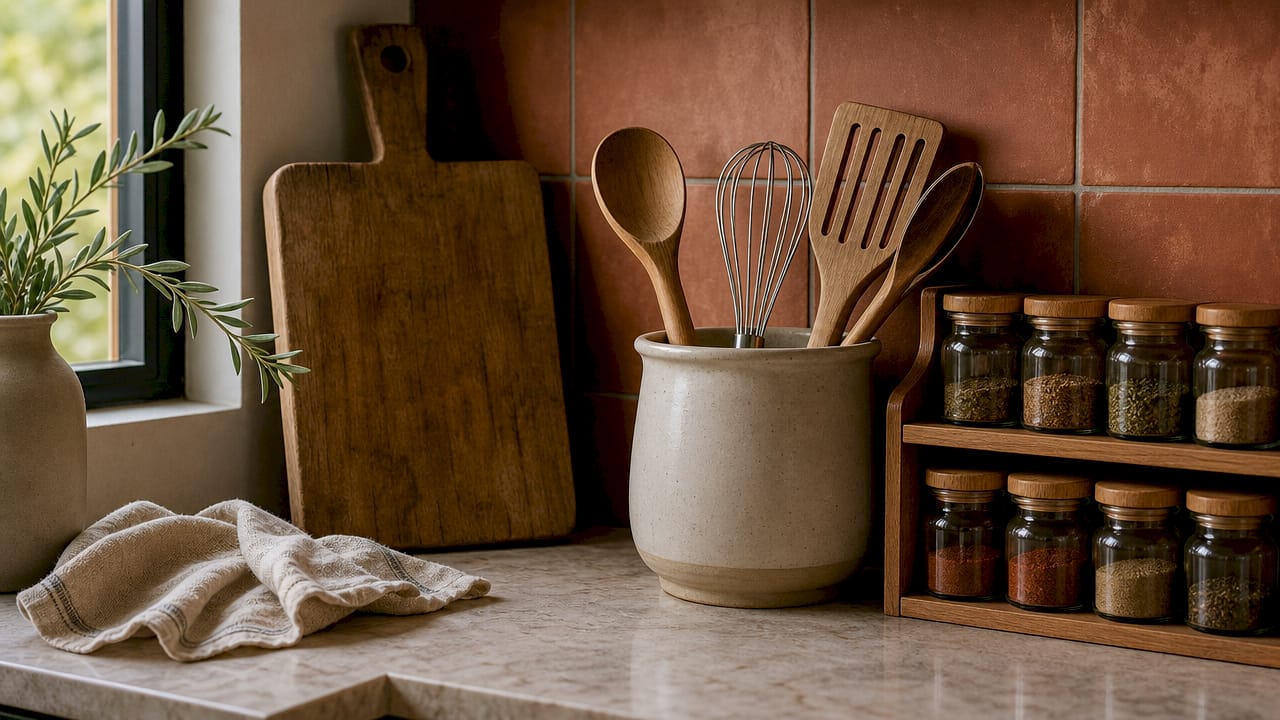
The importance of functional decor becomes clearest when you consider how much time the average household spends managing belongings. Homes filled with items that serve no practical role accumulate clutter faster, require more maintenance, and offer fewer natural storage solutions. By contrast, a home furnished with intent creates an environment where everything has a place and a purpose. That shift alone changes how a space feels to live in.
How does functional decor reduce clutter and simplify everyday living?
Clutter and poor interior design cause measurable negative psychological effects including stress, anxiety, and cognitive overload. That finding from 2026 psychological research is significant because it frames clutter not as a tidiness issue but as a health issue. Choosing decor that actively organises your home is therefore a direct investment in your mental state.
Functional decor addresses clutter through several practical mechanisms:
- Smart storage pieces such as ottomans with internal compartments, shelving units, and lidded baskets keep belongings contained without hiding them in inaccessible cupboards.
- Multi-purpose furniture like storage benches or extendable dining tables reduces the number of individual items a room requires, freeing floor space and visual breathing room.
- Visible organisers such as wall-mounted hooks, trays, and magazine racks give frequently used items a fixed home, which reduces decision fatigue and everyday friction.
- Audit and edit thinking encourages removing non-functional or unnecessarily decorative pieces that add visual noise without contributing to the room’s usability.
Pro Tip: Before buying any new decor, ask two questions: does this item do something useful, and does it look good doing it? If the answer to either is no, it does not belong in the room.
The result of applying these principles consistently is a home that stays tidier with less effort. When storage is built into the decor itself, tidying becomes a matter of returning items to their designated spot rather than finding somewhere to put them.
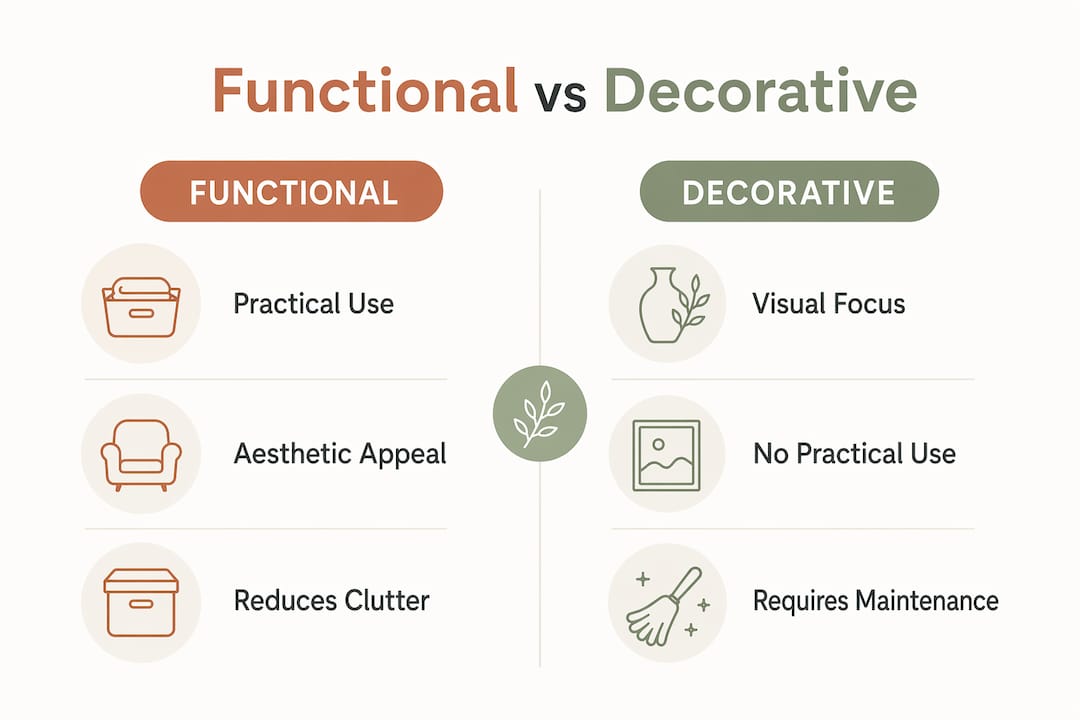
Functional vs decorative decor: what is the real difference?
The distinction between functional and decorative decor is not simply about whether an item is useful. It is about whether usability was considered at the point of selection. The table below illustrates the key differences in practice.
| Feature | Functional decor | Decorative-only decor |
|---|---|---|
| Primary purpose | Practical use with aesthetic appeal | Visual impact only |
| Daily usability | High. Works even when slightly untidy | Low. Requires constant arrangement |
| Maintenance effort | Minimal. Designed for real-life use | Higher. Easily disrupted by daily living |
| Clutter management | Actively reduces clutter | Can contribute to visual noise |
| Long-term value | Improves with use and habit | Dependent on trend cycles |
Functional organisation prioritises ease of use, storing items where they are actually needed and designing layouts that hold up even when life gets busy. Decorative organisation, by contrast, focuses on appearance and can fail in daily usability, increasing friction rather than reducing it. A beautifully arranged shelf of matching boxes looks impressive, but if retrieving anything from it requires dismantling the display, it will be abandoned within weeks.
The benefits of functional decor are most visible in this comparison. Functional pieces do not require a tidy home to look good. A wicker storage basket looks attractive whether it is empty or full. A wall-mounted key rack looks intentional whether it holds one key or five. This resilience to real life is precisely what makes functional decor a smarter long-term choice.
Pro Tip: Style functional items in curated groupings of three or five. A trio of matching storage jars on a kitchen shelf reads as deliberate design, not clutter, while still doing a practical job.
Functional decor ideas for every room in your home
Applying functional decor room by room is the most practical way to understand how to choose functional decor for your specific home. Each room has different daily demands, and the best choices reflect those habits directly.
-
Entryway. Entry drop zones integrating hooks, bins, and shelves near the front door reduce daily chaos and keep belongings organised from the moment you arrive home. A storage bench adds seating for removing shoes while concealing footwear inside. A mirror above the bench serves a practical purpose while making the space feel larger.
-
Living room. Modular shelving units allow you to configure storage around your actual possessions rather than buying furniture and hoping things fit. A storage coffee table with a lift-top or internal drawers replaces a purely decorative surface with one that holds remote controls, chargers, and magazines out of sight. Space-saving furniture with dual purposes is particularly valuable in smaller living rooms where every square metre counts.
-
Kitchen. Task lighting and pendant lights above counters enhance usability while complementing the room’s design style. Visible practical items such as a ceramic utensil holder, a magnetic knife strip, or open shelving for frequently used crockery contribute to the kitchen’s personality without requiring additional decorative pieces. Custom cabinetry that reaches the ceiling eliminates the awkward gap where dust collects and wasted storage potential sits.
-
Bedroom. An ottoman at the foot of the bed provides a surface for laying out tomorrow’s clothes while storing extra bedding inside. Built-in storage around the bed frame, whether drawers beneath the mattress or shelving in the headboard, keeps the floor clear and the room calm. Bedside lighting on a wall-mounted arm frees the entire surface of the bedside table for genuinely useful items.
-
Home office. Cable management trays, desktop organisers, and wall-mounted pin boards keep the workspace clear without requiring a separate storage room. Choosing a desk with integrated drawers removes the need for a separate filing cabinet.
The material choices you make within each room also contribute to functional aesthetics. Natural materials such as rattan, linen, and solid wood age well, resist trend cycles, and tend to look better with use rather than worse.
| Room | Key functional piece | Dual benefit |
|---|---|---|
| Entryway | Storage bench with hooks | Seating plus concealed shoe storage |
| Living room | Storage coffee table | Surface plus hidden compartments |
| Kitchen | Pendant task lighting | Usability plus visual focal point |
| Bedroom | Ottoman at bed foot | Styling surface plus extra storage |
| Home office | Desk with integrated drawers | Workspace plus filing solution |
How does functional decor support mental well-being?
Cluttered and ill-designed interiors directly affect mental health outcomes, a finding that 2026 research has placed firmly within the mainstream of interior design thinking. The psychological mechanism is straightforward: visual disorder competes for cognitive attention, leaving less mental capacity for focus, relaxation, and decision-making. A home designed with function in mind removes that competition.
“Visual organisation must work alongside daily habits. Functional decor that is not user-friendly ends up ignored, and clutter returns.” — Storage is the new luxury
Ergonomic and ADHD-friendly design principles promote functional decor specifically because reducing the number of mental steps required to tidy a space supports better habits and lower daily stress. When the storage solution is obvious and accessible, using it requires no effort. That reduction in friction compounds over time into a genuinely calmer home environment.
Incorporating biophilic elements, natural textures, plants displayed in functional planters, woven wall hangings that also absorb sound, and linen curtains that regulate light, adds a further psychological dimension. These pieces connect the interior to the natural world while performing a practical role. The psychology of colour in home design also plays a role here: choosing functional pieces in tones that suit the room’s purpose, cooler blues and greens in a bedroom, warmer neutrals in a living space, reinforces the calming effect of an organised environment.
Pro Tip: Map your decor choices to your actual daily routines rather than an idealised version of them. If you never use the hallway console table, replace it with a coat rack and a small shelf. Decor that fits your real habits stays tidy without effort.
Key takeaways
Functional decor is the most effective approach to home styling because it reduces clutter, supports mental well-being, and creates spaces that hold up to real daily life without constant maintenance.
| Point | Details |
|---|---|
| Definition matters | Functional decor is chosen for practical purpose first, with aesthetics as an equal priority, not an afterthought. |
| Clutter has a cost | 2026 research links cluttered interiors to stress and cognitive overload, making functional storage a health investment. |
| Functional beats decorative | Pieces that work even when slightly untidy outperform decorative-only items in long-term usability and visual appeal. |
| Room-by-room application | Map functional decor choices to each room’s specific daily demands for lasting impact and genuine organisation. |
| Habit alignment is critical | Decor placed where you naturally execute routines stays used; decor placed for appearance alone gets ignored. |
The case for decor that actually does something
I have spent years advising on home interiors, and the single most common mistake I see is buying beautiful things without asking what job they do. A home styled entirely for visual impact looks extraordinary in photographs and exhausting to live in. The decorative bowl that cannot hold keys, the shelf arrangement that cannot be touched, the rug that cannot be walked on without anxiety: these are not design choices. They are performance art.
The homes that genuinely feel good to be in share one characteristic. Every piece earns its place. The storage basket is beautiful and it holds the dog’s toys. The pendant light is striking and it illuminates the chopping board. The ottoman is sculptural and it holds the spare duvet. That double value is not a compromise. It is the point.
Where I see people go wrong most often is in treating storage as a separate problem from decor. They buy the decorative items first, then look for somewhere to put everything else. Reversing that order, choosing storage pieces that look good rather than decorative pieces that happen to have a drawer, changes everything. The hidden storage approach works brilliantly in bedrooms and wardrobes, but in living spaces, partial visibility of useful items styled in curated groupings adds warmth and personality that fully concealed storage cannot replicate.
The other thing worth saying plainly: functional decor does not mean minimal decor. It means intentional decor. A room can be layered, warm, and full of personality while every single item in it serves a purpose. That is not a constraint. It is the foundation of a home that feels genuinely lived in rather than staged.
— Cristiano
Shop functional and stylish decor at Homable
Homable curates home decor with both form and function at the centre of every selection. Whether you are looking for storage solutions that double as statement pieces, lighting that transforms a room’s usability, or accessories that bring personality without adding clutter, the collections at Homable are chosen with the modern homeowner in mind. Every product balances design quality with practical purpose, so you never have to choose between a home that looks good and one that works well. Browse the full range at Homable, where practical home decor meets considered design, with free shipping on orders over £100.
FAQ
What is functional decor?
Functional decor refers to home accessories and furnishings chosen for their practical purpose as well as their visual appeal. Unlike purely decorative items, functional pieces serve a daily role such as storage, lighting, or organisation while contributing to the room’s overall aesthetic.
Why use functional decor instead of purely decorative items?
Functional decor reduces clutter, lowers maintenance effort, and supports mental well-being by creating an environment where everything has a clear purpose. Decorative-only organisation focuses on appearance and often fails in daily usability, increasing friction over time.
How do I choose functional decor for a small home?
Prioritise multi-purpose furniture and space-saving solutions such as storage ottomans, wall-mounted shelving, and benches with internal compartments. Audit existing items and remove anything that does not serve a practical function or contribute meaningfully to the room’s character.
Does functional decor have to look minimal or plain?
No. Functional decor can be layered, warm, and full of personality. Curated groupings of visible practical items such as baskets, trays, and hooks add texture and warmth without overcrowding a space, proving that utility and style are not in conflict.
How does functional decor affect mental well-being?
Research published in 2026 links cluttered and ill-designed interiors directly to stress, anxiety, and cognitive overload. Functional decor reduces visual disorder and the mental effort required to maintain a tidy home, creating a calmer and more restorative living environment.