Cart
0

TL;DR:
- A structured textile update workflow helps homeowners refresh their decor confidently while avoiding mismatched or inefficient choices.
- It emphasizes proper planning, sourcing, installation, and regular review to maintain a cohesive and durable home textile collection.
Refreshing the textiles in your home sounds simple until you find yourself surrounded by mismatched fabric swatches, a sofa cushion that clashes with new curtains, and no clear idea of what to order next. A structured workflow for updating textiles removes that chaos. It turns a frustrating process of guessing and backtracking into something you can repeat confidently every season. This guide walks you through each stage, from gathering tools and sourcing fabrics to styling, care, and long-term maintenance. Whether you are refreshing a single room or overhauling your whole home, the steps ahead will save you time, money, and regret.
Table of Contents
- Key takeaways
- The workflow for updating textiles: preparation
- Sourcing and selecting the right fabrics
- Executing the update: installation and styling
- Verification and long-term maintenance
- My perspective on getting textile updates right
- Bring your textile vision to life with Homable
- FAQ
Key takeaways
| Point | Details |
|---|---|
| Start with a clear audit | Measure your spaces and document your existing textiles before making any purchasing decisions. |
| Follow a five-stage process | A proven workflow covers research, planning, sourcing, sampling, and pre-production to prevent costly errors. |
| Balance style with practicality | Choose fabrics that meet both your aesthetic goals and everyday durability requirements. |
| Layer for depth and character | Mixing textiles from different textures and eras creates warmth and personality in any room. |
| Maintain and review regularly | Document care instructions and schedule periodic reviews to keep your textile collection fresh and consistent. |
The workflow for updating textiles: preparation
Before you touch a single fabric swatch, you need a clear picture of what you already have and what you actually need. Skipping this stage is where most home decor updates go wrong. You end up buying beautiful fabric that is the wrong scale, the wrong undertone, or the wrong weight for the room.
Start by walking through each space with a measuring tape and a notepad. Record the dimensions of your windows, sofas, beds, and any other upholstered or draped elements. Note the colours already present in flooring, walls, and fixed furniture. Taking photographs on a consistent light setting (natural daylight works best) gives you a reliable reference when you are comparing swatches away from the room.
Here is what you should gather before beginning the sourcing stage:
- Fabric swatches from your existing textiles, labelled by room and item
- Accurate measurements for curtains, cushion covers, throws, rugs, and upholstery
- A digital or physical mood board collecting colours, textures, and styles you are drawn to
- A simple design plan or layout sketch for each room you are updating
- A budget broken down by room and item category
Pro Tip: Use a free mood board tool such as Canva or Pinterest boards to organise inspiration by room. Keeping references in one place prevents you from duplicating styles across spaces that share a visual connection.
Documentation matters more than most people expect. Professional textile workflows rely on detailed records to maintain consistency, and the same principle applies at home. Updating technical documentation such as measurements, fabric codes, and care requirements prevents the kind of mismatched outcomes that force costly do-overs. Even a simple spreadsheet listing each item, its dimensions, and its current fabric type gives you an enormous advantage when comparing samples.
Sourcing and selecting the right fabrics
Once your groundwork is in place, the sourcing stage is where the textile design process really comes alive. This is also where many home decorators get distracted by trend-led impulse buys that do not serve the bigger picture.
The most dependable approach is to work through sourcing in a structured sequence:
- Research current trends with a critical eye. Consumers are increasingly demanding textiles that combine beauty with sustainability and genuine durability. Look for natural fibres, recycled content, and performance weaves that age well rather than pill or fade within a year.
- Define your functional requirements first. A linen cushion cover works beautifully in a low-traffic reading room but will look worn within months on a family sofa. Match the fibre and weave to the use before you consider colour.
- Build a cohesive mix-and-match collection. The shift in textile design is moving away from single patterns towards cohesive mix-and-match collections that work across pieces. Selecting a palette of three to four complementary textures gives you flexibility to layer without creating visual noise.
- Order samples before committing. Request physical swatches from every supplier you are considering. Lay them in the room at different times of day and alongside your existing textiles. Colours shift dramatically between showroom lighting and natural daylight.
- Check supplier lead times and minimum quantities. Many fabric suppliers have minimum order requirements or long lead times for bespoke colours. Factor these into your timeline so you are not caught waiting for a key piece.
- Update your care notes as you go. Adding even small amounts of synthetic fibre to a natural textile can significantly change care instructions, affecting shrinkage and wash performance. Record the care requirements for every new fabric before it enters your home.
Pro Tip: When comparing samples, fold them and scrunch them rather than just looking at them flat. How a fabric handles creasing tells you far more about its everyday behaviour than its appearance on a bolt.
For guidance on weaving sustainable choices into your selections, Homable’s article on responsible home styling is worth reading alongside this stage of the process.
Executing the update: installation and styling
With your fabrics selected and ordered, the execution phase is about precision and creativity working together. A formal five-stage textile workflow covers concept, design, sourcing, sampling, and pre-production. At the home level, your execution phase mirrors that final pre-production stage: getting everything in the right place, in the right order, without avoidable mistakes.
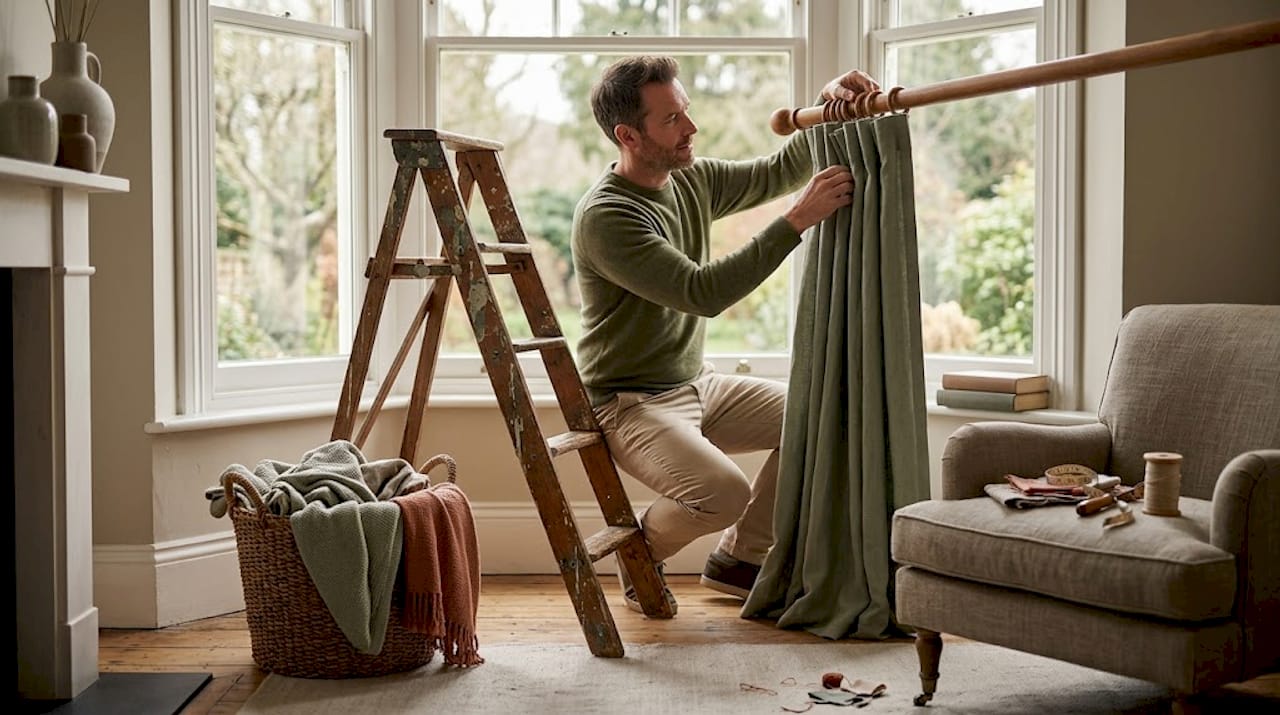
Accuracy during installation protects your investment. Curtains hung too short, cushion covers that gap at the seam, or a rug that is two centimetres too narrow all detract from an otherwise well-chosen collection. Measure twice, order once.
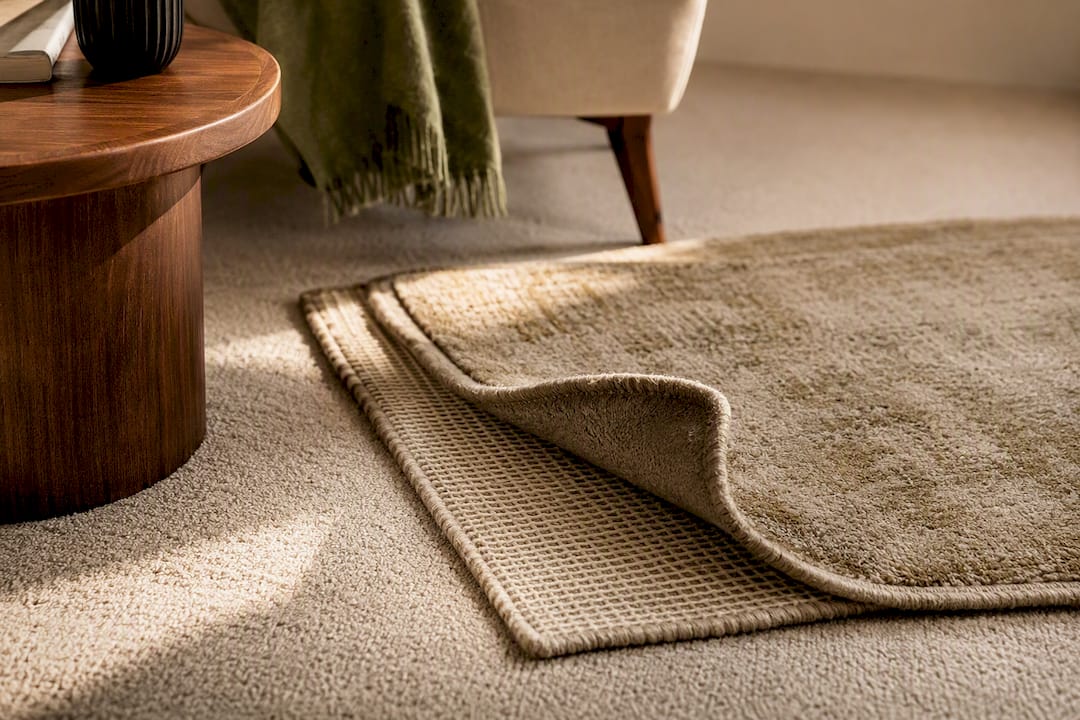
Layering is where the real character of a room develops. Layering textiles from different styles and eras creates warmth and personality that a single-fabric approach rarely achieves. Think of a wool throw over a linen sofa, a jute rug under a flatweave kilim, or a velvet cushion against a cotton slub bedcover. For practical guidance on making this work room by room, Homable’s piece on textile layering for depth covers the logic behind why certain combinations succeed.
If you are working on a kitchen or a room with predominantly hard surfaces, integrating soft textiles requires a slightly different approach. This guide on balancing fabric with hard surfaces offers thoughtful advice on where textiles can soften without overwhelming a space.
Common mistakes to avoid during this phase:
- Hanging curtains at window height rather than ceiling height, which makes rooms feel lower and smaller
- Choosing a rug that is too small for the furniture grouping, which fragments the space visually
- Mixing too many competing patterns in one room without a unifying colour thread
- Neglecting the backs of cushions and throws, which are visible in everyday use
- Forgetting to account for fabric shrinkage when measuring for made-to-measure pieces
One of the most cost-effective moves in any textile update is reframing fabric fragments as art. An offcut of a beautiful printed textile, mounted and framed, instantly updates a wall without the cost of new upholstery or artwork. It is also a clever way to test a print in a room before committing to it at larger scale.
Pro Tip: When coordinating with a curtain maker or upholsterer, supply your own detailed measurement notes rather than relying solely on their visit. Errors compound quickly when assumptions go unchecked on both sides.
Verification and long-term maintenance
Completing the installation is not the end of the workflow. This stage is where most home decorators stop. That is a mistake, because a proper review locks in what you have achieved and makes the next update far easier.
The first thing to check after installation is visual consistency across the whole room in natural light. Colours that matched in samples can read differently at full scale or in relation to each other. Step back to the doorway and look at the room as a whole, not piece by piece.
| Check | What to look for | Action if needed |
|---|---|---|
| Colour consistency | Do all textiles share the same undertone family? | Swap out the outlier or add a bridging neutral. |
| Scale and proportion | Does each fabric piece feel right-sized for the item and room? | Re-hang, re-plump, or reposition as needed. |
| Texture balance | Is there a mix of smooth, rough, and soft without one dominating? | Add or remove a layer to restore balance. |
| Care documentation | Have you recorded care instructions for every new piece? | Update your home textile log immediately. |
| Functional performance | Do zips, ties, and fastenings work correctly after the first wash? | Address fit issues before they worsen. |
Centralised digital workflows improve connection across production and quality processes in manufacturing. The same logic applies at home. Keeping a simple digital document (a shared note, a spreadsheet, or a folder of labelled photos) with your fabric details, care codes, and supplier contacts means you can reorder or replicate a look years later without starting from scratch.
For a seasonal refresh approach that builds on this foundation, Homable’s guide on seasonal home updates gives you a repeatable structure to revisit each year.
My perspective on getting textile updates right
I have seen more textile updates derailed by impatience than by bad taste. People gather beautiful inspiration, do solid research, and then rush the execution because they are excited to see the result. They order without final sample confirmation, hang curtains without rechecking the measurements, skip the documentation because it feels bureaucratic. And then six months later they cannot remember where a fabric came from, why they chose it, or whether they ordered the shrink-safe version.
What I have learned from following structured approaches to updating fabric collections is that the discipline is not the enemy of creativity. It is what protects the creative decisions you worked hard to make. When I see a room that really works, there is almost always a clear process behind it, even if the homeowner does not describe it that way.
The other thing worth saying plainly: do not underestimate the power of restraint. The rooms that feel the most put-together rarely have the most textiles. They have the right ones, in the right places, maintained properly. Chasing trends every season is expensive and exhausting. A well-built textile base, updated thoughtfully every year or two, creates far more lasting satisfaction than constant turnover.
Embrace the workflow not as a rigid checklist but as a framework that gives your creativity somewhere solid to stand.
— Cristiano
Bring your textile vision to life with Homable
If your textile update is nearing the styling stage, the right accessories can complete what fabric alone cannot.

Homable’s decorative silver flower candle holder is a perfect example of how a single curated accent piece anchors a freshly updated textile scheme, adding sculptural contrast against layered soft furnishings. Pair it with new cushions, a refreshed throw, or a reframed textile fragment to create a finishing moment in any room. Browse Homable’s curated collections for stylish, affordable pieces that complement rather than compete with your fabric choices. Free shipping is available on orders over £100.
FAQ
What are the key stages in a textile update workflow?
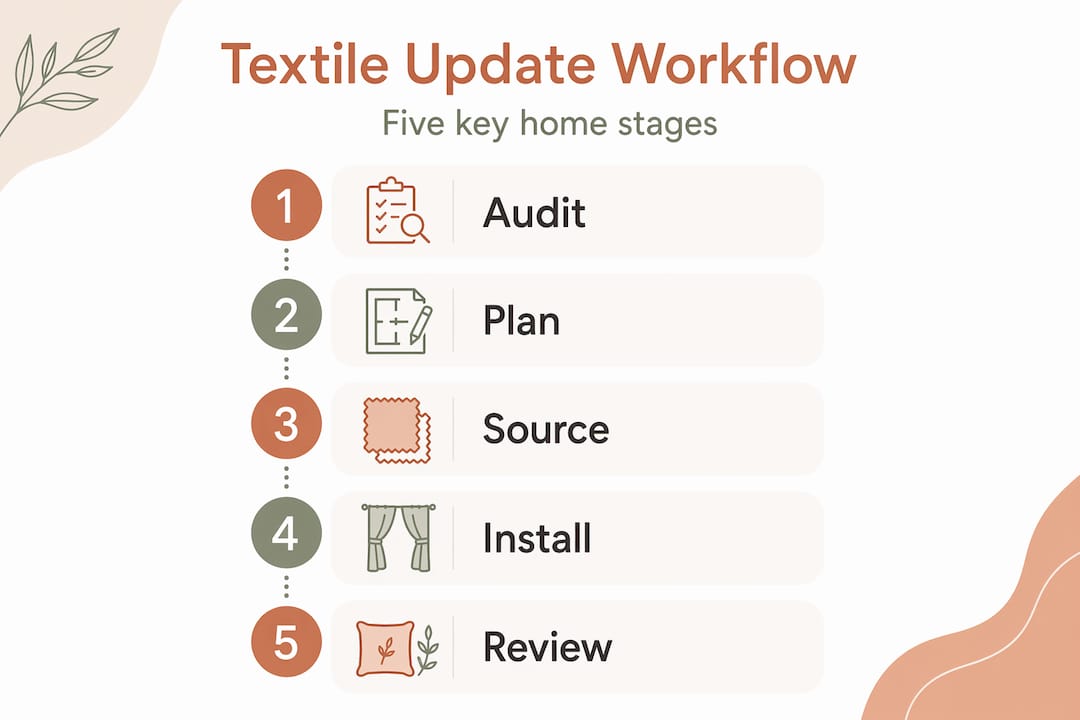
A solid workflow covers five stages: research, design planning, sourcing, sampling, and execution with review. Following these five stages prevents costly late decisions and keeps your update cohesive from start to finish.
How do I choose fabrics that last in a busy household?
Prioritise performance weaves and natural fibres with tight constructions for high-traffic areas. Always check care instructions and test samples in the actual room before ordering in quantity.
Why do care instructions matter when updating textiles?
Even minor changes in fibre composition can affect how a fabric washes and shrinks. Updating care details for each new piece prevents damage and avoids returns or replacements.
How can I refresh a room without buying all-new textiles?
Framing textile offcuts as wall art is a cost-effective way to update a space without full reupholstery. Repositioning throws, rotating cushions, and layering a new rug over an existing one also creates significant visual change at low cost.
How often should I review my home textile collection?
A review once or twice a year, ideally at season changes, keeps your decor fresh without unnecessary turnover. Use each review to check for wear, update your documentation, and identify one or two pieces worth refreshing.