Cart
0

Good design in a home does one thing above all else: it removes friction from daily life while making the space feel calmer and more valuable. The right lighting, layout and materials cut down on the small daily irritations that quietly wear people down, and they do it in measurable ways.
- Lighting and layout reduce daily friction. A well-placed lamp or a wider walkway between the sofa and the kitchen island saves seconds that add up to calmer mornings.
- Materials and acoustics affect sleep and mood. Quieter rooms and better air quality are linked to how well residents rest and function the next day.
Subjective ratings of home brightness, noise, window views and perceived safety explain around 6% of additional variance in anxiety and depression models, independent of income, age or lifestyle. That is a modest number on paper, but it is a measurable one, and it comes from the room you are sitting in right now, not a doctor’s office or a gym.
Key Takeaways
Good design works because it removes daily friction across lighting, layout, materials and safety, and those improvements compound into measurable well-being gains.
| Point | Details |
|---|---|
| Design affects mental health measurably | Home environment factors explain a real, if modest, share of variance in anxiety and mood. |
| Safety and hygiene lead | These two factors carry the strongest link to overall residential satisfaction, ahead of aesthetics. |
| Function before form | Map routines, storage and circulation before choosing furniture or finishes. |
| Budget in tiers | Start with low-cost lighting and decluttering fixes before committing to major structural projects. |
| Track small experiments | A 30-day light, noise and sleep check reveals whether a change actually worked. |
| Homable supports quick wins | Its lighting, storage and decor pieces suit the small, fast fixes covered throughout this guide. |
Table of Contents
- Why design matters: what the evidence actually shows
- How design affects health and everyday well-being
- The core design elements that make a home work
- Practical changes by budget: quick wins to major projects
- Room-by-room: what good design actually looks like
- Choosing materials that support health, not just style
- How to tell if a change worked, and when to call a professional
- The evidence behind these recommendations
- Design as everyday problem solving
- Where Homable fits into your next small fix
- Sources
Why design matters: what the evidence actually shows
Design is not decoration layered on top of a house. Research increasingly treats “residential environment” as a single measurable construct made up of thermal comfort, acoustics, lighting, hygiene, safety and security, and each of those pieces contributes to how satisfied you feel with your life more broadly.
A 2026 Journal of Happiness Studies paper modelled exactly this pathway. It found that improvements across those six components raise satisfaction with your living situation specifically, and that satisfaction then feeds into broader subjective well-being. Design does not make you happy directly. It removes obstacles that were making you less happy, and the effect travels through daily comfort rather than around it.
A separate structural equation model reached a similar conclusion but flagged two components as unusually powerful: safety and hygiene showed the strongest loadings on the overall residential environment factor. That is worth sitting with. Homeowners often chase aesthetic wins first (a feature wall, a striking pendant light) when a secure lock, a decluttered hallway, or a properly ventilated bathroom may be doing more of the psychological work.
- Thermal comfort: consistent temperature without draughts or overheating.
- Acoustic control: reduced noise transfer between rooms and from outside.
- Lighting: daylight access plus controllable artificial light for different tasks.
- Indoor air quality: adequate ventilation and low-emission materials.
- Perceived safety: secure entry points, good sightlines, tidy circulation routes.
Context matters here too. Adults in several countries spend an average of around 15 to 16 hours a day at home, more for older adults and small children. No other environment gets that much exposure, which is exactly why small design flaws compound rather than fade into the background.
How design affects health and everyday well-being
Each environmental factor works through a specific mechanism, and understanding the mechanism helps you decide where to spend money first.
Lighting governs circadian rhythm. Morning daylight exposure helps regulate the sleep-wake cycle, while task lighting reduces eye strain during close work like reading or cooking. A reading corner with a single warm-toned lamp positioned over the shoulder rather than an overhead bulb cuts glare and makes the habit of reading in the evening far more likely to stick.

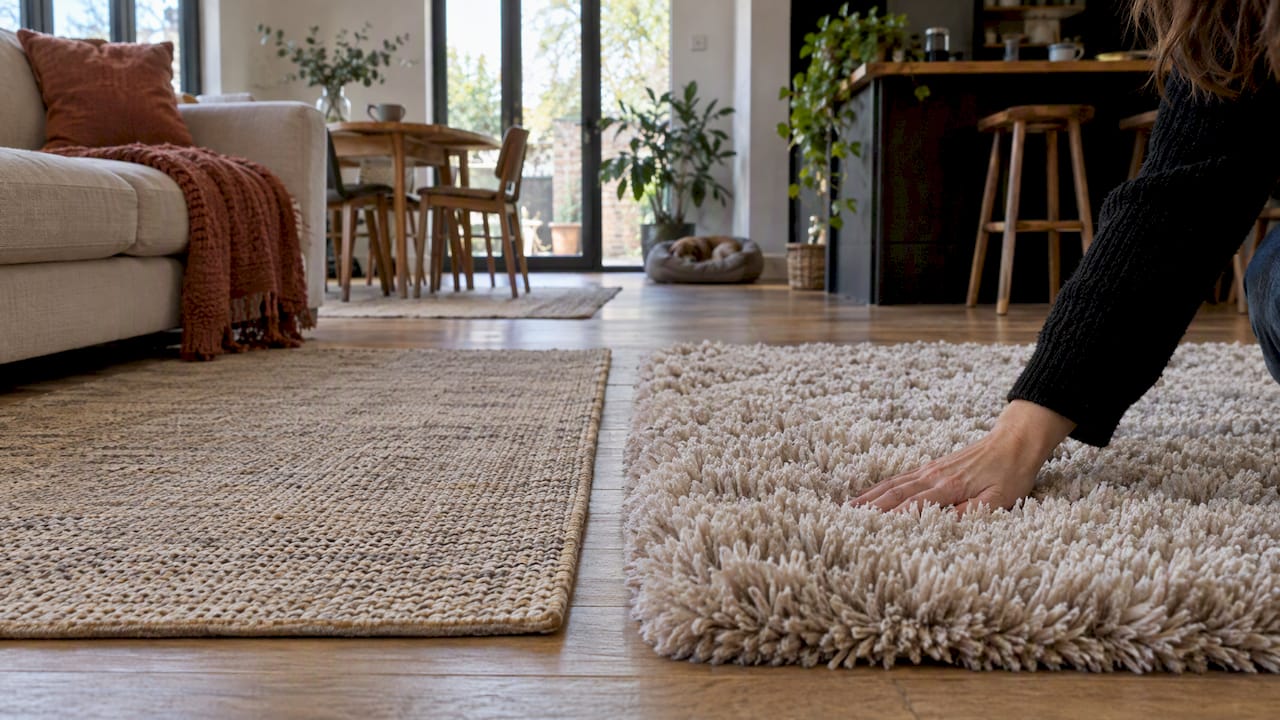
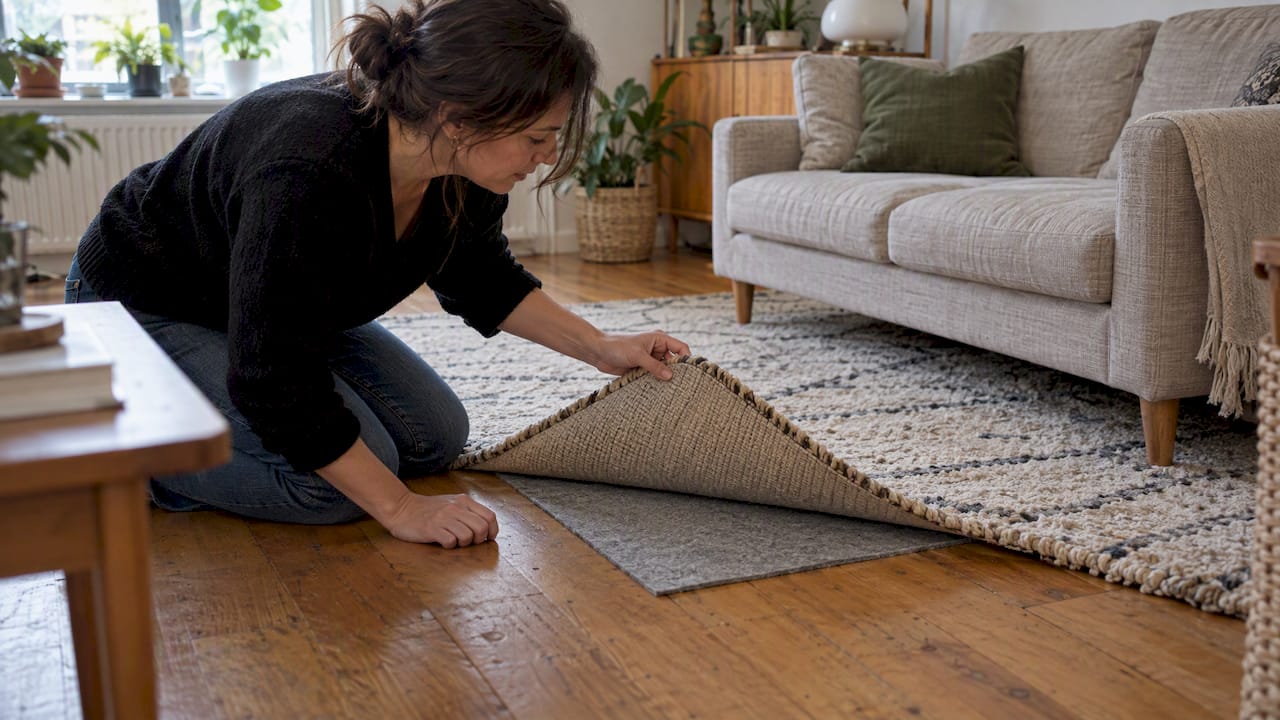
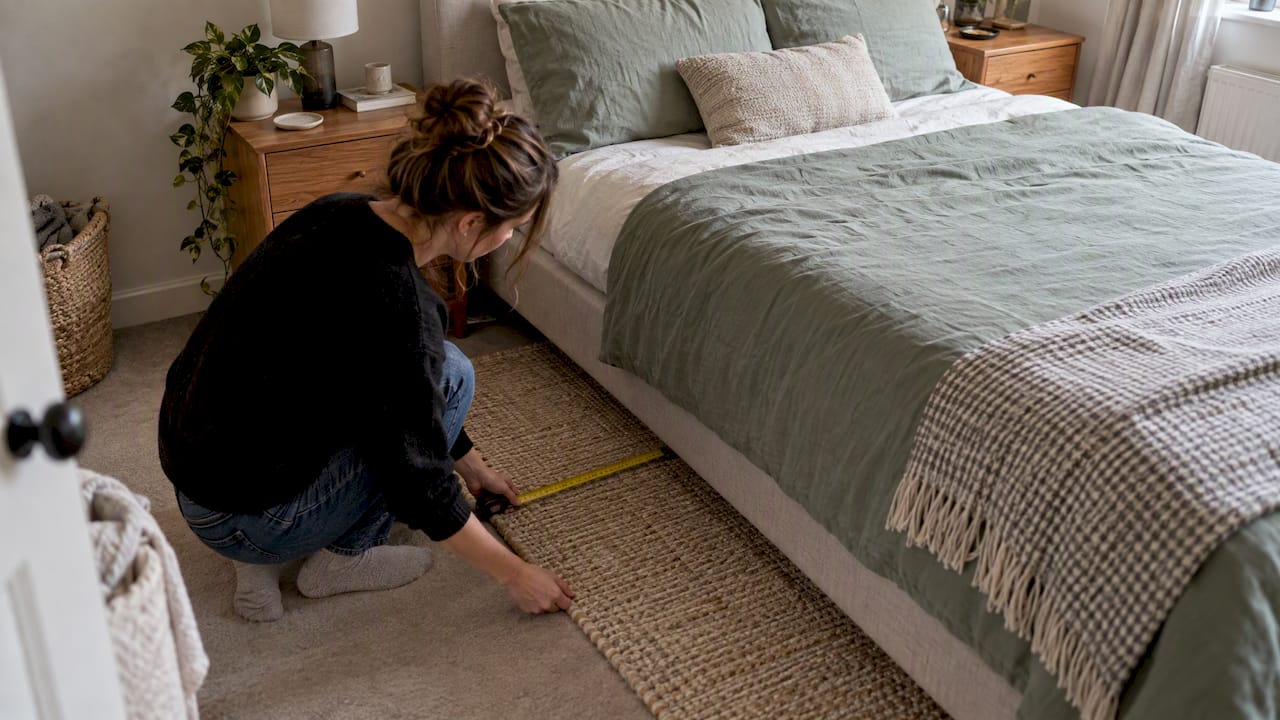
Acoustics affect stress hormones and concentration. A thick rug, heavier curtains, or a bookshelf against a shared wall can meaningfully cut noise transfer without any structural work.
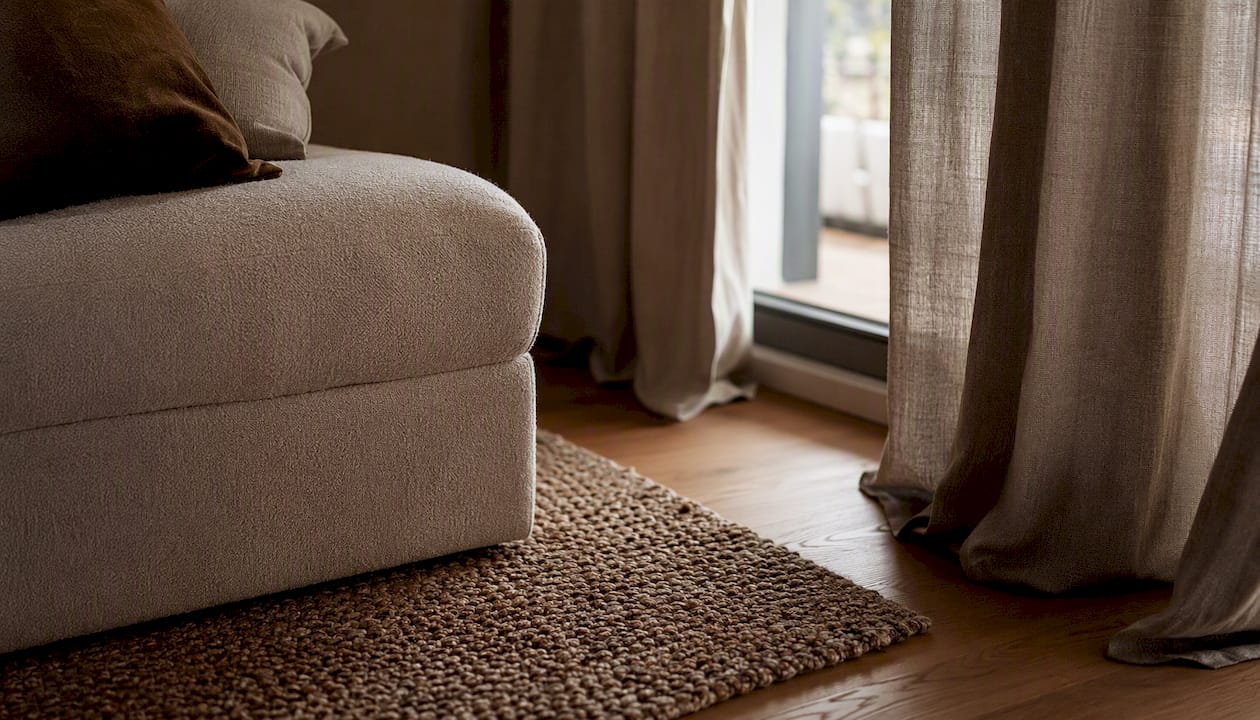
Thermal comfort influences sleep quality directly. A bedroom that swings between too warm and too cold disrupts the deep sleep stages, so draught-proofing a window often does more for rest than a new mattress.
Indoor air quality (IAQ) matters more than most homeowners assume. A scoping review of 31 studies across OECD countries recommends better ventilation, daylight, acoustic performance and biophilic elements as the core levers for improving mental health through housing. Damp, poorly ventilated rooms are linked to worse respiratory and psychological outcomes, not just musty smells.
Perceived safety is partly about locks and lighting outside the door, and partly about clutter. A hallway you can walk through without side-stepping shoes and boxes registers, subconsciously, as a safer and calmer space.
Pro Tip: Before buying anything, spend three evenings just noticing where you squint, where you feel cold, and where noise from another room bothers you. That short audit tells you more than any showroom visit.
The core design elements that make a home work
Function should lead form, not follow it. Design practitioners consistently argue that mapping daily routines before choosing furniture prevents the most common and expensive design mistake: a beautiful room that nobody actually uses comfortably.
- Map your routines first. Note where people actually sit, cook, work and store things, not where you assume they should.
- Size storage to real volume. Count what you own in a category (shoes, coats, kitchen tools) before choosing a cabinet.
- Protect circulation paths. Keep at least 90cm of clear walking width through main routes; anything tighter creates constant, low-level friction.
- Match scale to the room. An oversized sofa in a small lounge blocks movement even when it looks striking in a catalogue photo.
- Test ergonomics before committing. Sit, reach, and stand at a proposed desk or counter height using a stack of books to simulate it, rather than trusting a showroom display.
A cramped landing turned into a genuine home office is a good illustration: swapping a bulky wardrobe for a slim shelving unit and adding a desk sized to the actual space (not the biggest desk that would technically fit) can turn 1.2 square metres of dead space into a working corner used daily.
Pro Tip: Mark out a new layout on the floor with masking tape before buying furniture. Walk through it for a day. Awkward turns and blocked doors show up immediately, and returning tape costs nothing.
Practical changes by budget: quick wins to major projects
Not every improvement needs a tradesperson or a large budget. The best returns tend to sit at the cheap end.
| Tier | Typical actions | Time and cost | Best for |
|---|---|---|---|
| Quick wins | Reposition lamps, declutter entryway, add draught excluders, swap harsh bulbs for warmer tones | A weekend, under £100 | Immediate comfort and mood |
| Mid-range | New curtains or blinds for acoustic and thermal control, open shelving for storage, rug layering for noise | 1–2 weeks, £150 | Noise, storage and daylight control |
| Major projects | Reconfiguring a room layout, upgrading insulation, kitchen or bathroom refit | Several weeks to months | Structural comfort and long-term value |
- Prioritise anything that is high impact and low cost first, such as lighting swaps and decluttering.
- Treat noise and thermal fixes as mid-range investments with a clear comfort payoff.
- Reserve structural changes for problems that quick fixes genuinely cannot solve.
DIY is fine for lighting, soft furnishings, shelving and paint. Hire a professional for anything involving wiring, load-bearing walls, plumbing or ventilation systems. Market commentary also notes that kitchen updates, better natural light and quality finishes commonly raise buyer interest, so a mid-range project in the kitchen tends to pay back further than the same spend elsewhere. Homable’s guide on boosting value and well-being through styling breaks this down room by room. For anyone planning a larger project, a structured renovation checklist helps sequence the work properly before the first wall comes down.
Room-by-room: what good design actually looks like
Home office: desk at elbow height, monitor at eye level, task lighting separate from ambient lighting, a closed storage unit for cables and paperwork, and a door or screen for acoustic separation. A proper setup checklist covers the ergonomic basics in more depth. Before: a laptop balanced on a kitchen stool. After: a dedicated 90cm desk with a single drawer and a lamp, cutting neck strain within days.
Bedroom: blackout curtains or blinds, a consistent overnight temperature, minimal noise transfer, and a bedside surface within arm’s reach. Before: overhead light only, harsh on the eyes at 11pm. After: a dimmable bedside lamp, which changes the entire wind-down routine.
Living room: circulation space around seating, layered lighting (ambient, task, accent), a rug to dampen hard-floor echo, and storage that keeps everyday clutter out of sight.
Kitchen: the classic work triangle between sink, hob and fridge should stay clear, cabinet handles should not catch on walking paths, and task lighting over the counter is not optional. Kitchens carry real safety stakes: trailing cables near water, poor lighting near a hob, and blocked exits during cooking are common causes of household accidents, so circulation and lighting here deserve more attention than in any other room.
Choosing materials that support health, not just style
Materials matter as much as layout, and the trade-offs are usually about upfront cost versus long-term comfort.
- Do choose low-VOC paints and finishes; they reduce off-gassing that affects indoor air quality for months after application.
- Do favour natural fibres (wool, cotton, linen) for rugs and curtains where budget allows; they tend to trap fewer irritants than synthetic equivalents.
- Don’t default to the cheapest laminate finishes without checking VOC ratings, particularly in bedrooms and children’s rooms.
- Do improve ventilation before or alongside any material upgrade; even the best low-VOC paint won’t fix a poorly ventilated bathroom.
Three inexpensive biophilic moves consistently deliver outsized benefit: a cluster of easy-care plants near a window, a natural wood or stone surface somewhere in a main living space, and unobstructed access to a window view from where you sit most. Homable’s biophilic design guide covers plant selection and placement in more detail, and a broader sustainable styling guide walks through material sourcing if you want to go further.
How to tell if a change worked, and when to call a professional
Run a simple 30-day check after any significant change:
- Note light levels in the room at three points during the day, roughly a week before and after.
- Track how many nights you sleep through without waking, before and after a thermal or acoustic fix.
- Time how long a daily task (finding keys, cooking, tidying) takes before and after a storage or layout change.
- Ask anyone who visits whether the space feels different, without prompting them first.
- Fewer minutes spent tidying each day is a real signal something worked.
- Reduced complaints about noise or temperature from other household members counts too.
- Improved sleep hours, even by 20 to 30 minutes, is worth tracking properly.
Hire a professional when a project involves structural walls, rewiring, plumbing, or when you genuinely cannot visualise how a space will function once changed. Ask any designer or contractor these questions before signing anything: What is the realistic timeline? What happens if you find a structural issue mid-project? Can you show examples of similar-sized rooms you’ve worked on? What is explicitly excluded from the quote? Good interior doors and joinery choices are a good example of a decision that looks simple but affects circulation, privacy and acoustics enough to warrant proper advice.
The evidence behind these recommendations
The claims above draw on a small but growing body of research connecting housing conditions to measurable well-being outcomes, rather than assumption or marketing copy.
| Study | Scope | Headline finding |
|---|---|---|
| Frontiers in Psychology | Subjective home environment ratings | Explains around 6% of variance in anxiety/depression models |
| Journal of Happiness Studies, 2026 | Multidimensional residential environment model | Environment improvements raise life-domain satisfaction, which mediates well-being |
| Scoping review (PMC), OECD-area | 31 studies | IAQ, daylight, acoustics and biophilia recommended for mental health |
| Journal of Happiness Studies (SEM), 2026 | Structural equation modelling | Safety and hygiene show strongest loadings on residential environment factor |
These are largely cross-sectional studies, meaning they show strong association rather than proven cause and effect in every direction, and most samples come from specific countries or regions rather than the whole population. Small, cumulative design changes are exactly where homeowners have the most control and the fastest feedback loop.
Design as everyday problem solving
I think the biggest myth about design is that it’s primarily about taste. It isn’t. It’s about reducing the number of small annoyances you absorb without noticing, day after day, until they add up to a home that feels tiring rather than restful.
The research bears this out: safety and hygiene, not showpiece furniture, carry the heaviest weight in how residents rate their living environment. That should change how homeowners spend their first £100 on a room, not just their last £1,000.
At Homable, the product range (from lighting accessories to storage pieces to soft furnishings) exists to support exactly this kind of practical, incremental improvement rather than a full renovation. If you want to go deeper on any of the specific fixes mentioned here, the Homable blog has room-by-room how-tos worth exploring at your own pace.
Where Homable fits into your next small fix
You won’t find a full renovation service here, and that’s fine. This article was about the daily, fixable stuff: a lamp in the wrong place, a bare corner that needs warmth, a shelf that would solve a clutter problem in ten minutes. Homable stocks exactly that layer of home improvement, storage pieces, lighting accessories, cushions and practical decor, priced so you can act on a quick win the same week you notice it, not the same year.
A decorative candle holder is a small example of the principle in action: it adds a warm light source to a reading corner or hallway without an electrician, a permit, or a weekend of work. If a room in your home has been bothering you in some small, hard-to-name way, browse the full Homable collection and start with whichever fix matches the friction you actually feel.
Sources
The sources below are recent, peer-reviewed or research-backed, and directly relevant to residential environment and well-being, rather than general lifestyle commentary.
- Frontiers | My home—my castle? Self-reported anxiety varies in relation to the subjective evaluation of home environment
- Keio news: Journal of Happiness Studies (June 2026) — residential environment and subjective well‑being
- PMCID: Scoping review on housing conditions, IEQ and mental health
- Springer: Residential environment and subjective well‑being (Journal of Happiness Studies, 2026)
For practical, room-by-room guidance beyond this article, the Homable blog covers layout, styling and product suggestions in more depth.